


How Gulf States View War Outlook, US-Iran Talks

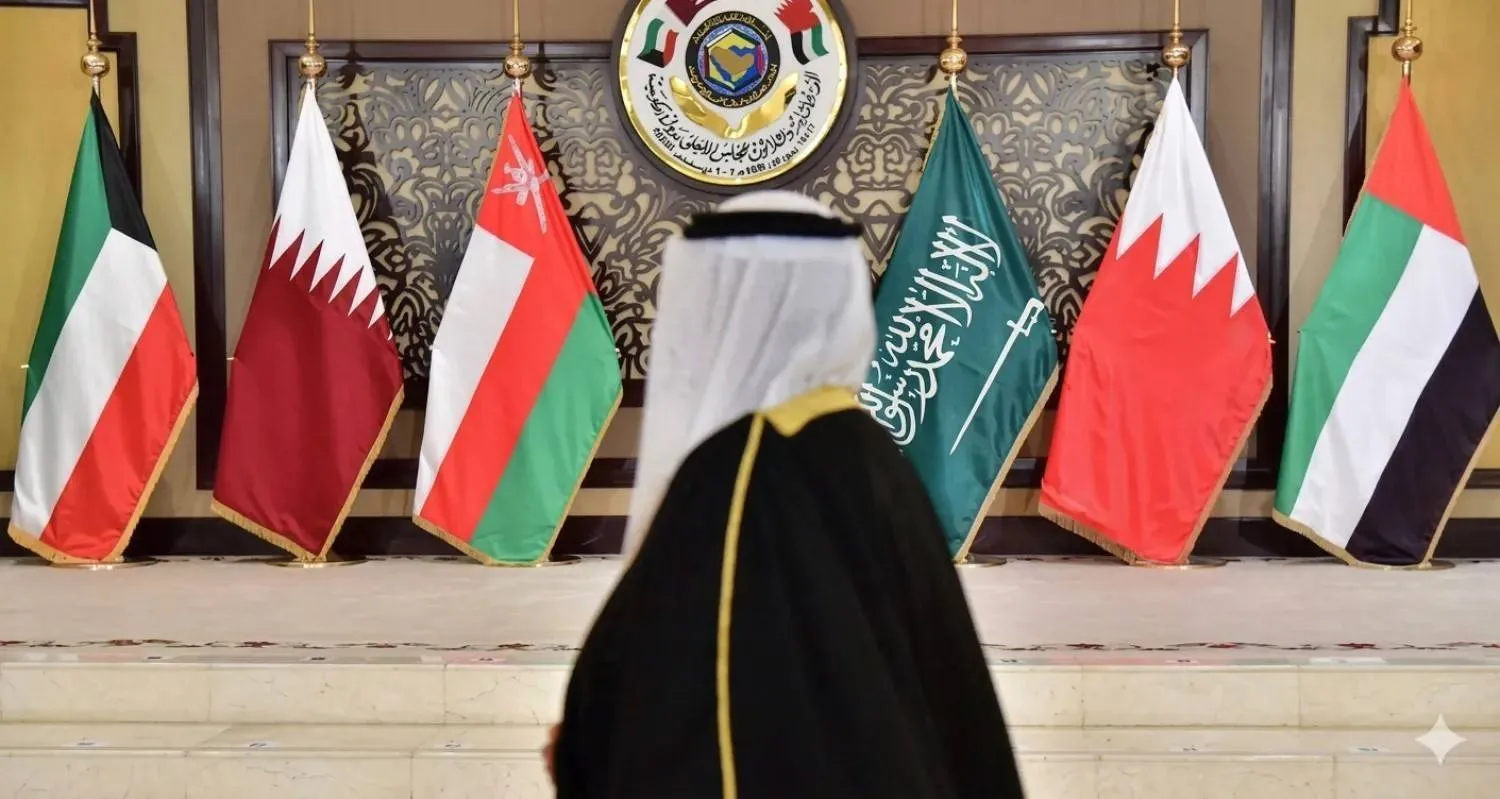
Flags of Gulf Arab states at an event (AFP)
TT

How Gulf States View War Outlook, US-Iran Talks

Flags of Gulf Arab states at an event (AFP)

Gulf Cooperation Council countries, under sustained Iranian attack, are closely tracking indirect US-Iran talks that Pakistan said on Thursday it is facilitating by relaying messages between the two sides.

Data monitored by Asharq Al-Awsat showed that by Wednesday evening, about 83% of Iran’s missile and drone attacks since the war entered its fourth week had targeted Gulf Arab states, compared with 17% aimed at Israel.

The tally recorded 4,391 missiles and drones striking Gulf countries, hitting critical infrastructure and civilian sites, versus 930 launched at Israel, which is leading the war.

Shaping the next phase

Gulf states on Thursday began to outline their stance on any negotiations over the conflict’s future.

Jasem Albudaiwi, Secretary-General of the Gulf Cooperation Council, said the bloc must be included “in any talks or agreements to resolve this crisis,” to safeguard security and prevent further attacks.

He rejected any frameworks, initiatives, or regional arrangements aimed at reshaping the Middle East after this conflict ends, underscoring Gulf insistence on a role in defining the region’s next phase.

Diplomacy first

Albudaiwi said international law allows states multiple options under the UN Charter, but stressed that the most rational and effective option is the diplomatic and political one.

Ahmed Al-Ibrahim, a political analyst specializing in US affairs, said Gulf states view US-Iran talks with cautious realism.

They do not oppose negotiations, but want outcomes that address what they see as the core threat, not only Iran’s nuclear program, but also its ballistic missiles and regional influence in Yemen, Lebanon, and Iraq.

A joint statement by five Gulf states and Jordan on Wednesday condemned attacks by Iran-aligned factions in Iraq on regional countries and infrastructure. It urged Baghdad to act immediately to halt such attacks launched from its territory and avoid further escalation.

Trust frays

Al-Ibrahim said Gulf confidence in both sides is limited. That view was reinforced by remarks from the Saudi foreign minister last week that “trust in Iran has been shattered.”

Al-Budaiwi said GCC states were surprised by US-Israeli strikes on Iran and had made clear they would not take part in military action or allow their territory to be used against Iran.

Despite that, Tehran still carried out what he described as a “treacherous attack” on GCC states.

He expects Gulf countries to pursue a dual track, backing de-escalation while strengthening defenses and expanding security partnerships. The Gulf, he said, rejects “incomplete deals” that fail to change Iran’s behavior or ensure regional security.

Seat at the table

Gulf security specialist Dhafer Al-Ajmi said GCC participation in any US-Iran talks on regional security is a “sovereign right,” not a request.

“We will not accept having our future shaped in our absence. Our seat at the table is the only guarantee for real and lasting peace,” he said.

Al-Ajmi said Gulf states have borne the brunt of the war’s costs and tensions. Their participation, he said, aims to secure binding guarantees to protect livelihoods and stability.

Any deal that ignores sovereignty and non-interference would be “incomplete and doomed to fail.”

Political analyst Ibrahim Raihan said Gulf states, while showing “wisdom” in handling the crisis, support de-escalation in principle. But he said the root problem remains Iran’s conduct, particularly violations of Gulf sovereignty, despite efforts before the war to avert conflict.

Three demands

Raihan said both Iran and Israel are seeking to widen the war. He outlined three priorities for any negotiations: de-escalation, guarantees to protect shipping routes, and a clear Iranian apology to neighboring Arab states for violations of their sovereignty.

Separately, the United Nations Human Rights Council on Wednesday condemned Iranian attacks on Gulf states as “egregious” and called on Tehran to provide swift compensation to those affected.


Kuwait Ports Authority Says Drones Struck Shuwaikh Port

Smoke rises from a high-rise building following a drone attack in Kuwait City on March 8, 2026. (AFP/file photo)
TT

Kuwait Ports Authority Says Drones Struck Shuwaikh Port

Smoke rises from a high-rise building following a drone attack in Kuwait City on March 8, 2026. (AFP/file photo)

The Kuwait Ports Authority said on Friday that its main commercial Shuwaikh Port was targeted in a drone attack, resulting in material damage but no human casualties.

The authority added in a statement that it had activated the emergency procedures in place for such situations, in coordination with the relevant authorities.

Iran pressed on with its assaults in the Gulf in retaliation for US-Israeli strikes.


Saudi Arabia Urges Its Nationals in Lebanon to Leave Immediately

Saudi Embassy in Beirut (Reuters)
TT

Saudi Arabia Urges Its Nationals in Lebanon to Leave Immediately

Saudi Embassy in Beirut (Reuters)

Saudi Arabia on Friday renewed calls on Saudi nationals currently present in Lebanon to leave the country immediately because of the security situation there.

In a statement on its social media platform X, the Saudi Embassy in Beirut urged its citizens to comply with the travel ban to Lebanon and called on all nationals currently present in the country to leave immediately citing the security developments.

The embassy emphasized the need to contact it in case of any emergency, wishing safety and security for all.


Kuwait Dismantles Iranian Cell, Bahrain Refers Collaborators to Judiciary

An Iranian rocket is intercepted over Abu Dhabi. (AFP)
TT

Kuwait Dismantles Iranian Cell, Bahrain Refers Collaborators to Judiciary

An Iranian rocket is intercepted over Abu Dhabi. (AFP)

Kuwait announced on Thursday that it busted a cell associated with Iran, while Bahrain referred collaborators with Tehran to the judiciary, reflecting the readiness of Gulf countries to deal with threats to their stability and security and to protect their higher interests.

Kuwaiti authorities said they thwarted a terrorist plot to carry out assassinations of state figures and leaders.

They detained a cell that includes a number of Kuwaitis working for Hezbollah, they added.

The cell was also tasked with recruiting people to carry out their attacks with the aim of harming higher national interests.

Kuwait had busted a similar cell just days ago.

Kuwait’s defenses also shot down on Thursday hostile rockets and drones that had breached its airspace.

In Bahrain, authorities arrested a cell accused of collaborating with Iran. It referred to the judiciary 14 people for contacting the Iranian Revolutionary Guards Corp (IRGC).

The detainees received assistance and funds to support operations against Kuwait, saying the IRGC had tasked them with sending photos and information.

One of the detainees took photos and sent coordinates of vital installations to the Guards, said Manama. The IRGC had used the information received from the cell to carry out attacks against Bahrain.

On March 12, the interior ministry announced that it had arrested four citizens for collaborating with the IRGC. Two days prior, it arrested six people for sharing photos of damage caused by Iranian attacks and voicing sympathy with Tehran and its hostile activities.

On Thursday, Bahrain’s defenses downed a rocket and 19 drones. Authorities said they will continue to confront Iran’s heinous terrorist attacks.

Bahrain has so far destroyed 154 rockets and 350 drones since the hostilities began.

In the UAE, authorities said a person was killed and three wounded from falling shrapnel from a downed ballistic missile in Abu Dhabi. Several vehicles were also damaged in the incident.

Emirati defenses downed 15 ballistic missiles and 11 drones fired from Iran in recent hours.

Since the eruption of the conflict, defenses downed 372 ballistic missiles and 1,826 drones from Iran. Two members of the armed forces were killed while performing their national duties.
