


Victory and Defeat Scenarios for Iran’s Proxies in Lebanon and Iraq

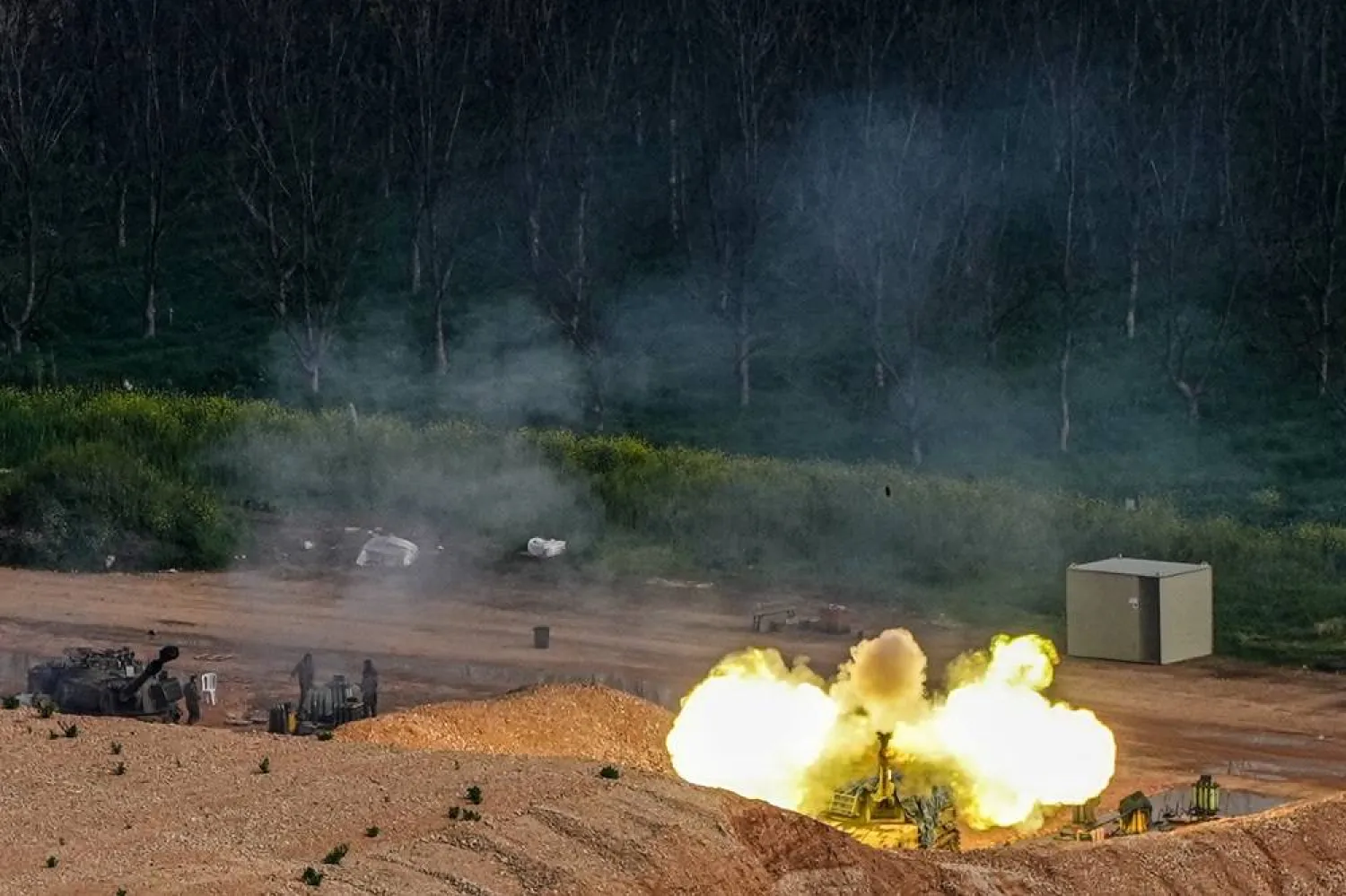
An Israeli artillery unit fires towards Lebanon, amid escalating hostilities between Israel and Hezbollah, as the US-Israeli conflict with Iran continues, in northern Israel, March 28, 2026. (Reuters)
TT

Victory and Defeat Scenarios for Iran’s Proxies in Lebanon and Iraq

An Israeli artillery unit fires towards Lebanon, amid escalating hostilities between Israel and Hezbollah, as the US-Israeli conflict with Iran continues, in northern Israel, March 28, 2026. (Reuters)

The future of Iran’s regional allies, particularly Hezbollah in Lebanon and armed factions in Iraq, is increasingly uncertain as a widening conflict reshapes the Middle East and tests the limits of Tehran’s long-standing proxy strategy.

Lebanese politician Michel Chiha once outlined a vision of Lebanon as a country open to the world through its coastline, protected internally by its mountainous terrain. He advocated a liberal, service-based economy rather than heavy industry, while emphasizing that Israel represented the primary external threat.

His assessment was largely accurate, but incomplete. Chiha did not fully account for the broader geopolitical system that governs Lebanon, one influenced by global and regional powers.

Lebanon has historically been vulnerable to shifts between these two levels. When global and regional dynamics align, the country experiences relative stability. When they clash, Lebanon often pays a heavy price, including political paralysis, internal unrest, and even civil war. If such conflicts persist without resolution, international powers tend to intervene, often delegating regional actors to impose a settlement.

This pattern has repeated itself at key moments in Lebanon’s modern history: the 1958 crisis at the end of President Camille Chamoun’s term; the outbreak of civil war in 1975; Syria’s 1990 intervention that ended General Michel Aoun’s military government; the 2008 Doha Agreement following Hezbollah’s takeover of Beirut; and more recently, political shifts culminating in the election of President Joseph Aoun after the failure of Hezbollah’s “support war” to meaningfully assist Gaza.

Iran in the region

Iran’s confrontation with the US-led global order dates back to the 1979 revolution. However, the strategic environment changed dramatically after the September 11, 2001, attacks and the subsequent US invasion of Iraq in 2003.

The collapse of Saddam Hussein’s regime reshaped the regional balance of power. For the first time, US forces were positioned directly on Iran’s borders, in both Iraq and Afghanistan. Tehran responded by expanding its influence through a network of allied groups across the region.

This strategy centered on the development of proxies, linked geographically through what became known as the “Axis of Resistance” and the concept of “unity of arenas.” These networks extended across Iraq, Syria, Lebanon and Yemen, allowing Iran to project influence across land, sea and air.

The so-called “Arab Spring” represented both an opportunity and a setback for Iran. On one hand, it enabled Tehran to expand its presence by filling political and security vacuums. On the other, it exposed its intentions, particularly as it mobilized allied groups to support friendly regimes.

Hezbollah’s intervention in Syria marked a turning point. The group became deeply involved in a prolonged and complex conflict, exposing vulnerabilities at multiple levels — security, military and ideological. These weaknesses became evident during subsequent confrontations with Israel, particularly during the Gaza war, when Israel penetrated Hezbollah’s structure and targeted senior leaders.
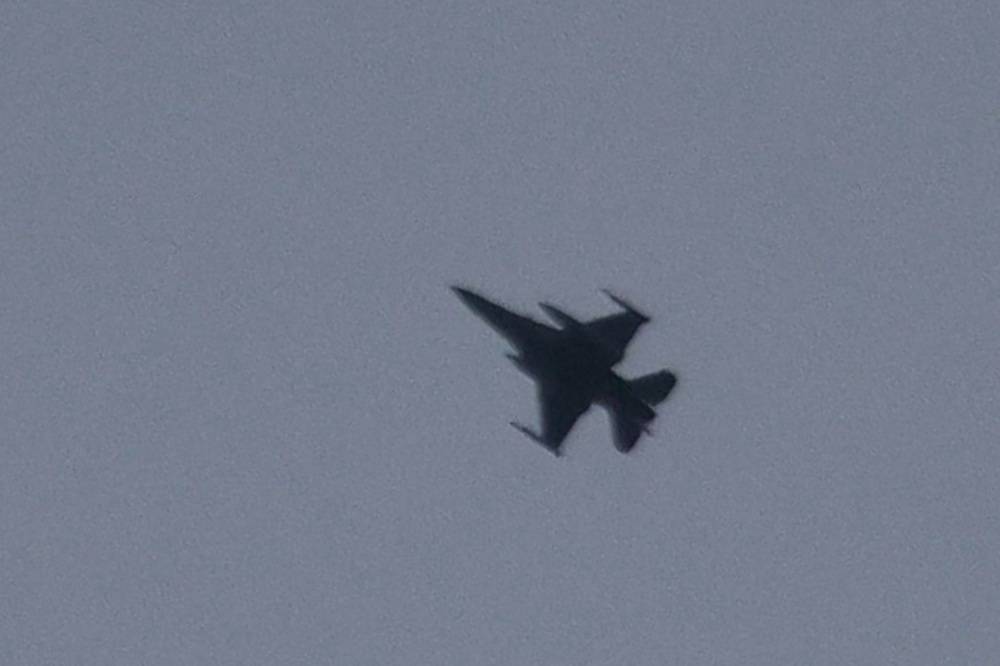
An Israeli Air Force F-16 fighter aircraft flies over Marjeyoun in southern Lebanon on March 28, 2026. (AFP)

Iraq enters the picture

Iraq occupies a central place in Iran’s geopolitical thinking. Historically, it has been viewed as a major source of threat to Iranian national security, from ancient times through to the modern era under Saddam Hussein during the Iran-Iraq War.

After 2001, Iran found itself effectively encircled by US forces. The emergence of the ISIS group in 2014, which seized large areas of Iraqi territory, further underscored Iraq’s strategic importance. For Tehran, maintaining influence in Iraq is essential to ensuring internal stability and national security. Control or strong influence over Iraq provides strategic depth and helps prevent potential threats from emerging on its western border.

Following the 2003 invasion, Iran’s regional strategy became more clearly defined: Iraq as the base, Syria as the corridor, and Lebanon — through Hezbollah — as the strategic endpoint or “crown jewel.”

October 7

The October 7, 2023 attack by Hamas on Israel is widely viewed as a “black swan” event, one that disrupts the foundations of the existing order without immediately creating a new equilibrium.

The attack triggered a chain reaction across the region. It exposed the limitations of Iran’s proxy-based strategy and highlighted what is known in political theory as the “principal-agent problem.” In this dynamic, the patron state - Iran - pursues broader strategic goals, while proxies focus on local or ideological objectives.

This misalignment creates inherent risks. When proxies succeed, both sides benefit. When they fail, the proxies bear the immediate consequences.

In the case of October 7, Iran was drawn into a conflict it neither fully anticipated nor sought to escalate. It encouraged Hezbollah to intervene under the banner of a “support war” for Gaza. The result was a cascading deterioration, with both Hamas and Hezbollah suffering significant losses.

The concept of “unity of arenas” began to unravel as the conflict expanded. By 2025, the situation escalated further when Israel and the United States launched a coordinated military campaign against Iran in June, lasting 12 days.

The campaign included strikes on Iranian nuclear facilities using advanced bunker-busting munitions carried by US B-2 bombers. It also reflected an unprecedented level of coordination between Washington and Tel Aviv, not only in execution but also in planning and target allocation.

Another defining feature of the conflict has been its reliance on remote warfare. Iran has used missiles and drones to strike Israel and regional targets, while Israel, backed by US capabilities, has relied on air power and technological superiority, including the use of artificial intelligence in target selection and strike coordination.

Lebanon and Iraq in the crossfire

The regional conflict has drawn in multiple actors, though with varying levels of involvement. Yemen’s Houthi militants have played a more limited and delayed role, likely reflecting logistical constraints and strategic calculations.

In contrast, Hezbollah in Lebanon and Iran-aligned factions within Iraq’s Popular Mobilization Forces have been more actively engaged.

In Lebanon, Iran has sought to rebuild Hezbollah following its setbacks in 2024. Reports suggest the group has been retrained in a decentralized form of warfare known as “mosaic warfare,” which emphasizes dispersion, flexibility and the avoidance of large-scale confrontations. This approach relies on a combination of rockets, anti-tank weapons and drones, effectively returning Hezbollah to tactics used prior to Israel’s withdrawal from southern Lebanon in 2000.

In Iraq, the situation differs. Armed factions have conducted attacks against US interests but have also targeted Iraqi state institutions, including intelligence facilities and radar systems. This dual targeting reflects internal divisions and raises concerns about the erosion of state authority.
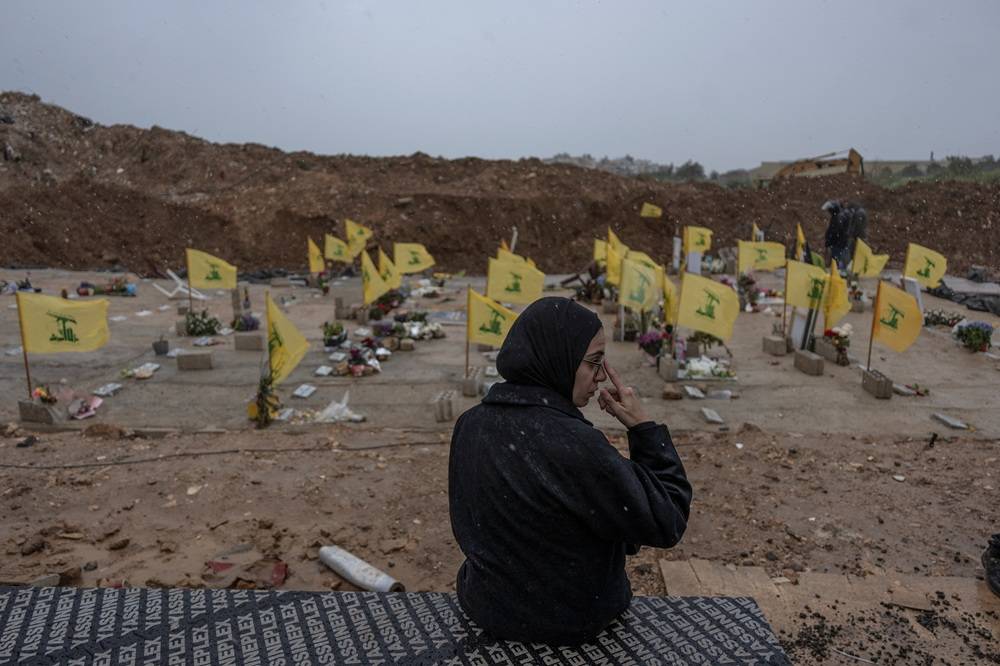
A woman sits in a cemetery before the funeral of Lebanese journalists, Al Manar reporter Ali Shaib, Al Mayadeen reporter Fatima Ftouni and cameraman Mohammed Ftouni, who were killed by a targeted Israeli strike, amid escalating hostilities between Israel and Hezbollah, as the US-Israeli conflict with Iran continues, in Choueifat, Lebanon, March 29, 2026. (Reuters)

Lebanon and Iraq’s challenges

Lebanon and Iraq share similarities as internationally recognized sovereign states, yet both face significant challenges in exercising full control over their territories.

In Iraq, militias within the PMF are formally integrated into the state’s security structure. However, some operate according to independent agendas that do not always align with national interests.

In Lebanon, Hezbollah operates as both a military force confronting Israel and a powerful domestic actor. It has often challenged state authority and pursued policies that diverge from official government positions.

The impact of the conflict has been more severe in Lebanon. The country has experienced displacement, particularly in the south and in parts of Beirut, as well as widespread destruction in Hezbollah strongholds. Israeli forces have also established a presence in southern territories they had not previously occupied.

In contrast, Iraq has not faced large-scale displacement or foreign occupation during this phase of the conflict. However, internal instability remains a concern, particularly as tensions between different political and ethnic groups persist.

Strategically, Iraq continues to serve as a cornerstone of Iran’s regional system. Lebanon, by contrast, has become more isolated, especially following the disruption of supply routes to Hezbollah through Syria.

War outcome

Several scenarios could shape the outcome of the conflict, each with significant implications for Iran’s proxies in Lebanon and Iraq.

Diplomatic solution:

At present, this scenario appears unlikely. The United States is demanding concessions that Iran had previously rejected, while Tehran is putting forward conditions that are seen as difficult to meet. Among these are demands related to control over key maritime routes and broader regional security arrangements.

Iran has also linked any potential ceasefire to developments on the Lebanese front, suggesting an effort to maintain influence there. A diplomatic resolution would raise critical questions about Hezbollah’s future, including the status of its weapons, its fighters and its role within Lebanon’s political system.

Current situation persists:

A prolonged war of attrition is seen as a scenario that could work in Iran’s favor. Time and economic resources, particularly oil revenues, could allow Tehran to sustain the conflict while gradually wearing down its adversaries.

However, this scenario carries significant risks. It could lead to deeper instability across the region, particularly in Gulf states, while exacerbating internal tensions in Iraq. In Lebanon, continued conflict could further weaken state institutions and increase the risk of internal unrest.

War scenario:

A broader military escalation remains a possibility. Reports indicate that the United States has considered expanded operations involving ground, naval and air forces.

Potential targets could include Iran’s strategic oil export facilities, such as Kharg Island, as well as key islands controlling access to the Strait of Hormuz. More complex operations, such as seizing enriched uranium, are considered less likely due to the challenges involved.

For Washington, any such operation would need to achieve a clear outcome. Failure could have significant consequences for the United States and its allies.

If a military campaign were to succeed, Lebanon would face major challenges, including addressing Hezbollah’s future and managing relations with Israel. Iraq, on the other hand, could see an opportunity to strengthen state authority and consolidate internal stability.

If it were to fail, the broader regional situation would likely remain unstable, with limited immediate impact on Iraq but continued uncertainty for Lebanon.



The Ethiopian Dam Dispute and Egypt’s ‘Right to Self-Defense’

Egyptian Foreign Minister Badr Abdelatty. Photo: Foreign Ministry
TT

The Ethiopian Dam Dispute and Egypt’s ‘Right to Self-Defense’

Egyptian Foreign Minister Badr Abdelatty. Photo: Foreign Ministry

Over the past two weeks, Egypt has repeatedly stressed its right to prevent any actions by Addis Ababa on the Nile River that could harm its water interests, stressing that it possesses the “right to self-defense” over Ethiopia’s Grand Ethiopian Renaissance Dam (GERD).

According to experts who spoke to Asharq Al-Awsat, Egypt’s signaling means that it “will not hesitate to use all legitimate means to safeguard its water security.”

They explained that the message is a stern warning to Ethiopia and suggests that Cairo is seeking to shift from a policy of protesting Ethiopian measures to preventive deterrence, aimed at stopping the establishment of a new status quo on the Nile.

New Egyptian Warning

Egyptian Foreign Minister Badr Abdelatty said that “Egypt will not allow the construction of additional dams ... that affect its water interests,” stressing Cairo’s commitment to a legally binding agreement that guarantees its water rights.

In a television interview on Wednesday evening, Abdelatty said that Egypt does not oppose African countries’ right to development, noting Cairo’s participation in dam and infrastructure projects in several Nile Basin states. However, he stressed the need to balance the right to development with the rights of downstream countries.

He also underscored Egypt’s commitment to protecting its water interests. “We have the right to self-defense to protect our interests and water security,” said the minister. “We will not accept any agreement regarding the Nile River unless it is legally binding,” he reiterated.

Mohamed Hegazy, a member of the Egyptian Council for Foreign Affairs and a former assistant foreign minister, says the right of self-defense is protected under international law after all peaceful means have been exhausted.

According to Hegazy, the core message is that Cairo still prefers agreement and negotiation, but it no longer accepts using negotiations to impose a fait accompli.

He argued that the most significant aspect of Abdelatty’s statements is that they send three simultaneous messages - Rejection of unilateral measures, rejection of additional dams, and insistence on the right of self-defense to protect water security.

Hussein El-Behairy, an African affairs expert at the National Center for Middle East Studies, said the minister’s recent statements reaffirm Egypt’s right to defend its historical and water rights in the Nile by whatever means the Egyptian state deems appropriate to preserve what Egyptians view as a matter of life and death.

Ethiopia’s Grand Ethiopian Renaissance Dam (GERD). Reuters

Escalating Egyptian Position

This is the third time Egypt has signaled the possibility of using its “right to self-defense” and preventing dam construction on the Nile.

On August 16, Egypt’s state news agency quoted an unnamed Egyptian official as saying that Cairo “will neither accept nor allow any party to control the flow of Nile waters to downstream countries,” stressing that the Egyptian state possesses multiple tools capable of protecting its people’s interests in the Nile.

The statement came in response to remarks attributed to Ethiopian Minister of Water and Energy Habtamu Itefa concerning the construction of additional dams on the Nile and control over water flows to downstream states, namely Egypt and Sudan.

Earlier, on August 4, Egyptian Minister of Water Resources and Irrigation Hani Sewilam stated during a press conference that Egypt “will not allow the construction of new Ethiopian dams on the Nile River.”

He said: “It is well known that Ethiopia has plans to build additional dams, but will the Egyptian state allow this? No.”

According to Hegazy, the ball is now in Ethiopia’s court. If Addis Ababa agrees to resume serious negotiations leading to a legally binding agreement on GERD, the crisis can be contained.

However, if Ethiopia continues to create new realities on the Nile, the scope for a diplomatic solution will narrow, making risk management and deterrence a more prominent part of Egypt’s strategy.

El-Behairy does not expect the escalation to pave the way for new negotiations on GERD unless the Ethiopian government is willing to make concessions in response to Cairo’s demands. These demands include reaching a legally binding agreement that guarantees Egypt’s water rights during periods of drought and severe drought, and providing Egypt with information regarding the operation of the dam in a manner that does not harm its water interests.


Train to Nowhere? South Korea’s Lonely Push for Peace with the North

A locomotive is seen at the Woljeong-ri Station in Cheorwon, Gangwon Province, in South Korea, near the demilitarized zone separating North and South Korea on August 10, 2026. (AFP)
TT

Train to Nowhere? South Korea’s Lonely Push for Peace with the North

A locomotive is seen at the Woljeong-ri Station in Cheorwon, Gangwon Province, in South Korea, near the demilitarized zone separating North and South Korea on August 10, 2026. (AFP)

Near the heavily fortified frontier dividing the Korean peninsula, the abandoned Woljeong-ri station is being recast as a symbol of South Korea's hopes to reconcile with the North.

But plans to reconnect South Korea's northernmost station to the rail network come at an awkward moment, as Pyongyang ignores Seoul's overtures while the South's old ally Washington pursues its own talks with Pyongyang.

A turbulent few days have raised doubts about the role of South Korea in any diplomatic push, despite President Lee Jae Myung's dovish line on the North since taking power last year.

US President Donald Trump abruptly scaled back annual military drills with Seoul this week, calling them "inappropriate and hostile" towards the nuclear-armed North.

He also berated South Korea for not helping in his war against Iran and said he would meet the North's leader Kim Jong Un this year.

North Korea then fired around 10 short-range ballistic missiles on Thursday, while Kim's powerful sister mocked Seoul's "master-servant" relationship with Washington.

The developments have overshadowed the Lee administration's outreach, including the Woljeong-ri project aimed at "eventual" reconciliation.

The modest station -- originally located inside today's demilitarized zone (DMZ) -- once sat on a line linking Seoul to Wonsan, but was destroyed during the 1950-53 Korean War. It was reconstructed at its current site in the border town of Cheorwon in 1988.

It is now an attraction for visitors to the nearby DMZ separating the two countries, and the line's former terminus -- Wonsan -- lies in North Korea.

Its history, however, underscores how vulnerable such hopes are to the politics of the peninsula.

Work began in 2015 but ground to a halt just a year later after North Korea's fourth nuclear test.

The latest reboot inspires more skepticism than hope for some in Cheorwon.

"It seems like they keep trying to reconcile with North Korea (through the railway project), but from our point of view, it isn't really practical," said resident Moon Jae-yong, 70.

- Lonely push for peace -

South Korea's reconciliation program eventually aims to restore rail links, such as Woljeong-ri, with the North.

Lee has also said he is ready for talks with Pyongyang without preconditions, including on formally ending the Korean War, which concluded with an armistice.

His unification minister said in July that Seoul had shifted from prioritizing denuclearization to curbing the expansion of North Korea's nuclear program.

But Pyongyang -- emboldened by support from traditional ally China, and Russia, whose invasion of Ukraine it is backing -- has been unmoved.

It has repeatedly declared itself an "irreversible" nuclear state and labelled Seoul its "most hostile" enemy.

The US leader may be trying to revive diplomacy to record a foreign policy win ahead of November's midterm elections, with many voters disenchanted by his intervention in the Middle East.

That has sidelined Seoul, with Lee voicing respect for Trump's decision and pledging to "do his utmost" to support his peacemaking efforts.

South Korea is "reasonably afraid that it gets sidelined -- China, Russia and now America are all engaged with Pyongyang in different ways, while Seoul is not," Vladimir Tikhonov, Korean Studies professor at the University of Oslo, told AFP.

"So, Seoul is desperate to get some opening with North Korea. But it can do very little, so far."

- Impossible dream? -

That leaves the rail project standing as a symbol of South Korea's lonely push for peace.

Along the disused line from Woljeong-ri towards Baengmagoji station to the south -- the section to be restored under the peace project -- vegetation crowds both sides of the tracks, nearly swallowing a stone wall.

"The iron horse wants to run," a sign reads, alongside a phrase in English: "We want to be back on track."

Preparing infrastructure in the South now could save time if inter-Korean links are eventually restored, said Lim Eul-chul, a professor at Kyungnam University.

"But realistically, it is virtually impossible under the current circumstances, and everyone knows that," he told AFP.

With few options on North Korea, Seoul has turned to projects it can "pursue unilaterally", Lim said.

The project also aims to boost tourism along the border, where residents face frequent disruptions and security risks.

Pyongyang sent trash-filled balloons and broadcast unsettling noises across the border during the administration of Lee's hawkish predecessor, Yoon Suk Yeol.

Kim Sun-hee, 70, described them as "like scraping cement, or even ghost-like noises. It was really frightening".

A bombed-out locomotive from the Korean War remains near Woljeong-ri station as a reminder of the division.

It is "heartbreaking to see", said visitor Ahn Seung-hyun.


Lockerbie Specter Returns in Netflix Drama: Who Was Bombmaker Marwan Khreesat?

Marwan Khreesat (Facebook)
TT

Lockerbie Specter Returns in Netflix Drama: Who Was Bombmaker Marwan Khreesat?

Marwan Khreesat (Facebook)

In the shadow world of Palestinian factional operations and intelligence wars that defined the 1970s and 1980s, few names were as mysterious or controversial as Marwan Khreesat.

Linked to what became known as the “engineering of airborne death,” Khreesat was described in Western intelligence accounts as a skilled bombmaker for the Popular Front for the Liberation of Palestine-General Command, or PFLP-GC, led by Ahmed Jibril.

For decades, he remained an elusive figure, moving between world capitals. West Germany arrested him, then released him in circumstances that fueled speculation. Israel’s Mossad pursued him. He eventually died in Amman at about 70, taking many of his secrets with him.

To some, he was a fedayeen who used his electrical skills against the Israeli occupation. To Western investigators, he was linked to aviation attacks that shocked the world.

His death did not end the questions.

Khreesat’s fingerprints, at least in the investigative sense, continued to hover over the Lockerbie case. More recently, his name returned to international attention as a Netflix docudrama revisited the hidden battles, intelligence operations, and unresolved questions of that era.

The electronics expert inside the PFLP-GC

Khreesat’s story began with technical skill.

A talented electrician and technician, he became involved in armed activity early, driven by his nationalist background. As radical Palestinian factions expanded, he joined the PFLP-GC, which had split from the Popular Front for the Liberation of Palestine and focused on specialized cross-border military operations.

Ahmed Jibril, born in 1938 in a village in the Jaffa district, founded the faction in 1968 after breaking away from the Popular Front for the Liberation of Palestine.

He quickly recognized Khreesat’s ability to work with electrical circuits and plastic explosives such as C-4 and Semtex.

Khreesat was not a front-line fighter.

He worked instead in secret, specially equipped laboratories, designing sophisticated explosive devices triggered by changes in air pressure or by digital timers.

That technical skill turned ordinary objects into devices capable of defeating airport security systems.

From El Al to Operation Autumn Leaves

Khreesat’s expertise did not suddenly emerge in the 1980s. It had been developed years earlier in the laboratories of the region’s shadow wars.

One early episode came in Rome in the summer of 1972.

The PFLP-GC used what the source describes as an emotional deception involving two British women, who were persuaded to carry a household record player presented as a farewell gift before boarding an El Al flight to Tel Aviv.

Hidden inside the record player was a charge of powerful plastic explosives fitted with a barometric trigger.

The device was designed to detonate automatically when the aircraft reached a high altitude over the Mediterranean, sending the wreckage — and potentially the evidence — into the sea.

The bomb exploded about 20 minutes after takeoff, tearing a large hole in the aircraft.

But airport security had insisted the record player be placed in the baggage hold rather than the passenger cabin. That reduced the blast’s impact and allowed the pilot to make a safe emergency landing in Rome.

The incident became an early warning to international intelligence services: an engineer was turning ordinary household electronics into sophisticated airborne bombs.

The most serious threat to Khreesat’s operations came 16 years later.

In the autumn of 1988, West German authorities penetrated a PFLP-GC cell in Frankfurt led by Hafez Dalkamoni as part of what became known as Operation Autumn Leaves.

German police arrested Khreesat and seized explosives concealed inside modified Toshiba radios and cassette players.

The devices were designed to explode automatically once an aircraft reached a specific altitude, triggered by changes in atmospheric pressure.

Then came the mystery.

German authorities released Khreesat only days after his arrest.

The decision triggered years of speculation. Later Western intelligence reports and suspicions suggested he may have been acting as a “double agent,” passing sensitive information to Jordanian, US or other security services.

Lockerbie and the question that would not disappear

On Dec. 21, 1988, Pan Am Flight 103 exploded over the Scottish town of Lockerbie, killing 270 people.

The technical similarities drew immediate attention.

The bomb used in the attack had also been concealed in a Toshiba cassette player, echoing devices seized from Khreesat in Germany just two months earlier.

Although the international judicial process later convicted Libyan Abdelbaset al-Megrahi, Khreesat’s name never fully disappeared from the investigation.

Decades later, it returned to public view through The Bombing of Pan Am 103, a major docudrama produced by the BBC and Netflix.

The series examined the criminal investigation and the joint pursuit by Scottish investigators and the US Federal Bureau of Investigation.

It also revived the theory of an “Iranian-Palestinian connection.”

Khreesat appeared in that context through references to fragments linked to the bomb and comparisons with devices he had designed that were seized in Germany.

The old question returned with it:

Was Marwan Khreesat the man who actually built the bomb that destroyed Pan Am Flight 103 over Scotland?

The secret file left behind

Khreesat spent his final decades largely silent at his home in the suburbs of Amman, refusing repeated approaches from Western media.

In later years, however, he began publishing memoirs and documents online, attacking some Palestinian leaders and at times boasting about earlier operations against Israeli interests.

After his death, the story took another turn.

His daughter, Suha Khreesat, made claims to British media, again pushing his name into the headlines.

In a 2018 interview with Britain’s Daily Mirror, marking the 30th anniversary of the Lockerbie bombing, she said her father had played no part in the deaths of the victims.

But she also said he had left behind a “large secret file, documents and recordings” kept by her mother, his wife.

She said the material proved that Ahmed Jibril — who later died in Damascus at about 83 — had carried out the Lockerbie operation under a major direct financial deal with the Iranian government.

Marwan Khreesat died, leaving behind a legacy as murky as the intelligence wars in which he operated.

He was a bombmaker whose technical skills challenged security services across two continents, a figure whose story fused electronics, covert operations, and regional power struggles.

And decades later, his name still shadows the Lockerbie file — preserved in intelligence documents, revived in investigations and retold on screens, revisiting one of the era’s most enduring mysteries.