


Private Sector Drives Saudi Tourism with Investments Worth $58 Billion

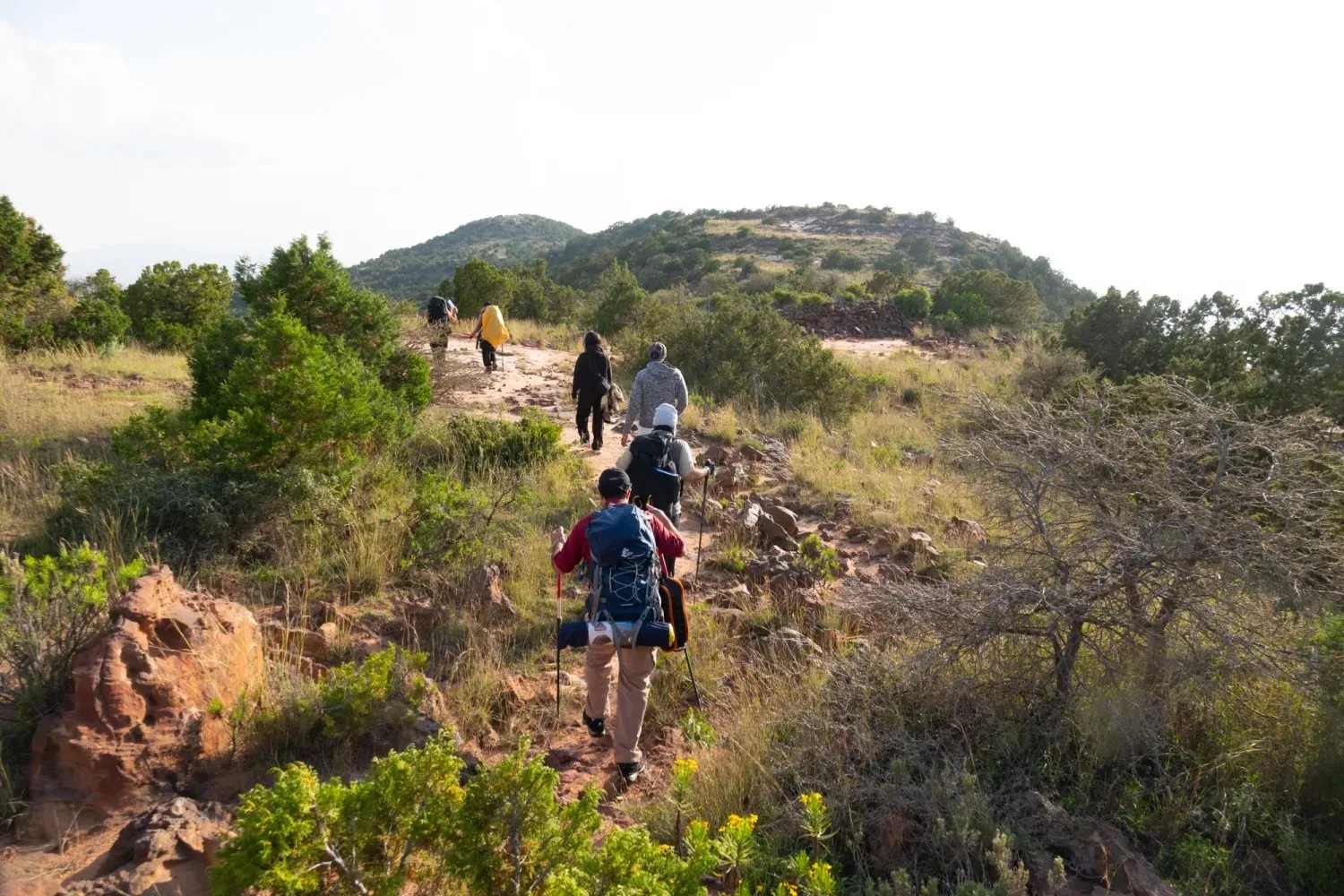
A mountain climbing trip in Tanomah, southern Saudi Arabia
TT

Private Sector Drives Saudi Tourism with Investments Worth $58 Billion

A mountain climbing trip in Tanomah, southern Saudi Arabia

Saudi Arabia’s private sector has emerged as a key engine of growth in the Kingdom’s rapidly expanding tourism industry, with investments totaling SAR219 billion ($58.4 billion), officials said, highlighting its growing role in developing destinations and enhancing the market’s appeal.

Speaking at the fourth edition of the Future Investment Initiative conference in Miami, Saudi Tourism Minister Ahmed Al-Khateeb said the Kingdom offers a model of a market fully prepared to attract investment, stressing that private sector participation is central to this success.

“The role of the private sector and its active participation are fundamental pillars, contributing around 48 percent of total tourism investment,” he stated.

Private sector role

Mahmoud Abdulhadi, Deputy Minister of Tourism for Destination Enablement, told Asharq Al-Awsat that total committed investments in the sector have reached SAR452 billion, with the private sector contributing SAR219 billion ($58.4 billion) and the Public Investment Fund accounting for SAR233 billion ($62.1 billion), reflecting a strategic partnership to support sustainable growth.

He added that Saudi Arabia ranked fifth among G20 economies in 2024 in terms of investment intensity, with investments accounting for 30 percent of gross domestic product — among the highest rates globally.

Between 2019 and 2024, the Kingdom attracted 56 major tourism projects valued at $1.9 billion, he said.

Abdulhadi added that investors benefit from a broad range of incentives, including long-term tax exemptions for multinational companies, wage support for roles subject to Saudization policies, reductions and exemptions on municipal licensing fees, and financing for projects of all sizes through the Tourism Development Fund.

He noted that the private sector accounts for around 60 percent of new hotel rooms and is leading investment projects across 10 regions of the Kingdom. Saudi Arabia has attracted more than 50 international hotel brands and over 40 new investors since 2020.

Record figures for 2025

Saudi Arabia’s tourism sector recorded strong performance in 2025, with about 122 million domestic and international tourists — up 5 percent from the previous year — while total tourism spending reached SAR301 billion ($80.3 billion), a 6 percent increase year-on-year.

Domestic tourists accounted for 92.9 million visitors, spending SAR128.2 billion ($34.2 billion), while international arrivals reached 29.3 million, with spending of SAR172.6 billion ($46 billion). The Kingdom aims to attract 150 million tourists annually by 2030.

Future investment priorities

Abdulhadi said investment priorities for the next five years include expanding hospitality capacity, enhancing booking and tourism promotion platforms, and developing a diverse range of tourism experiences spanning coastal, urban, heritage and adventure offerings.

Additional focus will be placed on agritourism, tourism supply chains and logistics services, creating significant opportunities for private sector participation and supporting sustainable growth.

He explained that Saudi Arabia has introduced mechanisms to ensure the sustainable growth of tourism projects, including covering 15–20 percent of capital expenditure for private investments, municipal fee exemptions for up to seven years, corporate income tax exemptions for foreign investments over the same period, up to 100 percent reductions in value-added tax on hotel rooms, and full support for land lease costs for up to 20 years.

Supporting sustainable growth

Abdulhadi underlined that the adoption of the 2025 Saudi Investment Law allows full foreign ownership, strengthens investor protections and facilitates capital flows, further enhancing the investment climate alongside specialized training programs developed in partnership with universities and educational institutions.

“This integrated ecosystem, together with public-private partnerships, represents the foundation for achieving Vision 2030 targets,” he said, including raising tourism’s contribution to GDP to 10 percent and creating more than 1.6 million jobs.



Oman Port Hit by Drone to Reopen from Tuesday

General view of Port of Salalah in Dhofar governorate, Oman, August 6, 2024. REUTERS/Rula Rouhana/File Photo
TT

Oman Port Hit by Drone to Reopen from Tuesday

General view of Port of Salalah in Dhofar governorate, Oman, August 6, 2024. REUTERS/Rula Rouhana/File Photo

Danish shipping firm Maersk announced Monday that Oman's port of Salalah, which was hit by a drone at the weekend, would start to reopen from Tuesday.

The Oman authorities said one worker was injured and minor damage caused by the strike on the port, which is run by Maersk subsidiary APM Terminals and is one of the key shipping facilities in the Gulf state.

Maersk said the area damaged was "limited" and that the port's management would take "necessary measures" to progressively build up to full capacity.

Some "constraints" would remain but additional safety and "preventive" measures had been taken because of the strike, it added.


US Stocks Open Higher after Trump Threatens Iran

Stock market statistics are displayed on a screen at the New York Stock Exchange (AFP)
TT

US Stocks Open Higher after Trump Threatens Iran

Stock market statistics are displayed on a screen at the New York Stock Exchange (AFP)

Wall Street stocks opened higher Monday after US President Donald Trump claimed progress in talks with Iran, even as he threatened to destroy key oil facilities on Kharg Island and to decimate the country's power infrastructure.

International benchmark Brent North Sea crude was up 2.2 percent to $115.02 per barrel on Monday morning, while the main US oil contract, West Texas Intermediate, rose 1.7 percent to $101.35, AFP reported.

All three major US indices started the week on the front foot.

About ten minutes into trading, the tech-rich Nasdaq Composite was up 0.8 percent at 21,124.23, the Dow Jones Industrial Average rose 0.9 percent at 45,566.69, and the broad-based S&P 500 also rose 0.9 percent to 6,426.20.

Art Hogan of B. Riley Wealth Management said investors "would desperately like to see an exit ramp in this war."

Still, even as Trump claims progress towards talks, he is often contradicted by Tehran and the Middle East region remains engulfed by war, with US-Israeli strikes continuing, Iran's retaliation targeting US allies in the Gulf and Israeli strikes against Lebanon expanding.

"The market's going to wake up every day and try to figure out where we are in the war with Iran and what that means for energy prices," said Hogan.

"If in fact, the president's announcement on Truth Social can be even taken a little bit seriously about negotiations going well, then the market would celebrate that."

Hogan added that markets were currently oversold and therefore "very susceptible to any good news, especially as it pertains to this war in Iran."

Monday's gains came after a series of losses last week, with the S&P 500 ending the week lower for the fifth straight week, its longest such run in four years.


Turkish Cenbank Total Reserves Fell $55 billion Since War Began

Turkish Central Bank (official website)
TT

Turkish Cenbank Total Reserves Fell $55 billion Since War Began

Turkish Central Bank (official website)

The Turkish Central Bank's total reserves fell by a hefty $22 billion last week to $155.5 billion, bringing their declines since the start of the Iran war to $55 billion, bankers said, Reuters reported.

They said the central bank sold $18 billion in foreign exchange last week, meaning its total forex sales amid the one-month war totaled $44 billion.

The central bank's net reserves fell $22.5 billion last week to $35 billion, the bankers also said.