


Israeli Parliament Passes Budget, Allowing Netanyahu to Avoid Early Elections

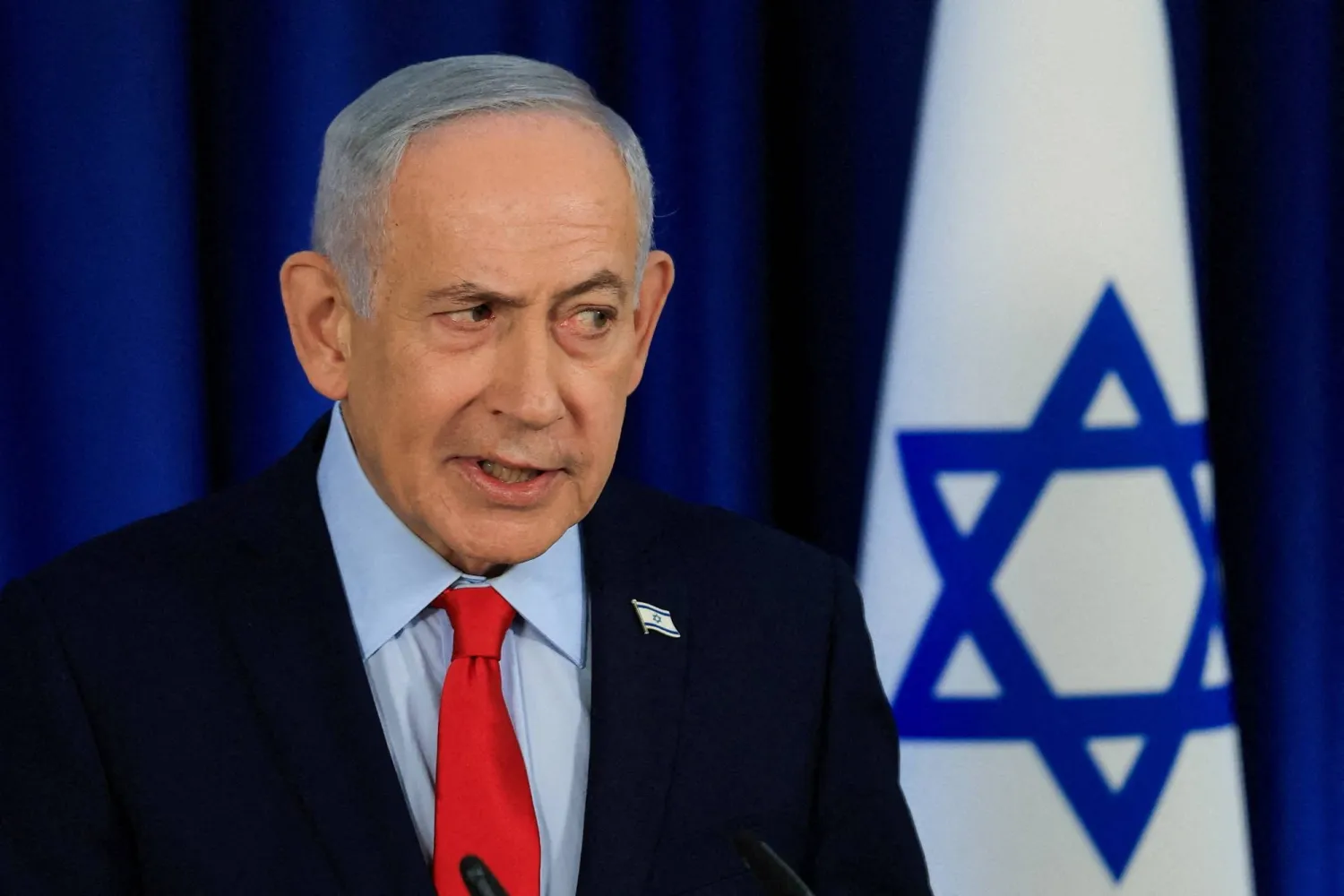
FILE PHOTO: Israeli Prime Minister Benjamin Netanyahu speaks during a press conference, amid the US-Israel conflict with Iran, in Jerusalem, March 19, 2026. REUTERS/Ronen Zvulun/Pool
TT

Israeli Parliament Passes Budget, Allowing Netanyahu to Avoid Early Elections

FILE PHOTO: Israeli Prime Minister Benjamin Netanyahu speaks during a press conference, amid the US-Israel conflict with Iran, in Jerusalem, March 19, 2026. REUTERS/Ronen Zvulun/Pool

Israel’s parliament on Monday passed its annual budget in a marathon overnight session, ensuring that Prime Minister Benjamin Netanyahu’s government can complete its term until the fall.

Israel needed to pass a budget before April 1 in order to avoid triggering early elections. Netanyahu still reserves the right to call for early elections before then if he wants.

Israel’s opposition slammed the budget for increasing funding to Israel’s ultra-Orthodox communities at a time when the country is facing soaring costs over its war in Iran and is still reeling from a two-year war in Gaza.

Opposition leader Yair Lapid called it “the greatest theft in the state’s history.”

“The government of gluttony and evasion carried out a nocturnal heist,” former Prime Minister Naftali Bennett, who is expected to challenge Netanyahu in upcoming elections, wrote on X.

Opposition parties were especially furious over a last-minute amendment providing an additional $250 million to ultra-Orthodox schools. Anger has increased at the ultra-Orthodox community for its refusal to allow its young men to serve in the military while it is stretched to its breaking point and is in desperate need of additional soldiers. Military service is mandatory for most Jews.

Far-right Finance Minister Bezalel Smotrich praised the budget for “taking care of all Israeli citizens, without exception.”

Netanyahu’s government is in the final months of its four-year term and is required to hold elections by the end of October. Israeli governments rarely last their full terms, though the budget’s passage means Netanyahu, whose popularity has dropped since Hamas' Oct. 7, 2023, attack, is now likely to complete his term.

The budget passed 62-55. Sirens warning of missiles launched from Iran toward Jerusalem interrupted the discussions three times, according to the parliament's spokesperson. The session took place in the building's auditorium, rather than the plenum, because it is located closer to a bomb shelter.

The $270 billion budget, Israel’s largest ever, included a 20% increase for the Ministry of Defense due to the ongoing war against Iran. The ministry's budget has swollen to $45 billion, forcing cuts in other government ministries.

Recent opinion polls in Israel indicate that while Israelis overwhelmingly support the war, Netanyahu and his political coalition don’t appear to be benefiting.

Iran continues to fire missiles at Israel each day, disrupting the lives of millions of anxious and exhausted voters. Israel’s war with Hezbollah militants in Lebanon also is intensifying, while the disruption of the flow of oil from the Arabian Gulf has upended the global economy.

Pushing off elections until the fall could allow Netanyahu to harness momentum from the Iran war once middle-of-the night sirens are a more distant memory for Israelis. But the election would also fall close to the anniversary of the Oct. 7 attack, the worst in Israel's history.

Israel’s military recently extended its wartime guidelines for civilians, which prevent large gatherings and encourage people to stay within a certain distance of bomb shelters, for an additional week. This means the wartime guidelines will include at least the first part of the weeklong Passover holiday, which starts on Wednesday.



Trump Threatens to Destroy Iran’s Civilian Infrastructure if a Deal Is Not Reached ‘Shortly’

First responders work on the rubble of a building targeted by an Israeli airstrike in the southern Lebanese village of Hanouiyeh, east of Tyre, on March 30, 2026. (AFP)
TT

Trump Threatens to Destroy Iran’s Civilian Infrastructure if a Deal Is Not Reached ‘Shortly’

First responders work on the rubble of a building targeted by an Israeli airstrike in the southern Lebanese village of Hanouiyeh, east of Tyre, on March 30, 2026. (AFP)

US President Donald Trump on Monday threatened widespread destruction of Iran’s energy resources and other vital infrastructure, including desalination plants that supply drinking water, if a deal to end the war is not reached “shortly.”

Iran meanwhile struck a key water and electrical plant in Kuwait, and an oil refinery in Israel came under attack. Israel and the US launched a new wave of strikes on Iran, as the war raged with no end in sight.

Trump’s new threat came in a social media post. Earlier comments to the Financial Times suggested American troops could seize Iran’s Kharg Island oil export hub. Trump has repeatedly claimed to be making diplomatic progress— though Tehran denies negotiating directly — while ramping up his threats and sending thousands more US troops to the Middle East.

It remains unclear where the diplomatic effort facilitated by Pakistan stands. Iran’s continuing attacks on its Gulf neighbors could further complicate any talks.

Trump says diplomacy is going well but threatens major escalation

In a social media post, Trump said “great progress is being made” in talks with Iran to end military operations. But he said if a deal is not reached “shortly,” and if the Strait of Hormuz is not immediately reopened, the US would broaden its offensive by “completely obliterating” power plants, oil wells, Kharg Island and possibly even desalination plants.

The strait is a crucial waterway through which a fifth of the world’s oil is shipped in peacetime.

The laws of armed conflict allow attacks on civilian infrastructure such as energy plants only if the military advantage outweighs the civilian harm, legal scholars say. It’s considered a high bar to clear, and causing excessive suffering to civilians can constitute a war crime.

A 22-year-old resident of Karaj, near Tehran, said his area lost power for several hours overnight following nearby strikes.

“I was really scared. I thought that they’d hit the power plants and that we are not going to have power anymore,” he said, speaking on condition of anonymity out of security fears.

In the FT interview, Trump said his preference would be to “take the oil in Iran.”

“Maybe we take Kharg Island, maybe we don’t,” he said, referring to a terminal through which nearly all of Iran's oil exports pass.

Iran says US demands are ‘excessive, unrealistic and irrational’

The US already has targeted military positions on Kharg.

Iranian Foreign Ministry spokesman Esmail Baghaei said Tehran had received a 15-point proposal from the Trump administration containing “excessive, unrealistic and irrational” demands, while denying there had been any direct talks.

Earlier, Iran’s parliament speaker, Mohammad Bagher Qalibaf, dismissed the talks in Pakistan as a cover while more US troops are brought to the region. He said Iranian forces were “waiting for the arrival of American troops on the ground to set them on fire and punish their regional partners forever,” according to state media.

Twice during Trump’s second term, the US has attacked Iran during high-level diplomatic talks, including with the Feb. 28 strikes that started the current war.

Iran attacks Israel

Sirens sounded at dawn near Israel’s main nuclear research center, a part of the country that has been targeted repeatedly in recent days. Israel’s military also said it had taken out two drones launched from Yemen, where the Iran-backed Houthis entered the war on Saturday with their first missile attack.

Iran kept up the pressure on its Gulf Arab neighbors: Saudi Arabia intercepted five missiles targeting its Eastern province; a fireball erupted over Dubai, United Arab Emirates, as a missile was intercepted; and in Kuwait, an Iranian attack hit a power and desalination plant, killing one worker and wounding 10 soldiers, the state-run KUNA news agency reported.

An Emirati official signaled that the UAE wants more than just a ceasefire.

“An Iranian regime that launches ballistic missiles at homes, weaponizes global trade and supports proxies is no longer an acceptable feature of the regional landscape,” Noura Al Kaabi, a minister of state at the UAE’s Foreign Ministry, wrote in a column published by the state-linked, English-language newspaper The National.

She added: “We want a guarantee that this will never happen again.”

NATO air defenses intercepted a ballistic missile over Türkiye that was fired from Iran, Türkiye’s Defense Ministry said, in the fourth such incident since the start of the war. Iran has denied firing the previous missiles. Türkiye has tried to maintain a neutral position and is taking part in mediation efforts.

Israel launched a new wave of attacks on Iran, saying it was striking “military infrastructure” across Tehran. Explosions were heard in the Iranian capital and Iranian state media reported a petrochemicals plant in Tabriz, in the north, sustained damage in an airstrike.

Peacekeeper killed in Lebanon

In southern Lebanon, which Israel has invaded as it battles the Iran-backed Hezbollah, an Indonesian United Nations peacekeeper was killed and three others were wounded by an exploding projectile.

An Israeli airstrike on a Beirut suburb killed one person and wounded 17, including four children, according to Lebanon's Health Ministry.

Over the weekend, Israeli Prime Minister Benjamin Netanyahu said the military would widen its invasion, expanding the “existing security strip” in southern Lebanon.

In Iran, authorities say more than 1,900 people have been killed, while 19 have been reported dead in Israel.

Two dozen people have been killed In Gulf states and the occupied West Bank. In Lebanon, officials said more than 1,200 people have been killed, and more than 1 million have been displaced. Six Israeli soldiers have died in Lebanon, while 13 US service members have been killed in the war.

Oil prices rise again

Iran’s attacks on the energy infrastructure of the region and its stranglehold on the Strait of Hormuz have threatened global supplies of oil, natural gas and fertilizer. They have sent fuel prices skyrocketing and given rise to growing concerns about an energy crisis.

Trump has said that Iran had agreed to allow 20 oil tankers through the Strait of Hormuz starting Monday as “a sign of respect.” There wasn’t any information on whether those ships were actually moving.

Brent crude oil, the international standard, was trading around $115 Monday, up nearly 60% from when the war started.


Türkiye Says NATO Defenses Downed Fourth inbound Iranian Missile

Turkish army personnel search a field after a piece of ammunition fell following the interception of a missile launched from Iran by a NATO air defense system, in Diyarbakir, Türkiye, March 9, 2026. REUTERS/Sertac Kayar/File Photo
TT

Türkiye Says NATO Defenses Downed Fourth inbound Iranian Missile

Turkish army personnel search a field after a piece of ammunition fell following the interception of a missile launched from Iran by a NATO air defense system, in Diyarbakir, Türkiye, March 9, 2026. REUTERS/Sertac Kayar/File Photo

A ballistic missile launched from Iran entered Turkish airspace before being shot down by NATO air and missile defenses deployed in the eastern Mediterranean, Türkiye's defense ministry said on Monday, Reuters reported.

The incident marked the fourth such incident since the start of the US-Israeli war with Iran, following three earlier interceptions by NATO systems earlier this month that prompted Ankara to protest and warn Tehran.

Tehran has denied in the previous three incidents that it authorized such launches and has asked Ankara to form a joint investigation into the matter.

The ministry said all necessary measures were being taken "decisively and without hesitation" against any threat directed at Türkiye's territory and airspace.


Spain Closes the Country's Airspace to US Planes Involved in the Iran War

Spain's Defense Minister Margarita Robles arrives at the informal EU Defense Ministers' meeting in Copenhagen, Denmark, August 29, 2025. Ritzau Scanpix/Thomas Traasdahl via REUTERS
TT

Spain Closes the Country's Airspace to US Planes Involved in the Iran War

Spain's Defense Minister Margarita Robles arrives at the informal EU Defense Ministers' meeting in Copenhagen, Denmark, August 29, 2025. Ritzau Scanpix/Thomas Traasdahl via REUTERS

Spain has closed its airspace to US planes involved in the Iran war, the defense minister said Monday, marking another step in the government's opposition to US and Israeli involvement in the conflict in the Middle East.

The country had already said that the US couldn't use jointly operated military bases in the Iran conflict, which Spanish Prime Minister Pedro Sánchez has described as illegal, reckless and unjust, The AP news reported.

Defense Minister Margarita Robles said Monday that the same logic applied to the use of Spanish airspace in the conflict.

“This was made perfectly clear to the American military and forces from the very beginning. Therefore, neither the bases are authorized, nor, of course, is the use of Spanish airspace authorized for any actions related to the war in Iran,” Robles told reporters.

Spain’s government under Sánchez, one of Europe's most prominent left-wing leaders, has been Europe’s loudest opposing voice against US and Israeli military actions in the Middle East.

He has called on the US, Israel and Iran to end the war, saying earlier this month: “You cannot respond to one illegality with another, because that’s how humanity’s great disasters begin.”

After Sánchez's government denied the US use of the Rota and Morón military bases in southern Spain, US President Donald Trump threatened to cut trade with Madrid.

It was the latest flare-up between Spain and the US, which made trade threats against the European nation last year, too, when Sánchez said that his government wouldn't increase its defense spending in accordance with a ramp-up agreed to by other NATO members following pressure from Trump.

At the time, Sánchez's government said that Spain could meet its military commitments by spending 2.1% of gross domestic product on defense, instead of the 5% the rest of the 32-nation military alliance agreed upon.

Sánchez was also among the most vocal critics of Israel's actions in the war in Gaza, which invited criticism from Israel's government on several occasions.

“I think everyone knows Spain’s position; it’s very clear,” Robles said, calling the war in Iran “profoundly illegal and profoundly unjust.”

Associated Press