Qatar Says Iran Missile Struck Tanker in Its Waters

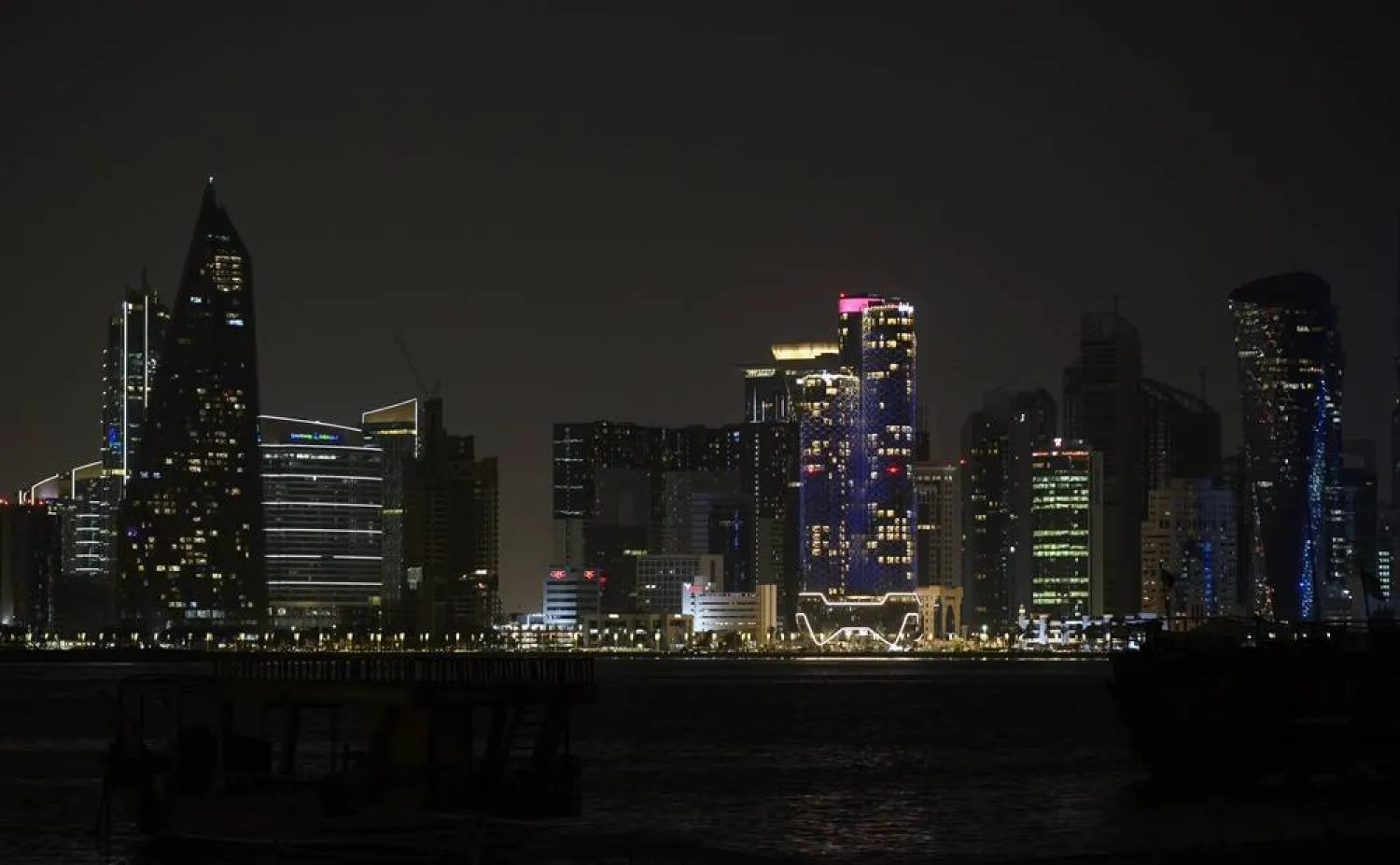
28 March 2026, Qatar, Doha: A view of the West Bay skyline in Doha with its lights switched off during Earth Hour. (dpa)
TT

Qatar Says Iran Missile Struck Tanker in Its Waters

28 March 2026, Qatar, Doha: A view of the West Bay skyline in Doha with its lights switched off during Earth Hour. (dpa)

Qatar said on Wednesday that a tanker leased to its state-owned energy company was struck by an Iranian missile in the Gulf country's territorial waters.

"Qatar was targeted... by three cruise missiles launched from Iran," the Defense Ministry said in a statement.

Qatar's military "intercepted two of the cruise missiles, while the third missile struck an oil tanker leased to QatarEnergy in Qatar's territorial waters," it said.

"Coordination was established with relevant authorities to evacuate the tanker, which had 21 crew members on board, without any human casualties," the ministry added.

Gulf countries have faced repeated drone and missile salvos from Iran over the past month in response to US and Israeli strikes that began at the end of February.

Iran has targeted hydrocarbon infrastructure in the oil-rich Gulf nations as well as shipping, effectively closing the strategic Strait of Hormuz, through which one-fifth of global oil usually passes.

QatarEnergy said in a statement the Aqua 1, a fuel oil tanker, had been "the subject of a missile attack in the northern territorial waters of the State of Qatar in the early morning hours of Wednesday".

It confirmed no crew members had been injured and there was "no impact on the environment as a result of this incident".


Presidents of the UAE, US Discuss Regional Escalation and Global Security Risks

File photo: Emirati President Sheikh Mohamed bin Zayed and US President Donald Trump meet in Abu Dhabi on Thursday (AP)
TT

Presidents of the UAE, US Discuss Regional Escalation and Global Security Risks

File photo: Emirati President Sheikh Mohamed bin Zayed and US President Donald Trump meet in Abu Dhabi on Thursday (AP)

UAE President Sheikh Mohamed bin Zayed Al Nahyan discussed on Wednesday the regional escalations and their impact on regional and global security during a phone call with US President Donald Trump.

The two leaders addressed the implications of rising tensions, including their impact on global markets, international maritime security, the world economy, and supply chains. They exchanged views on the broader consequences of the current escalation.

The two sides also addressed the ongoing Iranian attacks targeting the United Arab Emirates and several countries in the region, including strikes on civilians, critical facilities, and infrastructure. They stressed that such actions represent a breach of national sovereignty and international law and pose a direct threat to regional security and stability.

On Wednesday, the UAE Ministry of Defense said its air defenses intercepted five ballistic missiles and 35 drones launched from Iran on its territories.

It added that a total of 438 ballistic missiles, 19 cruise missiles, and 2,012 drones have been intercepted since the start of these attacks on February 28.

The attacks killed two armed forces personnel and 10 civilians of various nationalities, and injured 190 others. The ministry said it remains on high alert and ready to respond decisively to any threats to national security, sovereignty, and stability.


Saudi Foreign Minister, UN Secretary-General Discuss Regional Developments

Saudi FM Prince Faisal bin Farhan and UN Secretary-General Antonio Guterres (Saudi Ministry of Foreign Affairs)
TT

Saudi Foreign Minister, UN Secretary-General Discuss Regional Developments

Saudi FM Prince Faisal bin Farhan and UN Secretary-General Antonio Guterres (Saudi Ministry of Foreign Affairs)

Saudi Minister of Foreign Affairs, Prince Faisal bin Farhan bin Abdullah, received a phone call on Wednesday from Secretary-General of the United Nations, Antonio Guterres, where discussions focused on the latest developments in the region and the ongoing international efforts to address the situation.

Iran continues to carry out hostile attacks against Gulf countries and the wider region since February 28, in response to US and Israeli strikes. These actions have drawn widespread international condemnation along with expressions of solidarity with the affected countries.

On March 11, the United Nations Security Council adopted a resolution strongly condemning Iran’s continued attacks on Gulf countries and Jordan, describing them as violations of international law and a serious threat to international peace and security.

Security Council Resolution No. 2817, which was approved by 136 countries, affirmed the right of affected states to individual or collective self-defense, in accordance with Article 51 of the UN Charter, and called on Tehran to immediately cease all attacks.


Saudi Arabia: High-Level Readiness for Hajj Season

Prince Saud bin Mishaal chairs Hajj and Umrah committee meeting in Makkah
TT

Saudi Arabia: High-Level Readiness for Hajj Season

Prince Saud bin Mishaal chairs Hajj and Umrah committee meeting in Makkah

Saudi authorities on Wednesday reviewed preparedness for this year’s Hajj season, assessing operational plans and readiness indicators as officials called for intensified coordination ahead of the annual pilgrimage.

The permanent Hajj and Umrah committee, chaired by Prince Saud bin Mishaal bin Abdulaziz, examined scenarios already implemented and others planned to ensure full readiness, in a meeting held under directives from Prince Khalid bin Faisal bin Abdulaziz.

Prince Saud bin Mishaal thanked agencies involved in the Ramadan Umrah season, citing extensive logistical and human support from the Saudi leadership that helped deliver smooth operations for visitors to the Grand Mosque.

Officials reviewed Ramadan performance across transport, ambulance and healthcare services, reporting no epidemics or incidents.

The meeting also covered the departure phase of Umrah performers via King Abdulaziz International Airport, and progress on upgrading the Hajj and Umrah terminal complex, with its first and second phases completed.

In Madinah, Prince Salman bin Sultan bin Abdulaziz chaired a parallel meeting of the regional Hajj and Umrah committee, attended by his deputy, Prince Saud bin Nahar bin Saud bin Abdulaziz, to review government preparations for the upcoming season.

Prince Salman congratulated agencies on the success of Ramadan operations, saying coordinated plans enabled visitors to perform rituals in a calm and secure environment.

He said the results reflect sustained leadership support for the Two Holy Mosques and their visitors, highlighting oversight by Prince Abdulaziz bin Saud bin Naif bin Abdulaziz to enhance services and ensure safety.

He stressed the need for full readiness across government, service and volunteer sectors, calling for proactive planning and stronger coordination to reinforce facilities and services in line with the care provided to pilgrims.

The Madinah meeting issued recommendations to support relevant entities and ensure high-quality services for visitors to the Prophet’s Mosque during Hajj.

Prince Salman was also briefed by the Minister of Hajj and Umrah Tawfiq al-Rabiah, accompanied by Pilgrim Experience Program CEO Mohammed Ismail, on a digital dashboard designed to track the readiness of Hajj projects and improve coordination.

Al-Rabiah said the platform enables continuous monitoring through daily updates, including readiness plans and performance indicators, project progress in the holy sites, alignment of operational plans, and integration with a central database.

Prince Salman also reviewed the Hajj and Umrah sector’s indicators platform, which presents real-time data and analysis on services provided to pilgrims. The platform supports decision-making by delivering timely, precise data, enhancing monitoring efficiency and strengthening system-wide readiness within an integrated institutional framework.