


Germany Growth Forecasts Slashed as Mideast War Hits Economy

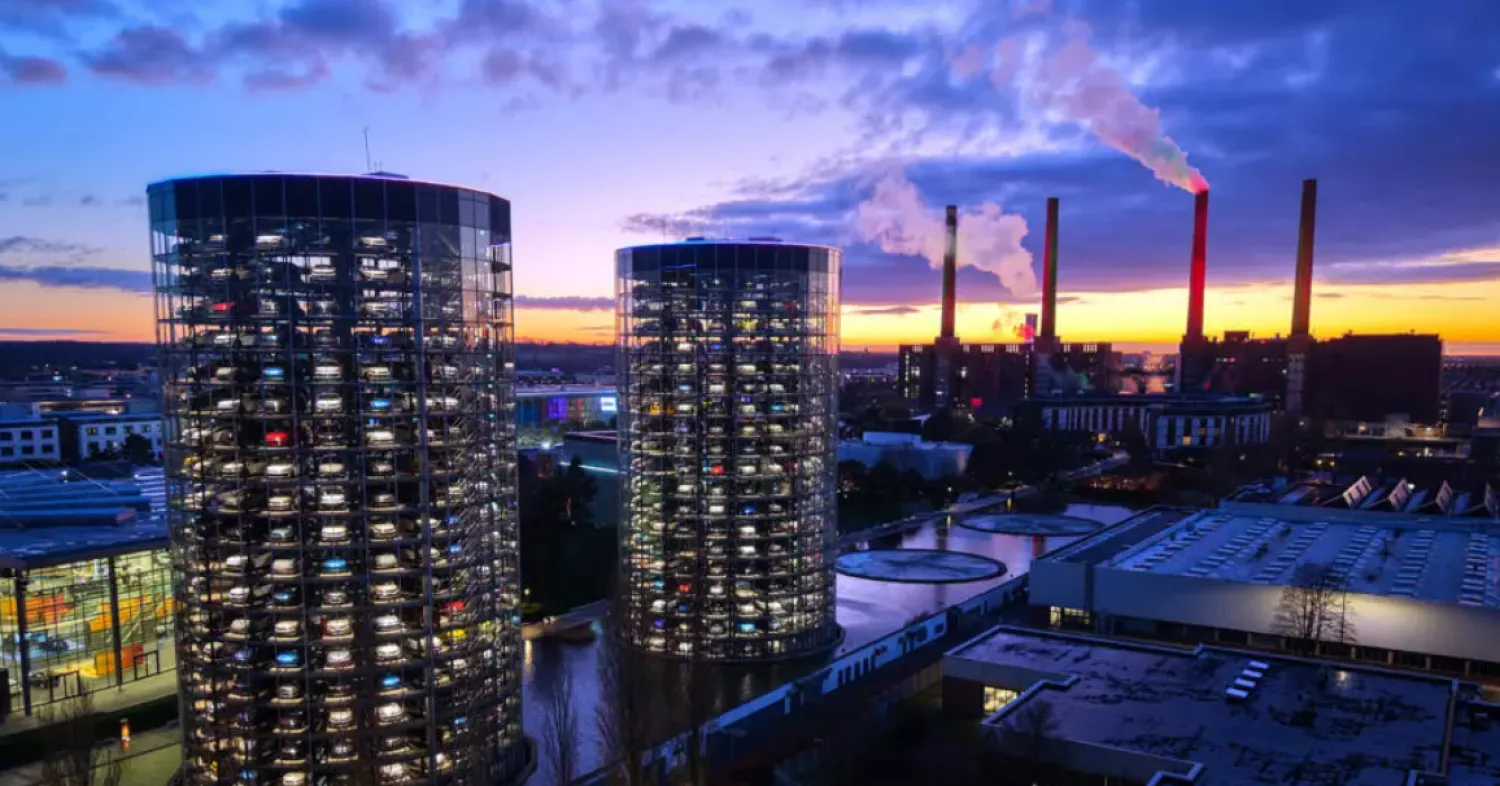
Germany's economy is struggling with fierce Chinese competition in sectors from cars to chemicals © Ronny HARTMANN / AFP/File
TT

Germany Growth Forecasts Slashed as Mideast War Hits Economy

Germany's economy is struggling with fierce Chinese competition in sectors from cars to chemicals © Ronny HARTMANN / AFP/File

Leading economic institutes more than halved their growth forecast for Germany on Wednesday, warning that the energy shock caused by the Middle East war would hit Europe's top economy hard.

A group of leading institutes slashed their joint GDP growth forecast for 2026 to 0.6 percent, down from a September prediction of 1.3 percent.

Inflation is now forecast to rise to 2.8 percent, up from 2.0 percent, "weighing on household purchasing power".

"The energy price shock triggered by the Iran war is hitting the recovery hard," said economist Timo Wollmershaeuser of the Ifo institute, adding that increased government spending was nevertheless "preventing a stronger slide", AFP reported.

Oil and natural gas prices have surged since the end of February, when the United States and Israel attacked Iran, killed its supreme leader and plunged the Middle East into war.

Iran has since closed the Strait of Hormuz to ships of countries it considers allied with the US and Israel, effectively blocking a sea lane that normally transports about a fifth of the world's oil and liquefied natural gas.

Higher inflation in Germany would hit consumer spending, the institutes said, weighing on an already weak economy that has barely grown since a burst of pent-up demand after the Covid pandemic in 2022.

The government on Wednesday introduced rules allowing petrol stations to only raise prices once a day, at noon.

But motorist Sebastian, a 49-year-old estate agent who did not want to give his surname, told AFP at a Frankfurt petrol station that this was not enough to protect his spending power.

"Whether the price of petrol changes once a day or 10 times a day doesn't really matter," he said, adding it was "certainly not enough" to lower his costs.

Germany's economy, struggling with fierce Chinese competition in sectors from cars to chemicals, was in the doldrums even before US President Donald Trump last year imposed sweeping new tariffs before starting the Mideast war in late February.

Chancellor Friedrich Merz, who took office last May, vowed to borrow and spend hundreds of billions through a special infrastructure fund over coming years in what was dubbed a spending "bazooka" aimed at getting the economy back on its feet.

But the economists said that much of the money was simply paying for day-to-day spending.

"Government expenditure on consumption is rising much more sharply than investment," economist Oliver Holtemoeller of the Halle Institute for Economic Research said. "That was not the idea behind changing the financing rules."

The outlook for the longer term was also dire.

Citing low productivity, industrial decline and an ageing population, the institutes warned that Germany's economy would soon be unable to grow sustainably.

"We have also reassessed the structural changes in the German economy and, in particular, revised our forecast for industrial growth downwards," Wollmershaeuser said.

In an era when "demographic change is hitting with full force", he said, "potential growth will come to a standstill by the end of the decade, and we will have to get used to average GDP growth rates of zero percent".

Speaking to broadcaster Welt TV, Economy Minister Katherina Reiche said the government was working on reducing labour taxes and energy costs but that Germans would have to get used to working more over the course of their lives.

"We need to make this country vigorous again," she said. "Germany needs to get its will to win back."



Hapag-Lloyd Says One Ship Has Crossed Strait of Hormuz

Hapag-Lloyd employees monitor the status of cargo ships in the Strait of Hormuz on a screen, in Hamburg, Germany, Wednesday, April 15, 2026. (AP Photo/Ebrahim Noroozi)
TT

Hapag-Lloyd Says One Ship Has Crossed Strait of Hormuz

Hapag-Lloyd employees monitor the status of cargo ships in the Strait of Hormuz on a screen, in Hamburg, Germany, Wednesday, April 15, 2026. (AP Photo/Ebrahim Noroozi)

Container shipping group Hapag-Lloyd said on Friday that one of its ships has crossed the Strait of Hormuz but did not have any information on the circumstances or timing.

Four out of initially six ships remain in the Gulf, after one ship's charter agreement expired, meaning it no longer belongs to the Hapag-Lloyd fleet, a spokesperson added.

The four ⁠Hapag ships remaining ⁠in the Gulf are staffed with 100 crew, who are well-supplied with food and water, Reuters quoted him as saying.

Scores of tankers and other vessels remain stuck in the Gulf as the United States is ⁠struggling to keep control of the Strait of Hormuz, one of the world's busiest shipping corridors.

The Iran war, launched by the US and Israel on February 28, has been paused since a ceasefire on April 8.

The US and Iran met in Pakistan in an attempt to end hostilities, but talks ended without agreement and ⁠a ⁠second round has yet to take place.

Tehran says it will not consider opening the strait until the US lifts its blockade of Iran's shipping, which Washington imposed during the ceasefire and Tehran calls a violation of that truce.

This week, Iran flaunted its grip over the strait with a video of commandos in a speedboat storming a huge cargo ship.


TotalEnergies to Invest in $1.2 Billion Power Project in Kazakhstan

FILE PHOTO: The logo of French oil and gas company TotalEnergies is seen at a petrol station in Paris, France, March 25, 2026. REUTERS/Abdul Saboor/File Photo
TT

TotalEnergies to Invest in $1.2 Billion Power Project in Kazakhstan

FILE PHOTO: The logo of French oil and gas company TotalEnergies is seen at a petrol station in Paris, France, March 25, 2026. REUTERS/Abdul Saboor/File Photo

French energy major TotalEnergies on Friday said it would invest in a Kazakhstan-based onshore wind and energy storage project, valued at $1.2 billion, and plans to sell the produced electricity to the country's government under a 25-year agreement signed in 2023.

The Mirny project, which is scheduled to reach full capacity in 2029, ⁠combines one gigawatt ⁠of wind capacity with 600 megawatt hours of battery energy storage, enough to supply about 1 million people in Kazakhstan, Reuters quoted the company as saying.

The launch of the project would ⁠contribute to Kazakhstan's target of increasing the share of renewables in electricity generation to 15% by 2030, Olivier Jouny, senior vice president for renewables at TotalEnergies, said in a statement.

Roughly 75% of the investment is financed externally through an agreement with an international consortium made of eight banks and entities, including the ⁠European ⁠Bank for Reconstruction and Development, Société Générale and China Construction Bank, TotalEnergies said.

TotalEnergies, jointly with partners Samruk Energy and KazMunayGas, controls a 60% stake in the project.

At the beginning of 2026, TotalEnergies had more than 34 GW of gross renewable power generation capacity, and it aims to achieve more than 100 terawatt hours of net electricity production by 2030.


Oil Rises on Concern Over Escalating Middle East Tensions

HUNTINGTON BEACH, CALIFORNIA - APRIL 23: A pumpjack stands idle in the Huntington Beach oil field on April 23, 2026 in Huntington Beach, California. Mario Tama/Getty Images/AFP
TT

Oil Rises on Concern Over Escalating Middle East Tensions

HUNTINGTON BEACH, CALIFORNIA - APRIL 23: A pumpjack stands idle in the Huntington Beach oil field on April 23, 2026 in Huntington Beach, California. Mario Tama/Getty Images/AFP

Oil rose on Friday on concerns of a renewed military escalation in the Middle East after Iran released footage of commandos boarding a cargo ship in the Strait of Hormuz, and a lack of progress in re-opening the key waterway.

Navigation through the strait, which before the war carried about a fifth of global oil output, remains effectively blocked. Iran's capture of two cargo ships highlighted Washington's difficulties in trying to control the passage.

Brent crude futures were up $1.93, ⁠or 1.8%, to $107 a ⁠barrel at 0805 GMT, while US West Texas Intermediate futures were up 76 cents, or 0.8%, at $96.61, Reuters reported.

For the week, Brent is up 18% and WTI 15%, the second-largest weekly gains since the war began.

Both contracts settled more than 3% higher on Thursday after reports that air defenses were engaging targets over Tehran and of a ⁠power struggle between Iran's hardliners and moderates.

"There is no de-escalation in sight," said Tamas Varga of oil broker PVM.

US President Donald Trump said Iran may have loaded up its weaponry "a little bit" during a two-week ceasefire, but added that the US military could eliminate it in a single day. On Wednesday, he said he would indefinitely extend the ceasefire to allow for further peace talks.

The ceasefire is increasingly looking like a preparatory phase for more war, Haitong Futures said in a report. If peace talks fail to make ⁠progress by ⁠the end of April and fighting resumes, oil prices could climb to new highs for the year, it added.

"There's set to be fresh financial pain ahead as key shipments from the region remain blocked," said Susannah Streeter, chief investment strategist at UK investment service Wealth Club. "That is set to keep costs elevated for a vast array of commodities."

As investors and governments around the world look for a lasting peace, Trump said he would not set a "timetable" for ending the conflict and that he wanted to make "a great deal."

"Don't rush me," he said when asked how long he was willing to wait for a long-term deal.
