A Month into War, Lebanon's Prime Minister Says No End in Sight https://english.aawsat.com/arab-world/5258058-month-war-lebanons-prime-minister-says-no-end-sight%C2%A0
A Month into War, Lebanon's Prime Minister Says No End in Sight
Lebanese Prime Minister Nawaf Salam speaks to reporters at the Grand Serail in Beirut, December 3, 2025. (Reuters)
Lebanese Prime Minister Nawaf Salam said on Thursday there was no end in sight to a war that had already displaced a million people over the last month, as families fleeing Israeli strikes said they were exhausted by repeated rounds of conflict. Lebanon is entering the second month of conflict between Iran-backed armed group Hezbollah and Israel, which has pledged to occupy swathes of southern Lebanon as part of a "security zone" to protect its own northern residents.
"Lebanon has become a victim of a war - one whose outcomes and end date no one can predict," Salam told reporters on Thursday after a meeting of his cabinet, Reuters reported.
"The positions of Israeli officials, and the practices of their army, reveal far-reaching goals, including a significant expansion in the occupation of Lebanese territories, dangerous talk about establishing buffer zones or security belts, and the displacement of more than one million Lebanese," Salam said.
Israel's assertion that its military will retain control of southern Lebanon has fuelled fears of a long-term occupation, after a two-decade Israeli presence ended in 2000.
Salam said his government would redouble diplomatic and political efforts to end the war. A call by Lebanese President Joseph Aoun for direct talks with Israel has so far received no response.
SALAM SALUTES LEBANESE STILL IN SOUTH
Israel has continued to carry out strikes on Lebanon after a 2024 ceasefire ended its last war with Hezbollah, while keeping troops stationed on five hilltop positions in southern Lebanon.
Israel launched a full-scale air and ground campaign after Hezbollah fired into Israel on March 2 in solidarity with Iran after the US and Israel began their war on Tehran.
Salam, without naming Hezbollah, condemned coordinated attacks carried out with Iran's Revolutionary Guards. More than 1,300 people have been killed in Israeli strikes and about a fifth of Lebanon's population has been displaced. Israel has issued evacuation orders covering around 15% of Lebanese territory.
"I want to direct the biggest salute to our people who are staying in their hometowns and villages in the south, and want to reiterate that we stand by them," Salam said.
Tens of thousands of Lebanese have remained in their homes in southern Lebanon, even as Lebanese troops withdraw from the area to avoid confronting Israeli troops. They include around 9,000 Lebanese Christians living in a cluster of border towns, who told Reuters they were determined to stay despite the advancing military operations.
LEBANESE WANT WARS TO STOP
Salam also stressed the need to preserve internal stability as the war strains Lebanon's sectarian political faultlines. Some communities have been reluctant to host displaced families. As the war drags on, Lebanon is examining ways to house those families in the long-run. Mohammad al-Badran, a Syrian who had lived for years in Beirut's southern suburbs, said he and his family were turned away when they sought refuge in a mountainous area outside the capital.
Badran, his wife and their four children - the youngest of whom was born barely two weeks before the war started - are now sleeping in a makeshift tent area in the capital.
His 10-year-old daughter, Nour, can hear the sound of Israeli strikes on the nearby southern suburbs. "The sound is loud, the children are crying, and I feel like the missiles are flying above us," she said.
Ali al-Aziz, who also fled the southern suburbs, told Reuters that Israel should withdraw from Lebanon so that the conflict could end and he could go back home.
"We want the war to end once and for all. Not for a war to happen every year or every ten years," he said.
Abyan Governor to Asharq Al-Awsat: Forces Ready for ‘Zero Hour’ Against Houthishttps://english.aawsat.com/arab-world/5316650-abyan-governor-asharq-al-awsat-forces-ready-%E2%80%98zero-hour%E2%80%99-against-houthis
Abyan Governor to Asharq Al-Awsat: Forces Ready for ‘Zero Hour’ Against Houthis
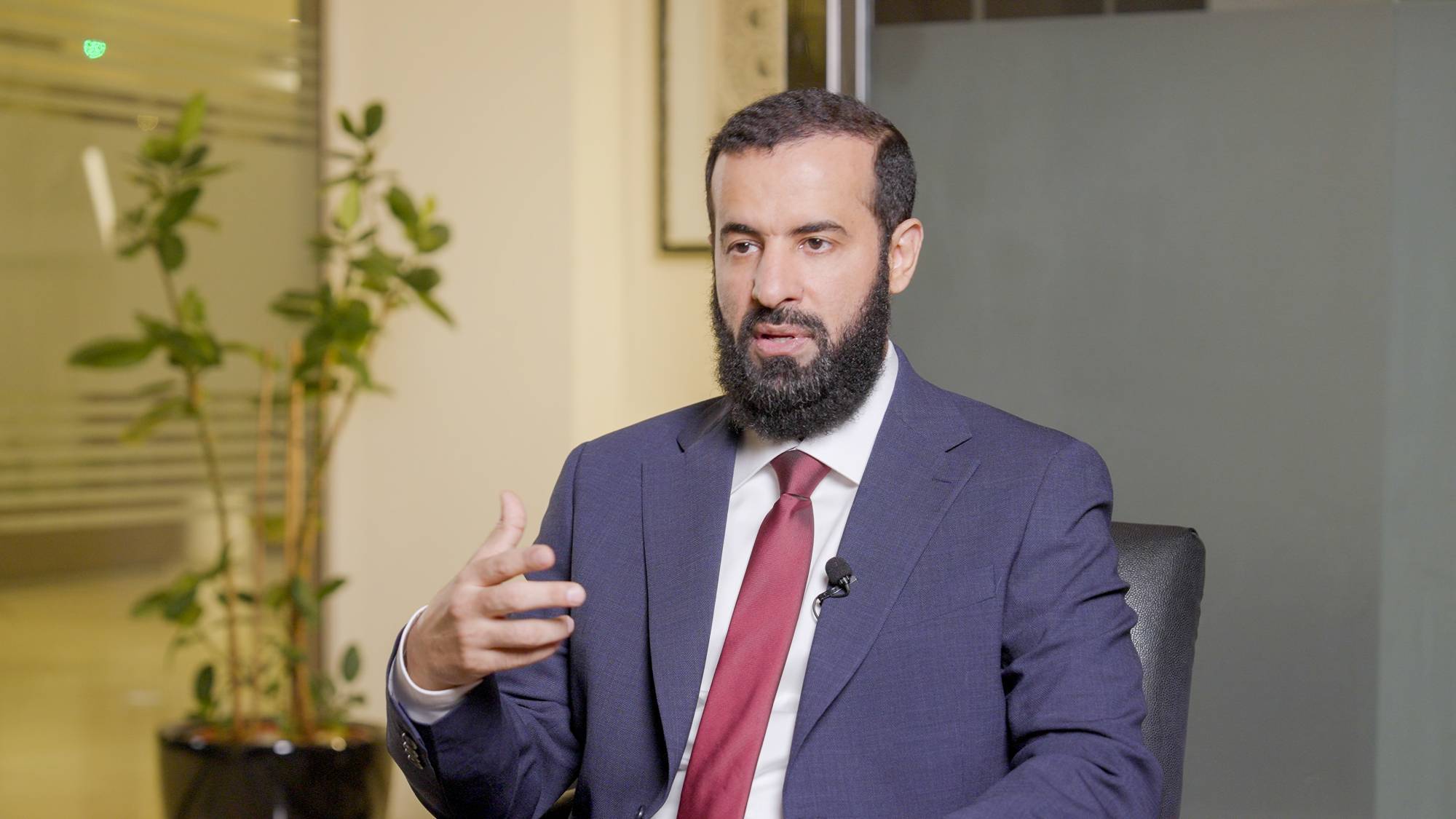
Al-Rabash said security and development were top priorities. Photo: Turky Alagili
Maj. Gen. Mukhtar al-Rabash al-Haythami, governor of Abyan and commander of the province’s military axis, said his forces were ready for the “zero hour” to launch an offensive against the Houthis in Yemen.
He disclosed plans and operations being coordinated with other military commands and fronts, as well as the reinforcement of the roughly 76-km (47-mile) front line between Abyan and al-Bayda with advanced weapons.
“The Abyan Military Axis is ready, both commanders and personnel, and is awaiting the zero hour,” al-Rabash told Asharq Al-Awsat in an interview.
He said the troops’ morale was “higher than ever” and that preparations were proceeding under a “carefully devised plan” in coordination with the Saudi-led coalition, Yemen’s Presidential Leadership Council and the Defense Ministry.
The Abyan governor said recent battlefield developments had demonstrated the government forces’ “fighting spirit and high morale,” adding that military commanders were united by the goal of “liberating Sanaa and Yemen from the Houthi militia and ending the Iranian project.”
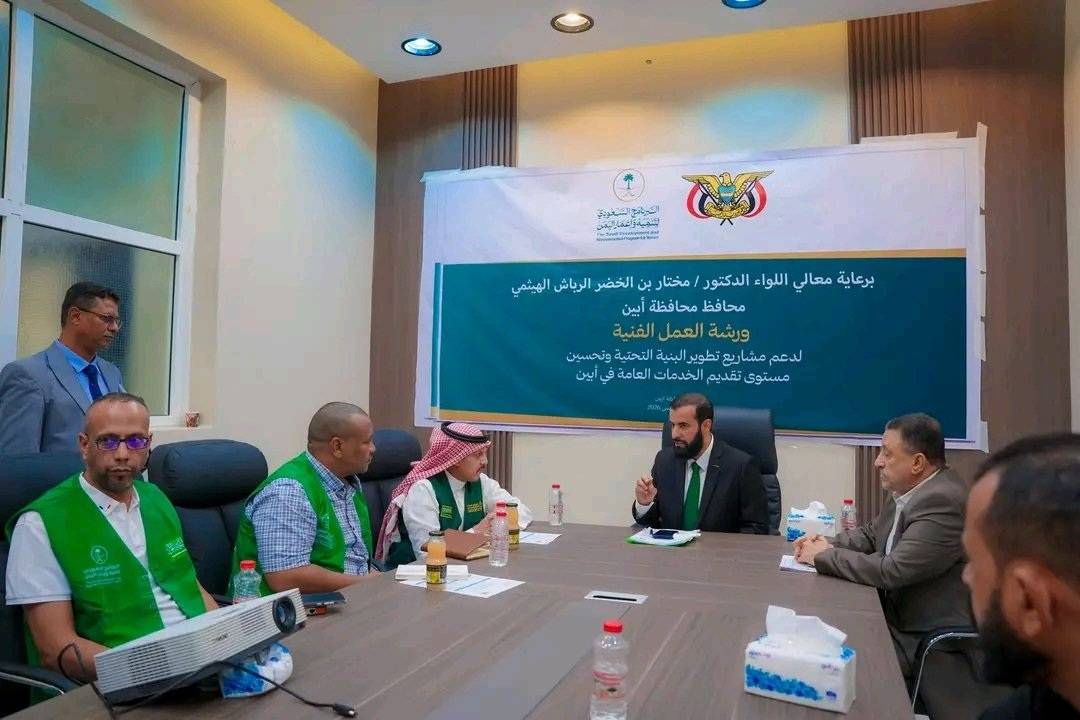
Al-Rabash described cooperation with Saudi Arabia as a key pillar of plans to rehabilitate the province. He said a three-day workshop with the Saudi Development and Reconstruction Program for Yemen had identified eight priority sectors and approved 24 public-service projects.
76-km front line with the Houthis
Abyan’s fronts are spread across several military commands, al-Rabash said. The front line with the Houthis extends for about 76 km along the border with al-Bayda province and sees frequent clashes.
The governor said plans to reinforce the fronts included raising combat readiness, providing them with advanced weapons, and mobilizing local communities and tribes to support government forces.
Al-Rabash said the prospects of a decisive outcome had improved after the Houthis were “given opportunity after opportunity to pursue peace.”
Instead of taking advantage of those opportunities, he said, the group had continued to escalate domestically and threaten international shipping.
Houthi cells and assassination attempts
On security, al-Rabash said Houthi cells had been uncovered in the province, adding that security forces had arrested between 120 and 150 operatives over the past several years.
He said the latest Houthi cell to be uncovered consisted of two operatives who were arrested and four others who escaped.
According to al-Rabash, those detained confessed to preparing four explosive devices to target him personally, as well as plotting to attack Brig. Gen. Ahmed al-Damani, commander of the Nation’s Shield Forces in Abyan.
The governor said there was “collusion and coordination” between the Houthis and terrorist organizations. He added that local government officials and security and military commanders had been targeted in attempted attacks, while several security commanders had been killed in confrontations with those groups.
Al-Rabash said Abyan had paid a heavy price through a succession of conflicts, beginning with al-Qaeda’s seizure of parts of the province in 2011, followed by the Houthi advance in 2015 and the 2019 conflict between the internationally recognized government and Southern Transitional Council forces.
The fighting caused extensive damage to infrastructure, the social fabric and the local economy, he said.
Al-Qaeda’s presence in Abyan
Asked about al-Qaeda’s current presence, al-Rabash said the number of ideologically committed members of the organization had become “very small,” according to estimates by the relevant security agencies.
The threat remained, however, through clandestine cells and the recruitment of some misled young people by exploiting poverty and ignorance, he said.
Al-Rabash said some operatives came from other provinces, while others arrived “by sea from certain countries.” Abyan’s coastline, which stretches for more than 300 km (186 miles), poses a security challenge and requires significant surveillance capabilities, he added.
He stressed that security and military measures alone were insufficient and that combating extremism required a parallel approach encompassing education, public awareness, development and job creation, as well as the involvement of tribes and local communities.
“When citizens feel the state’s presence through schools, public services and job opportunities, they become less receptive to ideas that bring nothing but death and bloodshed,” he said.
24 Saudi-backed projects
On development, al-Rabash described cooperation with Saudi Arabia as a key pillar of plans to rehabilitate the province. He said a three-day workshop with the Saudi Development and Reconstruction Program for Yemen had identified eight priority sectors and approved 24 public-service projects.
The governor stated the Saudi Development and Reconstruction Program for Yemen approved 24 projects in Abyan (Local Authority)
The projects cover electricity, water, healthcare, education and roads, alongside larger strategic projects that are being developed, he said.
The governor placed the strategic Wadi Hassan dam at the top of Abyan’s priority projects, saying it would help replenish groundwater and the wells that supply Aden with water. The dam was also expected to help revive the agricultural sector.
Al-Rabash said Wadi Hassan had historically contributed to Abyan’s agricultural standing, which earned the province its reputation as “Yemen’s breadbasket.” Investment in modern agricultural technologies could restore that role and expand the province’s productive capacity, he added.
He praised Saudi support for Abyan and Yemen more broadly, particularly in hospitals, schools, electricity and roads, saying the projects “directly affect people’s lives.”
“We extend our thanks and appreciation to our brothers in the Kingdom of Saudi Arabia — its king, crown prince, government and people — for their countless efforts across various fields,” al-Rabash said.
He said Saudi support included “building hospitals and schools, rehabilitating roads, supporting the electricity sector and everything that helps improve the lives of the Yemeni people.”
The governor contrasted Saudi Arabia’s role with that of the Houthis.
“Our brothers in Saudi Arabia build hospitals, schools and roads, while the Houthis come with missiles to destroy them,” he said. “They kill and destroy but do not build, and their attacks have struck mosques, schools and hospitals.”
“Our Saudi neighbor and brother, with whom we share ties of blood, religion, tribe and geography, comes to help build and improve people’s lives,” he added. “That is the difference evident to anyone with insight.”
Al-Rabash said security and development were inseparable tracks, prompting the local authorities to adopt the slogan: “Abyan First — Authority Upheld, Development Built.” Photo: Turky Alagili
‘Abyan First’
Al-Rabash said security and development were inseparable tracks, prompting the local authorities to adopt the slogan: “Abyan First — Authority Upheld, Development Built.”
He said priorities were focused on five main sectors — electricity, water, healthcare, education and roads — alongside efforts to consolidate security, combat terrorism and crime, and raise combat readiness along the fronts.
The local authorities had also expanded outreach to tribes, religious scholars, journalists, young people, women, and social and sporting groups to build a community partnership, he said. The public’s response was among the most important factors in the success of the new phase.
Al-Rabash concluded with a message urging Abyan’s residents to “stand together and work as one,” saying the province’s stability and reconstruction “cannot be achieved without a genuine partnership between the community and the local authorities.”
Israeli Foreign Minister Says No Plans to Deport Palestinians from Gazahttps://english.aawsat.com/arab-world/5316498-israeli-foreign-minister-says-no-plans-deport-palestinians-gaza
Palestinians look on from the street at the damage to a house that was hit by an Israeli strike following an evacuation warning in the Al-Rimal neighborhood of Gaza City on September 8, 2026. (AFP)
TT
TT
Israeli Foreign Minister Says No Plans to Deport Palestinians from Gaza
Palestinians look on from the street at the damage to a house that was hit by an Israeli strike following an evacuation warning in the Al-Rimal neighborhood of Gaza City on September 8, 2026. (AFP)
Israeli Foreign Minister Gideon Saar said on Wednesday that the government does not plan to deport Palestinians from Gaza, after two Israeli ministers this month floated proposals for the mass removal of Palestinians from the coastal territory.
"We are not planning to expel or to deport anyone from (the) Gaza Strip," Saar told a press conference in Ljubljana, Slovenia.
"If someone wants to immigrate (on) his own will, and there is a country which is ready to accept him .... we will not oppose that, but we will (also) not enforce anyone against (their) will," he said.
Saar is in Slovenia to open the Israeli embassy in Ljubljana.
Defense Minister Israel Katz on Wednesday said on September 2 there was "no real solution for Gaza in the end without this migration" of Palestinians.
Far-right security minister Itamar Ben-Gvir on September 3 outlined a seven-year plan for removing Gaza's population through what he described as "voluntary emigration."
The US Ambassador to Israel Mike Huckabee has said that Israel has no plans to force Palestinians to leave Gaza.
Israel is to hold a general election on October 27.
Lebanon Says One Dead in Israeli Drone Strikehttps://english.aawsat.com/arab-world/5316496-lebanon-says-one-dead-israeli-drone-strike
This photograph taken from the southern Lebanese village of al-Hanniyeh shows smoke rising from the site of an Israeli strike that targeted the al-Mansouri village, on September 9, 2026. (AFP)
TT
TT
Lebanon Says One Dead in Israeli Drone Strike
This photograph taken from the southern Lebanese village of al-Hanniyeh shows smoke rising from the site of an Israeli strike that targeted the al-Mansouri village, on September 9, 2026. (AFP)
An Israeli strike killed one person in Lebanon's south, the Lebanese state news agency said on Wednesday, in a region where Israel has intensified attacks despite a ceasefire.
An Israeli drone targeted a motorcycle in Zebdine in the Nabatieh region, killing a man, Lebanon's National News Agency said.
Since announcing last week the capture of the Ali al-Taher ridge, a strategic Hezbollah position in Nabatieh, the Israeli army has stepped up its strikes in the area.
The attacks have killed at least 29 people since Friday, including 12 members of the same family, according to Lebanese authorities and official media.
Fighting in Lebanon had calmed since a US-Iran memorandum of understanding and a framework agreement between Israel and Lebanon were reached in June.
But Beirut still reports recurring Israeli strikes, which it says have killed more than 4,300 people in total since March, and Israeli forces continue to occupy a so-called occupied "security zone" in the south.
UN Secretary-General Antonio Guterres on Tuesday expressed concern about the Israeli "escalation" in southern Lebanon, according to his spokesperson.
In an online petition posted this week, nearly 400 Lebanese public figures, including legal experts and human rights advocates, called for Lebanon's army to be deployed in Nabatieh.
They also voiced concern over a possible "expansion of the Israeli occupation" toward the city, which is about 11 kilometers (seven miles) from the Israeli border.
"This city does not belong to any political group," added the signatories, referring to Hezbollah, which is well established in Nabatieh.
In a statement released on Tuesday, the Lebanese army said its units were "deployed in all areas that Israel does not occupy, particularly in the Nabatieh region".
لم تشترك بعد
انشئ حساباً خاصاً بك لتحصل على أخبار مخصصة لك ولتتمتع بخاصية حفظ المقالات وتتلقى نشراتنا البريدية المتنوعة