


Iraq in Talks with Gulf States on Pipeline Exports beyond Hormuz

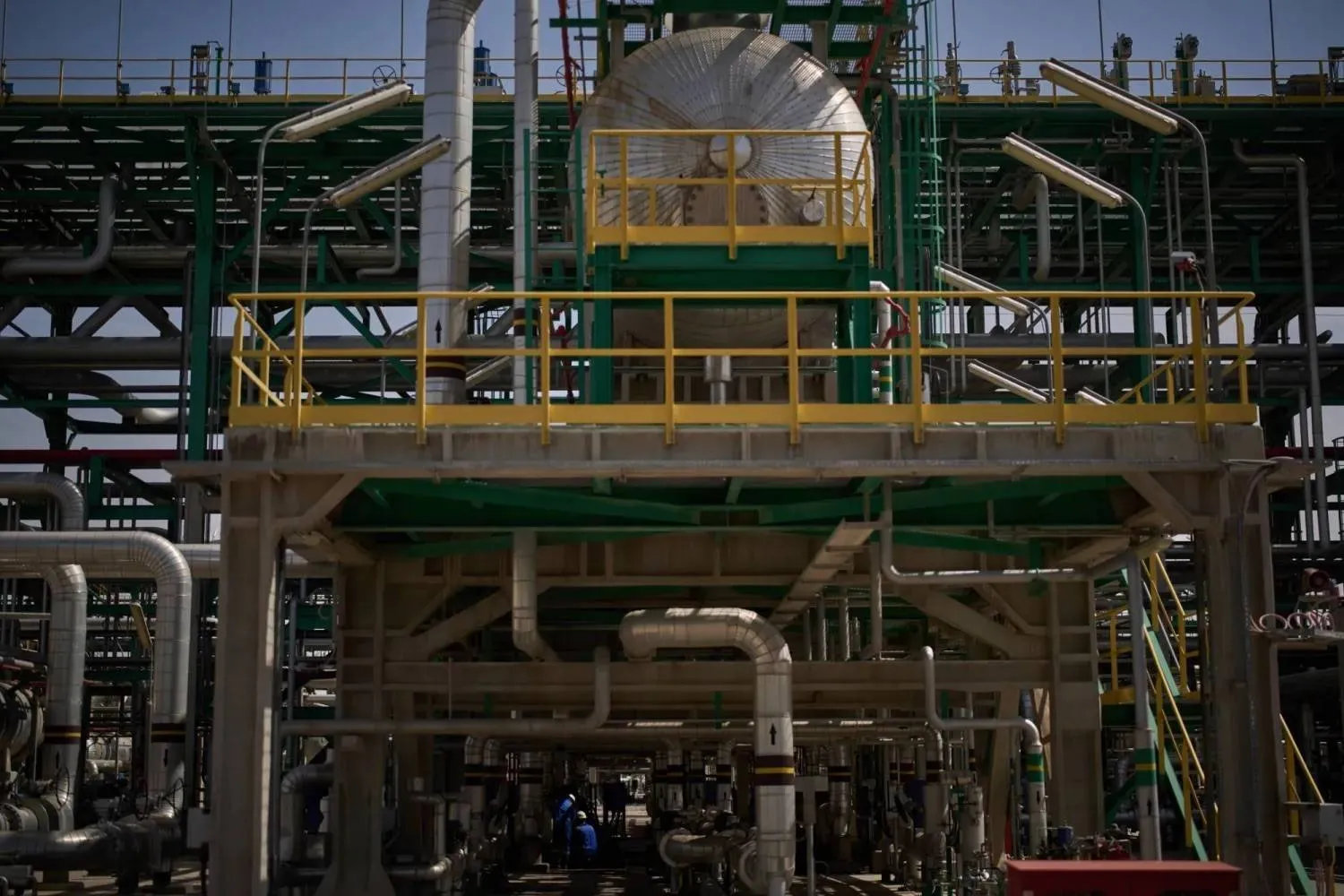
Workers carry out maintenance on a pipeline at a gas separation station in the Zubair oil field near Basra (AP). 
TT

Iraq in Talks with Gulf States on Pipeline Exports beyond Hormuz

Workers carry out maintenance on a pipeline at a gas separation station in the Zubair oil field near Basra (AP). 

Iraq is in talks with Gulf countries to use their pipeline networks to secure alternative oil export routes beyond the Strait of Hormuz, the state oil marketer SOMO said Thursday.

The move is part of an emergency strategy by the oil ministry to tap regional infrastructure and bypass maritime chokepoints, ensuring Iraqi crude continues to reach global markets while offsetting higher transport costs linked to the current crisis.

Ali Nizar al-Shatari, head of the State Organization for Marketing of Oil (SOMO), said the ministry is prioritizing negotiations to access Gulf pipeline systems extending beyond the Strait of Hormuz and into the Arabian Sea, allowing exports to avoid areas of military tension.

“The goal is to secure stable routes that guarantee efficient flows of Iraqi oil at lower transport costs,” Shatari said, adding that Iraq generated about $2 billion in oil revenues in March, up 28 percent from February.

He said SOMO exported around 18 million barrels of crude from Basra, Kirkuk and the Kurdistan region by using all available outlets, including southern ports that operated until early March and northern routes to Türkiye’s Mediterranean port of Ceyhan.

As part of efforts to diversify export options, Shatari revealed that the first shipments of fuel oil and Basra Medium crude successfully reached Syrian ports.

He noted that Iraq had signed a deal to export 50,000 barrels per day via this route, describing cooperation with Syria as “very significant,” with storage and security provided to ensure safe delivery to the port of Baniyas.

The route has proven effective and could become a permanent option after the crisis, he added.

Shatari further noted that the oil ministry is close to completing repairs on the Iraq-Türkiye pipeline, which suffered extensive damage in previous years.

Technical teams have inspected the most difficult terrain, with about 200 kilometers (125 miles) still to be assessed in the coming days before full pumping of Kirkuk crude resumes.

In a notable logistical move, Iraq has begun pumping Basra crude northwards for export via Ceyhan.

Flows started at 170,000 barrels per day and are expected to stabilize between 200,000 and 250,000 bpd, helping offset disrupted southern exports and supply energy-hungry markets in Europe and the Americas.

Shatari said Iraq has benefited from rising global prices by selling Kirkuk crude — a medium-grade oil — at strong premiums.

He also confirmed the reactivation of an agreement with the Kurdistan region to reuse the pipeline through the region to Ceyhan, helping lift total exports to 18 million barrels in March.

This came despite a drop in production in Kurdistan fields to about 200,000 bpd due to security threats, he added.


Middle East War Presents ‘Serious Risk’ for Africa, Warns Report

Festus Mwirotsi, 34, scouts for pests and diseases in roses meant for export at Isinya Roses farm in Kajiado, Kenya, March 24, 2026, as Kenya's flower industry is losing up to $1.4 million a week as the Iran war cuts demand and disrupts shipping. (AP)
TT

Middle East War Presents ‘Serious Risk’ for Africa, Warns Report

Festus Mwirotsi, 34, scouts for pests and diseases in roses meant for export at Isinya Roses farm in Kajiado, Kenya, March 24, 2026, as Kenya's flower industry is losing up to $1.4 million a week as the Iran war cuts demand and disrupts shipping. (AP)

The Middle East war "presents a serious risk to Africa", the African Union and the African Development Bank (AfDB) said in a report seen by AFP Saturday.

The conflict threatens to increase the cost of living and curtail growth on the continent, the report warned.

The Middle East accounts for 15.8 percent of Africa's imports and 10.9 percent of its exports, the report noted.

"The conflict, which already has triggered a trade shock, could quickly turn into a cost-of-living crisis across Africa through higher fuel and food prices, rising shipping and insurance costs, exchange rate pressures, and tighter fiscal conditions," it added.

The growth rate of most African countries continues to be slower than before the Covid pandemic, it noted.

"A loss in output growth of 0.2 percentage points on Africa's GDP is projected for 2026 if it (the conflict) exceeds six months," it said.

"The longer the conflict lasts and the more severe the disruption to shipping routes and energy and fertilizer supplies, the greater the risk of a significant growth slowdown across the continent."

Reduced deliveries of liquefied natural gas (LNG) from the Gulf will impact fertilizer production, limiting its availability during the crucial planting period up to May, it added.

- Currencies hit -

The report was compiled by the UN Development Program (UNDP) and the United Nations Economic Commission for Africa (UNECA).

According to recent data from the AfDB, the currencies of 29 African countries have already depreciated, increasing the cost of servicing external debt, making imports more expensive and reducing foreign exchange reserves,

Some countries could see some short-term gains, such as Nigeria for its oil exports or Mozambique for its LNG.

The rerouting of ships around Cape of Good Hope could benefit ports in Mozambique, South Africa, Namibia and Mauritius.

Kenya is establishing itself as a logistics hub in East Africa, while Ethiopian Airlines, the leading carrier in Africa, is serving as an "emergency air bridge" between the continent, Asia, and Europe, the report noted.

But these gains are likely to be uneven and will not offset the consequences for inflation, budgets, and food security in Africa, they warned.

Above all, the current crisis could hit the costs of humanitarian aid and divert donor funds towards other priorities.


Taiwan Says It Has Assurances over LNG Supplies from 'Major' Country

The Taipei 101 skyscraper is seen lit up before the Earth Hour in Taipei, Taiwan, Saturday, March 28, 2026. (AP Photo/ Chiang Ying-ying)
TT

Taiwan Says It Has Assurances over LNG Supplies from 'Major' Country

The Taipei 101 skyscraper is seen lit up before the Earth Hour in Taipei, Taiwan, Saturday, March 28, 2026. (AP Photo/ Chiang Ying-ying)

Taiwan has received ‌supply assurances from the energy minister of a "major" liquefied natural gas-producing country, the island's economy minister said on Saturday, speaking about the Iran war's impact on Middle East energy imports.

Taiwan, a major semiconductor producer, had relied on Qatar for around a third of its LNG before the conflict, and has said it has secured alternate supplies for the months ahead from countries including Australia and the United States, said Reuters.

Speaking to ‌reporters in Taipei, ‌Economy Minister Kung Ming-hsin said that ‌because ⁠Taiwan has good ⁠relationships with its crude oil and natural gas suppliers, neither adjusting shipment origins nor purchasing additional spot cargoes would be a problem.

Kung said that about two weeks ago the energy minister of a certain "major energy-producing country" proactively contacted him.

The person "explained to us that they ⁠would fully support our natural gas needs. ‌If we have any ‌demand, we can let them know," he added.

"Another country even ‌said that some countries have released strategic petroleum ‌reserves, and they could also help coordinate matters if Taiwan needs assistance," Kung said.

"This shows that Taiwan has in fact earned considerable goodwill internationally through the long-term trust ‌it has built over the years," he said.

He declined to name the countries involved.

Angela ⁠Lin, ⁠spokesperson for state-owned refiner CPC, said at the same news conference that crude oil inventories were being maintained at pre-conflict levels and overall petrochemical feedstock supplies have remained stable.

CPC Chairman Fang Jeng-zen said that to reduce dependence on the Middle East, a new contract with the US will see 1.2 million metric tons of LNG supplied annually, with even more to come in the future, including eventually from Alaska.

However, Taiwan is not considering importing crude or LNG from Russia, he added.


India Says Crude Oil Supplies Secured, No Payment Issues for Iran Imports

The Indian-flagged carrier Jag Vasant, carrying liquefied petroleum gas (LPG) via the Strait of Hormuz, arrives at Mumbai Port in Mumbai, India, 01 April 2026. EPA/DIVYAKANT SOLANKI
TT

India Says Crude Oil Supplies Secured, No Payment Issues for Iran Imports

The Indian-flagged carrier Jag Vasant, carrying liquefied petroleum gas (LPG) via the Strait of Hormuz, arrives at Mumbai Port in Mumbai, India, 01 April 2026. EPA/DIVYAKANT SOLANKI

India's petroleum ministry said in a post on X on ‌Saturday ‌that the ‌country's ⁠refiners have secured their ⁠crude requirements, including from Iran, ⁠and ‌there are ‌no payment hurdles ‌for ‌Iranian imports.

India's crude oil ‌requirements remain fully secured ⁠for the coming ⁠months, the ministry added.
