Israel Preparing for Two Weeks of Escalation with Iran

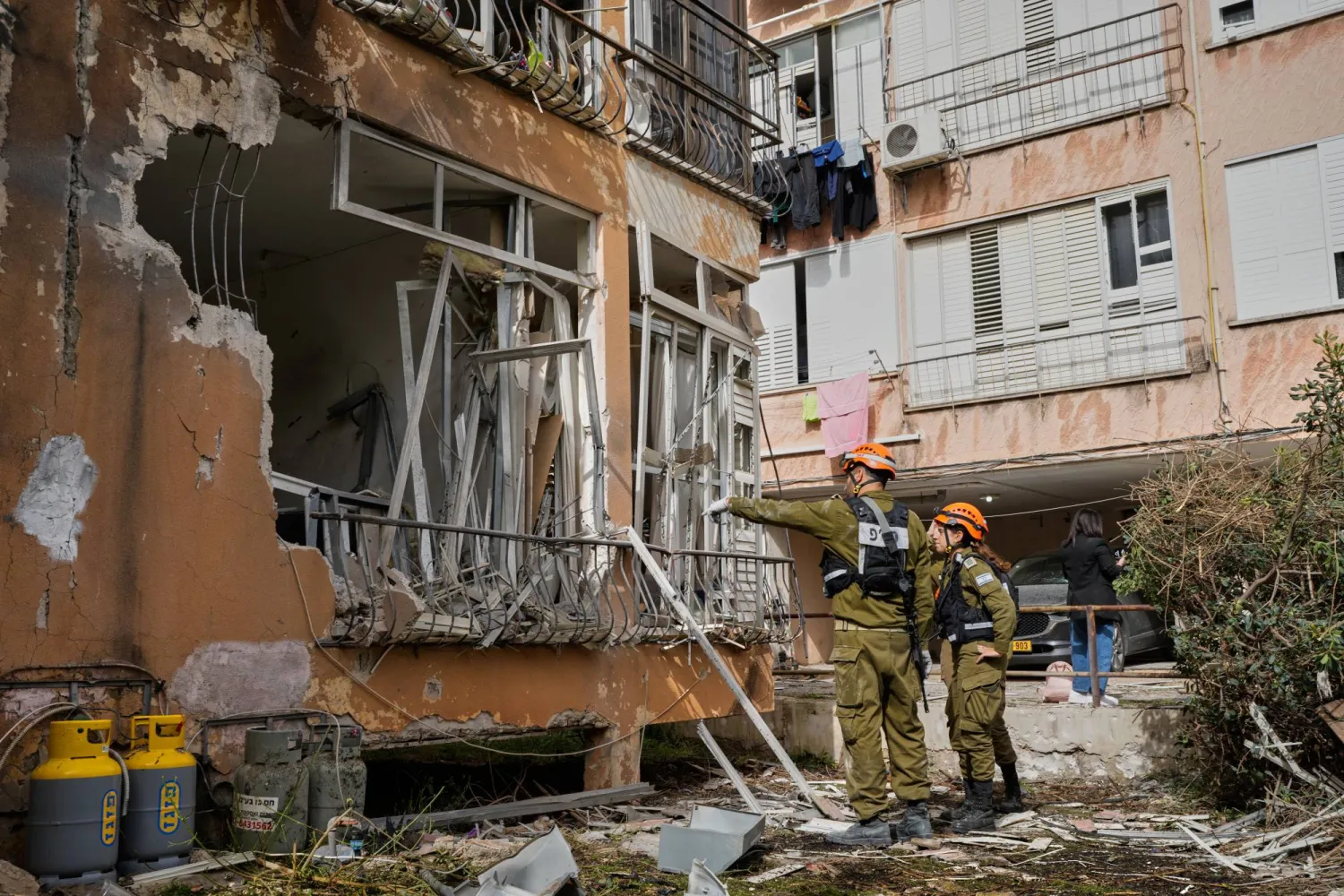
Israeli security forces inspect damage at an apartment building struck by an Iranian missile in Petah Tikva, Israel, Saturday, April 4, 2026. (AP)
TT

Israel Preparing for Two Weeks of Escalation with Iran

Israeli security forces inspect damage at an apartment building struck by an Iranian missile in Petah Tikva, Israel, Saturday, April 4, 2026. (AP)

Israel is prepared for another two weeks of war with Iran and has planned a list of targets for attacks, including infrastructure and economic facilities, while continuing to hit Iran's defense industries.

“The Iranian economy would be Israel’s next target,” the Kan public broadcaster reported.

Security officials told the channel that Israel has prepared a list of targets for attacks in the coming weeks, including infrastructure and bridges, as well as less frequently targeted sites such as energy and oil facilities.

Kan said Israeli officials believe the war could last longer than two weeks, and Israel is preparing accordingly.

The new timeframe extends past the four to six weeks initially set by the White House.

Meanwhile, Israel’s i24NEWS quoted senior Israeli officials as saying there is no expectation of a slowdown in operations in Iran, quite the opposite. The campaign to dismantle key infrastructure is intensifying, as this remains the primary arena shaping wider regional developments.

Sources said Israeli high-ranking military officials and US Central Command (CENTCOM) Commander Brad Cooper agreed in a meeting to continue strikes on Iran for another two to three weeks with a bank of targets including economic centers and banks.

Israel’s second phase represents a major strategic shift in the bank of targets against Iran, setting the military’s sights on the country’s economy, according to Kan.

In addition to the ongoing attacks on military facilities, Israel and the United States plan to hit Iran’s economic sectors, including financial institutions, banks, energy infrastructure, and petrochemical facilities that form the regime’s main “lifeline”.

According to the plan, the United States will operate in the designated areas under its responsibility, while the Israeli army will deepen its attacks on Iran’s basic infrastructure in various regions.

The new decisions were taken as US President Donald Trump told Tehran that his latest deadline for a deal to end the war was fast approaching.

“Remember when I gave Iran ten days to MAKE A DEAL or OPEN UP THE HORMUZ STRAIT. Time is running out — 48 hours before all Hell will reign (sic) down on them,” he wrote in a post on Truth Social.

Trump's messaging about the war has veered between hinting at diplomatic progress and making threats to bomb Iran “back to the Stone Ages.”

Kan noted that the new target list awaits Trump’s approval as the US President has not yet given up on negotiations with Iran.


Several Killed in Ukraine in Latest Russian Strikes

Burnt-out hypermarket following an overnight Ukrainian drone strike, in the course of the Russia-Ukraine conflict in Donetsk, a Russian-controlled city of Ukraine, on August 16, 2026. Alexander Ermochenko, Reuters
TT

Several Killed in Ukraine in Latest Russian Strikes

Burnt-out hypermarket following an overnight Ukrainian drone strike, in the course of the Russia-Ukraine conflict in Donetsk, a Russian-controlled city of Ukraine, on August 16, 2026. Alexander Ermochenko, Reuters

Four people were killed in a wave of Russian strikes across Ukraine on Wednesday, the government said, as US envoy Steve Witkoff headed to Saint Petersburg for talks.

Ukraine's Prime Minister Sergiy Koretsky said two people were killed when a drone hit a 24-storey building in the capital, Kyiv, while two others were killed in the northeastern Kharkiv region.

The head of the Kharkiv regional state administration, Oleg Synegubov, said the victims were an elderly couple, aged 81 and 83. Emergency services found their bodies under the rubble after their house was destroyed.

The latest attacks came as Witkoff on Tuesday wrapped up talks with Ukraine's President Volodymyr Zelensky in Norway before heading to Russia on Wednesday to meet President Vladimir Putin.

US Secretary of State Marco Rubio described the talks as "positive", after rising tensions between Kyiv and Washington in recent weeks over the course of the nearly five-year war.

Koretsky wrote on Telegram that Russian forces had struck energy infrastructure, railways, shopping centers and residential buildings "continuously" since Tuesday night.

Further strikes included one on a university building in the central city of Kremenchuk, and attacks on energy facilities in Kyiv, Volyn in the northwest, and Odesa and Mykolaiv in the south.

Koretsky also said a drone attacked a merchant vessel in the Black Sea.

Power company DTEK said emergency power outages were imposed on three parts of Kyiv alongside planned power cuts elsewhere in the city.


North Korea Says ‘New Firepower Units’ in Place After Border Threat

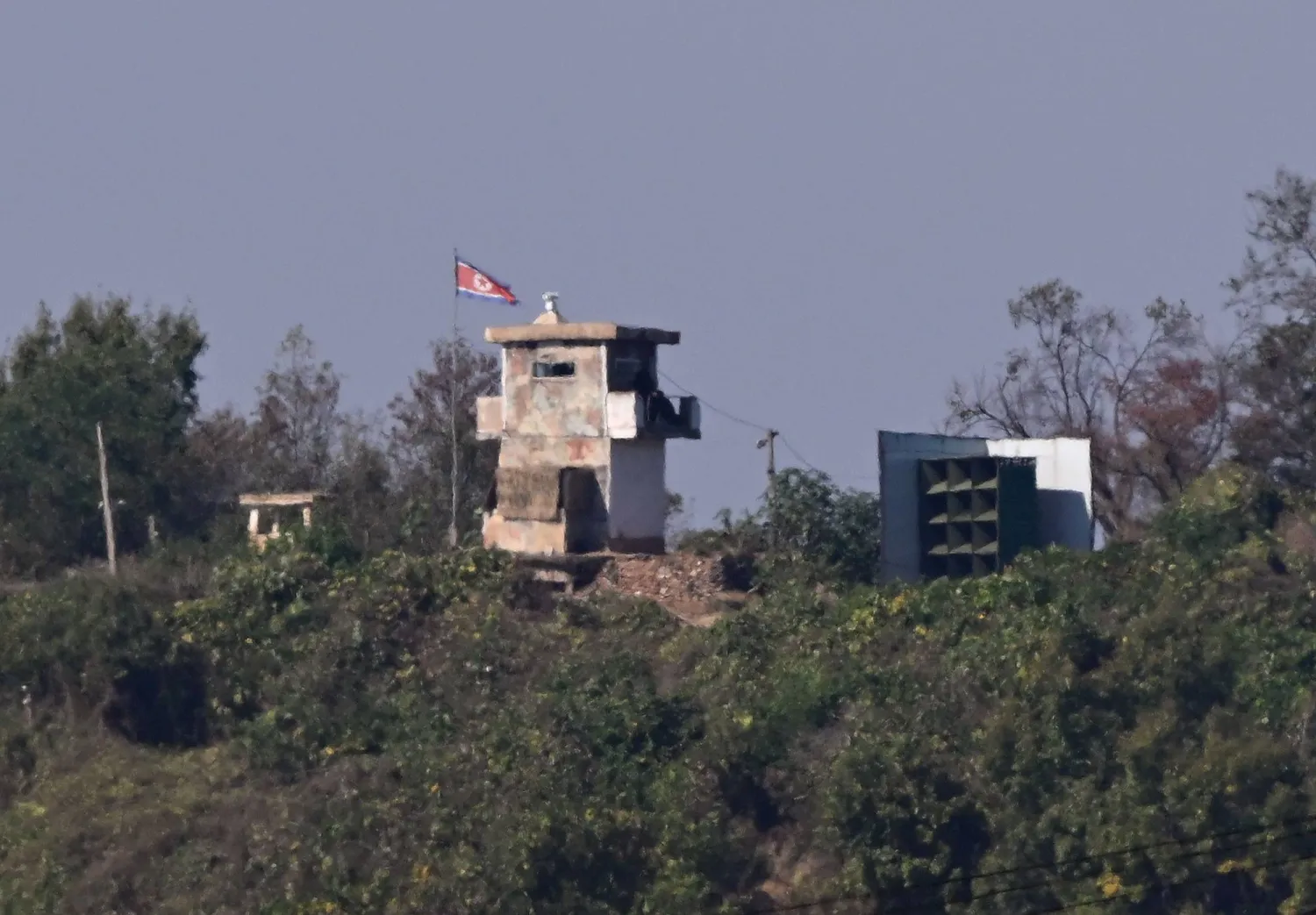
A North Korean guard post (C) and a giant loudspeaker (R) on the North side of the Demilitarized Zone (DMZ) dividing the two Koreas, are seen from the border city of Paju on October 20, 2026. (AFP)
TT

North Korea Says ‘New Firepower Units’ in Place After Border Threat

A North Korean guard post (C) and a giant loudspeaker (R) on the North side of the Demilitarized Zone (DMZ) dividing the two Koreas, are seen from the border city of Paju on October 20, 2026. (AFP)

North Korea has moved new units into "firing positions", the powerful sister of leader Kim Jong Un said Wednesday, days after Pyongyang warned it was considering deploying additional strike means to its border with South Korea. 

Tensions between Seoul and Pyongyang have soared since the South last month blamed an explosion inside the heavily fortified Demilitarized Zone (DMZ) separating the two countries on landmines laid by North Korea, an accusation it has rejected. 

"Our military leadership underlined the need to make those rogues aware that our new firepower units have taken their firing positions," Kim Yo Jong said, according to state media. 

Her statement came a day after Seoul warned of a "firm" response to further North Korean provocations. 

She added that Kim Jong Un had "issued an order to fortify the border with an enemy state to be eternally impregnable". 

The statement came as the Korea Central News Agency said the armed forces' Marshal Pak Jong Chon had inspected "pivotal positions" on the border, stressing to troops it was "time to organize the firepower strong enough to strike terror into the enemy's heart". 

"If the enemy troops make a provocation actually threatening the safety of our service personnel... The border forces of the DPRK must take very proficient, specialized and overwhelming military action," he said, using the acronym for the North's official name. 

Seoul's military accused Pyongyang on Tuesday of attempting to shift the blame for escalating military tensions, while confirming it had used both loudspeakers and warning shots as "legitimate defensive measures to prevent North Korean troops from crossing the MDL (Military Demarcation Line) and to drive back troops that have crossed it". 

Jin Yong-sung, chairman of South Korea's Joint Chiefs of Staff, ordered the military to "respond with firm resolve" should North Korea use Seoul's actions as a pretext for aggressive action, while the defense ministry warned they would be met with "resolute" punishment. 

North Korea has separately tested a slew of weapons recently, including a "new-type" precision-guided torpedo system and an intermediate-range hypersonic missile, both of which were said to employ AI technology. 


Israel Accepted as a Pacific Islands Forum Partner, FM Says

Israeli Foreign Minister Gideon Saar speaks during a ceremony marking the opening of Colombia's new embassy in Jerusalem, at the Ministry of Foreign Affairs in Jerusalem, Israel, 14 October 2026. (EPA)
TT

Israel Accepted as a Pacific Islands Forum Partner, FM Says

Israeli Foreign Minister Gideon Saar speaks during a ceremony marking the opening of Colombia's new embassy in Jerusalem, at the Ministry of Foreign Affairs in Jerusalem, Israel, 14 October 2026. (EPA)

Israel has ‌become a Pacific Islands Forum partner, Foreign Minister Gideon Saar said on X, describing the move as part of the country's broader effort to strengthen ties with the region.

Before Israel's inclusion, the Forum had 21 dialogue partners including the United States, China, Japan and the European Union. Dialogue partners are countries and organizations outside the Blue Pacific region with significant interests in the ‌islands and ‌that contribute to discussions and initiatives ‌aimed ⁠at regional development ⁠and security, according to the grouping's website.

Saar said Forum Secretary-General Baron Divavesi Waqa had informed him that Pacific leaders had approved Israel's application as a "Forum Partner" at their meeting in Palau.

Israel submitted its request during Saar's visit ⁠to Fiji in June, he added.

Under the ‌arrangement, Israel will ‌participate in cooperation on water management, desalination, agriculture, climate change, ‌innovation and sustainable development, Saar revealed.

Israel and ‌the Forum will also prepare a joint action plan and establish a mechanism to monitor its implementation, he added.

Earlier this year, Israel opened an embassy ‌in Fiji, which also serves nine other Pacific island countries, Saar said.

Papua ⁠New ⁠Guinea, Fiji and Nauru have opened embassies in Jerusalem since the current Israeli government took office, he remarked.

The move comes as Israel seeks to deepen diplomatic support amid mounting international pressure over its conduct of the war in Gaza. Several Pacific island states have at times voted with Israel or against UN resolutions it opposed.

The Pacific Islands Forum has not publicly confirmed Israel's status and did not immediately respond to a request for comment.