OPEC+ Agrees in Principle on Theoretical Oil Output Hike amid Iran War Paralysis

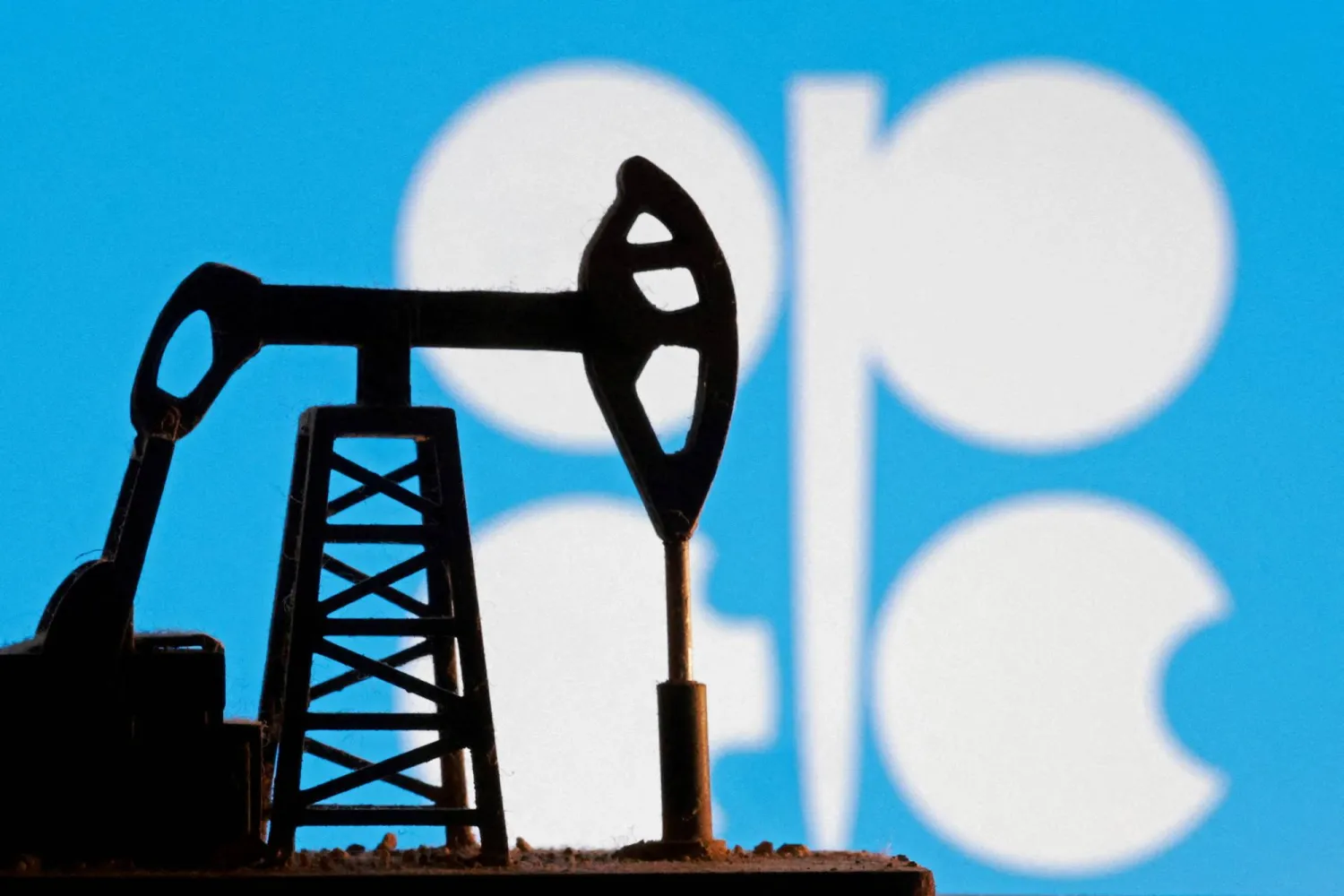
FILE PHOTO: A model of an oil pump is seen in front of the OPEC logo in this illustration taken January 9, 2026. REUTERS/Dado Ruvic/Illustration/File Photo
TT

OPEC+ Agrees in Principle on Theoretical Oil Output Hike amid Iran War Paralysis

FILE PHOTO: A model of an oil pump is seen in front of the OPEC logo in this illustration taken January 9, 2026. REUTERS/Dado Ruvic/Illustration/File Photo

OPEC+ has agreed in principle to raise its oil output quotas by 206,000 barrels per day for May, three sources with knowledge of the group's talks said ahead of its meeting later on Sunday, a rise that will largely exist on paper as its key members are unable to raise production due to the US-Israeli war with Iran.

The war has effectively shut the Strait of Hormuz - the world's most important oil route - since the end of February and cut exports from OPEC+ members.
Some group members such as Russia are unable to increase output due to Western sanctions and damage to infrastructure inflicted during the war with Ukraine.

Inside the Gulf, damage to infrastructure from missile and drone attacks has also been severe. Several Gulf officials have said it would take months to resume normal operations and reach production targets even if the war stopped and Hormuz reopened immediately, according to Reuters.
Iran on Saturday said Iraq was exempt from any restrictions to transit the vital route, and shipping data on Sunday showed a tanker loaded with Iraqi crude passing through the strait. Still, it remains to be seen if more vessels will take the risk involved, a source close to the issue said.

Sunday's OPEC+ talks are set to start at around 1300 GMT with a gathering of ministers called the Joint Ministerial Monitoring Committee, which does not decide on output policy.

After this, eight members of OPEC+ hold separate talks having agreed in principle to raise output quotas by 206,000 bpd for May, the three sources said. This would be the same as the increase decided for April at their last meeting held on March 1, just as the war began to disrupt oil flows. A month later, the largest oil supply disruption on record is estimated to have removed as many as 12 to 15 million bpd or up to 15% of global supply. Crude prices have soared to a four-year high close to $120 a barrel. Oil prices could spike above $150 - an all-time high - if flows via Hormuz remain disrupted into mid-May, JPMorgan said on Thursday. A quota increase will have little immediate impact on supply but would signal readiness to raise output once Hormuz reopens, OPEC+ sources have said. Consultancy Energy Aspects called the increase "academic" as long as disruptions in the strait persist.


Türkiye Says It Is Starting Offshore Hydrocarbon Exploration in Pakistan, Plans Drilling Next Year

This handout photograph taken on November 10, 2026 and released by Türkiye's Ministry of Energy and Natural Resources on November 12, 2026 shows Türkiye's Minister of Energy and Natural Resources Alparslan Bayraktar (C) during a session at the 31st United Nations Climate Change Conference (COP31) at the Antalya Expo Center in Antalya. (Handout / Turkish Energy Ministry / AFP)
TT

Türkiye Says It Is Starting Offshore Hydrocarbon Exploration in Pakistan, Plans Drilling Next Year

This handout photograph taken on November 10, 2026 and released by Türkiye's Ministry of Energy and Natural Resources on November 12, 2026 shows Türkiye's Minister of Energy and Natural Resources Alparslan Bayraktar (C) during a session at the 31st United Nations Climate Change Conference (COP31) at the Antalya Expo Center in Antalya. (Handout / Turkish Energy Ministry / AFP)

Türkiye's Oruc Reis seismic research vessel will begin exploration for hydrocarbon resources in offshore fields in Pakistan, Turkish Energy Minister Alparslan Bayraktar said on Friday, adding that drilling was expected to start in 2027.

Last year, Türkiye's state oil company TPAO ‌signed hydrocarbon exploration ‌and production agreements ‌with ⁠Pakistani companies including Mari ⁠Energies, Fatima, OGDCL, PPL, Prime and GHDL for three offshore and two onshore fields in Pakistan.

Bayraktar, who attended a ceremony to welcome Oruc ⁠Reis at Karachi Port alongside ‌Pakistan's Foreign ‌Minister Ishaq Dar and Petroleum Minister ‌Ali Pervaiz Malik, said on ‌X the vessel would carry out two- and three-dimensional seismic survey operations in the Indus and Makran basins ‌to "uncover the potential there".

The step marked a "strong ⁠turning ⁠point" in energy cooperation between the two countries, he said, noting that it came at a time of turbulence in global oil and gas markets.

Last month, Bayraktar said the planned operations off Pakistan had been delayed by about six months due to the war in Iran.


ECB's Lagarde: Cyber Threat Boosted by AI is My Top Worry

President of the European Central Bank (ECB) Christine Lagarde addresses guests at the 36th Frankfurt European Banking Congress (EBC) at the Old Opera (Alte Oper) in Frankfurt am Main, western Germany on November 20, 2026. (Photo by Kirill KUDRYAVTSEV / AFP)
TT

ECB's Lagarde: Cyber Threat Boosted by AI is My Top Worry

President of the European Central Bank (ECB) Christine Lagarde addresses guests at the 36th Frankfurt European Banking Congress (EBC) at the Old Opera (Alte Oper) in Frankfurt am Main, western Germany on November 20, 2026. (Photo by Kirill KUDRYAVTSEV / AFP)

The greatest immediate challenge facing the world of finance may be cyber threats supercharged by increasingly sophisticated AI agents, European Central Bank President Christine Lagarde said on ⁠Friday.

Attackers are often ⁠anonymous, and difficult to track, and rely on dubious funding often from "toxic ⁠states" that have a vested interest in disrupting the world, Lagarde said.

"The one (worry) that keeps me awake, and many of you awake as well ... is AI ⁠applied ⁠together with cyber threat," Lagarde told the European Banking Congress in Frankfurt, adding that policymakers have not paid enough attention to this threat.

She also said that the ECB will make its currency swap lines with other countries more accessible to shield the euro area from outside financial shocks and boost the euro's global role.

The ECB only has swap lines with major central banks such as the US Federal Reserve and the People's Bank of China at present, allowing them to exchange their own currencies for euros at times ⁠when financial markets ⁠seize up.

Lagarde's comments suggest these financial lifelines might one day become more widely available as part of the ECB's push to promote the international use of the single currency and make the euro zone less dependent on the US dollar for trade and investment.

"We are working ⁠to keep our swap lines fit for purpose in a more fragmented world," she told the conference. "They will be more accessible, too."

Policymakers globally have been questioning the long-term dominance of the dollar in light of US President Donald Trump's unpredictable economic policy and the United States' ballooning public debt.

Lagarde said the primary goal of the swap lines was to limit spillover of financial stress from abroad, indirectly helping the ECB ⁠control borrowing ⁠costs in the euro area.

But she added these central bank swaps make foreign investors more comfortable holding euros.

"A reserve manager who knows that euro securities can be turned into euro liquidity without a fire sale has more reason to hold them in normal times," Lagarde said.

In a similar vein, the ECB has recently opened up its EUREP facility, which allows foreign central banks to obtain euros against collateral, but only provided that it is denominated in the single currency. More than 30 countries have expressed interest in getting access.


Oil Prices Set for 3rd Straight Weekly Decline on Middle East Export Flows

Oil pumpjacks operate at an oil field run by North American Blue Energy Partners (NABEP) in Lagunillas, Venezuela, Tuesday, Nov. 17, 2026. (AP Photo/Ariana Cubillos)
TT

Oil Prices Set for 3rd Straight Weekly Decline on Middle East Export Flows

Oil pumpjacks operate at an oil field run by North American Blue Energy Partners (NABEP) in Lagunillas, Venezuela, Tuesday, Nov. 17, 2026. (AP Photo/Ariana Cubillos)

Oil prices edged down on Friday and were set for a weekly decline on strong exports from the Middle East.

Brent crude futures were down 95 cents, or 1%, to $91.03 a barrel at 0900 GMT. US West Texas Intermediate futures for December were down $1.40, or 1.7%, to $81.81 a barrel, while the more active January contract was down 83 cents, or 1%, to $81.61, Reuters reported.

Brent is on track for a 5% decline for the week and the December WTI contract for an almost 8% weekly drop as expectations of a supply surplus grew because crude ⁠shipments through the Strait ⁠of Hormuz have returned to roughly pre-war levels. This would be the benchmarks' third straight week of decline.

"This week we keep having relatively strong export flows out of the Middle East. There is also a narrative ongoing that as long as people are talking, maybe there's a deal in the making," said Aldo Spanjer, commodity strategist at BNP Paribas.

"The prices are correct if you believe that this geopolitical risk doesn't come back. I'm not in that camp who thinks ⁠this is done... I probably see a rebound," he said.

Iran's intensifying attacks on tankers transiting the Strait of Hormuz, "running at roughly one incident per day in November", still add a meaningful geopolitical risk premium to the market, according to UOB Group analysts in a client note.

OPEC+ ministers will hold a series of meetings on November 29 to decide their 2027 output policy. The group comprises the Organization of the Petroleum Exporting Countries and allies such as ⁠Russia.

Some analysts expect softness in the broader equities markets to weigh on oil prices, as Asian shares fell on Friday — heading for their worst week since 2020.

"Supply disruptions remain a risk, but near-term demand concerns tied to the AI trade unwind and broader risk-off sentiment are weighing on prices," said Saxo analysts in a note.

In Russia, crude oil output could fall again as Ukrainian attacks on refineries and export infrastructure intensify, analysts and traders say. Ukrainian drone attacks have slashed Russian oil refineries' combined crude processing volumes by 45% since late October, Reuters reported on Wednesday.