Citigroup Pushes Back Fed Rate Cut Timeline After Strong Job Numbers

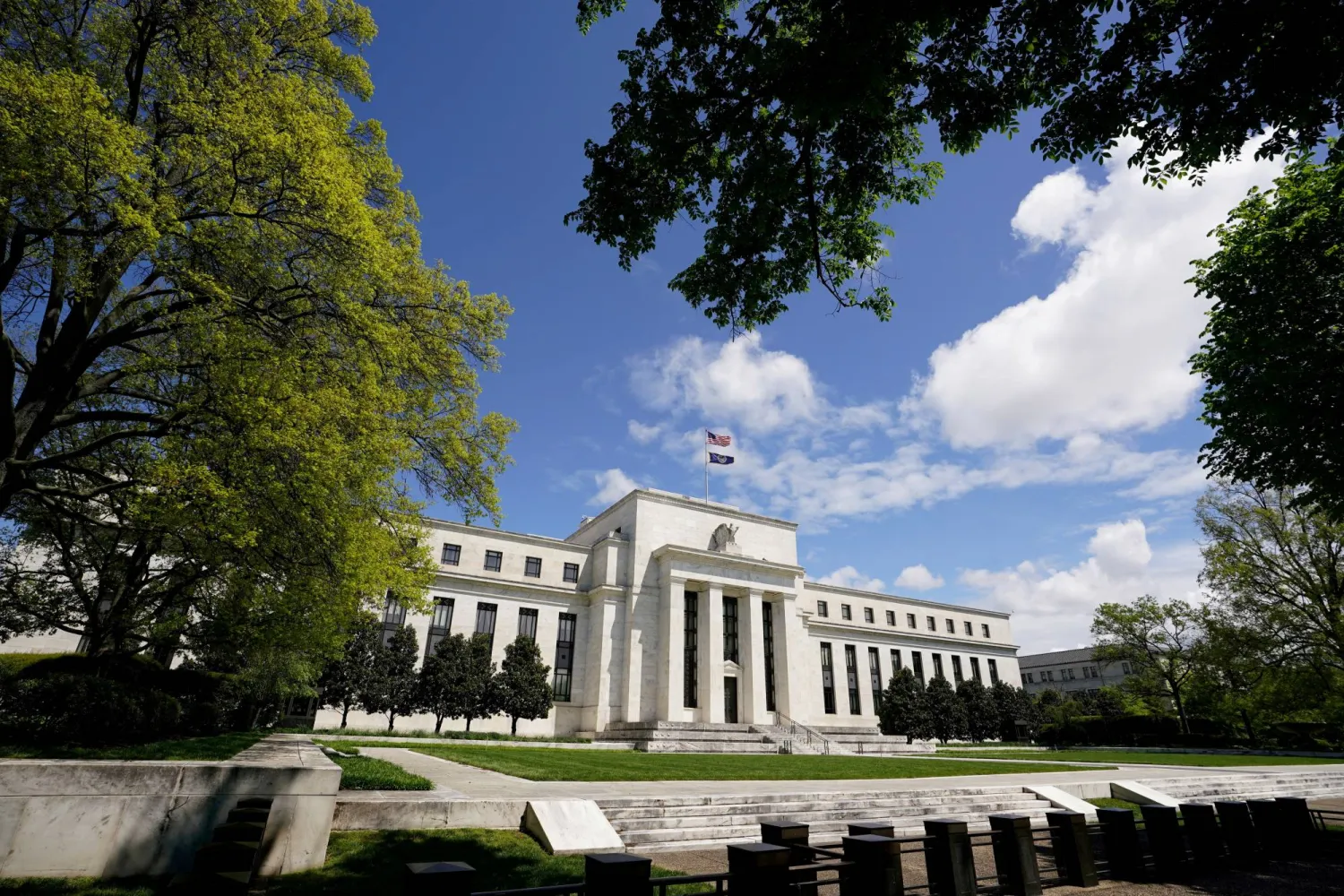
The Federal Reserve building in Washington. (Reuters)
TT

Citigroup Pushes Back Fed Rate Cut Timeline After Strong Job Numbers

The Federal Reserve building in Washington. (Reuters)

Citigroup ‌has pushed back its Fed rate-cut timeline, citing unexpectedly strong US job gains and persistent inflation risks.

The Wall Street brokerage now expects a total of 75 basis points of rate cuts in September, October and December ‌instead of June, ‌July and September, ‌according ⁠to a note ⁠dated April 3.

"We continue to think signs of a weakening labor market will result in cuts later in the year. ⁠But the timing of ‌upcoming data ‌suggests a later start to rate ‌cuts than we had ‌previously been expecting," Citigroup said.

US job growth rebounded more than expected in March as a strike ‌by healthcare workers ended and temperatures warmed up, but ⁠downside ⁠risks for the labor market are mounting from a war with Iran that has no clear end in sight.

Citigroup says weak hiring will push the unemployment rate higher in the summer, similar to the last few years.


Oil Prices Whipsaw while US Stocks Glide Near their Record Heights

Facilities of the PCK Schwedt refinery in Schwedt, northeastern Germany, are seen at the company's plant on April 30, 2026 - (File Photo by Tobias SCHWARZ / AFP)
TT

Oil Prices Whipsaw while US Stocks Glide Near their Record Heights

Facilities of the PCK Schwedt refinery in Schwedt, northeastern Germany, are seen at the company's plant on April 30, 2026 - (File Photo by Tobias SCHWARZ / AFP)

Oil prices whipsawed on Thursday and surged toward their highest levels since the war with Iran began, only for the leaps to quickly vanish. The US stock market, meanwhile, is gliding following more strong profit reports from big companies like Alphabet.

The S&P 500 rose 0.1% and is a bit below its all-time high set earlier this week, as companies continue to deliver fatter profits for the start of 2026 than analysts expected despite high oil prices and uncertainty about the economy. The Dow Jones Industrial Average was up 413 points, or 0.8%, as of 10 a.m. Eastern time, and the Nasdaq composite was 0.3% lower, Reuters reported.

Alphabet led the way and rose 5.8% after the owner of Google and YouTube reported profit for the latest quarter that almost doubled analysts’ expectations. Investments in artificial intelligence “are lighting up every part of the business,” CEO Sundar Pichai said.

The steadiness on Wall Street followed manic swings in the oil market, where prices surged overnight on worries that the Iran war will affect the flow of crude for a long time. Iran has closed the Strait of Hormuz to oil tankers, keeping them pent up in the Arabian Gulf and away from customers worldwide, while a US Navy blockade is preventing Iran from selling its own oil.

Traders are always buying and selling contracts for different kinds of oil, going out for many months. In the most actively traded part of the market for Brent crude, the international standard, the price got as high as $114.70 overnight for a barrel of Brent to be delivered in July. It then regressed to $109.80, down 0.6%, which is still well above the roughly $70 per barrel that Brent was selling for before the war.

So far during the war, the peak price for the most actively traded Brent contract is $119.50, which was set last month.

In a less actively traded corner of the Brent market, the price for a barrel to be delivered in June briefly went above $126 overnight before pulling back toward $114.

That easing, along with the continuing flood of better-than-expected profit reports from US companies, helped to keep Wall Street stable near its records.

Caterpillar, Eli Lilly, O’Reilly Automotive and Royal Caribbean all rallied more than 6% after delivering profits for the latest quarter that topped analysts’ expectations. That’s crucial for investors because stock prices tend to follow the track of corporate profits over the long term.

Still, a better-than-expected result isn’t always enough to boost a stock’s price if it’s already shot much higher.

Meta Platforms tumbled 9.9% even though the company behind Facebook and Instagram made more profit last quarter than expected. Investors focused more on Meta’s increased forecast for how much it will spend on data centers and other investments this year as it builds out its AI capabilities, up to a range of $125 billion to $145 billion.

Doubts are still high among some investors about whether all the AI spending by Meta and other companies will produce enough profit and productivity to make it worth it.

Microsoft fell 4.5% after it likewise raised its forecast for investments and other capital spending. But analysts also said accelerating trends at its Azure business were encouraging.

Amazon slid 0.8% after blowing past analysts’ expectations for earnings in the latest quarter.

In the bond market, Treasury yields eased after oil prices gave up their big overnight gains. Reports also suggested that US economic growth accelerated by less in the first three months of the year than economists expected, while a measure of inflation worsened in March by about as much as expected.

A separate report said that fewer US workers applied for unemployment benefits last week in an indication of fewer layoffs even though companies are announcing large cuts to workforces.

The yield on the 10-year Treasury eased to 4.38% from 4.42% late Wednesday.

In stock markets abroad, indexes were mixed.

London’s FTSE 100 jumped 1.3% after the Bank of England kept its main interest rate on hold.

Germany's DAX returned 0.7%, and France's CAC 40 slipped 0.2% after the European Central Bank also held its own interest rates steady. That followed similar decisions by the US Federal Reserve on Wednesday and the Bank of Japan on Tuesday to keep their rates unchanged.

Hong Kong’s Hang Seng lost 1.3%, while stocks added 0.1% in Shanghai after a report said China’s factory activity slowed slightly in April but remained in expansion territory for the second month.


Saudi GDP Grows 2.8% in First Quarter

The Saudi capital, Riyadh (SPA)
TT

Saudi GDP Grows 2.8% in First Quarter

The Saudi capital, Riyadh (SPA)

Saudi Arabia's real gross domestic product grew 2.8% in the first quarter, year-on-year, preliminary government estimates showed on Thursday.

Non-oil activities grew 2.8% in the quarter, and oil activities increased 2.3% from the prior-year period, the General Authority of Statistics data ⁠showed.

On a quarterly basis, growth shrank 1.5% in the three months to March 31 compared to the fourth quarter, driven by a decline in oil activities.

Oil activity decreased 7.2% from the fourth quarter, while non-oil activity was almost flat.


IMF Warns Asia to Keep Policy in Balance Amid Energy Disruptions

FILE PHOTO: A view of the International Monetary Fund (IMF) logo at its headquarters in Washington, D.C., US, November 24, 2024. REUTERS/Benoit Tessier/File Photo
TT

IMF Warns Asia to Keep Policy in Balance Amid Energy Disruptions

FILE PHOTO: A view of the International Monetary Fund (IMF) logo at its headquarters in Washington, D.C., US, November 24, 2024. REUTERS/Benoit Tessier/File Photo

Asian countries will need to keep their powder dry in preparation for future shocks even as they tackle an energy crisis caused by the Iran War, IMF Director for Asia Pacific Krishna Srinivasan said on Thursday.

With energy supplies running short due to the logjam in the Strait of Hormuz, southeast Asian economies have budgeted significant sums to cushion the impact of surging prices, and have also introduced measures to conserve energy, including work from home plans.

But Srinivasan, speaking at a media roundtable, warned countries against ramping up energy subsidies.

"If you give generalised subsidies, it's very hard to pull it back," he said, adding that countries should instead provide budget neutral ⁠and targeted fiscal ⁠support, and maintain fiscal discipline.

"In other words, cut elsewhere to support people who are being hit by the energy shock," Reuters quoted him as saying.

Srinivasan said that while some markets, such as Thailand and China, can hold off on tightening monetary policy because they are in deflationary territory, markets already above their inflation targets, including Australia, need to start now.

He also ⁠noted that some markets, such as the Philippines, have decided to tighten preemptively to anchor inflation expectations, but he added that the IMF's advice would have been to see through the shock and wait to see if inflation really picks up in a meaningful way.

"You may want to take insurance upfront or you may want to wait and see so that you don't hurt growth ... it's a very difficult balance to strike as a central bank governor," he said.

The IMF cut its global GDP outlook for 2026 to 3.1% on April 14, assuming ⁠a short-lived Middle ⁠East conflict and oil prices normalising in the second half of the year.

However, IMF chief economist Pierre-Olivier Gourinchas warned that the fund's "adverse scenario" of 2.5% growth looked increasingly likely, with continued energy disruptions and no clear path to end the conflict.

Srinivasan said that if the Strait of Hormuz remains closed beyond the next three months and oil prices stay elevated for the rest of the year, the IMF's more severe growth scenarios will become more likely.

There are still downside risks to growth, with a number of uncertainties facing the world economy, including the duration of the energy crisis and the severity of fertiliser shortages, which could create a food supply shock, he said.