


Oil Prices Rally, Stocks Mixed after Trump's Latest Iran Threat

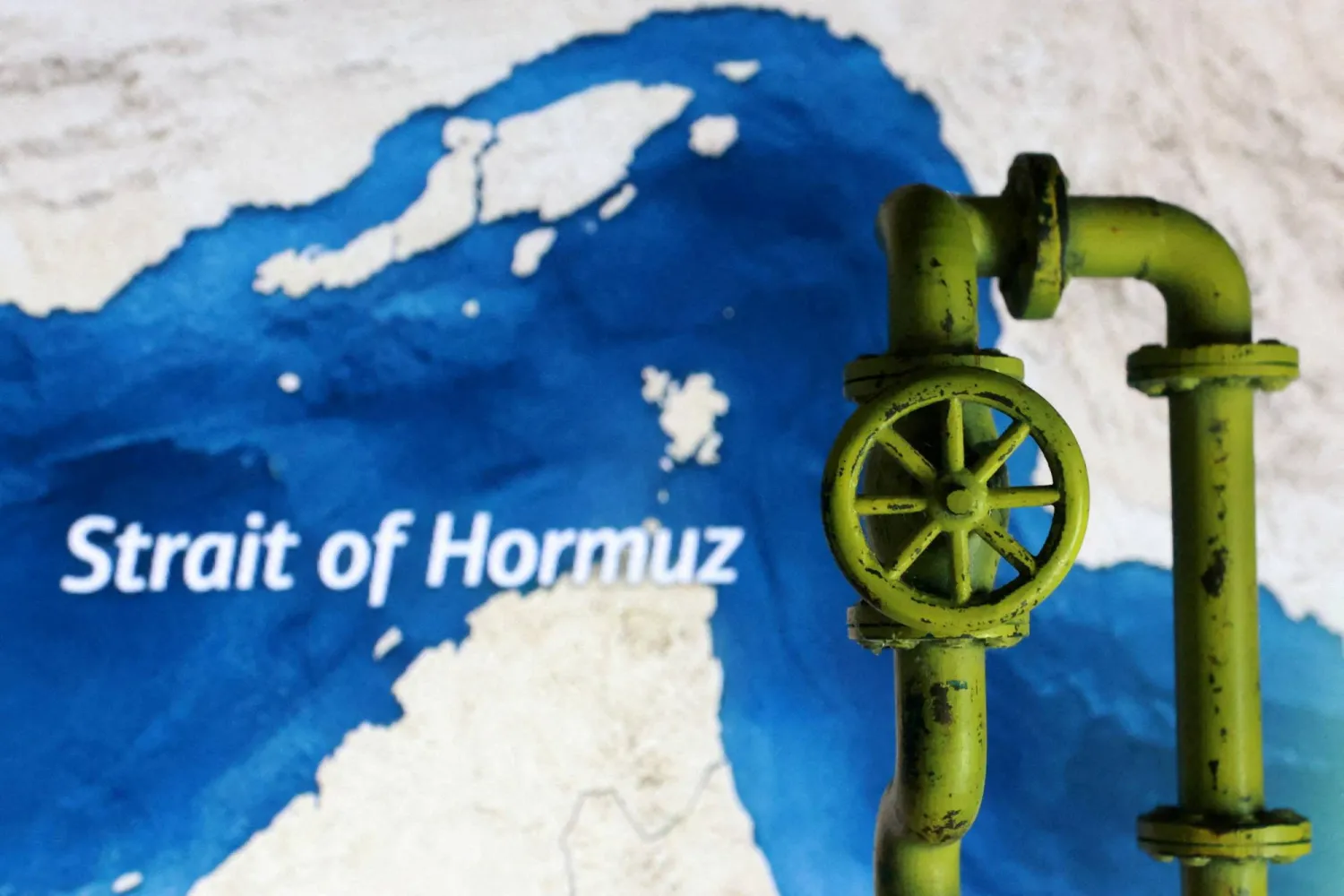
FILE PHOTO: A map showing the Strait of Hormuz and a 3D printed oil pipeline are seen in this illustration taken March 23, 2026. REUTERS/Dado Ruvic/Illustration/File Photo/File Photo
TT

Oil Prices Rally, Stocks Mixed after Trump's Latest Iran Threat

FILE PHOTO: A map showing the Strait of Hormuz and a 3D printed oil pipeline are seen in this illustration taken March 23, 2026. REUTERS/Dado Ruvic/Illustration/File Photo/File Photo

Oil prices rose Tuesday while equities were mixed as investors assessed Donald Trump's latest deadline for Iran to reopen the strategic Strait of Hormuz or be "decimated".

As the Middle East war entered its sixth week, the US president warned Tehran that its civilian infrastructure would be destroyed if it did not let ships through the waterway, through which a fifth of global crude and gas passes.

The remarks came as he and Iran said a proposal touted by international mediators for a 45-day ceasefire was not yet ready, AFP reported.

Trump told a news conference that "the entire country" of Iran "could be taken out in one night and that night might be tomorrow night", if his ultimatum to reopen the Strait by 0000 GMT Wednesday was not met.

"We have a plan... where every bridge in Iran will be decimated by 12 o'clock tomorrow night, where every power plant in Iran will be out of business, burning, exploding and never to be used again," Trump said, brushing aside accusations that such a move would be a war crime.

"I mean complete demolition by 12 o'clock, and it'll happen over a period of four hours -- if we wanted to."

The threat came after a profanity-laced social media post on Easter Sunday in which he vowed Iran would be "living in Hell" if it didn't reopen the Strait.

Tehran said that if such an attack went ahead, it would retaliate by striking energy infrastructure in the Gulf, which could deal a further blow to already thin oil supplies and hammer the global economy.

Both main oil contracts rose Tuesday, with West Texas Intermediate topping $115 -- its highest in a month -- and Brent sitting around $111.

Equity markets fluctuated, with Tokyo, Singapore, Manila and Jakarta down while Shanghai, Sydney, Seoul, Wellington and Taipei rose. Hong Kong was closed for a holiday.

That followed a positive start to the week on Wall Street.

"Financial markets are oscillating in a narrow, uneasy range as traders sized up the countdown to Donald Trump's Iran deadline," wrote Stephen Innes at SPI Asset Management.

"Tentative ceasefire optics (were) offering brief relief but never fully offsetting the lingering risk of escalation," he added.

"For now, the rhetoric has tightened, the threats sharpened, and yet the market is not capitulating, conditioned by repetition to expect de-escalation just before the edge.

"Traders are no longer reacting to what is said, but to when it is usually walked back."

The hit to fuel supplies from the Middle East has forced governments around the world to unveil economic support measures amid fears of another spike in inflation.

On Tuesday, the Philippines said inflation jumped to a forecast-topping 4.1 percent in March, its highest level in nearly two years.

US figures last week showed growth in the country's services activity cooled last month as companies monitored the higher energy prices and braced for supply chain disruptions.

In company news, Samsung rallied around one percent after estimating first-quarter profit soared 755 percent to an all-time high of $37.9 billion thanks to strong sales of chips crucial for artificial intelligence.

It also said sales were expected to surge 68 percent on-year to hit $88 billion in January-March.



Türkiye, Syria Step Up Banking Ties as Lenders Eye Expansion

Türkiye’s Ziraat Bank tower is seen in Sarajevo, Bosnia and Herzegovina, May 16, 2018. (Reuters)
TT

Türkiye, Syria Step Up Banking Ties as Lenders Eye Expansion

Türkiye’s Ziraat Bank tower is seen in Sarajevo, Bosnia and Herzegovina, May 16, 2018. (Reuters)

Türkiye and Syria are accelerating cooperation between their central banks, Trade Minister Omer Bolat said on Tuesday, adding that Syria’s central bank governor will meet Turkish banking ‌regulators.

Speaking at ‌a business ‌forum, ⁠Bolat said closer ⁠banking ties and the entry of Turkish lenders into Syria could help boost trade and industrial ⁠investment.

State lender Ziraat ‌Bank ‌and private lender Aktifbank ‌are both working to ‌establish a presence in Syria, company officials said separately, with applications submitted ‌and operations expected to begin in the near ⁠term.

Business ⁠leaders at the forum said restoring banking services and resolving customs and logistics issues would be key to increasing bilateral trade.


Türkiye Not Facing Energy Security Problem Amid War but Situation ‘Volatile’

Travelers cross from Iran into Türkiye at the Kapikoy border crossing in eastern Van province, Türkiye, Saturday, April 4, 2026. (AP)
TT

Türkiye Not Facing Energy Security Problem Amid War but Situation ‘Volatile’

Travelers cross from Iran into Türkiye at the Kapikoy border crossing in eastern Van province, Türkiye, Saturday, April 4, 2026. (AP)

Türkiye is not ‌facing any problems regarding energy supply security due to the Iran war, but the situation is "volatile", Energy Minister Alparslan Bayraktar was quoted as saying by Turkish media on Tuesday.

"We hope the war will not last any longer. But the process is currently under our control," Bayraktar told reporters on Monday evening after a cabinet meeting, broadcaster Haberturk reported.

"There is no problem or difficulty in energy ‌supply security."

Türkiye ‌is a big energy importer which ‌neighbors ⁠Iran and is among ⁠the most exposed emerging market economies to the global energy price jump.

Bayraktar said in late March that Türkiye’s dependence on Middle East oil was at a "manageable" 10% of total supplies and that the country had taken protective diversification steps.

At the ⁠time he said every $1 increase in ‌oil prices adds about $400 million ‌to Türkiye’s energy bill, while there had not been ‌any natural gas supply cuts so far from ‌Iran, Türkiye’s fourth largest supplier last year.

On Monday, Bayraktar told reporters that he had spoken with the Hungarian foreign minister and discussed the issue of protecting the security ‌of the TurkStream pipeline, which carries Russian natural gas to southern Europe through ⁠the ⁠Black Sea and Türkiye.

Explosives were found near the TurkStream pipeline in Serbia at the weekend, prompting Hungarian Prime Minister Viktor Orban to convene an emergency defense council.

Russia and Türkiye formally launched the TurkStream pipeline, which has a capacity of 31.5 billion cubic meters per year, in January 2020. The pipeline allows Moscow to bypass Ukraine as a transit route to Europe.

"The security of the pipeline in the Black Sea and on our side is important," Bayraktar said.


SME Financing Moves to the Core of Saudi Arabia’s Non-Oil Economy

A night view of Riyadh, Saudi Arabia (SPA file)
TT

SME Financing Moves to the Core of Saudi Arabia’s Non-Oil Economy

A night view of Riyadh, Saudi Arabia (SPA file)

In a sign of a deep shift in the structure of financing within Saudi Arabia’s economy, and reflecting the goals of Vision 2030 to diversify the production base, credit facilities extended to micro, small and medium-sized enterprises reached a record high at the end of 2025.

Banks and finance companies injected around SAR 467.7 billion ($124.5 billion) into the sector last year, marking a 33 percent annual increase. The surge highlights the transition of these enterprises from the margins of economic activity to the center, positioning them as a key driver of non-oil growth and job creation.

On a yearly basis, total facilities rose 33 percent from about SAR 351.7 billion ($93.6 billion) in 2024, according to monthly bulletin data from the Saudi Central Bank (SAMA).

The banking sector accounted for the largest share, with facilities provided by banks reaching approximately SAR 446.6 billion, up 34 percent year on year. Finance companies contributed around SAR 21.1 billion, an annual increase of 15.4 percent.

By enterprise size, growth rates varied. Lending to medium-sized firms rose 18 percent year on year to SAR 220.9 billion. Small enterprises recorded stronger growth of 34 percent, reaching SAR 163.5 billion. Micro-enterprises saw the sharpest increase, with facilities surging 97 percent to SAR 83.3 billion, underscoring a notable expansion in financing to this segment.

Structural shift

The strong growth has been driven by several factors, most notably the clear strategic direction under Vision 2030, which places SMEs at the heart of economic diversification, along with the expanding role of institutions supporting the sector.

Among these is Monsha’at, which has helped improve the business environment and connect enterprises with funding sources, according to economist Hussein Al-Attas.

“This level of facilities is not just a record figure. It reflects a structural shift in the philosophy of financing within the Saudi economy,” Al-Attas told Asharq Al-Awsat.

He identified four main drivers behind the growth: a clear economic vision, a stronger regulatory environment, the expansion of credit guarantee programs, and a shift in how banks view the SME sector.

The Kafalah program has been particularly important, helping reduce lending risks and enabling banks to increase exposure to SMEs. This has coincided with improvements in financial data quality and governance practices, which have strengthened lenders’ confidence in the sector.

Sustainable growth

Al-Attas said the current trend reflects not a temporary expansion in credit but a redefinition of the role of SMEs in the economy, with growth expected to continue over the medium term.

However, he pointed to several challenges that could affect the pace of expansion. These include limited managerial expertise in some firms, the risk of defaults if financing is poorly managed, concentration of lending in specific sectors, and the potential impact of future interest rate increases.

Authorities are aware of these risks. This is reflected in a growing focus on improving governance, strengthening management efficiency, and linking financing more closely to actual operating performance to ensure funds are directed toward sustainable and productive activities.

The importance of this expansion extends beyond the headline figures. It supports a higher contribution of SMEs to non-oil GDP and plays a central role in job creation, given the sector’s labor-intensive nature.

According to Al-Attas, the growth also strengthens economic diversification by supporting the entry of new firms into promising sectors such as technology, industry, and services. It also increases local value added and reduces reliance on imports and large corporations.

Looking ahead, he expects financing growth to continue at a healthy pace over the next three to five years. This outlook is supported by the expansion of digital financing solutions, continued integration between government and banking sectors, and improving market maturity and enterprise quality. Large-scale projects and non-oil expansion are also expected to create new financing opportunities, gradually shifting the focus from the volume of funding to the quality of its economic impact.

Digital transformation

Mohammed Al-Farraj, senior head of asset management at Arbah Capital, said the development reflects alignment between ambitious government policies aimed at raising SMEs’ contribution to GDP to 35 percent and a responsive banking sector that has led the growth and captured the largest share of financing.

He noted that guarantee and incentive programs, as well as the SME Bank, have played a key role in reducing credit risks and boosting banks’ willingness to lend.

Digital transformation and the rise of fintech companies have also marked a turning point by improving access to financing and lowering operating costs. This has created a more flexible and attractive environment for business growth beyond traditional constraints.

Despite these positive indicators, Al-Farraj cautioned that rapid expansion requires strategic vigilance, particularly regarding credit risks and potential defaults amid interest rate volatility and increased competition in sectors such as retail.

He continued that the next phase will require a shift from quantitative growth, focused on expanding financing volumes, to qualitative growth that emphasizes credit quality, project sustainability, and resilience to economic changes.

Alternative financing tools such as venture capital are expected to play a growing role. These tools can ease pressure on bank balance sheets while directing funding toward strategic sectors including technology, tourism, and industry to ensure meaningful value creation in the national economy.

Developments seen in 2026 suggest early returns from this expansion. These include the emergence of a new generation of high-growth firms, increased SME contribution to non-oil exports, and greater use of instruments such as sukuk tailored for SMEs as a cost-effective long-term financing option.

Al-Faraj said SMEs are no longer a peripheral segment but a central driver of innovation and growth in Saudi Arabia’s economy. Sustaining this momentum will require continued regulatory development and more flexible repayment mechanisms to ensure durable growth aligned with long-term economic development goals.