


Lebanon Rejects Iran Negotiating on Its Behalf

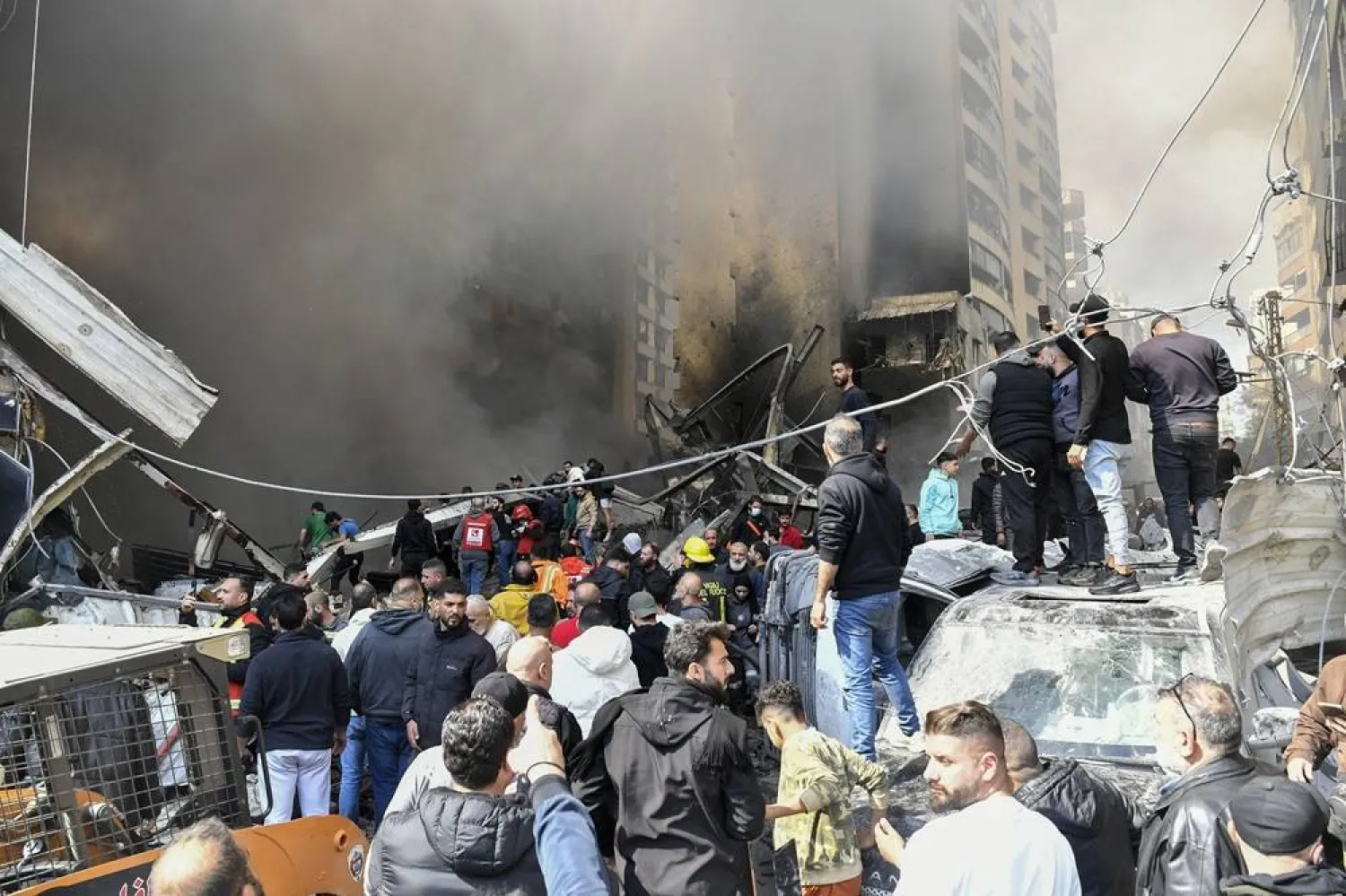
People gather at the scene of an Israeli airstrike in the Corniche al-Mazraa neighborhood of Beirut, Lebanon 08 April 2026. (EPA)
TT

Lebanon Rejects Iran Negotiating on Its Behalf

People gather at the scene of an Israeli airstrike in the Corniche al-Mazraa neighborhood of Beirut, Lebanon 08 April 2026. (EPA)

Lebanon was left outside contacts that produced a US-Iran ceasefire deal, despite reports it would be included and moves by Iran and Hezbollah suggesting otherwise.

Hezbollah halted its military operations before the deal was announced early on Wednesday, while Lebanese officials scrambled to contact countries involved in the issue to clarify the situation.

Prime Minister Nawaf Salam told Asharq Al-Awsat that Lebanon would not accept anyone negotiating on its behalf.

President Joseph Aoun welcomed the US-Iran announcement of a 15-day ceasefire and praised efforts by all parties that helped secure the agreement, particularly Pakistan, Egypt, and Türkiye.

He said he hoped it would mark a first step toward a final, comprehensive deal that addresses the drivers of conflict in the region, safeguarding the sovereignty of all states.

Aoun said violence was not an effective means to resolve disputes and that governments should work to ensure a free and dignified life for their people, not push them toward futile and needless death.

He added that the Lebanese state would continue efforts to ensure any regional calm extends to Lebanon on a firm and lasting basis.

Aoun affirmed that the efforts are in line with principles agreed upon by the Lebanese: full sovereignty over all territory, liberation from any occupation, and the exclusive right to wage war, maintain peace, and use legitimate force, resting with constitutional institutions alone.

Responsibility for any negotiations to secure Lebanon’s national interest lies solely with the Lebanese state, he said.

Berri: Lebanon included

Parliament Speaker Nabih Berri told Asharq Al-Awsat that Lebanon was covered by the ceasefire agreement with Iran, but said Israel had not complied with it across Lebanon so far, in breach of the deal.

Berri said the agreement clearly included Lebanon and that this was what should be implemented. He said he had contacted the Pakistani side to inform it of Tel Aviv’s failure to abide by the ceasefire and asked it to engage the United States to pressure Israel.

He said he remained in contact with several parties involved and had received assurances that Lebanon was part of the agreement, though he did not rule out that Israel could seek to “undermine this agreement as the party most harmed by it.”

Salam: The state alone negotiates

In his first comment on the ceasefire and the debate over whether Lebanon was included, Salam said: “No one negotiates over Lebanon except the Lebanese state.”

He declined to elaborate on ongoing contacts to secure a ceasefire in Lebanon, saying only that the state was carrying out its duties and mobilizing all its capabilities to pull the country out of a crisis imposed on it.

“With the announcement of an agreement between the US and Iran, through appreciated Pakistani efforts, we are intensifying our contacts and our political and diplomatic efforts to secure a ceasefire in Lebanon,” said Salam.

“I also stress that no one negotiates in the name of Lebanon except the Lebanese state, through its constitutional institutions, in a way that safeguards its sovereignty and the interests of its people,” he added.

Foreign Ministry: One voice

For its part, Lebanon’s Foreign Ministry welcomed the announcement of the two-week ceasefire between Iran and the US as a step toward de-escalation and regional stability, but stressed that no party has the right to negotiate on the country’s behalf.

“Lebanon unequivocally affirms that it speaks with one voice — its own — and that no party has the right to negotiate on its behalf except the Lebanese state,” the ministry said in a statement.

“Any such action constitutes a direct violation of its sovereignty and national decision-making,” it added, noting that Lebanon has previously announced its readiness for direct negotiations with Israel, with civilian participation and under international auspices.

The ministry reiterated that Lebanon’s sovereignty is indivisible and not negotiable, and that its national choices, security, and political future are determined exclusively by its constitutional institutions, free from any external interference.



Lebanon Revokes Bank Saderat Iran’s License amid US Pressure

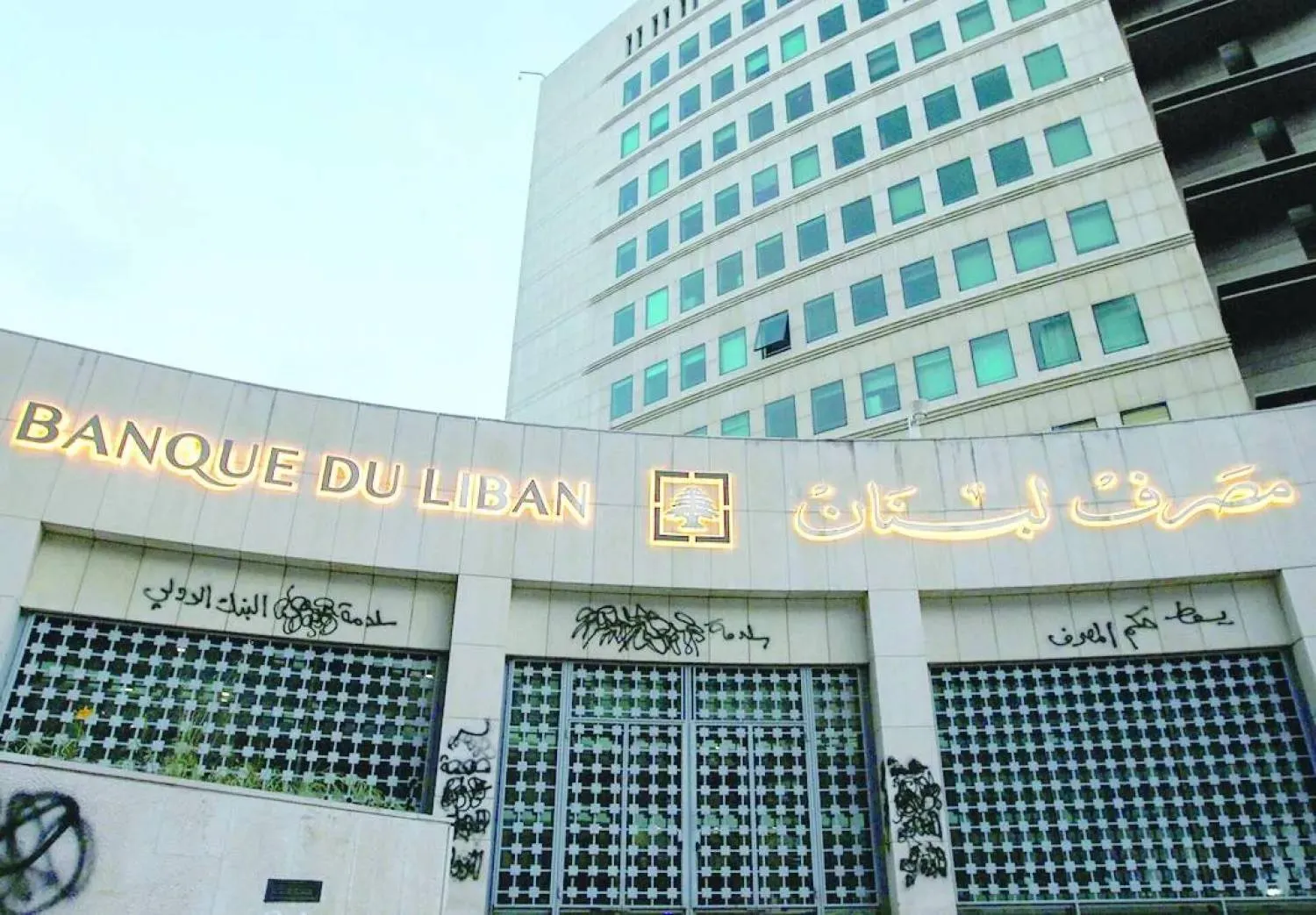
The Banque du Liban headquarters in Beirut (Banque du Liban). 
TT

Lebanon Revokes Bank Saderat Iran’s License amid US Pressure

The Banque du Liban headquarters in Beirut (Banque du Liban). 

Lebanon’s central bank has revoked the local license of Bank Saderat Iran, one of Iran’s largest banks, as Washington intensifies pressure on countries to sever commercial ties with Tehran.

Banque du Liban Governor Karim Souaid told Bloomberg that the decision, taken this week, was intended to demonstrate Lebanon’s determination to protect its banking sector from institutions that could expose it to financial and regulatory risks.

The move follows tighter restrictions imposed on Iran’s financial system by other regional central banks and coincides with mounting US pressure worldwide, according to the governor.

Bank Saderat is one of Iran’s oldest commercial banks, with several branches overseas. In Lebanon, however, it did not operate as a full-scale commercial bank serving the general public or offer the extensive retail banking services typically provided by major Lebanese lenders.

Its operations were largely confined to facilitating certain transfers and financial activities linked to specific networks or entities.

Sanctions targeting Iranian institutions had effectively isolated the bank from major international banking messaging networks, including SWIFT, and global payment systems.

Washington is pursuing a campaign to isolate Iran economically in an effort to force Tehran to accept US terms for ending the war.

Last month, Britain announced it would reject new license applications from Iranian banks subject to US sanctions, including Bank Saderat, which operates a branch near the Bank of England in London’s financial district.

Avoiding financial risks

Speaking on the sidelines of the International Monetary Fund’s annual meetings in Bangkok, Thailand, Souaid noted that larger economies, including the United Arab Emirates and Türkiye, had complied with similar demands to preserve their banks’ ties to the international financial system".

He stressed that Lebanon could not afford the risks associated with failing to take such measures.

The governor acknowledged that some decisions could be politically sensitive but maintained that protecting Lebanon’s banking sector from foreign sanctions and external pressure must take priority.

Souaid also emphasized the need for Lebanon to secure its removal from the Financial Action Task Force’s (FATF) gray list, where it was placed over shortcomings in combating illicit financial flows.

He called for eliminating illicit funds and money-laundering proceeds from the Lebanese economy.

The central bank has hired a specialized US firm to map Lebanon’s cash economy and identify suspicious financial activity, according to the governor.

For years, Bank Saderat and its operations had faced scrutiny from international financial authorities, particularly the US Treasury Department, which regarded it as a potential financial conduit for regional groups such as Hezbollah.

Despite that pressure, its Lebanese branch maintained a legal presence under a longstanding license issued by Banque du Liban, even as Washington repeatedly called for its closure and the complete severing of its financial channels.

IMF negotiations

Lebanon is seeking to revive its economy after a financial collapse that led it to default on approximately $30 billion in international bonds in 2020.

The country is holding talks with the IMF over a potential loan, seen as a crucial step toward economic recovery.

Souaid described efforts to clean up the financial sector as an important issue in those negotiations.

Although such measures are not among the IMF’s formal conditions for a potential support package, he explained that international lenders and donors participating in any program would nevertheless expect Lebanon to maintain a financial sector free of illicit activity.


China Says Israel Should Stop Its 'Forced Establishment' of West Bank Settlements

Cattle gather in an enclosure at a farm run by Israeli settlers near the Palestinian town of Duma in the Israeli-occupied West Bank, on October 13, 2026. (Photo by Ilia YEFIMOVICH / AFP)
TT

China Says Israel Should Stop Its 'Forced Establishment' of West Bank Settlements

Cattle gather in an enclosure at a farm run by Israeli settlers near the Palestinian town of Duma in the Israeli-occupied West Bank, on October 13, 2026. (Photo by Ilia YEFIMOVICH / AFP)

Chinese Foreign Minister Wang Yi told Israeli President Isaac Herzog that Israel should stop and reverse its "forced establishment" of West Bank settlements, China's foreign ministry said in a statement on Friday.

China has consistently held that the Palestinian question is the greatest historical injustice of this ‌century, Wang ‌told Herzog during a meeting ‌in ⁠Azerbaijan, the ministry ⁠added.

Wang had earlier said that promoting peace and reconciliation in the region is the "cornerstone" of China's Middle East policy

China believes that the "two-state solution" is the right path ⁠to a resolution and the ‌immediate priority ‌is to fully open access to the ‌Gaza Strip so a humanitarian "catastrophe" ‌is not allowed to spread, Wang added

At the same time, Israel should stop and reverse its forced establishment of ‌settlements in the West Bank, he said

China is ⁠willing ⁠to work with the international community to push all parties to return to dialogue and consultation as soon as possible and seek a political settlement of the conflict, Wang added

China has long been a supporter of the Palestinian cause and Beijing also has close ties with Israel's main regional foe, Iran.


Jbessa Gas Export Pipeline Targeted in Northeastern Syria, Fire Erupts, SANA Reports

File: Flames rise at Tishreen thermal power plant following an explosion, near Otaybah, Syria, September 30, 2026, in this screengrab from video obtained from social media. Social Media/via REUTERS
TT

Jbessa Gas Export Pipeline Targeted in Northeastern Syria, Fire Erupts, SANA Reports

File: Flames rise at Tishreen thermal power plant following an explosion, near Otaybah, Syria, September 30, 2026, in this screengrab from video obtained from social media. Social Media/via REUTERS

The Jbessa gas export pipeline in northeastern Syria was targeted in the al-Arabidi area, causing a fire, state news agency SANA reported on Thursday citing the director of the Syrian Petroleum Company's media office.

The company said in a statement that the 16-inch ‌pipeline exploded at ‌5.15 p.m. in an ‌area ⁠about 60 km ⁠from the city of Shaddadi. It did not specify the cause of the explosion, according to Reuters.

Technical teams isolated the damaged section by closing valves at the Jbessa gas plant and the ⁠Deir Ezzor gas station ‌in the al-Bughailiya area, ‌while firefighting and safety crews headed to ‌the site to secure the area, ‌the company said.

The extent of the damage and whether gas supplies had been disrupted were not immediately clear.

The explosion ‌followed a separate incident on Thursday morning in which the Baniyas-Homs ⁠oil ⁠products pipeline was damaged near the village of Hudeida in the western Homs countryside in what the company described as sabotage aimed at stealing fuel.

That incident caused a gasoline leak, the company said, adding that work was continuing to repair the damage and restore the line to service.