


IMF: Wars Impose Deep and Prolonged Economic Costs on Countries

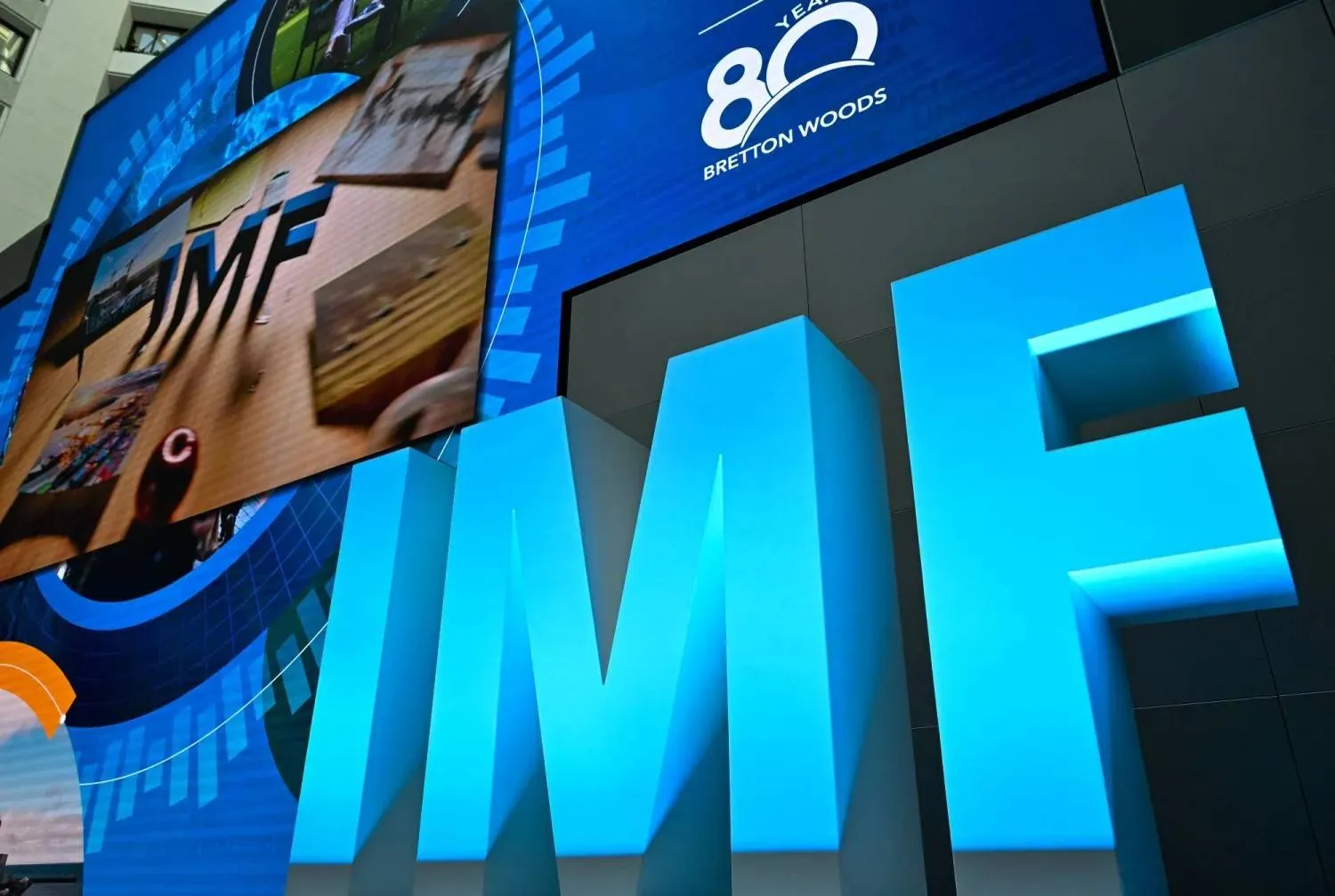
The letters IMF (for International Monetary Fund) stand next to a stage for events in the conference building of the International Monetary Fund (IMF). Soeren Stache/dpa 
TT

IMF: Wars Impose Deep and Prolonged Economic Costs on Countries

The letters IMF (for International Monetary Fund) stand next to a stage for events in the conference building of the International Monetary Fund (IMF). Soeren Stache/dpa 

Wars cause large and persistent economic losses in countries where fighting takes place, with output declining by roughly 7% over five years on average, and economic scars lasting for more than a decade, the International Monetary Fund (IMF) said in research released on Wednesday.

The IMF examined ‌the cost of active conflicts - now at the highest levels since the end of World War Two - and the macroeconomic consequences of sharp increases in military spending in two chapters of its forthcoming World Economic Outlook. The full report will be released next Tuesday.

The chapters do not address the Middle East war or the two-week ceasefire announced by US President Donald Trump late on Tuesday but offer a comprehensive look at wartime economies back to 1946, and weapons spending data from 164 countries.

In 2024, the latest year for which data is available, more than 35 countries experienced conflict in their territory and about 45% of the world's population lived in countries affected by ⁠conflict.

“Beyond their devastating human toll, wars impose large and lasting economic costs, and pose difficult macroeconomic trade-offs, especially for those countries where the fighting is taking place,” the IMF said in a blog released at the same time.

Countries engaged in foreign conflicts can avert physical destruction on their own soil and avoid large economic losses, but neighboring countries or key trading partners will feel the shock, the IMF said.

“Output losses from conflicts persist even after a decade and typically exceed those associated with financial crises or severe natural disasters,” the IMF chapter said.

It said conflicts contributed to sustained exchange rate depreciation, reserve losses and rising inflation, as widening external imbalances amplified macroeconomic stress, according to Reuters.

Military Spending Surges Globally

Rising geopolitical tensions and more frequent conflicts have sparked big jumps in military ‌spending, with ⁠about half of the world's countries increasing their military budgets over the past five years, and more increases coming as NATO countries boost weapons spending to 5% of GDP by 2035.

Arms sales by the world's largest weapons makers - many of whom are based in the US - have doubled in real terms over two decades, the IMF found.

The IMF authors found that large defense spending booms had become more frequent, especially in emerging-market and developing economies, with typical booms lasting 2-1/2 years and military spending surging by about 2.7% of GDP.

About two-thirds of these military buildups were financed by higher deficits, ⁠which could boost economic activity in the medium term, but also increased inflation and created medium-term challenges, the IMF said. That meant buildups needed to be closely coordinated with monetary policy, the IMF said.

Military Buildups Strain Budgets

On average, fiscal deficits worsened by about 2.6 percentage points of GDP and public debt increased by about 7 percentage points within three years of the start of a buildup.

About one-quarter ⁠of those buildups were financed by reprioritizing spending, often leading to a sharp decline in government spending on social programs, said Andresa Lagerborg, an IMF economist, in a taped discussion about the chapter.

Output gains were also smaller when the arms were purchased from foreign suppliers, the IMF said. Focusing on public investment in equipment and infrastructure would expand market size, ⁠support economies of scale and strengthen industrial capacity while limiting the loss of orders to overseas suppliers, it said.

IMF economist Hippolyte Balima, one of the key authors of the chapters, said the data also showed that peace was fragile, with about 40% of countries relapsing into conflict within five years.


Gold Steady as Investors Eye US-Iran Ceasefire, Brace for Inflation Data

Gold bracelets and necklaces on display for sale in a gold shop at the Grand Bazaar in Istanbul (AFP)
TT

Gold Steady as Investors Eye US-Iran Ceasefire, Brace for Inflation Data

Gold bracelets and necklaces on display for sale in a gold shop at the Grand Bazaar in Istanbul (AFP)

Gold prices were steady on Thursday as investors remained cautious about the fragile US-Iran ceasefire, with a key US inflation report due later in the day also in focus for interest rate clues.

Spot gold was little changed at $4,715.45 per ounce, as of 0716 GMT. US gold futures for June delivery fell 0.8% to $4,739.40.

"It doesn't seem like gold is looking to ‌do much at ‌this moment. I think there's still a lot ‌of ⁠speculation on what's going ⁠to happen after the ceasefire," said GoldSilver Central Managing Director Brian Lan.

Lan said he expected gold to consolidate between $4,607 and $4,860 in the near term.

US President Donald Trump vowed to retain military assets in the Middle East until a peace deal with Iran is reached and warned of a major escalation in fighting if it ⁠failed to comply, said Reuters.

On Wednesday, Israel pounded Lebanon ‌with its heaviest strikes yet, killing ‌hundreds of people and drawing a threat of retaliation from Iran.

Oil prices rose ‌on Thursday on concerns that supply from the key Middle ‌East producing region may not fully resume amid doubts that the two-week ceasefire will hold.

Spot gold has declined more than 10% since the war began on February 28, as higher energy prices fueled inflation concerns and ‌prompted markets to reassess interest rate-cut expectations, reducing non-yielding bullion's appeal.

Minutes from the Federal Reserve's March ⁠17 to ⁠18 meeting showed that more policymakers felt rate hikes could be needed to counter inflation that continued to exceed the central bank's 2% target.

US Personal Consumption Expenditures data for February, due at 1230 GMT later in the day, and March consumer price data on Friday could give further clues on the Fed's policy path.

"Beyond near-term liquidity needs, we expect gold to continue to rebuild its gains in the coming months amid heightened geopolitical risk," Standard Chartered said in a note on Wednesday.

Among other metals, spot silver fell 0.3% to $73.93 per ounce, platinum lost 1.2% to $2,005.71 and palladium edged up 0.3% to $1,558.68.


Israel Instructs Karish Offshore Natgas Platform to Reopen After Ceasefire

London-based Energean's drill ship begins drilling at the Karish natural gas field offshore Israel in the east Mediterranean May 9, 2022. REUTERS/Ari Rabinovitch/File Photo
TT

Israel Instructs Karish Offshore Natgas Platform to Reopen After Ceasefire

London-based Energean's drill ship begins drilling at the Karish natural gas field offshore Israel in the east Mediterranean May 9, 2022. REUTERS/Ari Rabinovitch/File Photo

Israel's energy ministry said on Thursday that it had ⁠instructed Energean to begin ⁠resuming operations ⁠at the Karish natural gas platform off Israel's Mediterranean coast following the ⁠ceasefire with ⁠Iran.

The ministry ordered partial, temporary closures in February of the country's gas reservoirs, in line with security assessments.

Iran, Israel and the United States are now in an uneasy, two-week ceasefire ahead of possible negotiations in Islamabad.

Tehran and Washington have offered vastly different explanations of the ceasefire’s initial terms.


Oil Prices Rise again and Asian Stocks Retreat on the Fragile Iran Ceasefire

A currency trader works near a screen showing international oil prices at the foreign exchange dealing room of the Hana Bank headquarters in Seoul, South Korea, Thursday, April 9, 2026. (AP Photo/Ahn Young-joon)
TT

Oil Prices Rise again and Asian Stocks Retreat on the Fragile Iran Ceasefire

A currency trader works near a screen showing international oil prices at the foreign exchange dealing room of the Hana Bank headquarters in Seoul, South Korea, Thursday, April 9, 2026. (AP Photo/Ahn Young-joon)

Oil rose again to above $97 a barrel and Asian stocks were trading lower Thursday on skepticism over a fragile ceasefire between the US and Iran.

Investors were closely watching whether a two-week ceasefire between the United States and Iran was already slipping after a round of deadly Israeli strikes on Lebanon that killed and injured hundreds. Iran again closed the Strait of Hormuz, in response to the attacks in Lebanon, said Reuters.

Tokyo’s Nikkei 225 dropped 0.9% to 55,824.30, while South Korea’s Kospi lost 1.6% to 5,776.03.

Hong Kong’s Hang Seng fell 0.4% to 25,801.87. The Shanghai Composite index was down 0.7% to 3,965.70.

Australia’s S&P/ASX 200 edged down 0.1%, while Taiwan’s Taiex was also 0.1% lower.

US futures were down more than 0.1%.

Oil prices were up Thursday, reversing an earlier plunge on optimism over the temporary ceasefire agreement. Brent crude, the international standard, was up 2.4% to $97.02 per barrel. It previously fell briefly to below $92 a barrel following the temporary ceasefire announcement.

Benchmark US crude was 3.3% higher on Thursday at $97.50 a barrel.

Uncertainties over global energy supply remained. The Strait of Hormuz, a chokepoint for energy transport where a fifth of the world’s oil typically passes, was largely closed even though the US repeatedly demanded that the strait must be reopened.

Talks to pursue a permanent end to the war could be taking place as soon as Friday in Pakistan, and US Vice President JD Vance is expected to be leading the negotiating team for the United States.

Wall Street closed higher Wednesday following US President Donald Trump’s announcement of a two-week ceasefire with Iran late Tuesday.

The S&P 500 jumped 2.5% to 6,782.81. The Dow Jones Industrial Average rose 2.9% to 47,909.92. The Nasdaq composite was up 2.8% to 22,635.00.

Following renewed hopes over deescalation of the war, shares of United Airlines surged 7.9% on Wednesday, American Airlines was up 5.6%, while cruise ship operator Carnival jumped 11.2%, trimming losses since the Iran war began on concerns over rising fuel costs.

In other dealings, gold and silver prices fell. Gold’s price dropped 0.7% to $4,743.20 an ounce. The price of silver fell 1.6% to $74.18 per ounce.

The US dollar rose to 158.66 Japanese yen from 158.57 yen. The euro was trading at $1.1668, up from $1.1663.
