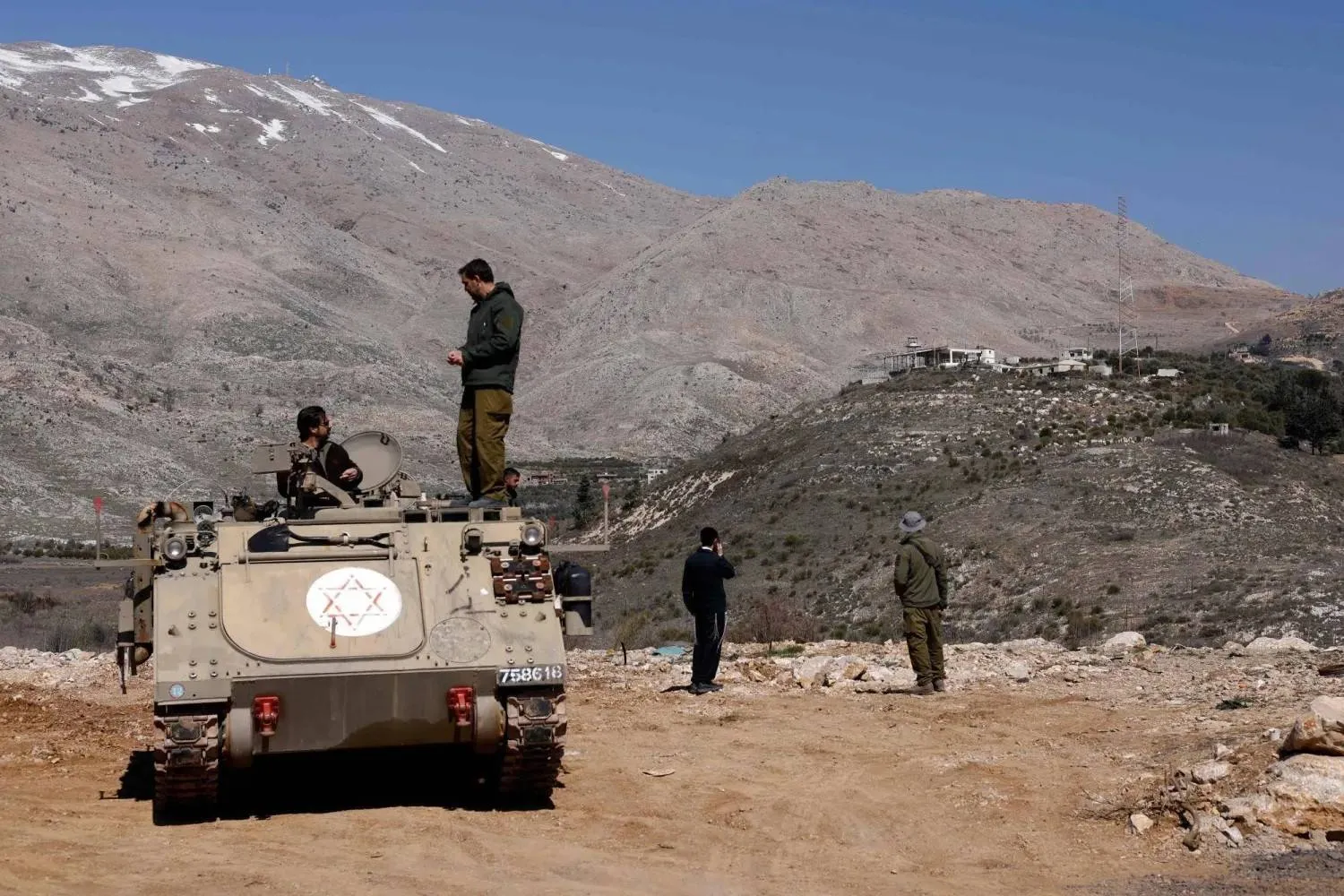

As Israeli forces press deeper into Syrian territory along the ceasefire line in the occupied Golan Heights, a Syrian official source told Asharq Al-Awsat that increased patrols by the United Nations Disengagement Observer Force (UNDOF) stem from the 1974 disengagement agreement, not new understandings with Israel.
An Israeli force on Thursday entered the village of Al-Ajraf in northern Quneitra, according to state news agency SANA.
The unit, comprising eight vehicles and more than 30 troops, set up a temporary checkpoint and searched passersby before withdrawing without making any arrests.
The move is part of a pattern of repeated incursions into the UN-monitored buffer zone separating Syrian and Israeli forces under the 1974 agreement. The incursions have continued since the ouster of former president Bashar al-Assad in December 2024.
Israel has since escalated its operations, with near-daily incursions reaching villages and towns beyond the buffer zone, where it has set up nine military bases.
UNDOF has stepped up patrols in Quneitra and Daraa along the ceasefire line, areas frequently entered by Israeli forces. It has also begun meeting residents to document alleged violations.
Quneitra governorate’s media director, Mohammed al-Saeed, said UNDOF’s deployment remains within the framework of the 1974 agreement and does not reflect new arrangements with Israel.
He said the mission monitors the ceasefire and all parties, and is currently documenting Israeli violations against Syrian sovereignty, civilians, and property in areas entered by Israeli forces. The deployment is routine, he added, but has intensified recently.
Al-Saeed said the increased UN presence has not curbed incursions, but offers some reassurance to residents by tracking troop movements and documenting violations.
Israeli forces, he said, carry out house raids, detain civilians, set up checkpoints, search passersby, block roads, disrupt services, and fire weapons to intimidate residents.
He said the actions are aimed at pressuring residents into self-displacement.
Despite this, residents are aware of the tactics and reject leaving, he said, unwilling to repeat the displacement of 1967, when similar practices forced communities from their homes.