


Lebanon PM Says Working to Get Israeli Troop Withdrawal

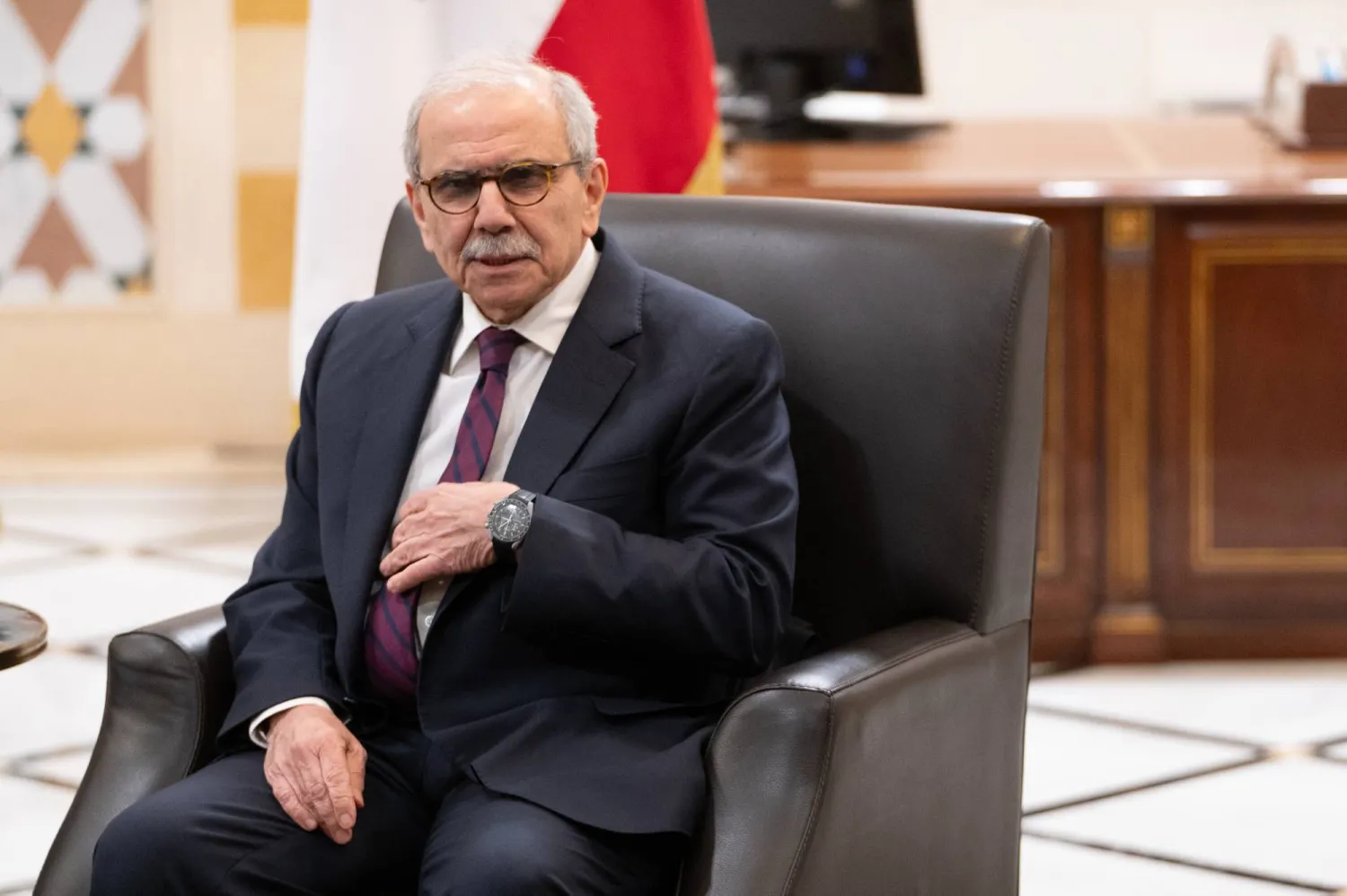
FILED - 16 February 2026, Lebanon, Beirut: Lebanese Prime Minister Nawaf Salam is pictured during a meeting at the Prime Minister's office. Photo: Markus Lenhardt/dpa
TT

Lebanon PM Says Working to Get Israeli Troop Withdrawal

FILED - 16 February 2026, Lebanon, Beirut: Lebanese Prime Minister Nawaf Salam is pictured during a meeting at the Prime Minister's office. Photo: Markus Lenhardt/dpa

Lebanese Prime Minister Nawaf Salam said Sunday he was working to stop the Israel-Hezbollah war, even as Israeli premier Benjamin Netanyahu told troops in south Lebanon that the fight there was far from over.

The Lebanese Red Cross said in a statement that one of its paramedics had been killed in the south, said AFP.

They said its teams had been "directly targeted by an Israeli drone" while on a humanitarian mission, even though "the ambulances and their crews bore the protective Red Cross emblem".

Secretary general of the International Federation of Red Cross and Red Crescent Societies, Jagan Chapagain, said he was "appalled and saddened" at the killing of a second Lebanese Red Cross volunteer in weeks.

The United Nations peacekeeping force UNIFIL said an Israeli tank rammed its vehicles on two occasions, "in one case causing significant damage".

Israel says the fragile temporary ceasefire in the wider Middle East war does not apply to its battle with Iran-backed Hezbollah in Lebanon.

It has kept up its attacks on the country as the militants fight back.

"We will continue to work to stop this war, to ensure the Israeli withdrawal from all our lands," Salam said in a televised address.

"We are continuing our efforts... to negotiate to stop the war," he added, ahead of planned talks on Tuesday in Washington between Lebanese, Israeli and US officials.

Lebanon was pulled into the Middle East conflict when Hezbollah fired rockets at Israel after US-Israeli strikes killed Iran's supreme leader.

Israel has responded with massive strikes and a ground invasion.

- 'Accountability' -

Netanyahu said Sunday that Israeli forces had eliminated the threat of an invasion by Hezbollah militants during a visit to troops in southern Lebanon.

But he added: "There is still more to do, and we are doing it.

"The war continues, including within the security zone in Lebanon," Netanyahu said in a video released by his office.

Israeli officials have repeatedly said that Israel wants to establish a "security zone" in south Lebanon to help prevent Hezbollah attacks.

Lebanon's state-run National News Agency (NNA) reported Israeli attacks on dozens of locations in the south on Sunday, with additional strikes on the adjacent West Bekaa area.

The health ministry raised the war's overall toll to more than 2,050 dead, including 165 children and more than 80 health workers.

The Lebanese Red Cross condemned attacks on its personnel as "clear and blatant violations of all provisions of international law".

Before Sunday's deadly mission, which also wounded another paramedic, "the necessary contacts were made with UNIFIL for protection and safe passage", it said.

Israel's military has repeatedly accused Hezbollah of using ambulances for military ends.

Lebanon's health ministry also said an Israeli strike on Qana killed five people, including three women, and wounded 25 others.

An AFP photographer in the southern town saw significant destruction as an excavator worked to clear debris and first responders carried a body out from under the rubble.

- 'Moral obligation' -

In south Lebanon's Bazuriyeh, Hassan Berro, a rescue worker from the Risala Scout association -- which is affiliated with the Hezbollah-allied Amal movement -- said: "Our emergency center was hit and completely destroyed, along with all its contents, including beds and medical equipment."

The AFP photographer saw windows shattered and debris covering several hospital beds in the building, where walls and ceilings were also damaged.

Also Sunday, the Israeli army accused Hezbollah of using a hospital compound in south Lebanon's Bint Jbeil "for military purposes".

Hezbollah said it had launched attacks on Israeli targets across the border and inside Lebanon, including against troops in Bint Jbeil, where the NNA reported heavy fighting.

Pope Leo XIV, who visited Lebanon late last year, expressed his closeness to the Lebanese people on Sunday.

He said there was a "moral obligation to protect the civilian population from the atrocious effects of war"


Israeli Troops Fire Tear Gas at Palestinian Schoolchildren in West Bank

 13 April 2026, Palestinian Territories, Hebron: Members of Red Crescent surround Palestinian children from Khirbet Umm al-Khair after Israeli settlers blocked the only road to their schools. (dpa)
13 April 2026, Palestinian Territories, Hebron: Members of Red Crescent surround Palestinian children from Khirbet Umm al-Khair after Israeli settlers blocked the only road to their schools. (dpa)
TT

Israeli Troops Fire Tear Gas at Palestinian Schoolchildren in West Bank

 13 April 2026, Palestinian Territories, Hebron: Members of Red Crescent surround Palestinian children from Khirbet Umm al-Khair after Israeli settlers blocked the only road to their schools. (dpa)
13 April 2026, Palestinian Territories, Hebron: Members of Red Crescent surround Palestinian children from Khirbet Umm al-Khair after Israeli settlers blocked the only road to their schools. (dpa)

Israeli forces fired tear gas at Palestinian schoolchildren staging a sit-in on Monday in the occupied West Bank, AFP footage showed, after settlers blocked access to their school.

The Israeli military confirmed to AFP it had dispersed an "unusual gathering", but did not specify whether its troops had fired tear gas at the children on the first day of class since the start of the Iran war.

The incident took place at Umm al-Khair, a small village in the southern West Bank region of Masafer Yatta.

Schoolchildren there had been due back in class on Monday for the first time in more than 40 days, after lessons were suspended following the outbreak of the Middle East war on February 28.

A group of schoolchildren and Palestinian residents had gathered near a barbed wire fence erected by Israeli settlers, which blocked access to the school, an AFP journalist reported.

Schoolchildren and some local adults were holding an open-air class as a sit-in to demand access when troops fired the tear gas, witnesses said.

"We were sitting and they threw a grenade (tear gas canister) at us. I got scared and started screaming and ran away," 12-year-old Sarah al-Hathaleen told AFP.

"I started crying. A woman hugged me and stayed with me. We were very scared."

Bassam Jabr, director of education for the Masafer Yatta area, confirmed the children were staging a sit-in at the time of the incident.

"Settlers are trying to tighten the noose on us in every way. One of these methods is cutting off the road for school students and expanding the settlement," Jabr said of settlers from the nearby Carmel settlement whose residents erected the fence.

"Sadly, there are no solutions. We will continue this sit-in today and tomorrow until we find a solution so the students can return to their schools," he said.

Israel's military said troops had been dispatched to the area.

"Soldiers were dispatched to the area of Umm Al-Khair due to reports of an unusual gathering of Palestinians in the area," the military told AFP.

"The gathering was dispersed and no injuries were reported," it said, without specifying whether tear gas had been fired.

AFP footage showed canisters being fired, with children screaming and fleeing.

"Last night we were excited for school today. The Israelis came and closed the road with barbed wire... we want to be back in school," said 11-year-old Rashid al-Hathaleen.

The Masafer Yatta region is a known hotspot for settler violence and Palestinian home demolitions.

It was in Umm al-Khair village that Palestinian activist Awdah Hathaleen was killed by a settler in August 2025.

Settler violence has also surged across the West Bank since the outbreak of the Iran war.

Excluding east Jerusalem, more than 500,000 Israelis now live in the West Bank in settlements that are illegal under international law, among some three million Palestinians.

Israel has occupied the West Bank since 1967.


Israel Army Ups Hezbollah Death Toll from April 8 Strikes to Over 250

 12 April 2026, Lebanon, Beirut: People and civil defense workers search for human remains amid the debris of a collapsed building following an Israeli air strike at the Beirut seafront. (dpa)
12 April 2026, Lebanon, Beirut: People and civil defense workers search for human remains amid the debris of a collapsed building following an Israeli air strike at the Beirut seafront. (dpa)
TT

Israel Army Ups Hezbollah Death Toll from April 8 Strikes to Over 250

 12 April 2026, Lebanon, Beirut: People and civil defense workers search for human remains amid the debris of a collapsed building following an Israeli air strike at the Beirut seafront. (dpa)
12 April 2026, Lebanon, Beirut: People and civil defense workers search for human remains amid the debris of a collapsed building following an Israeli air strike at the Beirut seafront. (dpa)

Israel's military said Monday that a massive wave of strikes in Lebanon last week killed five Hezbollah commanders, as well as more than 250 of the Iran-backed group's fighters.

The Lebanese health ministry has said Wednesday's attacks killed more than 350 people in total and wounded more than 1,200.

Israel had previously put the number of Hezbollah members killed at around 180.

"During the largest strike conducted in Lebanon, more than 250 Hezbollah terrorists and commanders were eliminated" across the country, including in the country's south, the Bekaa region and Beirut, the military said in its statement Monday.

The military named five commanders killed, including Hassen Nasser, chief of Hezbollah's logistics support headquarters, and Abu Muhammad Habib, deputy commander of the group's missile unit.

The army said Monday that it continued to operate in Lebanon, with troops surrounding the southern town of Bint Jbeil.

Last week's punishing wave of strikes came on the same day as the start of a fragile two-week truce agreed between the US and Iran in the Middle East war, which has killed thousands across the region and plunged the global economy into turmoil.

Also on Monday, Israel's military said it had struck around 150 Hezbollah targets in Lebanon over the past 24 hours. 

"In the past 24 hours, approximately 150 Hezbollah terrorist organization targets were struck in numerous areas across southern Lebanon," the military said, adding that the targets included "military structures, anti-tank missile launch points, and terror command centers". 

Lebanon was pulled into the war when Hezbollah fired rockets at Israel on March 2, days after the opening salvo of US-Israeli strikes killed Iran's supreme leader Ali Khamenei.

Israel responded with massive strikes and a ground invasion.

While Iran and mediator Pakistan had insisted Lebanon was included under the ceasefire, Israel and the US have disputed this.

Israeli and Lebanese officials are set to hold negotiations on Tuesday in Washington.


Red Cross Calls Attacks on Medical Workers in Lebanon 'Gravely Concerning'

Lebanese Red Cross volunteers inspect the damage to their rescue vehicles at the site of an Israeli drone strike that targeted their headquarters in the southern city of Tyre on April 13, 2026. (Photo by Kawnat HAJU / AFP)
TT

Red Cross Calls Attacks on Medical Workers in Lebanon 'Gravely Concerning'

Lebanese Red Cross volunteers inspect the damage to their rescue vehicles at the site of an Israeli drone strike that targeted their headquarters in the southern city of Tyre on April 13, 2026. (Photo by Kawnat HAJU / AFP)

The International Committee of the Red Cross said it was deeply concerned by attacks on medical workers in Lebanon after a deadly strike on a Red Cross center in the country on Monday and the death of a volunteer a day earlier. 

Lebanon's state news agency reported that Monday's strike, which it said was carried out by Israel, killed one person and damaged Lebanese Red Cross vehicles. 

The ICRC said the Lebanese Red Cross center in the district of Tyre, a city on Lebanon's coast, was hit by the strike. It did not comment on who was responsible or give details of the victim. 

Israel's military it had carried out a targeted strike on a "Hezbollah terrorist" in ‌Tyre on ‌Monday and was investigating reports the strike had caused damage to ‌a ⁠Red Cross center. ⁠The military did not identify the individual who it said it had killed. 

On Sunday, the Lebanese Red Cross said one of its volunteers, Hassan Badawi, had died from his injuries after a strike by an Israeli drone in the district of Bint Jbeil in southern Lebanon. 

Badawi had volunteered for the Lebanese Red Cross since 2022, his friend Ahmed Qassam told Reuters during his funeral on Monday. 

He was buried in a temporary grave in Choueifat, south of Beirut, ⁠as it was not possible to access Badawi's home village of ‌Sultaniyah in Bint Jbeil district, due to intensive ‌fighting there. Israeli troops on Monday launched an attack to seize the key border town in ‌southern Lebanon. 

"I was waiting for a phone call from him to tell me, 'Mother, ‌I'm fine.' He didn't call me. My heart was burning," Badawi's mother, Ahlam Badawi, said. 

"They (the Israeli military) attacked him directly. He was just doing humanitarian work. He was not doing anything more," Badawi's father, Ali Badawi, added. 

The Israeli military had no immediate comment on the accusation. Earlier, it had ‌said it had struck a "Hezbollah terrorist" in the area and that it was reviewing the incident after it received reports of ⁠injury to a ⁠Red Cross team. 

Agnes Dhur, head of the ICRC delegation in Lebanon, said in a statement on Monday: "The loss of those who dedicate their lives to saving others is gravely concerning, given the impact on the civilians who depend on their help." 

"Humanitarian and medical personnel must be protected. They must be allowed to reach and help the wounded, and return unharmed," she added. 

The latest war in Lebanon began on March 2, when Lebanese armed group Hezbollah fired at Israeli positions in support of its patron Iran. 

Israel has since escalated its air and ground campaign in the country where its operations have killed more than 2,000 people, displaced more than 1 million and triggered a warning that hospitals could run out of life-saving supplies.
