


Russia Offers to Take in Iran's Enriched Uranium

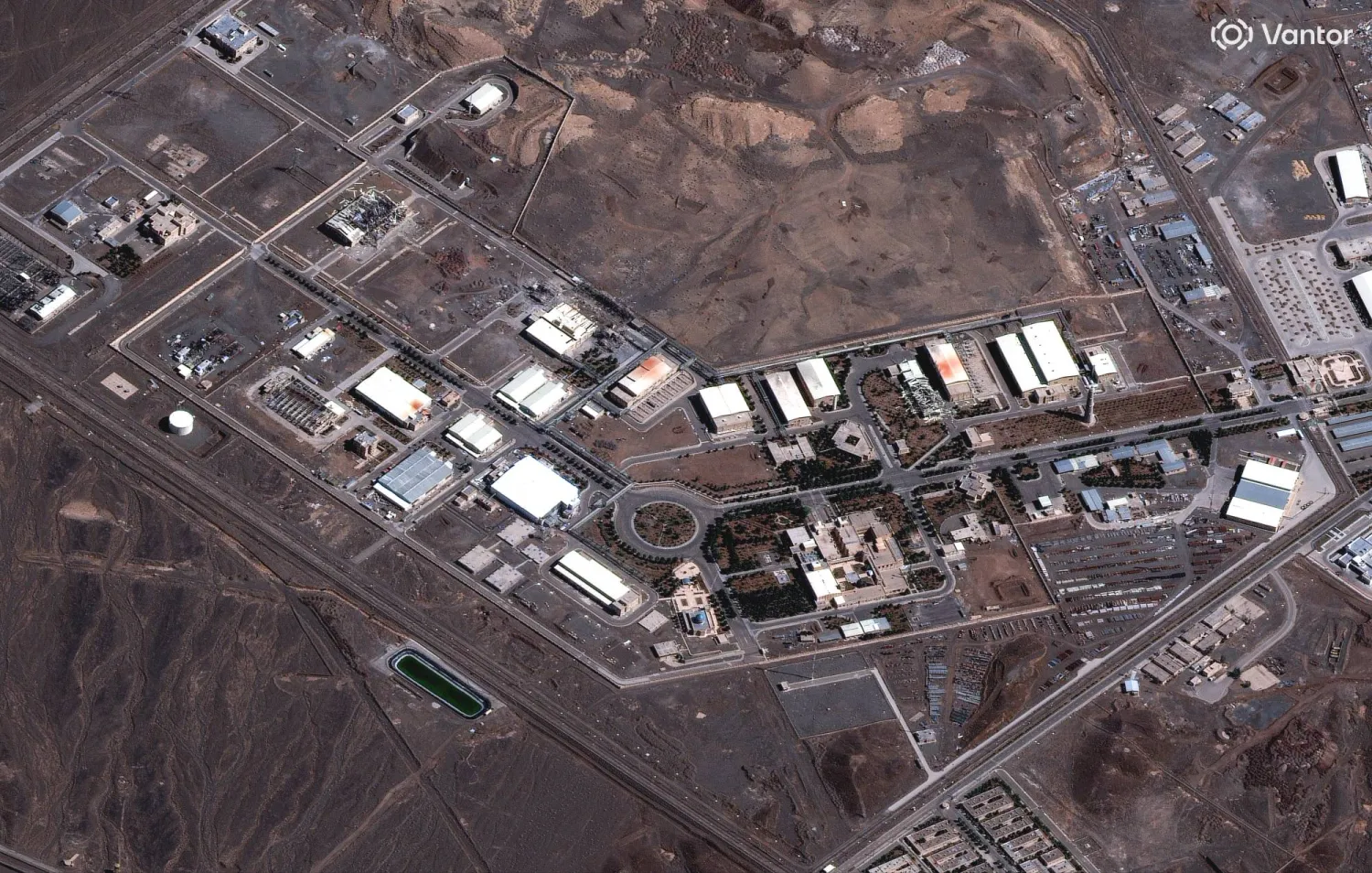
FILE - This satellite image provided by Vantor shows the Natanz nuclear complex in Iran on March 7, 2026, with no new damage seen at the facility or the tunnels. (Satellite image ©2026 Vantor via AP, file)
TT

Russia Offers to Take in Iran's Enriched Uranium

FILE - This satellite image provided by Vantor shows the Natanz nuclear complex in Iran on March 7, 2026, with no new damage seen at the facility or the tunnels. (Satellite image ©2026 Vantor via AP, file)

Russia is ready to take in Iran's enriched uranium as part of a future peace deal with the United States, the Kremlin said on Monday.

Failed talks between Iran and the United States over the weekend dashed hopes of a swift deal to permanently end the war that has killed thousands and thrown the global economy into turmoil since it began in late February.

Russia, which possesses the world's largest stockpile of nuclear weapons, has repeatedly offered to host Iran's enriched uranium as part of any peace deal.

"This proposal was voiced by President (Vladimir) Putin in contacts with both the United States and regional states. The offer still stands, but has not been acted upon," the Kremlin's spokesman Dmitry Peskov told reporters on Monday in response to a question by AFP.

The Kremlin also criticized Trump's threat to blockade the Strait of Hormuz, a key waterway that has been at a standstill since the US and Israel began striking Iran in late February.

"Such actions will likely continue to negatively impact the international market," Peskov said.



Netanyahu Says Israel Supports Trump's Iran Naval Blockade

FILE PHOTO: A map showing the Strait of Hormuz is seen in this illustration taken March 23, 2026. REUTERS/Dado Ruvic/Illustration/File Photo
TT

Netanyahu Says Israel Supports Trump's Iran Naval Blockade

FILE PHOTO: A map showing the Strait of Hormuz is seen in this illustration taken March 23, 2026. REUTERS/Dado Ruvic/Illustration/File Photo

Prime Minister Benjamin Netanyahu said Monday that Israel supports US President Donald Trump's decision to impose a naval blockade on Iran, adding that his government is in full coordination with Washington on the matter.

"Iran violated the rules (of the peace talks in Pakistan), President Trump decided to impose a naval blockade," Netanyahu said at a cabinet meeting, according to a video statement released by his office, AFP reported.

"We, of course, support this firm position, and we are in constant coordination with the United States."

The US military said it would begin a blockade of all Iranian ports on Monday after weekend talks with Tehran ended without a deal.

Trump had announced on social media that he would blockade the strategic Strait of Hormuz trade route that he has been demanding Tehran fully re-open, after Vice President JD Vance left the failed negotiations with an Iranian delegation in Islamabad.

The US military said the blockade would begin at 1400 GMT, and apply to all ships leaving or seeking to dock at Iranian ports on either side of the key waterway.

Netanyahu said Tehran had violated the terms of the talks to begin with, saying Vance had briefed him after the negotiations ended in Islamabad.

"The breakdown came from the American side, which could not tolerate Iran's blatant violation of the terms for entering negotiations," Netanyahu told the cabinet.

"The agreement was that there would be a ceasefire, and that the Iranians would immediately open the strait. They did not do so. The Americans could not accept this."

Netanyahu also said Vance had told him the "central issue" for Trump was the removal of all enriched uranium from Iran and "ensuring that there is no further enrichment in the years ahead -- even decades ahead -- no enrichment within Iran".

"That is their focus, and of course it is important to us as well," Netanyahu added.


Iran in Touch with India on Ships Passage through Strait of Hormuz, Iranian Envoy Says

A vessel at the Strait of Hormuz, off the coast of Oman’s Musandam province, April 12, 2026. REUTERS
TT

Iran in Touch with India on Ships Passage through Strait of Hormuz, Iranian Envoy Says

A vessel at the Strait of Hormuz, off the coast of Oman’s Musandam province, April 12, 2026. REUTERS

Iran has "good contact" with the Indian government on passage of the South Asian nation's ships through the Strait of Hormuz and wants to help New Delhi, Iranian Ambassador to India Mohammad Fathali said on Monday.

The US-Israeli war on Iran, which began in February, has restricted shipping through the key route - a conduit for 40% of India's crude imports - impacting trade and squeezing oil supplies.

This came as ⁠the US Central Command said in a note to seafarers seen by Reuters on ⁠Monday that US military will enforce a blockade ​in Gulf of Oman and Arabian Sea east of the Strait of Hormuz and it will ‌apply to ‌all ​vessel ‌traffic regardless ⁠of ​flag.

The advanced note ‌said ‌the blockade ​would ‌come into effect at ‌1400 GMT on Monday.

"Any vessel entering or departing the blockaded ‌area without authorization is subject to interception, ⁠diversion, ⁠and capture," the note said.

"The blockade will not impede neutral transit passage through the Strait of Hormuz to or from non-Iranian destinations." 


Suspected Militants Kill Police Officer Assigned to Guard Polio Team as Nationwide Campaign Begins in Pakistan

Health workers administer polio vaccines to children during a campaign in Dera Ismail Khan, Pakistan, 13 April 2026.  EPA/SAOOD REHMAN
Health workers administer polio vaccines to children during a campaign in Dera Ismail Khan, Pakistan, 13 April 2026. EPA/SAOOD REHMAN
TT

Suspected Militants Kill Police Officer Assigned to Guard Polio Team as Nationwide Campaign Begins in Pakistan

Health workers administer polio vaccines to children during a campaign in Dera Ismail Khan, Pakistan, 13 April 2026.  EPA/SAOOD REHMAN
Health workers administer polio vaccines to children during a campaign in Dera Ismail Khan, Pakistan, 13 April 2026. EPA/SAOOD REHMAN

Suspected militants opened fire on a vehicle carrying police officers assigned to protect polio workers in northwestern Pakistan on Tuesday, killing one of them and wounding four others before fleeing the scene, police said. Two attackers were killed when police returned fire, The Associated Press said.

The shooting occurred in Hangu, a district in Khyber Pakhtunkhwa province bordering Afghanistan, shortly after Pakistan launched its second nationwide anti-polio campaign of the year, according to local police official Mahmood Alam.

No group immediately claimed responsibility, but suspicion is likely to fall on the Pakistani Taliban and local militant groups, which often carry out similar attacks in the region and elsewhere. Pakistan and neighboring Afghanistan remain the only countries where polio has not been eradicated, according to the World Health Organization.

First lady Aseefa Bhutto Zardari urged families to ensure their children are vaccinated during the weeklong drive, which aims to reach more than 45 million children under 5 across all provinces and regions. She said the campaign will be conducted in coordination with Afghanistan, reflecting a shared commitment to interrupt cross-border transmission and close remaining gaps.

Aseefa is the daughter of President Asif Ali Zardari and former Prime Minister Benazir Bhutto, who was killed in a 2007 gun and bomb attack by militants, and who had personally overseen initiatives aimed at eliminating polio during her tenure. In a statement, she said “Pakistan stands at a crucial moment in the fight against polio.” She said while the country is closer than ever to eradication, “the final stretch remains the most challenging.”

Highlighting recent gains, she said 31 polio cases were reported nationwide in 2025, while only one case has so far been recorded this year, but warned against complacency.

Pakistan’s polio eradication program has been running anti-polio campaigns for years, though health workers and the police assigned to protect them are often targeted by militants who falsely claim the vaccination campaigns are a Western conspiracy to sterilize children.

Authorities have deployed thousands of police officers to protect workers following intelligence warnings of possible attacks. More than 200 polio workers and the police assigned to guard them have been killed in Pakistan since the 1990s, according to officials.