


Bank of America Pledges $250 Billion for US Infrastructure Financing

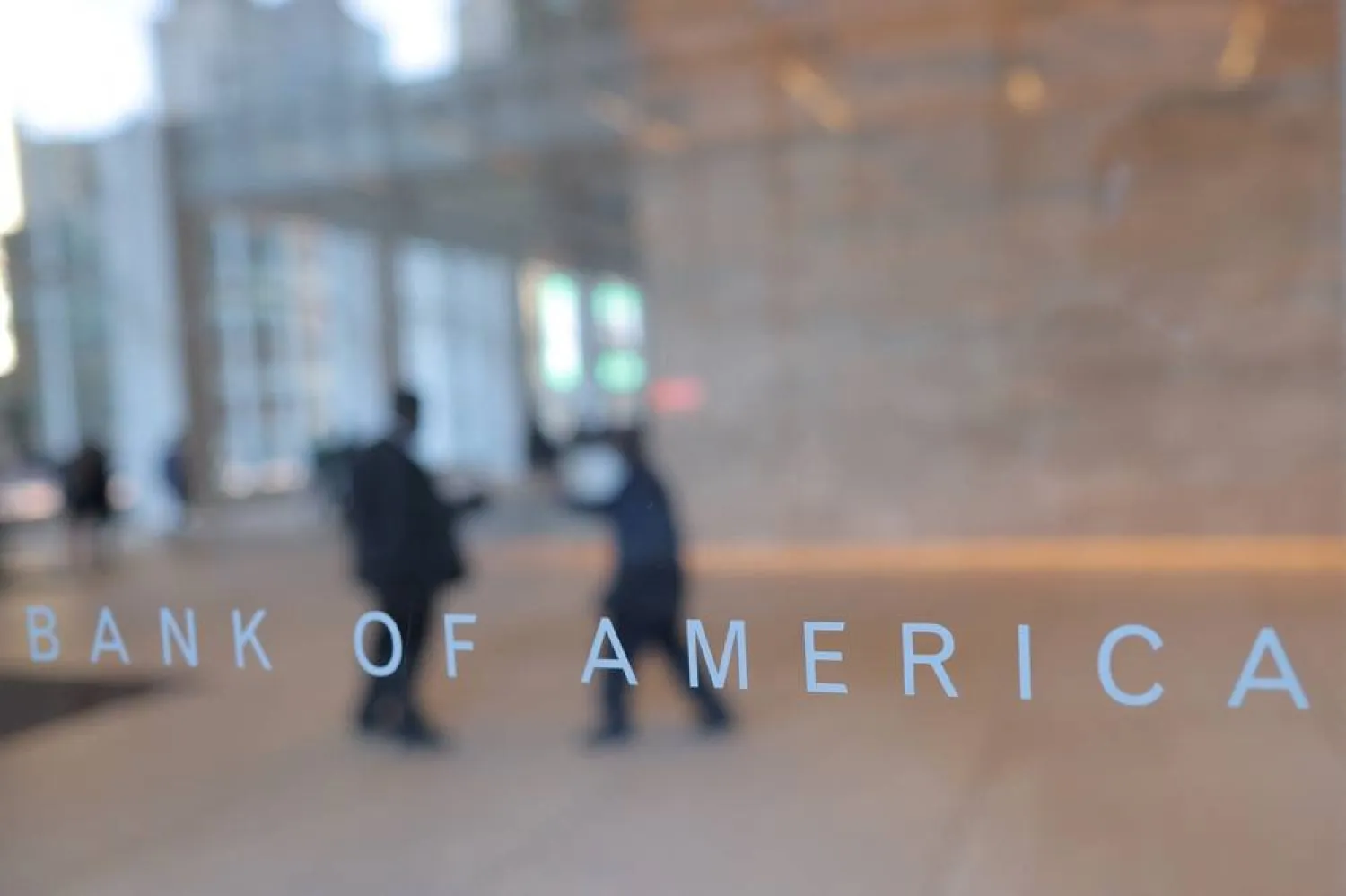
Signage is seen at the Bank of America Tower in Manhattan, New York City, New York, US, November 2, 2022. (Reuters)
TT

Bank of America Pledges $250 Billion for US Infrastructure Financing

Signage is seen at the Bank of America Tower in Manhattan, New York City, New York, US, November 2, 2022. (Reuters)

Bank of America said on Wednesday it plans to deploy $250 billion by July 2027 to support US digital and infrastructure projects, a move it says will boost the country's economic growth and help create tens of thousands of jobs.

The Wall Street bank said its "Critical Infrastructure Finance Initiative," launched on the heels of the nation's 250th anniversary celebrations, will provide primary market lending, investments, ‌capital markets services, ‌and banking and advisory offerings.

The announcement underscores how ‌major ⁠US financial institutions are seeking ⁠to capitalize on rising demand for AI data centers, critical minerals and energy infrastructure upgrades.

It comes days after Morgan Stanley said it would facilitate roughly $1.5 trillion over the next decade to finance technology and infrastructure projects.

Last year JPMorgan Chase launched a $1.5 trillion plan to facilitate, finance and invest in industries deemed critical to the US national security and economic resilience, including defense, ⁠energy and advanced manufacturing.

BOOSTING GROWTH, CREATING JOBS

Bank of ‌America's financing will target three areas: ‌digital infrastructure, including data centers and computing; energy and power infrastructure, including renewable generation ‌and energy storage; and core infrastructure such as transportation and natural gas.

"Meeting ‌America's growing infrastructure needs requires mobilizing capital at scale across increasingly interconnected sectors," said Karen Fang, global head of infrastructure and sustainable finance at Bank of America.

"Delivering these projects requires integrated financing solutions spanning corporate and project-level capital in both public ‌and private markets."

The $250 billion target will be measured over an 18-month period from January 1, 2026, to July ⁠4, 2027, ⁠the bank said.

"If we all do our job right, we should be deploying more capital," said Fang, who is also co-head of global capital solutions at BofA, when asked about potential deployment of more capital after July 2027.

Many projects require new infrastructure to be built before becoming operational, she said.

In the United States, infrastructure construction loans typically have terms of five to seven years. Once projects are completed and operating, they are often refinanced with longer-term debt lasting 10, 15 or 20 years, Fang said.

She said greater infrastructure investment would help drive economic growth and create long-term jobs.

"Infrastructure spending will lead to economic growth and prosperity," she said.


IEA Cuts 2026 Oil Demand Forecast Again as Hormuz Remains Shut

Boats and a vessel in the Strait of Hormuz, as seen from Musandam, Oman, August 3, 2026. (Reuters)
TT

IEA Cuts 2026 Oil Demand Forecast Again as Hormuz Remains Shut

Boats and a vessel in the Strait of Hormuz, as seen from Musandam, Oman, August 3, 2026. (Reuters)

The International Energy Agency on Wednesday sharply reduced its forecast for global oil demand this year, as supplies remain crimped by the closure of the Strait of Hormuz and high prices deter buyers.

Demand is expected to slump by 1.6 million barrels per day (mb/d), compared with its forecast slump of one million barrels in its previous monthly report in July.

Crude prices have remained well above levels seen before the US and Israeli attacks on Iran in late February, sparking a war that has seen Iran launch attacks at several Gulf countries.

Tehran also responded by effectively shutting down tanker and cargo traffic in the Strait of Hormuz, through which around one-fifth of global oil supplies usually transit.

"The ongoing closure of the Strait of Hormuz and elevated fuel prices continue to weigh on oil consumption," the Paris-based IEA said.

Despite a purported ceasefire and repeated claims that a deal to open the strait was imminent -- what the IEA referred to as "sudden diplomatic pivots" -- only a handful of ships are being let through, leading to volatile pricing on global oil markets.

The IEA said global supplies rose by 2.4 million barrels per day in July, to reach 101.5 mb/d, but that was still 6.3 mb/d lower than a year ago.

But "renewed hostilities and maritime disruptions in July and early August undermined the recovery efforts," the agency said.

It now expects global supply to fall by 4.3 mb/d on average this year, before recovering next year.

On the demand side, the IEA is projecting a return to growth in the fourth quarter of this year.


Oil Rises After Attacks on Ships in Hormuz, Bab el-Mandeb

A drone view of drilling rigs in Midland, Texas, US, June 11, 2025. (Reuters)
TT

Oil Rises After Attacks on Ships in Hormuz, Bab el-Mandeb

A drone view of drilling rigs in Midland, Texas, US, June 11, 2025. (Reuters)

Oil prices rose on Wednesday after attacks on two ships reinforced worries about disruptions to Middle East supplies, while industry data showing swelling inventories of US crude might keep bulls in check.

Brent futures were up 90 cents, or 1%, at $89.81 a barrel by 0757 GMT, set for their sixth day of gains. US West Texas Intermediate (WTI) crude climbed 88 cents, ‌or 1.1%, to $84.08, ‌up for a fifth day. Both contracts earlier ‌rose ⁠more than $1.

The United States ⁠and Yemen's Iran-aligned Houthis reported separate attacks on shipping in the Strait of Hormuz and the Bab el-Mandeb Strait on Tuesday, two crucial export valves for Middle Eastern oil and gas in addition to the Suez Canal.

Iran's top security official said Hormuz would stay closed unless the US accepted Iran's conditions to end the war, including release of its frozen ⁠assets.

Shipping data showed the number of vessels transiting ‌Hormuz fell to a one-week low of ‌eight on Tuesday. Before the war, 125 to 140 vessels passed through the ‌crucial waterway each day.

In Libya, the country's National Oil Corporation ‌said all fires at fuel storage tanks in the Zawiya oil complex were under control.

On the supply front, a Reuters poll showed that US crude oil and fuel inventories were expected to have fallen last week.

However, market sources citing ‌American Petroleum Institute data said US crude inventories rose sharply, while gasoline and distillate stocks fell.

Crude stocks rose ⁠by about 9.1 ⁠million barrels, while gasoline and distillate inventories fell by 1.5 million barrels and 596,000 barrels, respectively, from the previous week, the sources said.

The crude build far exceeded expectations and, if confirmed by the Energy Information Administration report later on Wednesday, could ease market concerns about supply tightness, Haitong Futures said in a note.

Official numbers from the EIA, the statistical arm of the US Department of Energy, are due at 10:30 a.m. ET (1430 GMT).

For longer-term supply, the EIA expected significant disruptions to Middle East crude supplies to persist through the end of 2027. The EIA said it expects 2026 Brent crude oil prices to average $86.81 a barrel, and WTI to average $80.88.


US Consumer Prices Likely Increased Moderately in July as Gasoline Prices Eased

A woman shops for food items from a wholesale retailer in Alhambra, California on August 11, 2026. (AFP)
TT

US Consumer Prices Likely Increased Moderately in July as Gasoline Prices Eased

A woman shops for food items from a wholesale retailer in Alhambra, California on August 11, 2026. (AFP)

US consumer prices likely increased moderately in July, which could further reduce financial market expectations for the Federal Reserve to raise interest rates this year.

The Labor Department's Consumer Price Index report on Wednesday would follow on the heels of news last week of surprise job losses last month.

Economists said the United States' position as a net oil exporter and the drawing down of petroleum inventories had cushioned the hit on the economy from the oil price shock sparked by the Middle East conflict.

Still, they viewed inflation risks as tilted to the upside, with no resolution to the US-Israeli war with Iran. President Donald Trump accused Iran of being "devious negotiators" in an interview released late on Monday and described some of his current options in the war — "just bop along" and let Tehran fail economically or hit them "really, really hard."

"I don't ‌expect any significant ‌firework when the numbers come out," said Sung Won Sohn, a finance and economics ‌professor at ⁠Loyola Marymount University. "I ⁠don't really see the Fed either raising or lowering interest rates, unless things turn out badly for both unemployment and the CPI."

The CPI likely rebounded 0.1% last month, a Reuters survey of economists predicted, after falling 0.4% in June - the first decline in six years. In the 12 months through July, the CPI was forecast to have increased 3.4% after advancing 3.5% in June.

The anticipated small monthly increase in the CPI would reflect a further decline in gasoline prices, which averaged $4.064 a gallon in July compared to $4.184 in June, according to data from the Energy Information Administration. Gasoline ⁠prices have dropped from an average of $4.609 a gallon in May.

Food prices likely ‌increased marginally, in line with their recent trend. Goods prices, including ‌household furniture and apparel amid the fading pass-through from tariffs, will likely account for the moderate rise in the CPI.

INFLATION STILL ‌RUNNING ABOVE TARGET

Outside the volatile energy and food components, the CPI was forecast to rise 0.2% last month ‌after being unchanged in June. That would translate to a year-on-year increase of 2.5% in the so-called core CPI inflation.

The US central bank tracks the Personal Consumption Expenditures price indexes for its 2% inflation target. While cooler inflation readings could further temper rate hike expectations, they would likely be of little comfort to consumers, with wages not keeping up with prices.

"It's an improvement, but ‌both of those numbers are still extremely high and unpleasant for consumers," said Tani Fukui, an economist at MetLife Investment Management.

The high cost of living has ⁠soured many Americans' views ⁠of Trump, and could weigh on the Republican party's chances in the November midterm elections that will determine control of the US Congress for the next two years.

Trump won the 2024 presidential election in large part because of his promise to lower inflation.

Core inflation was seen lifted by rebounds in the prices of used cars and trucks as well as education and communication goods. Increases were also expected in airfares.

A mild pick-up in rents was anticipated, but economists were divided on whether prices for hotel and motel rooms would continue their decline.

Still, benign core CPI inflation readings were unlikely to be replicated in the core PCE price measure, which left some economists to continue to expect the Fed to tighten monetary policy in September.

Prior to the data, economists forecast core PCE inflation rising 0.2% over the month after gaining 0.1% in June. That would translate to a year-on-year increase of 3.3%, which would match June's rise. Components in the core basket have different weights in the core CPI basket.

"A report in line with our expectations would strengthen the case for the Fed hiking in September," said Stephen Juneau, a U.S. economist at Bank of America Securities.
