


Pakistani Delegation Arrives in Tehran in Move to Ease Tensions and Arrange More US-Iran Talks

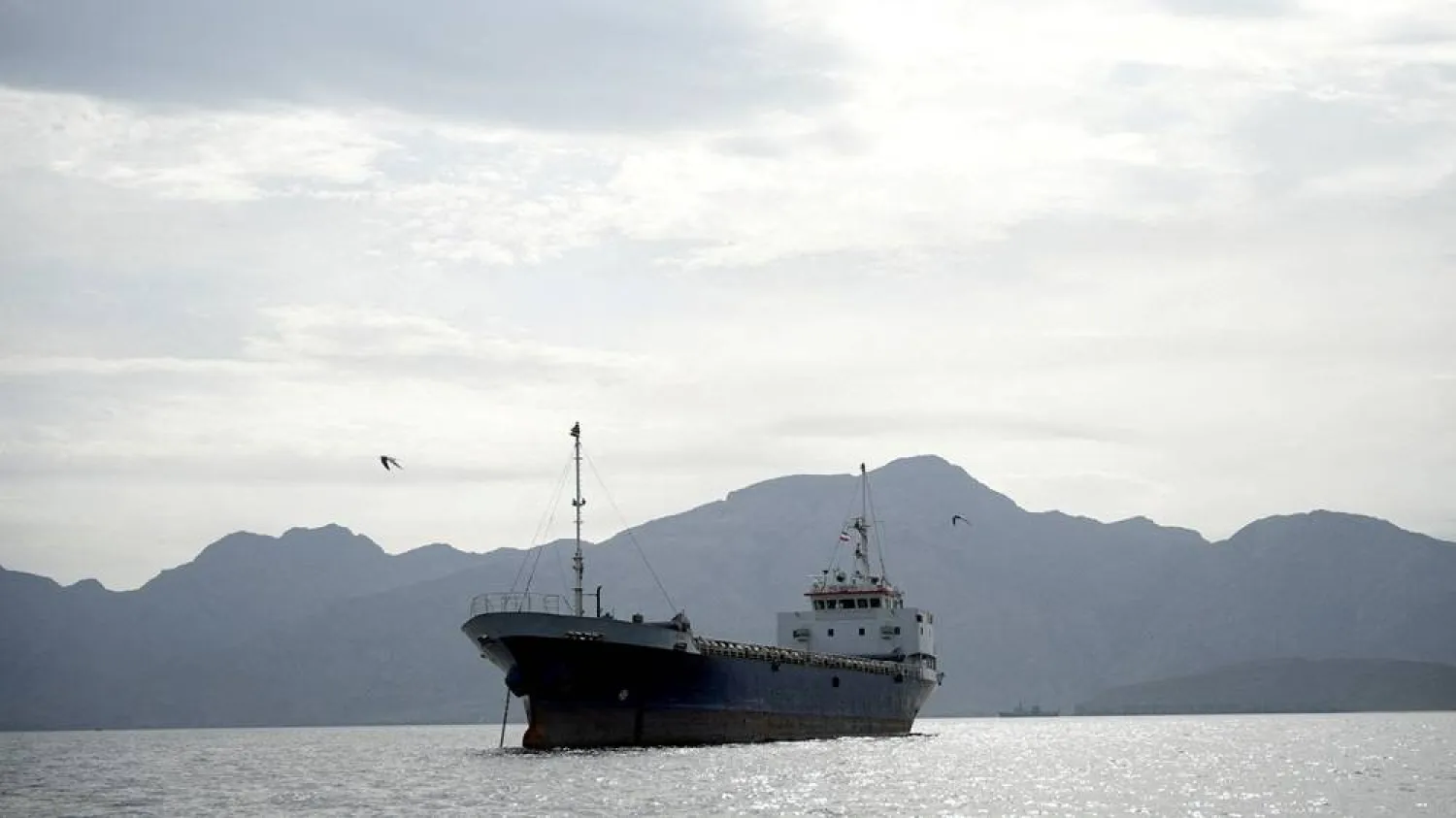
A vessel in the Strait of Hormuz, off the coast of Oman’s Musandam province, April 12, 2026. (Reuters)
TT

Pakistani Delegation Arrives in Tehran in Move to Ease Tensions and Arrange More US-Iran Talks

A vessel in the Strait of Hormuz, off the coast of Oman’s Musandam province, April 12, 2026. (Reuters)

Pakistan’s army chief arrived Wednesday for talks in Tehran in the latest diplomatic move to ease tensions in the Middle East and arrange a second round of negotiations between the United States and Iran after almost seven weeks of war. 

The Pakistani military said the delegation also included the country's interior minister and other senior security officials. The group is “part of the ongoing mediation efforts,” the military said, but it gave no details. 

Pakistan has emerged as a key mediator in the conflict after it hosted rare direct talks between the US and Iran in Islamabad, a move authorities said helped narrow differences between the two sides. 

Meanwhile, Pakistani Prime Minister Shehbaz Sharif arrived in Saudi Arabia on an official visit to discuss regional issues. A statement from Sharif’s office said he was received at the airport in Jeddah by senior Saudi officials. Sharif was accompanied by Pakistan's foreign minister and information minister. 

Progress  

The US blockade on Iranian ports and renewed Iranian threats strained the week-old ceasefire agreement, but regional officials said they were making progress, telling The Associated Press that the United States and Iran had an “in principle agreement” to extend it to allow for more diplomacy. They spoke on condition of anonymity to discuss the matter. 

But even as mediators worked for peace, tensions simmered. The commander of Iran’s joint military command, Ali Abdollahi, threatened to halt trade in the region if the US does not lift its naval blockade. 

Iranian Foreign Ministry spokesman Esmail Baghaei, announcing the incoming Pakistani delegation, said Islamabad “has held discussions with the Americans and has also heard our stances. During this visit the views of both sides are to be discussed in detail.” 

A senior US official said the United States has not formally agreed to extend the ceasefire and that “engagement” with Iran continues. The official spoke on condition of anonymity because they were not authorized to publicly discuss the sensitive negotiations. 

Sticking points  

Before the two-week ceasefire expires on April 22, mediators are pushing for a compromise on three main sticking points that derailed direct talks last weekend — Iran’s nuclear program, the Strait of Hormuz and compensation for wartime damages, according to a regional official who spoke on condition of anonymity to discuss the mediation efforts. 

Baghaei said Iran is open to discussing the type and level of its uranium enrichment, but his country “based on its needs, must be able to continue enrichment,” Iran’s state-media reported. 

The negotiating team led by Vice President JD Vance during last weekend's talks in Islamabad urged the Iranians to agree to a 20-year moratorium on uranium enrichment as part of a potential deal to end the war, according to a regional official involved in the mediation efforts and a person briefed on the matter. 

The Iranians rejected the US plan and countered with an offer to suspend enrichment for five years, the regional official and the person briefed on the matter added. They spoke on condition of anonymity because they were not authorized to comment publicly on the negotiations. 

The White House rejected the Iranian proposal. The US and Iranian proposals were first reported by The New York Times. 

The fighting has killed at least 3,000 people in Iran, more than 2,100 in Lebanon, 23 in Israel and more than a dozen in Gulf Arab states. Thirteen US service members have also been killed. 

Trump says Iran wants a deal  

The war, now in its seventh week, has jolted markets and rattled the global economy as shipping has been cut off and airstrikes have torn through military and civilian infrastructure across the region. Oil prices fell on hopes for an end to fighting on Wednesday, and US stocks surged close to records set in January. 

Yet the future of the fragile ceasefire still hung in the balance as the US pressed ahead with its blockade, which threatens to sever Iran from economic lifelines it has relied on since the war began nearly seven weeks ago, and Tehran threatened regional trade. 

“I think they want to make a deal very badly,” US President Donald Trump said in an excerpt from an interview with the Fox Business Network’s “Mornings with Maria” that aired Wednesday.  

He added: “I view it as very close to over.” 

Trump claimed Wednesday that China has agreed not to provide weapons to Iran as reports circulated that Beijing has considered transferring arms. 

Trump wrote in a social media post that China is “very happy that I am permanently opening the Strait of Hormuz.” He added: “They have agreed not to send weapons to Iran.” He seemed to suggest the two are linked. 

China has long supported Iran’s ballistic missile program and backed it with dual-use industrial components that can be used for missile production, according to the US government. 

US military says no ships got past blockade  

US Central Command said Wednesday that no ships made it past the blockade in the first 48 hours, while nine merchant vessels complied with direction from US forces to turn around and reenter Iranian waters. 

The blockade is intended to pressure Iran, which has exported millions of barrels of oil, mostly to Asia, since the war began Feb. 28. Much of it has likely been carried by so-called dark transits that evade sanctions and oversight, providing cash that’s been vital to keeping Iran running. 

Since the war began, Iran has curtailed maritime traffic, with most commercial vessels avoiding the waterway. Tehran's effective closure of the strait, through which a fifth of global oil transits in peacetime, has sent oil prices skyrocketing, pushing up the cost of gasoline, food and other basic goods far beyond the Middle East. 

Strikes continue in Lebanon after Washington talks  

Elsewhere, Israel pressed ahead with its aerial and ground war in Lebanon. The country's National News Agency reported airstrikes and artillery shelling throughout southern Lebanon on Wednesday, including near Bint Jbeil, where Israeli forces have encircled fighters with the Lebanese Iran-backed group Hezbollah. 

The fighting continued after Israeli and Lebanese officials concluded their first direct talks in decades. 

The Lebanese Health Ministry said Israel struck three different teams of paramedics Wednesday in southern Lebanon, first hitting one team and then two more that rushed to help. The attacks killed three paramedics, wounded six others and left a fourth missing in the southern town of Mayfadoun, the ministry said.  

The Israeli military did not immediately respond to a request for comment. 

An Israeli official said a meeting of the country's security cabinet would be held Wednesday evening to discuss developments with Lebanon. The official spoke on the condition of anonymity because they were not authorized to speak to the media. 

Israel and Lebanon have technically been at war since Israel was established in 1948, and Lebanon remains deeply divided over diplomatic engagement with Israel. 


Iran Reopens Strait of Hormuz, but Trump Says Blockade on Iranian Ships and Ports Will Stay in Force

The Malta-flagged tanker Agios Fanourios I, an oil tanker that sailed through the Strait of Hormuz, arrives in Iraq’s territorial waters off Basra, Iraq April 17, 2026. (Reuters)
TT

Iran Reopens Strait of Hormuz, but Trump Says Blockade on Iranian Ships and Ports Will Stay in Force

The Malta-flagged tanker Agios Fanourios I, an oil tanker that sailed through the Strait of Hormuz, arrives in Iraq’s territorial waters off Basra, Iraq April 17, 2026. (Reuters)

Iran said Friday it fully reopened the Strait of Hormuz to commercial vessels, but President Donald Trump said the American blockade on Iranian ships and ports “will remain in full force” until Tehran reaches a deal with the US, including on its nuclear program.

Iranian Foreign Minister Abbas Araghchi posted on X that the crucial waterway, through which about 20% of the world's oil is shipped, was now fully open to commercial vessels, as a 10-day truce between Israel and the Iran-backed Hezbollah group in Lebanon appeared to hold.

Trump initially celebrated the Iranian announcement, posting on social media that the strait was "fully open and ready for full passage.” But minutes later, he issued another post saying the US Navy's blockade would continue “UNTIL SUCH TIME AS OUR TRANSACTION WITH IRAN IS 100% COMPLETE.”

The president also said Iran, with help from the US, is working to remove all mines from the strait.

Trump imposed the blockade earlier this week after Iran restricted traffic through the strait due to fighting in Lebanon, which Iran claimed to be a breach of the Pakistan-brokered ceasefire reached between the US, Israel and Iran.

At the time, Trump said the blockade would enforce an “all or none” policy in hopes of pressuring Iran to reopen the strait.

The president's decision to continue the blockade despite Iran’s announcement appeared aimed at sustaining pressure on Tehran as the fate of the two-week ceasefire reached last week remains uncertain. Direct talks between the US and Iran last weekend were inconclusive, as the two nations differed over Iran’s nuclear program and other points.

Truce in Lebanon could help US-Iran peace efforts

Oil prices fell on hopes of a deal. The head of the International Energy Agency had warned that energy shocks could get worse if the strait did not reopen.

The truce in Lebanon could clear one major obstacle to a deal between Iran, the United States and Israel to end weeks of devastating war. But it was unclear to what extent Hezbollah would abide by a deal it did not play a role in negotiating and which will leave Israeli troops occupying a stretch of southern Lebanon.

Trump said in another post that Israel is “prohibited” by the US from further strikes on Lebanon and that “enough is enough” in the Israel-Hezbollah war. The White House did not immediately respond to a question about whether the prohibition spans both offensive and defensive strikes.

Shortly before Trump's social media post, Israeli Prime Minister Benjamin Netanyahu said Israel agreed to the ceasefire in Lebanon “at the request of my friend President Trump,” but that the campaign against Hezbollah is not complete.

He claimed Israel had destroyed about 90% of Hezbollah’s missile and rocket stockpiles and added that Israeli forces “have not finished yet” with the dismantling of the group.

Celebrations in Beirut

In Beirut, celebratory gunshots rang out across the Lebanese capital at the start of the truce. Displaced families began moving toward southern Lebanon and Beirut’s southern suburbs despite warnings by officials not to return to their homes until it became clear whether the ceasefire would hold.

A spokesperson for the UN peacekeepers in southern Lebanon said Friday they had not observed any airstrikes since midnight, but accused the Israeli military of violating airspace and of artillery shelling in southern Lebanon. The Israeli military did not immediately comment.

According to the agreement shared by the State Department, Israel can act in self-defense against imminent attacks but cannot carry out offensive operations against southern Lebanon.

Trump heralded the deal a “historic day for Lebanon” and expressed confidence the war with Iran would soon end.

“I will say the war in Iran is going along swimmingly,” Trump said in a Las Vegas speech. “It should be ending pretty soon.”

An end to Israel’s war with Hezbollah was a key demand of Iranian negotiators, who previously accused Israel of breaking the current ceasefire with strikes on Lebanon. Israel said that deal did not cover Lebanon.

Pakistan’s army chief met Thursday with Iran’s parliament speaker as part of international efforts to press for an extension of the ceasefire.

The fighting has killed at least 3,000 people in Iran, more than 2,290 in Lebanon, 23 in Israel and more than a dozen in Gulf Arab states. Thirteen US service members have also been killed.

Israel says it will keep troops in Lebanon

Israeli forces have engaged in fierce battles with Hezbollah in the border area as they pushed into southern Lebanon to create what officials have called a “security zone.”

Israel’s hardline Defense Minister Israel Katz said Israel would continue to hold all the places it is currently stationed, including a buffer zone extending 10 kilometers (6 miles) from the border into southern Lebanon. He said many homes in the area would be destroyed and Lebanese residents will not return.

Hezbollah has said Lebanese people have “the right to resist” Israeli occupation of their land and that their actions “will be determined based on how developments unfold.”

Israel and Hezbollah have fought several wars and have been fighting on and off since the day after the start of the Gaza war. Israel and Lebanon reached a deal to end that war in November 2024, but Israel has kept up near-daily strikes in what it says is an effort to prevent the party from regrouping. That escalated into another invasion after Hezbollah again began firing missiles at Israel in response to its war on Iran.

Pakistan army chief meets with Iranian parliament speaker

Pakistan’s army chief met Thursday with Iran’s parliament speaker as part of efforts to press for an extension to a ceasefire that has paused almost seven weeks of war between Israel, the US and Iran.

Regional officials reported progress, telling AP the United States and Iran had an “in-principle agreement” to extend it to allow for more diplomacy. They spoke on condition of anonymity to discuss sensitive negotiations.

Mediators are pushing for a compromise on three main sticking points: Iran’s nuclear program, the Strait of Hormuz and compensation for wartime damages, according to a regional official involved in the mediation efforts.

Trump on Friday suggested Iran has agreed to hand over its enriched uranium.

“The USA will get all Nuclear ‘Dust,’ created by our great B2 Bombers — No money will exchange hands in any way, shape, or form,” he said in a post. Nuclear dust is the shorthand Trump frequently uses to refer to the highly enriched uranium that is believed buried under nuclear sites the US bombed during last year’s 12-day war between Israel and Iran.

If true, it would be a major concession from Iran, and would lock in a key demand of the US to end the conflict. But neither Iran nor countries acting as intermediaries in the conflict have said Tehran has made such an agreement.

Trump also asserted Thursday that Iran had “agreed to give us back the nuclear dust.”


Australia's Most Decorated Veteran Walks Free on Bail on War Crimes Charges

Australian SAS soldier Ben Roberts-Smith (C) is escorted from the Silverwater Correctional Complex after being released on bail in Sydney on April 17, 2026. (Photo by DAVID GRAY / AFP)
TT

Australia's Most Decorated Veteran Walks Free on Bail on War Crimes Charges

Australian SAS soldier Ben Roberts-Smith (C) is escorted from the Silverwater Correctional Complex after being released on bail in Sydney on April 17, 2026. (Photo by DAVID GRAY / AFP)

Australia’s most decorated living veteran, Ben Roberts-Smith, walked free on bail from a Sydney prison on Friday, 10 days after he was charged with war crimes in the killings of five people while serving in Afghanistan.

Judge Greg Grogin granted Roberts-Smith bail in a Sydney court around five hours earlier, ruling the former Special Air Service Regiment corporal had established exceptional circumstances to justify his release from custody, The Associated Press reported.

Prosecutors had opposed bail and argued there was a risk that Roberts-Smith would flee Australia or interfere with witnesses and evidence.

Roberts-Smith, 47, was arrested on April 7 and charged with five counts of war crime murder involving the deaths of five Afghans in Uruzgan province in 2009 and 2012.

Australian law defines war crime murder as the intentional killing in a context of armed conflict of a person who is not taking an active part in the hostilities, such as a civilian, prisoner of war or a wounded soldier.

Roberts-Smith was driven away from Sydney's Silverwater Correctional Complex late Friday apparently wearing the same clothes he wore when police escorted him from a commercial airliner at Sydney Airport last week, news media images showed.

Roberts-Smith was awarded both the Victoria Cross and Medal of Gallantry for his service in Afghanistan and is only the second Australian veteran of the Afghanistan campaign to be charged with a war crime.

The charges follow a military report released in 2020 that found evidence elite SAS and commando regiment troops unlawfully killed 39 Afghan prisoners, farmers and other noncombatants. Around 40,000 Australian military personnel served in Afghanistan between 2001 and 2021, of whom 41 were killed.

Similar allegations against Roberts-Smith were found credible in a civil court case in 2023 when a judge rejected his claims that newspaper articles defamed him.

At that trial, Roberts-Smith testified he had never killed an unarmed Afghan and denied ever committing a war crime. He claimed he was the victim of spiteful fellow soldiers’ lies and of others’ envy of his medals.

But while the civil court found the war crimes allegations were mostly proven on a balance of probabilities, the war crime murder charges would have to be proved in a criminal court to a higher standard of beyond reasonable doubt.

Roberts-Smith is accused of personally shooting dead two victims. He allegedly ordered subordinates to shoot the other three victims.

In opposing bail, prosecutor Simon Buchen described the charges against Roberts-Smith as “among the most serious known to the criminal law.”

Buchen said Roberts-Smith had been “on the cusp of relocating overseas” without telling authorities when he became aware that prosecutors were considering charges.

Roberts-Smith had made “advanced plans to relocate overseas. Consideration was being given to moving to various destinations overseas,” Buchen told the court.

Roberts-Smith faces a potential maximum sentence of life in prison on each conviction. He has yet to enter pleas.

Defense lawyer Slade Howell told the bail hearing Roberts-Smith’s case “may properly be described as exceptional in the sense that it is out of the ordinary.”

“The use of domestic courts to prosecute alleged war crimes committed by a highly decorated Australian soldier deployed overseas repeatedly by the Australian government to fight a war on its behalf is unprecedented and is uncharted legal territory of the common law of this country,” Howell said.

Howell also said Roberts-Smith’s “proceedings will be beset by a multitude of delays, many of which are peculiar to these proceeding.”

Potential delays could arise if prosecutors decide to charge one or more of Roberts-Smith’s fellow veterans, some of whom now live overseas, Howell said.

Roberts-Smith took part in the bail hearing by video link from prison and spoke only when asked by the judge to confirm that he could see and hear proceedings.


3 Charged after Attempted Arson at Iran International Office in London

A Police van is parked outside of a warehouse park housing offices of a the Persian-language TV station, Iran International, in Wembley, northwest London on April 16, 2026. (Photo by Henry NICHOLLS / AFP)
TT

3 Charged after Attempted Arson at Iran International Office in London

A Police van is parked outside of a warehouse park housing offices of a the Persian-language TV station, Iran International, in Wembley, northwest London on April 16, 2026. (Photo by Henry NICHOLLS / AFP)

British police said on Friday they had charged three people over an attempted arson attack on offices linked to television station Iran International in northwest London earlier this week.

The three, two men and a teenager and all British, are accused of arson with intent to endanger life after an ignited container was thrown towards the premises of the parent company of Iran International, Volant Media, on Wednesday evening, landing in a car park.

The fire immediately put itself out, causing ⁠no damage nor injuries, Reuters reported.

Iran ⁠International, a London-based television station critical of Tehran's government, said a suspicious vehicle was denied entry to its London site shortly before the incendiary devices were thrown.

Oisin McGuinness, 21, Nathan Dunn, 19, and a 16-year-old boy who cannot be named for legal ⁠reasons, are due to appear at Westminster Magistrates’ Court later on Friday. McGuinness was also charged with dangerous driving.

Police said a vehicle fled the scene and crashed after being pursued by an armed response unit which was in the area.

The incident came a day after police arrested two suspects following an attempted arson attack on a synagogue, also in north London.

Last month, several ambulances belonging to the Jewish volunteer emergency ⁠service ⁠Hatzola were set alight while parked near a synagogue in the Golders Green area of north London.

None of the incidents have been linked but Matt Jukes, a deputy commissioner for London's Metropolitan Police, said he understood why conflict overseas and heightened tensions in Britain would be "deeply worrying".

"London’s Jewish communities and the Iranian diaspora in London have, in recent years, been increasingly targeted by individuals, groups and hostile states intent on spreading fear, hate and harm," Jukes said.
