



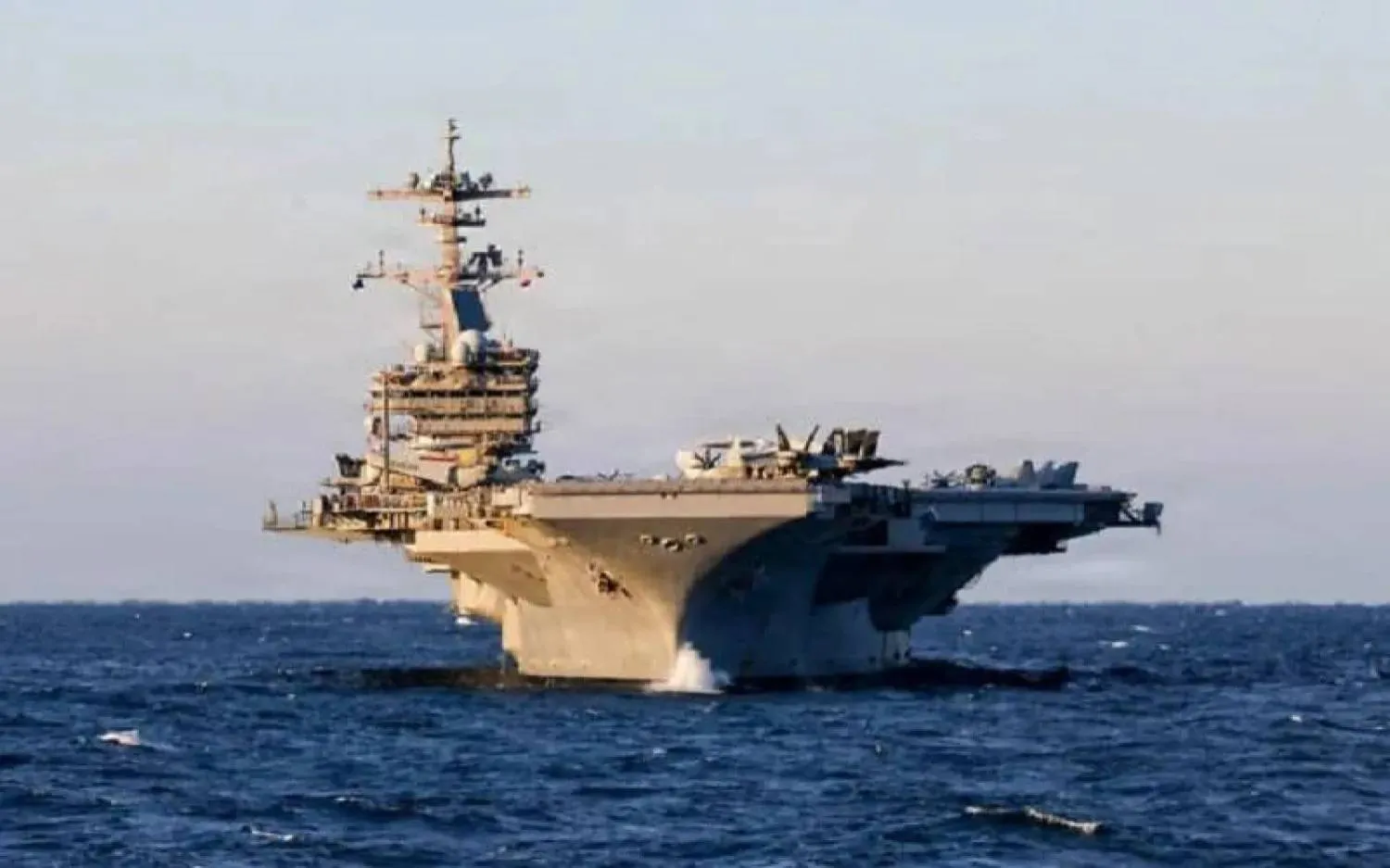

US author Anne-Marie Slaughter argues in The Chessboard and the Web: Strategies of Connection in a Networked World that the world no longer operates or interacts according to the logic of a traditional chessboard.
The old model was linear and two-dimensional, centered on a single objective: toppling the king by controlling territory.
That logic no longer defines 21st-century conflict. Today’s world operates across overlapping, interlocking layers that interact and often collide simultaneously, within a continuously evolving network that includes military, economic, political, alliance, and informational dimensions.
As this network evolves, it generates both solutions and complications so rapidly that they outpace the ability of leadership to make timely decisions. Improvisation comes to dominate decision-making, errors multiply and accumulate, feeding back into the system and further deepening its complexity.
On the escalation ladder
Escalation depends on strategic flexibility and the tools available. In practical terms, the greater the flexibility, the greater the ability of actors to climb the escalation ladder, from low-intensity conflict to higher levels, until reaching a peak where one side yields, either on the battlefield or at the negotiating table.
But this climb is inherently a trap. Each step builds on the last. As these steps accumulate over time, the cost compounds, making it increasingly difficult to step back without incurring significant losses.
The US blockade
This is not the first time the US Navy has imposed a maritime blockade. The most notable case was Cuba in the 1960s during the Cuban Missile Crisis, labeled a “quarantine,” a term deliberately used to indicate a measure short of full wartime blockade. Cuba’s geography made it relatively easy to encircle.
A similar approach was later applied to Venezuela. Today, the focus has shifted to Iranian ports, both inside and outside the Gulf.
Direct comparisons are limited by differing contexts. Still, one constant remains: the US Navy possesses the capability to enforce such blockades, particularly given its dominance over global seas and oceans.
In Cuba, Soviet missiles targeted major US cities and the world was divided between two superpowers. In Venezuela, President Donald Trump invoked the Monroe Doctrine and implemented a national security strategy prioritizing the Western Hemisphere and America’s immediate sphere.
The Strait of Hormuz, however, is fundamentally different. Other waterways can be bypassed; Hormuz cannot. It is a closed corridor through which oil, gas, petrochemicals, helium, fertilizers, and other critical goods must pass. There is no alternative route; all shipments must transit Hormuz in both directions.
Iran’s strategy
Since the Shah’s era, aligned with the Nixon Doctrine, Tehran has pursued control over Gulf waters and influence over the Strait of Hormuz. The continued occupation of the UAE islands of Greater Tunb, Lesser Tunb, and Abu Musa since the 1970s underscores this long-standing strategic objective.
More than 30 islands are scattered across the Gulf’s deep waters, precisely along the routes used by oil tankers that require significant depth to pass safely. If linked together as part of a military-security network, they reveal long-term planning for scenarios such as the current one.
Iran’s naval doctrine relies on both the Revolutionary Guards and the regular navy, employing small submarines, torpedoes, fast attack boats, naval mines, drones, and ballistic missiles.
At its core lies an anti-access strategy designed to deny adversaries freedom of movement in Gulf waters.
Centers of gravity
Qeshm Island is critical for controlling access to the Strait of Hormuz. Kharg Island follows, serving as the hub for more than 80 percent of Iran’s oil exports, supplied by the oil fields of Khuzestan.
Beyond the islands, the South Pars gas field in Bushehr province is central to Iran’s energy system, providing more than 70 percent of the country’s domestic electricity needs.
These key sites have already been targeted during the conflict by US or Israeli airpower. To expand the scope of escalation and increase pressure, Trump deployed additional forces, including Marine units and elements of the 82nd Airborne Division, aimed at broadening military options and forcing Iran to soften its negotiating position. After talks in Pakistan failed, he moved to announce the blockade.
The current US approach
By declaring the blockade, Trump effectively altered the existing rules of engagement in the Gulf, imposing an asymmetric approach that avoids Iran’s strengths and prevents it from dictating the battlefield dynamics.
Instead, the US leverages distance, operating from the Arabian Sea, along with its technological superiority and strategic flexibility.
This effectively turns Iran’s own strategy against it. What once constrained US freedom of movement inside the Gulf is now being used to impose external pressure on Iran from the Arabian Sea.
If successful, the strategy could deprive Iran, according to The Wall Street Journal, of roughly $435 million per day, or $13 billion per month, while avoiding the costs of direct military action such as seizing islands like Kharg.
It would also confine Iran’s asymmetric capabilities within the Gulf and strip it of its most effective operational tools.
The central question now is how Iran will respond. How will it adapt its strategy in the face of this pressure? Will escalation continue? And could that escalation take the form of a maritime attack similar to the 2000 strike on the US destroyer USS Cole near Aden?


