




Washington: Robert Jimison, Megan Mineiro
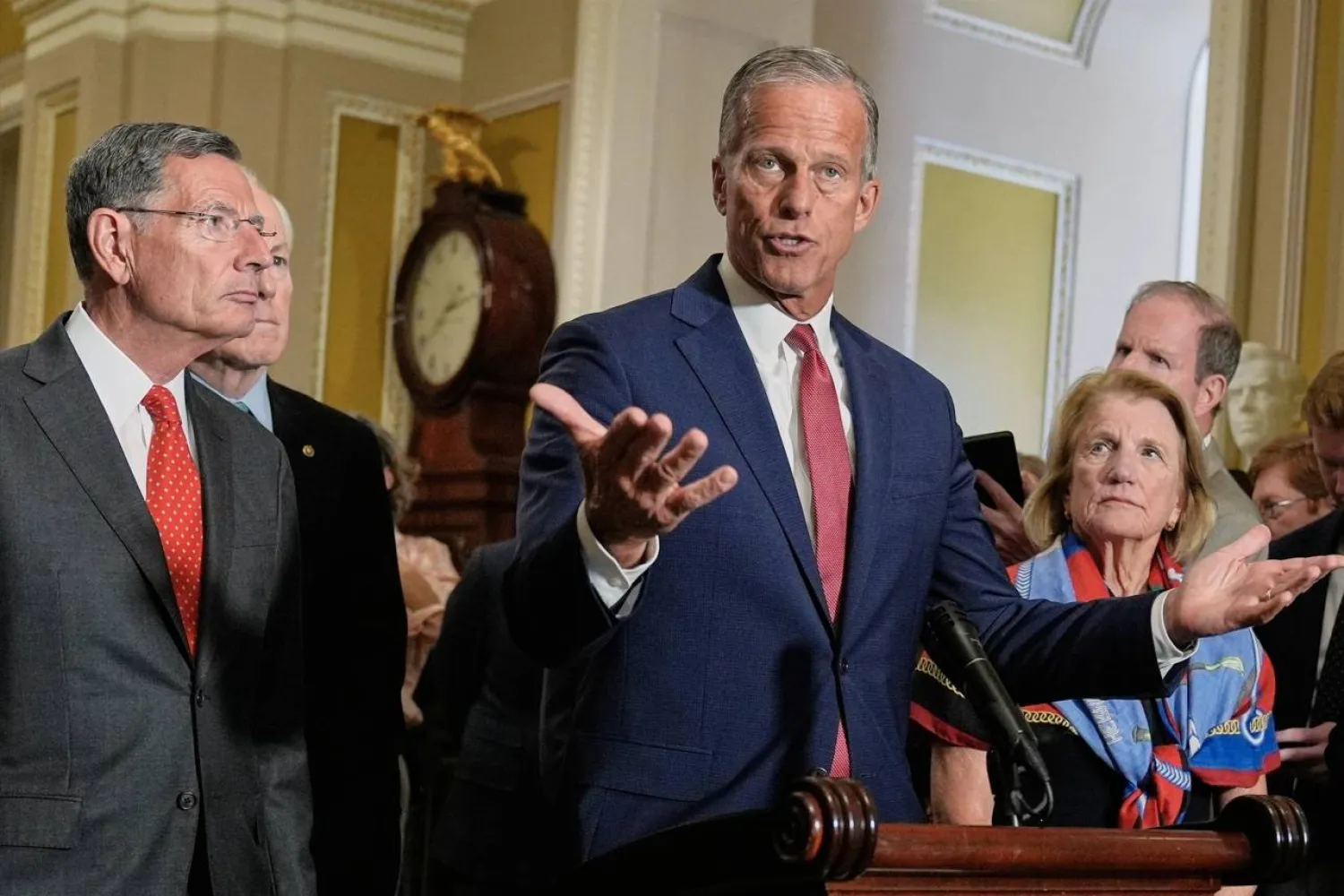
Senate Republicans on Wednesday blocked the latest Democratic-led effort to curb President Trump’s authority to wage war on Iran, as a fragile ceasefire frays, dueling blockades choke traffic through the Strait of Hormuz and failed talks leave the next phase of the conflict uncertain.
The move to take up the measure failed on a vote of 52 to 47. It fell largely along party lines, with Republicans and a single Democrat, Senator John Fetterman of Pennsylvania, opposed and Democrats joined by a lone Republican, Senator Rand Paul of Kentucky, in favor.
Fourth Trial
It was the fourth time in recent weeks that Democrats have tried and failed to force Congress to reassert its war powers as the conflict, now stretching into its second month, continues. The repeated defeats underscore the durability of Republican backing for Trump, as his allies on Capitol Hill have foregone oversight of the war and repeatedly sought to avoid placing meaningful constraints on his authority.
Still, in the run-up to the vote, some GOP lawmakers suggested that their patience was wearing thin as the conflict drags on, its economic fallout reverberates among their constituents, and the president’s bellicose statements intensify.
“I hope that we are arriving at an exit strategy here to bring this to a close to preserve our security interests and bring down the cost of gasoline,” Senator Josh Hawley of Missouri said of the war, now in its seventh week.
Other Republicans said the administration should do more to lay out its objectives and plan for the conflict. They expressed a fervent desire to see it end promptly.
60-Day Mission
Senator Mike Rounds of South Dakota said that should the president expect Congress to support continuing the conflict beyond 60 days — the initial window that the law gives a president to deploy armed forces into hostilities without congressional approval — officials from the administration should “come in and give us a full description of it and sell the point and the plan.”
The statutory deadline for Trump to either pull out US troops or request a 30-day extension would fall on May 1. Senator Bill Hagerty, Republican of Tennessee, on Tuesday appeared to suggest that such an extension would not be necessary.
“This is going to be over soon,” he said.
While home during a two-week recess, some Republicans said they had heard concerns from their constituents about the conflict, which has sent oil prices above $100 per barrel, natural gas costs rising more than 80% and fertilizer prices surging, raising costs for farmers.
Wednesday’s vote was forced by Senator Tammy Duckworth, Democrat of Illinois, who argued that the war was the latest demonstration of the president reneging on promises he made during his 2024 campaign.
“It’s clear that none of this is making America safer, bringing prices down or ending wars like he promised,” Duckworth said in a statement ahead of the vote. “Americans are sick and tired of being lied to, and Republicans cannot continue to sit by and abdicate their responsibilities as Trump continues to spiral out of control at the expense of our national security.”
Democrats’ Bet
Democrats hope that mounting Republican frustration will eventually pull the party asunder, yielding enough defections for a handful to join them in delivering a rebuke of the president.
“I have not seen, in a long time, the level of frustration,” Senator Chuck Schumer, Democrat of New York and the minority leader, said in an interview last week. “There’s always been Republican frustration with Trump, but the frustration is sort of peaking.”
Senator Tommy Tuberville, Republican of Alabama, said he held events across his state in recent weeks and fielded questions from voters about the war. He said his response to concerned constituents was: “We just have to wait and see.”
Tuberville, who voted against the resolution, said: “I think we need to let the president of the United States handle this.”
In a recent address providing an update on the war, Trump said his administration was “on track to complete all of America’s military objectives shortly, very shortly.” He added that “we’re going to hit them extremely hard over the next two to three weeks.”
The United States and Iran have since agreed to a two-week ceasefire, while diplomatic talks between the two nations took place but ended with no resolution. Tensions have also risen as the United States has placed a blockade of vessels using Iran’s ports.
During that crucial period, Congress was out of session.
Now back in Washington, many Democrats and some Republicans have begun to press for additional information.
Hawley said that senators who do not sit on the Armed Services and Foreign Relations Committees — which have received a series of confidential briefings since the war began — have been kept in the dark, noting that he and others “have not been briefed since the first week of March.”
“I would welcome more,” Hawley added.
The New York Times


