


World Weighs Fate of Middle East Ceasefire After US Seizes Iranian Cargo Ship

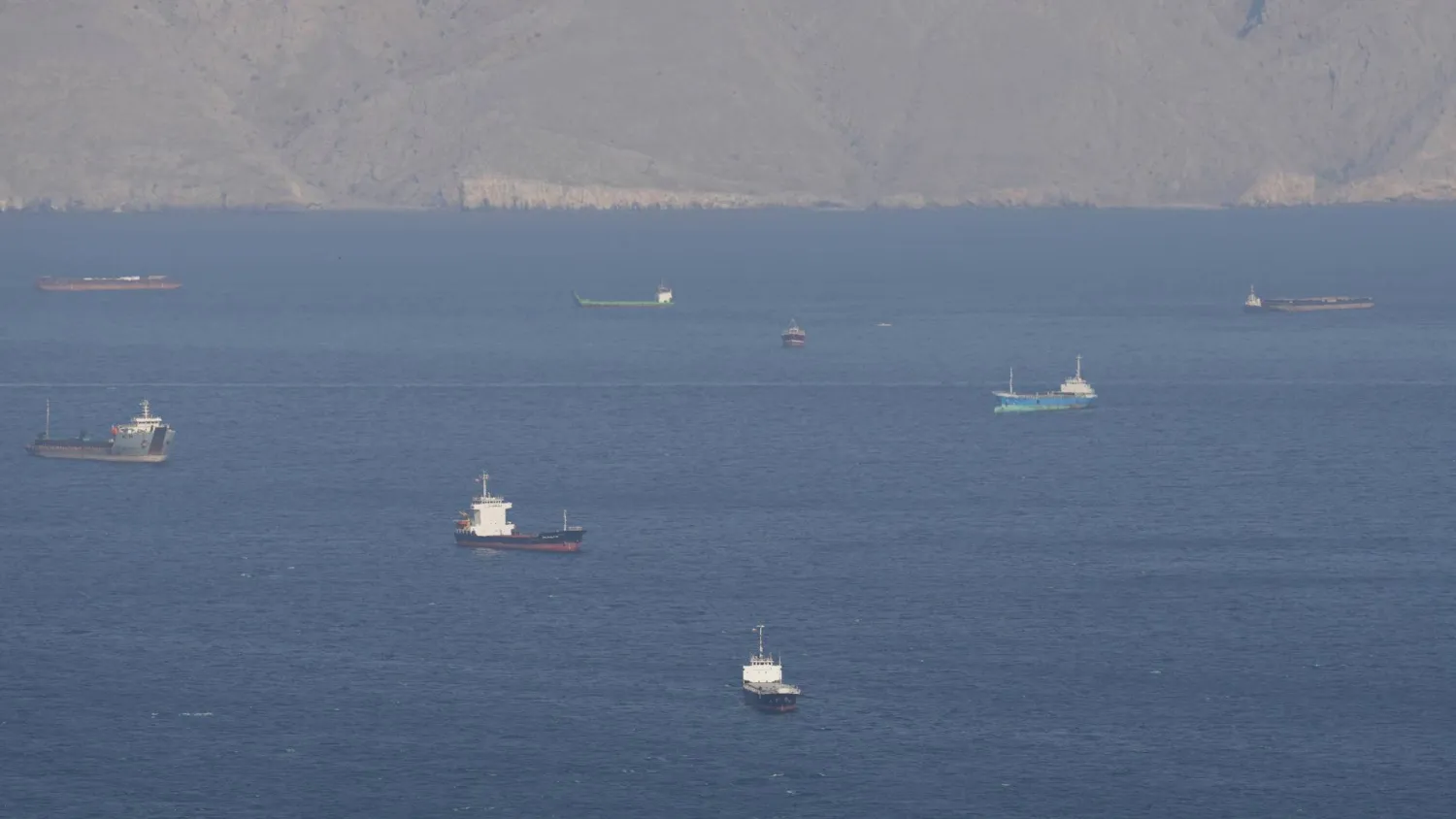
 Ships and tankers in the Strait of Hormuz off the coast of Musandam, Oman, April 18, 2026. (Reuters)
Ships and tankers in the Strait of Hormuz off the coast of Musandam, Oman, April 18, 2026. (Reuters)
TT

World Weighs Fate of Middle East Ceasefire After US Seizes Iranian Cargo Ship

 Ships and tankers in the Strait of Hormuz off the coast of Musandam, Oman, April 18, 2026. (Reuters)
Ships and tankers in the Strait of Hormuz off the coast of Musandam, Oman, April 18, 2026. (Reuters)

Concerns grew on Monday that the ceasefire between the United States and Iran might not hold after the US said it had seized an Iranian cargo ship that tried to run its blockade and Iran vowed to retaliate.

Efforts to build a more lasting peace in the region likewise appeared to be on shaky ground, as Iran said it would not participate in a second round of negotiations that the US had hoped to kick off before the ceasefire expires on Tuesday.

The US has maintained a blockade of Iranian ports, while Iran has lifted and then reimposed its own blockade on marine traffic passing through the Strait of Hormuz, which typically handles roughly one-fifth of the world's oil supply.

The US military said Sunday it fired on an Iranian-flagged cargo ship as the vessel sailed toward Iran's Bandar Abbas port. "We have full custody ‌of their ship, ‌and are seeing what's on board!" President Trump wrote on social media.

Iran's military said ‌the ⁠ship had been ⁠traveling from China. "We warn that the armed forces of Iran will soon respond and retaliate against this armed piracy by the US military," a military spokesperson said, according to state media.

Oil prices jumped and stock markets wobbled, as traders pondered the prospect that traffic in and out of the Gulf would remain at a bare minimum.

IRAN REJECTS PEACE TALKS

Iranian state media reported that Tehran had rejected new peace talks, citing the ongoing blockade, threatening rhetoric, and Washington's shifting positions and "excessive demands."

"One cannot restrict Iran's oil exports while expecting free security for others," Iran's First Vice President Mohammadreza Aref wrote on social ⁠media. "The choice is clear: either a free oil market for all, or the risk ‌of significant costs for everyone."

Trump earlier warned Iran that the US would ‌destroy every bridge and power plant in Iran if Tehran rejected his terms, continuing a recent pattern of such threats.

Iran has said ‌that if the United States were to attack its civilian infrastructure it would hit power stations and desalination plants ‌of Gulf Arab neighbors.

PREPARING FOR TALKS THAT MIGHT NOT HAPPEN

Trump said his envoys would arrive in Islamabad on Monday evening, one day before a two-week ceasefire ends.

A White House official told Reuters the US delegation would be headed by Vice President JD Vance, who led the war's first peace talks a week ago, and also include Trump's envoy Steve Witkoff and son-in-law Jared Kushner. But ‌Trump told ABC News and MS Now that Vance would not go.

Pakistan, which has served as the main mediator, appeared to be preparing for the talks.

Two giant ⁠US C-17 cargo planes landed ⁠at an air base on Sunday afternoon, carrying security equipment and vehicles in preparation for the US delegation's arrival, two Pakistani security sources said.

Municipal authorities in the Pakistani capital of Islamabad halted public transport and heavy-goods traffic through the city. Barbed wire was rolled out near the Serena Hotel, where last week's talks were held. The hotel told all guests to leave.

Now in its eighth week, the war has created the most severe shock to global energy supplies in history, sending oil prices surging because of the de facto closure of the strait.

Thousands of people have been killed by US-Israeli strikes on Iran and in an Israeli invasion of Lebanon conducted in parallel since the war began on February 28.

Iran responded to the attacks with missiles and drones against Israeli and nearby Arab countries that host US bases.

Iran's parliament speaker, Mohammad Baqer Qalibaf, who has led Iran's side in the talks, had earlier said the two sides had made progress but were still far apart on nuclear issues and the Strait.

European allies, repeatedly criticized by Trump for not aiding his war effort, worry that Washington's negotiating team is pushing for a swift, superficial deal that would require months or years of technically complex follow-on talks.



China Voices Concern Over US Seizure of Iranian Cargo Ship, Urges Further Talks

13 April 2026, China, Beijing: Guo Jiakun, spokesman for the Chinese Foreign Ministry, speaks to journalists. (dpa)
TT

China Voices Concern Over US Seizure of Iranian Cargo Ship, Urges Further Talks

13 April 2026, China, Beijing: Guo Jiakun, spokesman for the Chinese Foreign Ministry, speaks to journalists. (dpa)

China has expressed concern over the "forced interception" by the US of an Iranian-flagged cargo ship, a Chinese foreign ministry spokesperson said on Monday, urging relevant parties to abide by the ceasefire agreement in a responsible ‌manner.

"The situation ‌in the Strait of ‌Hormuz ⁠is sensitive and complicated," ⁠said spokesman Guo Jiakun during a regular press briefing. Parties involved should avoid further escalation and "create the necessary conditions for normal transit through the strait ⁠to resume," he added.

The ‌US said ‌earlier it fired on and seized ‌an Iranian cargo ship that tried ‌to run its blockade of Iranian ports.

Iran's military said the ship had been travelling from China ‌and vowed retaliation against what it called "armed piracy by the US ⁠military."

Beijing ⁠on Monday also urged relevant parties to "continue to maintain the momentum of the ceasefire and negotiations".

"Now that a window for peace has opened, favorable conditions should be created to bring the war to an end as soon as possible," Guo said.


Russia Arrests German Woman in Alleged Bomb Plot

People visit the observation deck at Vorobyovy gory (Sparrow Hills) with the main building of the Ministry of Foreign Affairs of Russia in the background during a spring day in Moscow, Russia, 17 April 2026. (EPA)
TT

Russia Arrests German Woman in Alleged Bomb Plot

People visit the observation deck at Vorobyovy gory (Sparrow Hills) with the main building of the Ministry of Foreign Affairs of Russia in the background during a spring day in Moscow, Russia, 17 April 2026. (EPA)

Russia said Monday it had arrested a German woman found with a homemade bomb in her backpack in what it alleged was a Ukrainian-hatched plot to blow up a security services facility in the south.

Russia has arrested dozens of people throughout the four-year war, mostly its own citizens, on allegations of working for Ukraine to carry out sabotage attacks.

There has been a string of high-profile arrests of Western citizens since Moscow ordered its troops into Ukraine -- typically on espionage charges that are widely seen as baseless, with those detained later swapped in exchange for Russians jailed abroad.

Detentions of Western citizens for carrying out or preparing actual attacks are much rarer.

The FSB security agency said the woman, born in 1969, had been dragged into the alleged plot by a citizen from a Central Asian country, who was working on orders from Ukraine.

She was detained and found with an improvised explosive device in her bag in the Caucasus city of Pyatigorsk, the FSB said.

The FSB said it had "prevented a terrorist attack planned by the Kyiv regime against a law enforcement facility in the Stavropol region, involving a German citizen born in 1969," the agency said in a statement.

The FSB said the device -- which contained an explosive charge equivalent to 1.5 kilograms (three pounds) of TNT -- was supposed to be detonated remotely, killing the German woman.

The blast was prevented by electronic jamming, the FSB added.

- 'Radical ideology' -

A man from an unidentified Central Asian state, born in 1997 and "a supporter of radical ideology", was found and arrested near the targeted site, it added.

The pair face life in prison on terrorist charges.

There was no immediate reaction to the allegations in Kyiv or Berlin.

Video footage of the purported arrest published on state media showed armed Russian security agents approach the woman, who was lying face down dressed in all black in a car park.

Another video showed masked plainclothes agents pulling a man into a station, followed by a controlled explosion of the backpack.

Russia has previously accused Ukraine of working with fundamentalists to carry out terror attacks inside Russia, without providing evidence.

Officials initially alleged that the perpetrators of a 2024 massacre at a concert hall on the outskirts of Moscow that killed 150 people were ISIS members in coordination with Ukraine.

ISIS claimed responsibility for that attack, making no reference of any Ukrainian involvement, for which no evidence was presented by Moscow and which Kyiv denies.


Iran Foreign Ministry Says US Not Serious About Pursuing Diplomacy

An Iranian woman walks next to a wall painting of Iran’s national flag on a street in Tehran, Iran, 20 April 2026. (EPA)
TT

Iran Foreign Ministry Says US Not Serious About Pursuing Diplomacy

An Iranian woman walks next to a wall painting of Iran’s national flag on a street in Tehran, Iran, 20 April 2026. (EPA)

Iran's foreign ministry said Monday that the United States was not serious about pursuing diplomacy, citing what it called "violations" of their two-week ceasefire.

"While claiming diplomacy and readiness for negotiations, the US is carrying out behaviors that do not in any way indicate seriousness in pursuing a diplomatic process," said ministry spokesman Esmaeil Baqaei in a weekly press briefing.

He said a US attack on an Iranian cargo ship early Monday, the US naval blockade on Iranian ports, and delays in implementing a ceasefire in Lebanon were all "clear violations of the ceasefire".

Iran has been at war with Israel and the United States since February 28 when strikes killed supreme leader Ali Khamenei, triggering a conflict that has engulfed the region.

Tehran and Washington have since held a round of negotiations which failed to culminate in a deal to end the war. It took place against the backdrop of a fragile two-week ceasefire which began on April 8.

US President Donald Trump said Sunday he had ordered US negotiators to travel to Pakistan on Monday to hold another round of talks, but Iran has yet to confirm its attendance.

"As of now, while I am at your service, we have no plans for the next round of negotiation, and no decision has been made in this regard," said Baqaei.

Key sticking points include Iran's stockpile of highly enriched uranium and the status of the strategic Strait of Hormuz, which has been largely closed since the outbreak of the war.

"Regarding the issue of transferring enriched uranium, neither during this period of negotiations nor before has transferring it to the United States been discussed," Baqaei said.

"It was never raised as an option for us," he added.