


Oil Prices and Stocks Climb as US-Iran Standoff Keeps Strait of Hormuz in Limbo

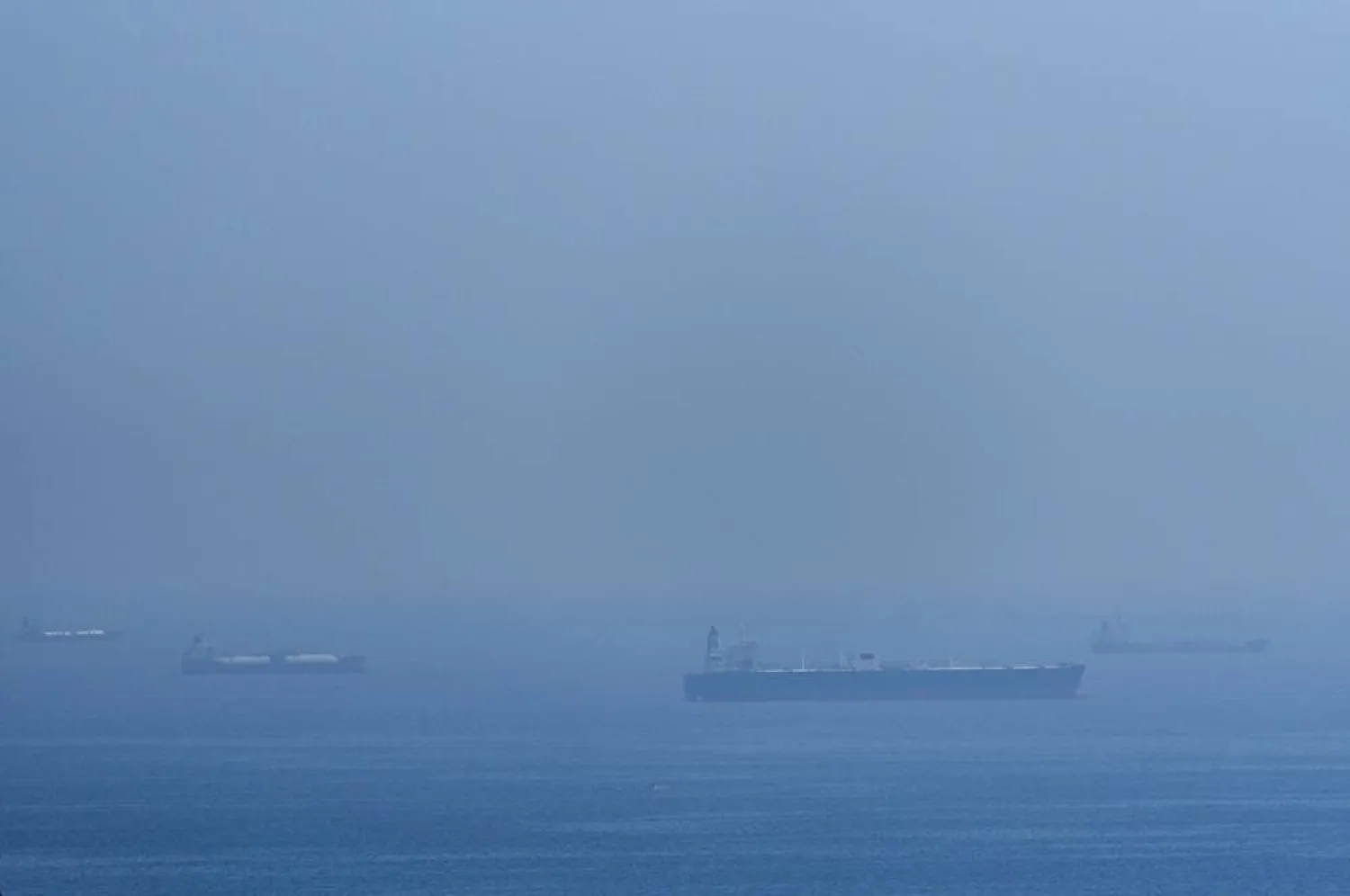
 Tankers and gas carriers anchored in the Strait of Hormuz, Saturday, April 18, 2026. (AP)
Tankers and gas carriers anchored in the Strait of Hormuz, Saturday, April 18, 2026. (AP)
TT

Oil Prices and Stocks Climb as US-Iran Standoff Keeps Strait of Hormuz in Limbo

 Tankers and gas carriers anchored in the Strait of Hormuz, Saturday, April 18, 2026. (AP)
Tankers and gas carriers anchored in the Strait of Hormuz, Saturday, April 18, 2026. (AP)

Oil prices climbed more than 5% while Asian shares also advanced Monday as a standoff between Iran and the US prevented tankers from using the Strait of Hormuz.

The Gulf waterway was closed again after Iran reversed a decision to reopen the strait and President Donald Trump said a US Navy blockade of Iranian ports remains in effect.

US benchmark crude gained 5.6% to $87.20 a barrel, while Brent crude, the international standard, was up 5.3% at $95.16 a barrel.

Despite renewed doubts about how soon ships will again transport the vast amounts oil the world gets from the Middle East, share prices were mostly higher in Asia.

In Tokyo, the Nikkei 225 gained 1% to 59,045.45, while South Korea's Kospi was up 1.1% at 6,260.92.

Hong Kong's Hang Seng added 0.8% to 26,373.71 and the Shanghai Composite index advanced 0.6% to 4,075.08.

Australia's S&P/ASX 200 was nearly unchanged at 8,943.90.

In Taiwan, the Taiex jumped 1.4%.

“The problem for markets is not the absence of hope; it is the overpricing of it,” Stephen Innes of SPI Asset Management said in a commentary. “The latest move higher in equities has started to feel less like conviction and more like momentum feeding on itself.”

On Friday, oil prices had dropped back to where they were in the early days of the Iran war, and US stocks raced to a fresh record after Iran said the strait was open again for commercial tankers carrying crude from the Gulf to customers worldwide.

A freer flow of oil could relieve pressure on prices for gasoline and all kinds of other products that get moved by vehicles. It could even ultimately help people pay less on credit-card interest and mortgage bills.

The S&P 500 leaped 1.2% to an all-time high of 7,126.06, closing out a third straight week of big gains, its longest streak since Halloween.

The Dow Jones Industrial Average surged 1.8% to 49,447.43. The Nasdaq composite climbed 1.5% to 24,468.48.

The US stock market has jumped more than 12% since hitting a bottom in late March on hopes the United States and Iran can avoid a worst-case scenario for the global economy despite their war.

The price for a barrel of benchmark US crude had plunged 9.4% after Iran’s foreign minister, Abbas Araghchi, posted on X that passage for all commercial vessels through the strait “is declared completely open” as a ceasefire appears to be holding in Lebanon.

Brent crude fell 9.1%.

After Araghchi's announcement, Trump said on his social media network that the US Navy’s blockade of Iranian ports remained “in full force” pending a deal on the war, though he also suggested that “should go very quickly in that most of the points are already negotiated.”

President Donald Trump said Sunday that the US had seized an Iranian-flagged cargo ship that tried to get around a naval blockade. Iran’s joint military command said Tehran would respond soon and called the US seizure an act of piracy.

A fragile, two-week ceasefire between the US and Iran is set to expire Wednesday, while escalating tensions in the Strait of Hormuz raises questions over new talks to end the war.

Since the war began, market sentiment has swung between optimism and gloom over when the fighting will end and what costs the world economy will endure. A strong start to the earnings reporting season for big US companies has helped support stocks.

In other dealings early Monday, the US dollar rose to 158.90 Japanese yen from 158.79 yen. The euro climbed to $1.1757 from $1.1742.



European Shares Slip as Hopes for US-Iran Peace Fade

 The German share price index DAX graph is pictured at the stock exchange in Frankfurt, Germany, April 17, 2026. (Reuters)
The German share price index DAX graph is pictured at the stock exchange in Frankfurt, Germany, April 17, 2026. (Reuters)
TT

European Shares Slip as Hopes for US-Iran Peace Fade

 The German share price index DAX graph is pictured at the stock exchange in Frankfurt, Germany, April 17, 2026. (Reuters)
The German share price index DAX graph is pictured at the stock exchange in Frankfurt, Germany, April 17, 2026. (Reuters)

European ‌shares declined on Monday, as hopes for peace in the Middle East ebbed with tensions reigniting after Washington seized an Iranian cargo ship that tried to run its blockade and Tehran vowed to retaliate.

Investors have grown increasingly jittery as the US-Iran ceasefire, set to expire Tuesday, appears fragile.

Iran rejected fresh peace talks with the US just hours after President Donald Trump said he would dispatch envoys to Pakistan ‌while threatening new ‌strikes unless Tehran accepts his terms.

The ‌pan-European ⁠STOXX 600 index ⁠was down 0.8% to 621.52 points as of 0717 GMT.

Major regional markets also fell, with France's CAC and Germany's DAX down 0.9% and 1%, respectively.

The uncertainty marks a sharp reversal from Friday's optimism, when the STOXX 600 jumped more than 1% and ⁠secured its fourth consecutive weekly gain after ‌Iran declared the Strait ‌of Hormuz open.

Energy shares gained 1.9% as crude prices ‌surged., while utilities and telecommunication stocks rose 0.7% and 0.2%, ‌respectively.

Travel and leisure sector led the declines, bearing, down 2%. Banks and automobile stocks dropped 1.8% each.

Among other movers, cash logistics company Loomis was top loser on the European ‌benchmark index after Goldman Sachs downgraded the stock to "neutral" from "buy".

The setback in the ⁠Middle ⁠East conflict comes despite tentative signs of normalization at the Strait of Hormuz.

Although Iran has reimposed a closure of the critical waterway, Kpler data revealed more than 20 vessels carrying oil, metals, gas, and fertilizer passed through on Saturday - the busiest traffic day since March 1.

Elevated oil prices continue to weigh heavily on energy-dependent European economies, keeping investors cautious.

The strait is a conduit for one-fifth of global energy shipments. Brent crude futures advanced 5.3% to $95.19 a barrel after tumbling 9% on Friday.


Saudi Central Bank Governor Says National Model Has Shielded Economy from Shocks

Saudi Central Bank Governor Ayman Alsayari. (International Monetary Fund)
TT

Saudi Central Bank Governor Says National Model Has Shielded Economy from Shocks

Saudi Central Bank Governor Ayman Alsayari. (International Monetary Fund)

Saudi Arabia’s economy has emerged as a model of resilience and crisis readiness, Central Bank Governor Ayman Alsayari said, citing steady progress under the Kingdom’s Vision 2030 reform agenda.

He stressed that continued implementation of the plan has helped protect the economy from regional shocks, underpinned by solid growth, contained inflation and prudent monetary and fiscal policies.

This strength, he noted, reflects decades of structural reforms and strategic investment in infrastructure and institutions, equipping the Kingdom with the capacity and flexibility to absorb shocks while sustaining investor and consumer confidence.

Addressing the International Monetary and Financial Committee of the International Monetary Fund, chaired by Saudi Finance Minister Mohammed Al-Jadaan, Alsayari highlighted the importance of Saudi Arabia’s diversified energy and trade infrastructure in maintaining supply flows under pressure.

He pointed to long-term investments such as the East-West pipeline, which runs to Red Sea ports in Yanbu, describing it as a vital artery for both Saudi exports and global energy supplies.

The ability to reroute exports and secure access to Red Sea ports and strategic facilities, he said, underscores the importance of long-term planning in preventing supply disruptions.

It also reinforces the need to treat energy security as integral to global financial stability, while avoiding policies that sideline the role of fossil fuels in sustaining trade and growth.

Alsayari warned that the war in the Middle East poses a serious test for the global economy and could revive conditions reminiscent of the stagflation era of the 1970s.

He welcomed progress on the “Diriyah Guiding Principles,” describing them as a milestone in efforts to reform IMF governance after nearly two decades of stagnation. The principles, reflecting the Diriyah Declaration, combine realism and ambition and provide a basis for strengthening the fund’s representation of the global economy.

Alsayari said that the step is essential to enabling the IMF to carry out its core functions in surveillance and lending, while keeping pace with technological shifts such as artificial intelligence and digital assets, and safeguarding the international monetary system against geopolitical risks and stagflation.

Saudi Arabia is translating its economic gains into tangible international support, including a $279 million pledge for IMF capacity development and the opening of a regional office in Riyadh to strengthen cooperation with countries in the region and beyond, Alsayari added.

He also cited platforms such as the AlUla Conference on Emerging Market Economies as tools to share expertise and advance reforms that support resilience and long-term growth.


IEA Proposes Building Iraq-Türkiye Pipeline to Bypass Hormuz

A general view of oil tanks at Türkiye's Mediterranean port of Ceyhan, February 19, 2014. (Reuters)
TT

IEA Proposes Building Iraq-Türkiye Pipeline to Bypass Hormuz

A general view of oil tanks at Türkiye's Mediterranean port of Ceyhan, February 19, 2014. (Reuters)

International Energy Agency Executive Director Fatih Birol proposed building a new oil pipeline linking Iraq’s Basra oil fields and Türkiye’s Mediterranean oil terminal in Ceyhan to bypass the Strait of Hormuz, according to Turkish newspaper Hürriyet.

“I believe a Basra-Ceyhan pipeline could be extremely attractive and a very important project for both Iraq and Türkiye, as well as for regional supply security, especially from Europe’s perspective,” Birol said in an interview with the newspaper.

“I also believe the financing issue can be overcome. Now is exactly the right time.”

He said, “The vase has been broken once, and it is very difficult to fix,” referring to the Strait of Hormuz.

A new oil pipeline “is a necessity for Iraq and an opportunity for Türkiye. It is also a major opportunity for Europe in terms of supply security. I think this should be considered a strategic project,” Birol added.

The war on Iran has disrupted shipping through the Strait of Hormuz, the strategic choke point through which 20% of the world’s oil supply flows, bringing global economic pain in the form of higher prices for gasoline, fertilizer and other staples.

Iraq and Türkiye share the Kirkuk-Ceyhan pipeline, a strategic corridor for transporting crude oil from northern Iraq to the Turkish port of Ceyhan, which began operation in 1976.

Iraq is seeking to rehabilitate the pipeline to overcome export problems, proposing to establish a new line from Basra to Ceyhan as a safe alternative to the Strait of Hormuz and to boost European energy security. On Sunday, Birol suggested building the new line.