Katz: Israel Awaiting US Green Light to 'Return Iran to Stone Age'

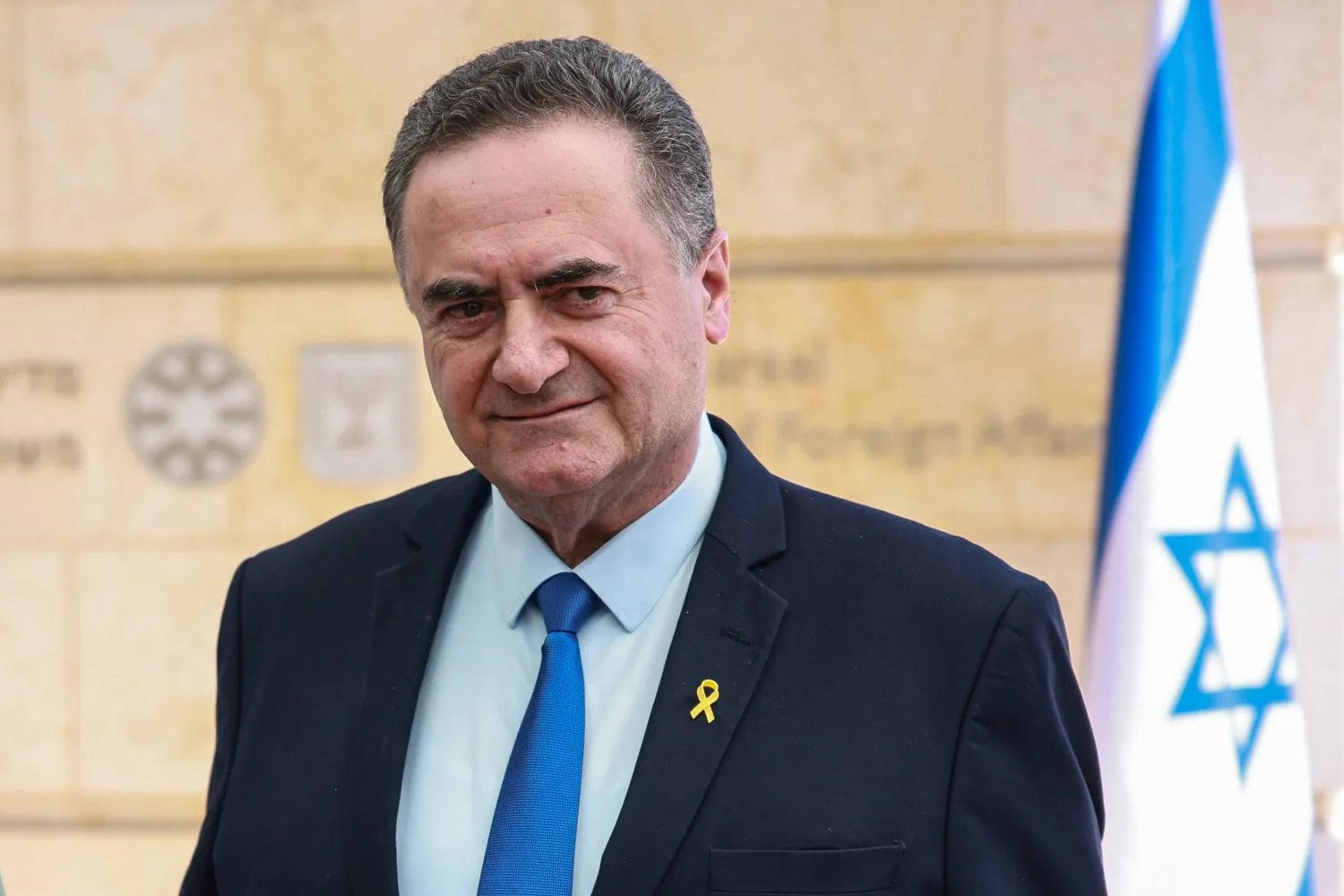
FILED - 25 June 2024, Israel, Jerusalem: Israeli Defense Minister Israel Katz is pictured in Jerusalem. Photo: Hannes P Albert/dpa
TT

Katz: Israel Awaiting US Green Light to 'Return Iran to Stone Age'

FILED - 25 June 2024, Israel, Jerusalem: Israeli Defense Minister Israel Katz is pictured in Jerusalem. Photo: Hannes P Albert/dpa

Defense Minister Israel Katz said on Thursday that Israel was "prepared to resume the war against Iran", adding that his country was awaiting a green light from the United States to return Iran to "the Stone Age".

"The IDF is ready both defensively and offensively, and the targets have been marked," Katz said in a video statement.

"We are awaiting a green light from the United States -- first and foremost to complete the elimination of the Khamenei dynasty... and additionally to return Iran to the Dark Age and the Stone Age by destroying key energy and electricity facilities and dismantling its national economic infrastructure," he added.

The opening US-Israel attack of the war on February 28 killed Iran's supreme leader Ali Khamenei, whose son later succeeded him but has yet to appear in public, creating speculation over his condition and if he is still alive.

"This time, when the attack resumes, it will be different and lethal, adding devastating blows at the most sensitive points -- following the tremendous strikes the Iranian terror regime has already sustained -- that will shake and bring down its foundations," AFP quoted Katz as saying.

US President Donald Trump on Tuesday announced an indefinite extension of the ceasefire between the United States and Iran, which came into effect on April 8, to create space for talks with Tehran.

Plans for renewed negotiations in Pakistan hang in the balance.

The Middle East war has engulfed the region, leaving several thousand people dead, mainly in Iran and Lebanon, and continuing to destabilize the global economy.


Zelensky Proposes National Pantheon for Ukraine's Heroes

President Volodymyr Zelensky laying flowers at the Tomb of the Unknown Soldier in Kyiv (dpa) 
TT

Zelensky Proposes National Pantheon for Ukraine's Heroes

President Volodymyr Zelensky laying flowers at the Tomb of the Unknown Soldier in Kyiv (dpa) 

Ukrainian President Volodymyr Zelensky has submitted a bill to parliament to establish a national pantheon honoring the country's heroes.

“Today, I submitted to parliament a law on the Ukrainian National Pantheon,” Zelensky said on Sunday in an address marking Constitution Day, according to dpa.

“The names of all the heroes who, across different centuries and eras, fought for Ukraine and inspired Ukraine will be brought together and forever inscribed in our history,” the president said.

“Nobody will ever again dictate to Ukrainians which heroes they should honor, which holidays they should observe or which history they should learn,” added Kyrylo Budanov, the head of Zelensky's presidential office.

“Our ancestors fought for centuries for this right to free self-determination and national independence, and that is exactly what our soldiers are shedding their blood for today,” Budanov said.

The reference to self-determination was also seen as a swipe at neighboring Poland, whose president, Karol Nawrocki, had revoked a high-ranking order awarded to Zelensky amid a dispute over history.

The memorial site is to be built in Kiev.


Australia, Vanuatu Sign Deal Barring Foreign Military Base on Pacific Island

Prime Minister of Vanuatu Jotham Napat and Australian Prime Minister Anthony Albanese pose for photographs after signing the Nakamal agreement during the Australia–Vanuatu Leaders’ Meeting at Parliament House in Canberra, Australia, June 29, 2026. AAP/Lukas Coch via REUTERS
TT

Australia, Vanuatu Sign Deal Barring Foreign Military Base on Pacific Island

Prime Minister of Vanuatu Jotham Napat and Australian Prime Minister Anthony Albanese pose for photographs after signing the Nakamal agreement during the Australia–Vanuatu Leaders’ Meeting at Parliament House in Canberra, Australia, June 29, 2026. AAP/Lukas Coch via REUTERS

Australia and Vanuatu signed a sweeping economic and security agreement on Monday that bars the establishment of any foreign military base on the Pacific island.

Vanuatu is at the center of strategic rivalry between China and US allies in the South Pacific, and Australia has expressed concern that Beijing is seeking a permanent security presence in the region.

The agreement commits Australia to greater economic support for Vanuatu, whose largest external creditor is China, and it stops a foreign military power establishing a base there, AFP reported.

"What this does do is to provide certainty for Australia that there will be no foreign military base," Prime Minister Anthony Albanese told reporters after signing the deal in Canberra with his Vanuatu counterpart Jotham Napat.

"We have concluded a balanced agreement that will protect our collective and individual security and our sovereignty," he added.

China's navy has made repeated port calls to Vanuatu.

Beijing also funded the expansion of a wharf in Luganville, once the largest US military base in the South Pacific, fueling concern in Canberra and Washington that China wanted a navy base.

China and Vanuatu previously said the wharf was for cruise ships.

The Nakamal Agreement commits Vanuatu to rejecting the militarization of infrastructure, said Napat.

"As a country, we have in fact passed an act in parliament not to allow any militarization to actually be used for our critical infrastructure," he told reporters at a news conference after the signing.

The agreement, viewed by AFP, states that "to reinforce Pacific collective security and sovereignty Vanuatu shall not permit its territory to be used for any foreign military base or infrastructure.”

It also recognizes Australia as "Vanuatu's longstanding primary policing partner,” and says Vanuatu will prioritize policing requests to other members of the Pacific Islands Forum regional bloc.

China formed policing ties with Vanuatu in 2023, and has donated equipment including drones, patrol boats and vehicles to its police force.

The agreement says Australia and Vanuatu will elevate assistance in "police training and equipment, policing, maritime security, cyber security, intelligence cooperation, and infrastructure.”

The Vanuatu treaty is the latest in a string of agreements Australia has struck with Pacific island nations, seeking to curb China's expanding security influence.

Chinese police have maintained a presence in Solomon Islands since signing a secret security pact in 2022.

Vanuatu has said it is separately negotiating an economic agreement with China, which has built roads and government buildings in the South Pacific nation over a decade.

A former Australian diplomat in the Pacific, James Batley, said the contest between Beijing and Canberra for influence would continue.

"Vanuatu's long tradition of non-alignment means that it won't simply abandon its relationship with China. Nor will China abandon its attempts to undermine Australia's interests in Vanuatu," he told AFP.


Washington Says US and Iran Pausing Strikes, Talks to Proceed

Vessels at the Strait of Hormuz, as seen from Musandam, Oman, June 26, 2026. REUTERS/Stringer
TT

Washington Says US and Iran Pausing Strikes, Talks to Proceed

Vessels at the Strait of Hormuz, as seen from Musandam, Oman, June 26, 2026. REUTERS/Stringer

A US official said Sunday that Washington and Tehran agreed to halt attacks after new tit-for-tat strikes strained their interim deal, with the sides planning to renew talks aimed at ending the Middle East war.

The exchanges have underscored the fragility of a Pakistan-brokered agreement to end the conflict that has killed thousands and snarled the flow of oil shipments through the vital Strait of Hormuz.

Although a ceasefire took effect in April, sporadic violence has flared up in the Gulf region, with traffic in the strait serving as a regular flashpoint.

"Technical talks are slated to continue on all areas of the MOU," a US official told AFP in an email late Sunday, referring to the memorandum of understanding struck between Washington and Tehran.

"Both sides will stand down for now and vessels can move freely" in and around the Strait of Hormuz, the official added.

Iran has not immediately commented on the US statement, and the US official did not confirm a US media report that talks would resume Tuesday in Qatar.

Tehran has insisted on controlling passage through the vital strait, through which about a fifth of the world's oil and liquefied natural gas travel in peacetime. It did not have that control before the war.

Iran's top diplomat warned Sunday that any attempt by ships to bypass its preferred route through Hormuz would "increase tensions" in the Middle East.

Tehran's enforcement of its control has sparked repeated flare-ups with Washington, the latest of which came early Sunday, when US Central Command said it had attacked 10 Iranian military targets over "continued Iranian aggression against commercial shipping.”

Iran said it retaliated with strikes against US bases in Kuwait and Bahrain. Both Kuwait and Bahrain denounced the Iranian attacks.

Iran presently insists ships transiting the strait pass through a corridor near its own shores, though this week dozens of vessels have travelled along the opposite side of the waterway, hugging the Omani coast.

"Any attempt to adopt new or separate arrangements compared to what is underway by the Islamic Republic of Iran, will only lead to more complicated situations and delays in the reopening of the Strait of Hormuz, and will increase the tensions," Iranian Foreign Minister Abbas Araghchi said.