Iran President Calls on People to Save Energy

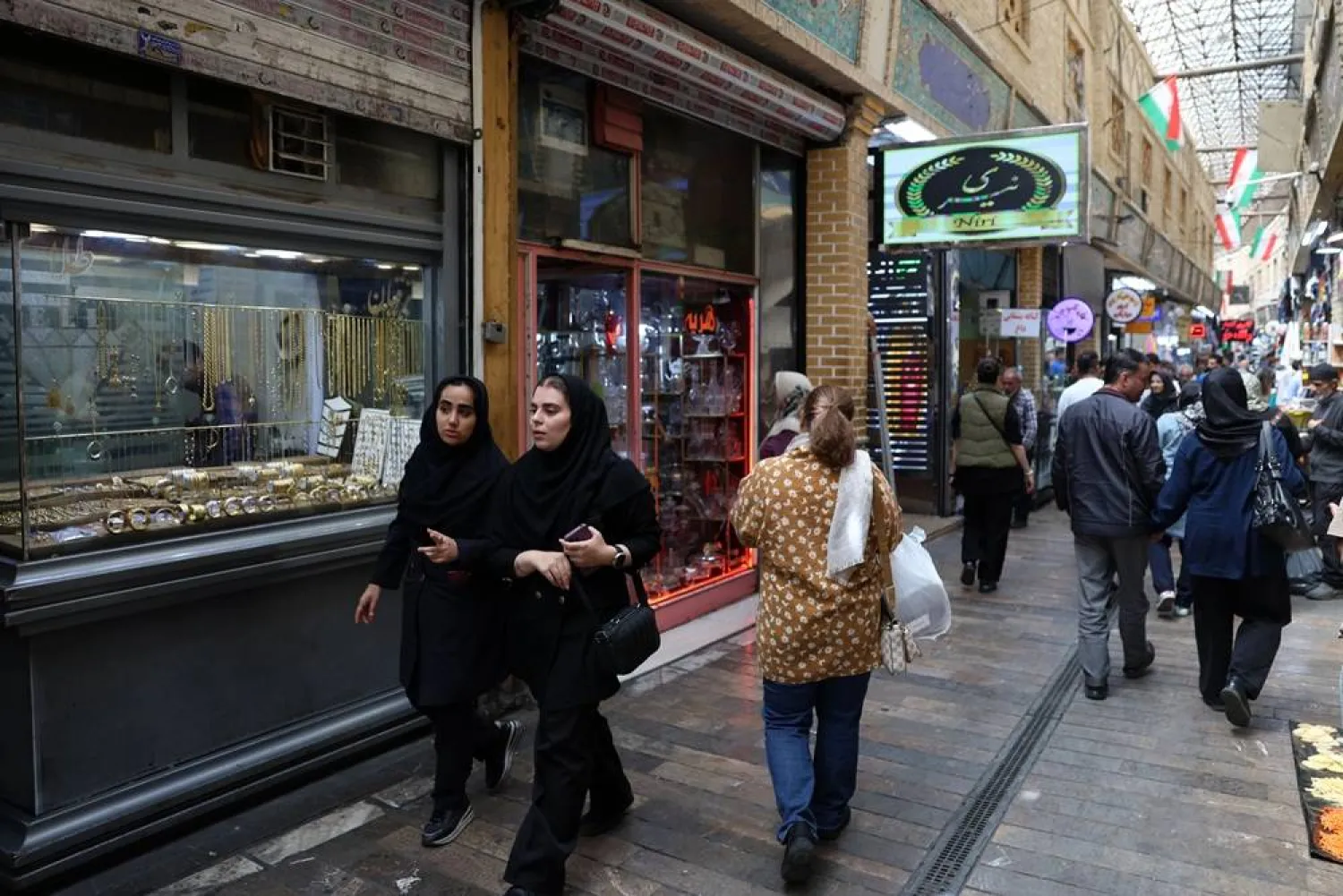
Iranians shop in the Tajrish bazaar in Tehran, Iran, 25 April 2026. (EPA)
TT

Iran President Calls on People to Save Energy

Iranians shop in the Tajrish bazaar in Tehran, Iran, 25 April 2026. (EPA)

Iranian President Masoud Pezeshkian called on his people Saturday to conserve electricity, warning that while there were no shortages at present, the US and Israel aimed to sow "dissatisfaction" among the Iranian people.

"We have asked our dear people, who are now ready and present on the ground, a simple request. And that is to reduce their own electricity and energy consumption," the president said on state TV.

"We do not need people to sacrifice for the time being, but we do need to control consumption. Instead of 10 lights, two lights should be turned on in the house -- what is wrong with that?" he added.

Despite the US-Israeli bombing campaign against Iran, there have been no reported power cuts in Tehran in recent days.

Pezeshkian accused Iran's enemies of hitting infrastructure and imposing a blockade "so that the current satisfaction turns into dissatisfaction".

US President Donald Trump has repeatedly threatened to wipe out Iran's power infrastructure, but has so far not followed through.

Even before the current war with the United States and Israel, however, Iran suffered frequent power outages during the winter and summer peaks in demand.

According to the International Energy Agency, Iran generates nearly four-fifths of its electricity from burning natural gas, a resource in which it is self-sufficient thanks to vast gas fields.

It supplements this with low-quality heavy fuel oil, known as mazout, used at older power stations.

Nevertheless, ageing infrastructure, a lack of investment and the impact of fierce international sanctions that cut off access to technology and investment have left the electricity grid unable to cope with demand.

Pezeshkian has previously launched several public awareness campaigns to reduce energy use.


Moscow Arrests Swede for 'Illegally' Crossing into Russia and Planning Attacks

People walk near the Kremlin, in Moscow, Russia, 25 September 2026. EPA/MAXIM SHIPENKOV
TT

Moscow Arrests Swede for 'Illegally' Crossing into Russia and Planning Attacks

People walk near the Kremlin, in Moscow, Russia, 25 September 2026. EPA/MAXIM SHIPENKOV

Russia's security services arrested a Swedish man they said fought for Ukraine for "illegally" crossing into Russia and allegedly planning attacks on military infrastructure, Russian media reported Thursday.
Russia's FSB security service, quoted by state news agencies, said an unnamed Swede was arrested in the northwestern Pskov region near the Lithuanian border, adding that "under the pretext of joining the Russian armed forces, he travelled to Russia to carry out acts of sabotage and terrorism on military facilities".


Washington Divided Over Renewed Strikes on Iran

US Secretary of War and CENTCOM commanders favor resuming the war against Iran, according to Axios. (CENTCOM)
TT

Washington Divided Over Renewed Strikes on Iran

US Secretary of War and CENTCOM commanders favor resuming the war against Iran, according to Axios. (CENTCOM)

Divisions have emerged within the Trump administration over whether to resume major military operations against Iran, with Defense Secretary Pete Hegseth and US Central Command (CENTCOM) leadership favoring fresh strikes while most presidential advisers advocate continued economic pressure, Axios reported.

The disagreement comes after President Donald Trump and Israeli Prime Minister Benjamin Netanyahu discussed a possible joint operation against Iranian military and nuclear facilities last week, according to US and Israeli officials and another informed source.

On Wednesday, Netanyahu warned that Iran’s proxies were seeking to launch missiles and carry out attacks.

Speaking to Israeli Army Radio, he said he opposed a preemptive strike on Tehran ahead of the elections, arguing that the timing was inappropriate. He nevertheless vowed to eliminate Hamas and Hezbollah and bring down Iran within two years.

Military Option Remains Open

The discussions suggest military escalation remains possible despite Trump’s insistence that he will not attack Iran before the US midterm elections, scheduled a week after Israel’s October 27 vote.

A US official said Netanyahu appeared eager to resume hostilities, but Trump had offered no firm commitment.

“Go ahead and prepare,” Trump reportedly told Netanyahu, a remark the official said could signal imminent action, a later operation or no attack at all.

A White House official denied that the leaders had discussed resuming the war, reiterating Trump’s position on the midterms.

Netanyahu’s office confirmed regular contacts with Washington but declined to discuss their substance.

According to the sources, Trump initially appeared inclined toward renewed strikes before becoming more hesitant.

Hegseth and CENTCOM leaders remain the strongest advocates of military action, while most advisers argue that sanctions and other economic measures are increasingly effective.

The debate pits military action aimed at disrupting Iran’s capabilities against sustained pressure intended to extract concessions without another round of fighting.

US and Israeli forces remain on alert, although preparations do not indicate that a final decision has been made.

Nuclear Concerns

Israel says intelligence indicates Iran is rebuilding parts of its nuclear program, concerns Netanyahu raised with Trump.

Israeli officials are particularly worried that Tehran could use the Pickaxe Mountain facility for uranium enrichment.

Senior Trump administration officials met for hours at Camp David on October 2 to discuss possible renewed strikes, including operations against Iranian military installations.

Whether the intelligence concerns will prompt military action or strengthen Washington’s negotiating position remains unclear.

The electoral calendar further complicates the calculations. A renewed offensive could provoke hundreds of Iranian ballistic missile launches toward Israel, potentially widening the conflict and disrupting its elections.

Diplomacy Continues

Meanwhile, Qatari mediators are awaiting Tehran’s response to Washington’s latest counterproposal to end the war, which demands nuclear concessions.

A US official said negotiations had not collapsed but were making little progress.

The official said Tehran had expected Trump to retreat under wartime pressure and with the midterms approaching, but the president had demonstrated that those calculations were mistaken.

On Tuesday, Trump again called Iran a “failed state” and said Washington would make a decision concerning Tehran “very soon.”



School Roof Collapse Kills at Least 28, Injures More than 3 Dozen in Pakistan

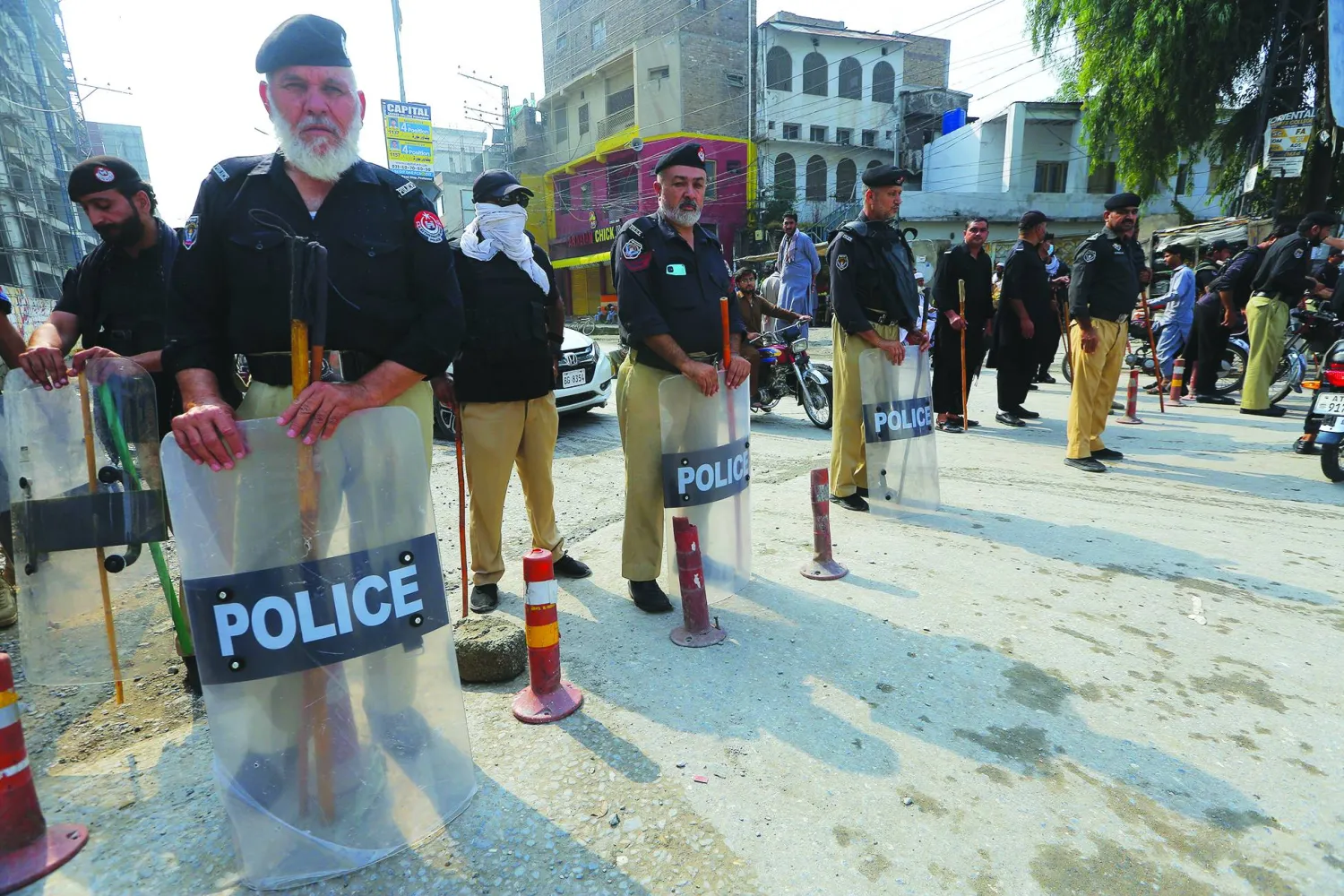
Pakistani security officials stand guard amid roadblocks in Peshawar, Pakistan, 11 October 2026, amid heightened security during the Pakistan Tehreek-e-Insaf (PTI) long march. EPA/ARSHAD ARBAB
TT

School Roof Collapse Kills at Least 28, Injures More than 3 Dozen in Pakistan

Pakistani security officials stand guard amid roadblocks in Peshawar, Pakistan, 11 October 2026, amid heightened security during the Pakistan Tehreek-e-Insaf (PTI) long march. EPA/ARSHAD ARBAB

The roof of a private school collapsed in northwestern Pakistan on Thursday, killing at least 27 children and a female teacher and injuring more than three dozen other people, a hospital spokesman said, as rescuers searched the rubble for anyone still trapped. 

Several children remained trapped under the rubble in Peshawar, the capital of Khyber Pakhtunkhwa province, said Bilal Faizi, a spokesman for the emergency services. 

A hospital spokesman, Mohammad Asim, also confirmed the casualties, saying some of the injured were in critical condition. All the children killed or injured were age 13 or younger, he said. The hospital declared an emergency as medical staff treated the wounded. Rescuers said that they were removing debris to reach those trapped. 

According to witnesses, residents were among the first to reach the school in a congested neighborhood in central Peshawar. Rescue workers arrived within minutes of being alerted, according to accounts from the scene, said The Associated Press. 

A resident, Mohammad Khan, said rescuers carefully removed debris, trying to reach children and staff feared trapped beneath the collapsed roof. Outside the school and at the state-run Lady Reading Hospital, anguished parents sought information about their children, unsure whether they had survived. 

The cause of the collapse was under investigation. Peshawar police chief Saeed Ahmed said that the school's owner had been arrested. He said that the building was structurally weak. 

In July, a roof collapsed at a tutoring center under construction in Lahore, killing four schoolchildren. 

Building collapses are common in Pakistan, where construction standards are often poorly enforced. Many structures are built with substandard materials, and safety regulations are frequently ignored to reduce costs.