Four Killed, 70 Injured in Mortar, Rocket Attacks by Pakistan, Afghan Taliban Sayshttps://english.aawsat.com/world/5267099-four-killed-70-injured-mortar-rocket-attacks-pakistan-afghan-taliban-says
Four Killed, 70 Injured in Mortar, Rocket Attacks by Pakistan, Afghan Taliban Says
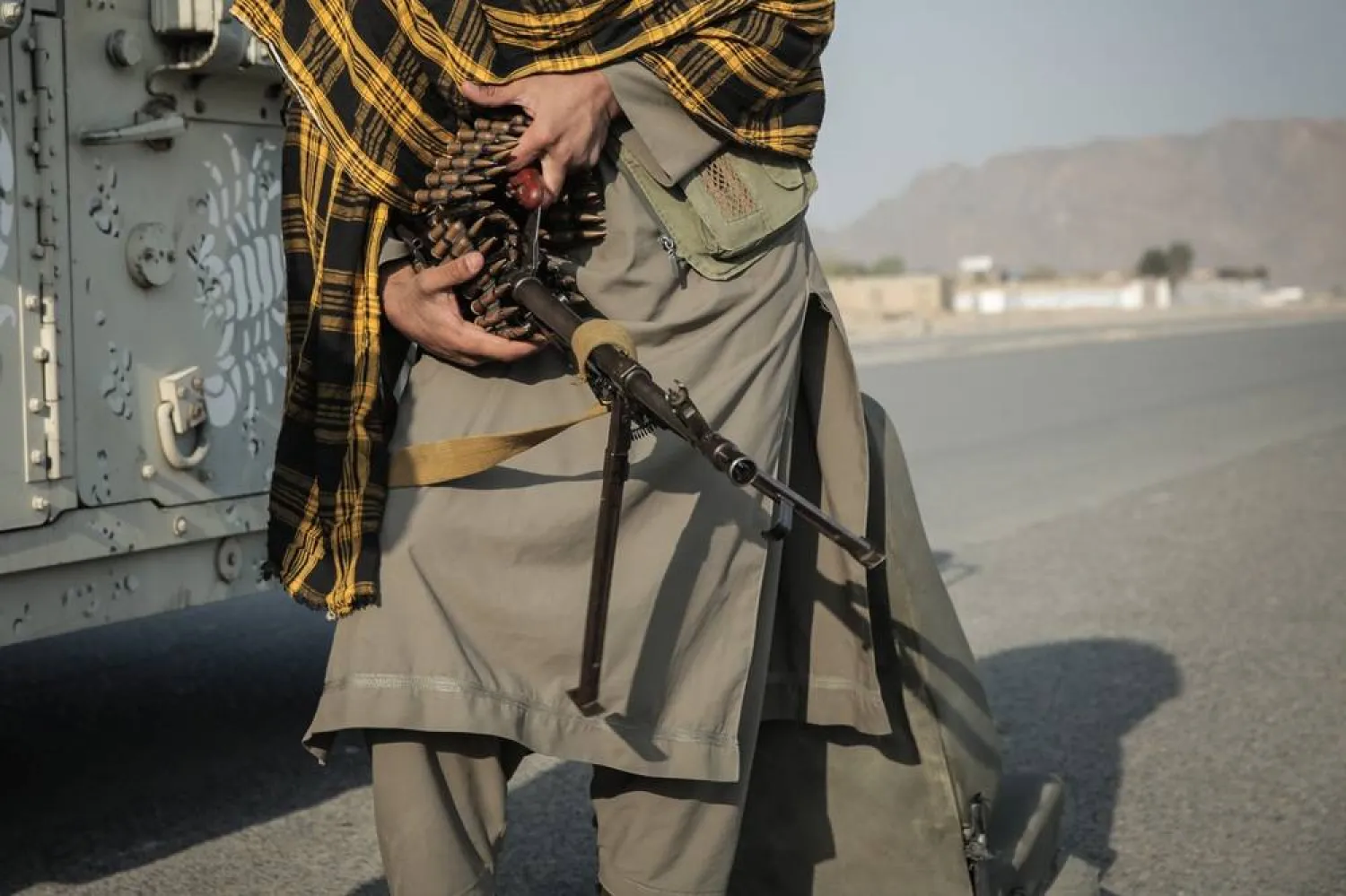
28 February 2026, Afghanistan, Torkham: A Taliban fighter checks his weapon next to an armored vehicle at a checkpoint near Torkham border crossing between Pakistan and Afghanistan. (dpa)
TT
TT
Four Killed, 70 Injured in Mortar, Rocket Attacks by Pakistan, Afghan Taliban Says
28 February 2026, Afghanistan, Torkham: A Taliban fighter checks his weapon next to an armored vehicle at a checkpoint near Torkham border crossing between Pakistan and Afghanistan. (dpa)
Mortar and rocket attacks launched by Pakistan against Afghanistan killed four people on Monday and injured 70 more, the Taliban government said, as fighting between the countries erupted again and threatened to derail fragile peace talks.
Pakistan's government dismissed the claims as a "blatant lie."
About 30 students, women, and children were among those injured in the attacks, which targeted homes and the Syed Jamaluddin Afghani University in Kunar province's Asadabad, the Taliban's deputy spokesperson Hamdullah Fitrat said.
"We strongly condemn these attacks by the Pakistani military regime, in which ordinary people, academic, and educational institutions were targeted, and declare them unforgivable war crimes," he said in a post on X.
Pakistan's information ministry in a post on X said no strike had been carried out on the university. "The claims are frivolous and fake," it said.
The Pakistani military did not immediately respond to a request for comment.
The worst fighting in years erupted between the allies-turned-foes in February, with Pakistani airstrikes inside Afghanistan that Islamabad said targeted militant strongholds.
Islamabad has said Kabul provides safe haven to militants executing attacks on Pakistan from its soil. The Taliban has denied the allegations and said militancy in Pakistan is an internal problem.
More than 400 people were killed in a Pakistani strike on a drug rehabilitation center in Kabul last month, the Taliban had said, before the neighbors suspended fighting. Pakistan rejected the Taliban's statements, saying it "precisely targeted military installations and terrorist support infrastructure".
The United Nations Assistance Mission in Afghanistan had put the death toll at 143.
China, which was mediating between the countries, said earlier this month that they had agreed during peace talks in Urumqi to explore a comprehensive solution to their conflict.
Skirmishes have died down since the talks in Urumqi were announced, but there have been reports of a few small clashes. Three people were killed in mortar shelling by Afghan forces on April 18 in Pakistan's northern Bajaur region, security officials said.
Pakistani Officials Say Afghan Taliban Shelled Pakistani Border. Kabul Denies the Attackhttps://english.aawsat.com/world/5321638-pakistani-officials-say-afghan-taliban-shelled-pakistani-border-kabul-denies-attack
Pakistani Officials Say Afghan Taliban Shelled Pakistani Border. Kabul Denies the Attack
Pakistani soldiers near a security fence at the border post in Torkham, Pakistan, in December. Credit Salahuddin/Reuters
Afghanistan's Taliban forces shelled Pakistani border posts overnight after Pakistani troops foiled what they described as a cross-border infiltration attempt by militants, local Pakistani officials said Wednesday.
The spokesman for Afghanistan’s Taliban government, Zabiullah Mujahid, denied any attacks by the Afghan Taliban forces, The Associated Press said.
The conflicting statements came just days after Pakistani fighter jets struck sites in eastern Afghanistan that Islamabad said were militant hideouts, an escalation between Kabul and Islamabad that threatens mediation efforts by regional powers.
Pakistani security forces neutralized two rudimentary drones, which the officials said were launched by the Afghan Taliban, before they could enter the northwestern city of Kohat, the officials said. They said the action underscored Pakistan's round-the-clock vigilance and air-defense systems' readiness to counter emerging aerial threats from Afghanistan.
The airstrikes ended several weeks of relative calm following months of cross-border hostilities. Also, earlier this month, Pakistani security forces killed 15 militants attempting to cross into the country from Afghanistan.
Four local Pakistani officials said Wednesday that militants attempted to infiltrate Pakistan from areas near Afghan border posts in Paktia and Nangarhar provinces, allegedly with support from the Afghan Taliban forces.
The officials referred to the militants as Fitna-ul-Khawarij, a term Islamabad uses for the Pakistani Taliban, a group that is separate but allied with the Afghan Taliban. Pakistan has repeatedly accused Afghanistan’s Taliban government of allowing militants to operate from its territory and carry out attacks across the border, an accusation that Kabul denies.
After Pakistani troops thwarted the infiltration attempt, Afghan Taliban forces allegedly fired mortars and other heavy weapons at Pakistani border posts, the four officials said. Pakistani forces responded with artillery fire, targeting Taliban border posts, mortar sites, and defensive positions.
The officials said Afghan Taliban forces subsequently abandoned several positions and suffered casualties. The four officials spoke on condition of anonymity as they were not authorized to talk to the media about the latest flare-up.
The accounts could not be independently verified. The latest escalations threaten mediation efforts by China, Türkiye, Qatar and Saudi Arabia to broker a lasting peace between Kabul and Islamabad.
In Monday's airstrikes, Pakistan’s Information Ministry said 28 militants were killed, while Afghan authorities said at least three civilians died and four others were wounded. The U.N. mission in Afghanistan confirmed the civilian casualties and Kabul formally protested the attack.
On the sidelines of the UN General Assembly in New York, Pakistani Foreign Minister Ishaq Dar expressed concern about what he said was the presence of more than two dozen anti-Pakistani militant groups in Afghanistan.
Monday’s Pakistani airstrikes followed a shootout with militants in Hangu, a district in northwestern Khyber Pakhtunkhwa province near the Afghan border, that killed six Pakistani security personnel. Days earlier, a suicide bomber struck a mosque inside a police compound in the nearby city of Kohat.
Eight gunmen then stormed the compound, triggering a 20-hour gunbattle that killed at least 21 people, most of them police officers. No group had claimed responsibility for the attacks.
Pakistani authorities blamed the violence on the Pakistani Taliban and allied militant groups. The Pakistani Taliban, formally known as Tehrik-e-Taliban Pakistan, have stepped up their attacks on Pakistani security forces, boosted by the Afghan Taliban's return to power in Afghanistan in 2021.
This Year's El Nino-driven Heat Could Cause Nearly Half a Million More Deathshttps://english.aawsat.com/world/5321635-years-el-nino-driven-heat-could-cause-nearly-half-million-more-deaths
Long-submerged houses are exposed after prolonged drought lowers the water level of Karian Dam, in Lebak, Banten Province, Indonesia, Friday, July 31, 2026. (AP Photo/Tatan Syuflana)
This Year's El Nino-driven Heat Could Cause Nearly Half a Million More Deaths
Long-submerged houses are exposed after prolonged drought lowers the water level of Karian Dam, in Lebak, Banten Province, Indonesia, Friday, July 31, 2026. (AP Photo/Tatan Syuflana)
This year's powerful El Nino and the record global heat it's driving, along with severe droughts, wildfires and shrinking water supplies, could lead to nearly half a million more deaths worldwide by the end of February, according to a research report released Wednesday.
The grim warning by the University of Chicago-based Climate Impact Lab says that as many as 451,000 more heat-related deaths between June and the end of February could be attributed to El Nino, compared with heat deaths expected in a typical year.
The heaviest toll, the group says, is expected in poorer countries, already struggling with food insecurity and high energy costs, partly due to climate change and the fallout of the war in Iran.
Michael Greenstone, a co-founder of the group and the study's co-author, said the heat danger will likely persist beyond February — even though this El Nino is expected to end by then. The fallout of the weather phenomenon could be felt well into next summer, he added.
The research, he said, shows that heat is most dangerous in places that are already hot and relatively poor.
“If you’re already in a hot place, the extra couple of degrees are going to be much more dangerous,” he said. Wealthier places, he added, generally have greater access to air conditioning, reliable water supplies and functioning health systems.
According to The Associated Press, the study combined seasonal temperature forecasts with localized estimates of how high temperatures affect mortality across more than 24,000 regions worldwide.
Researchers estimated the additional heat-related deaths by comparing deaths expected under El Nino-driven high temperatures with deaths expected if temperatures remained similar to what they have been in the last three decades. The projected fatalities are for the entire El Nino period, from June 2026 until the end of February 2027.
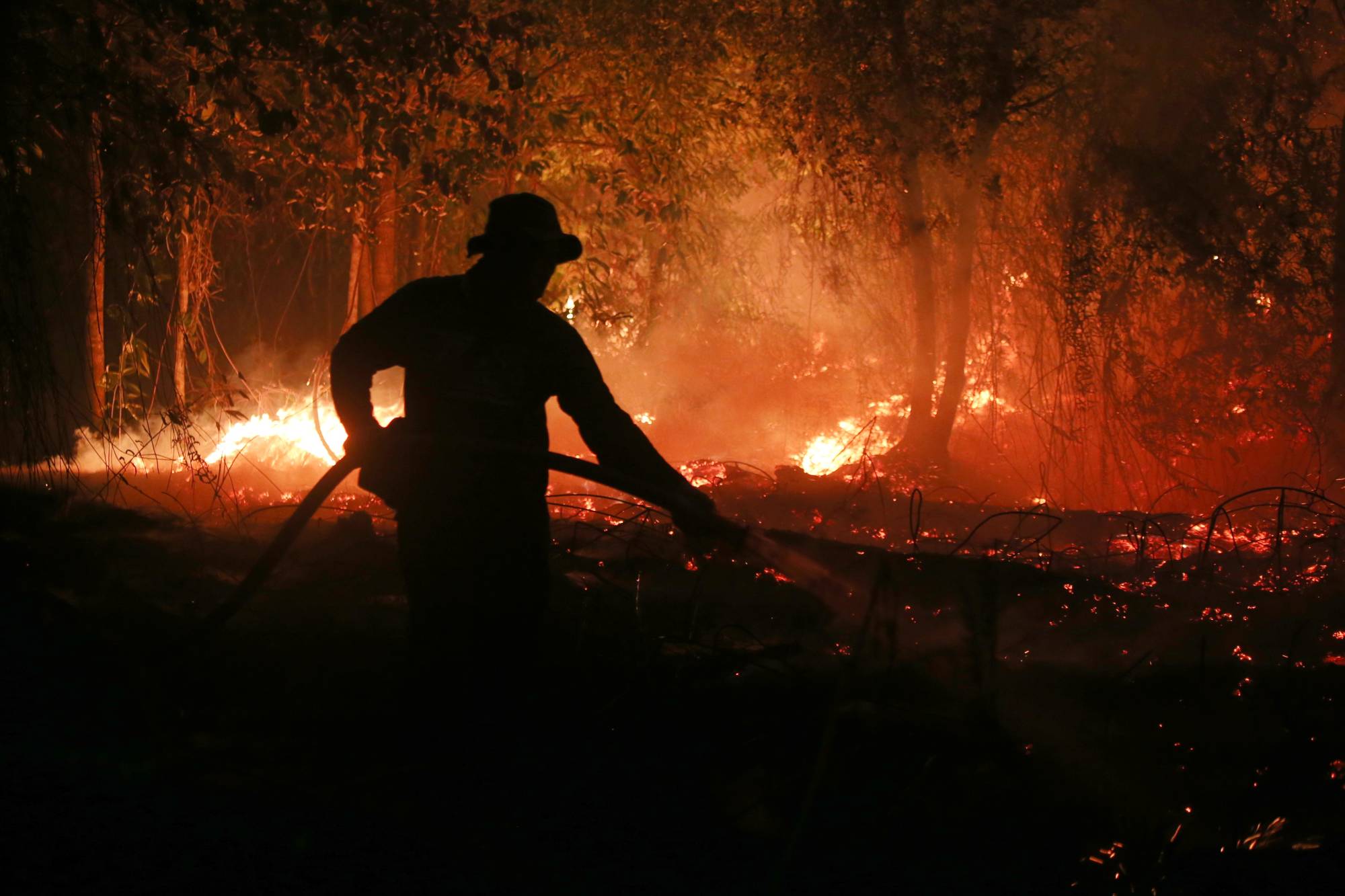
FILE - A firefighter sprays water in an attempt to extinguish a wildfire burning through a peatland forest in Pulang Pisau, Central Kalimantan, Indonesia, Sept. 5, 2026. (AP Photo/Regina Safri, File)
The report says the Global South will see more heat-related deaths The study by Greenstone and his colleagues also warns that the Global South — a term that isn't geographical but a reference to developing countries in general — will bear the heaviest burden of the excessive heat.
The researchers behind the report found that the Sahel region in Africa — countries along the semiarid southern fringe of the Sahara Desert — is expected to be the hardest-hit, with about 66,800 additional deaths caused by El Nino-driven heat.
Other major hot spots include South and Southeast Asia and parts of Latin America, according to the report. The researchers project about 19,400 additional heat-related deaths across the Philippines, Vietnam, Thailand and Cambodia, as well as 19,300 in Indonesia, 15,800 in India and 13,300 in Brazil.
With such staggering numbers, there are recommended measures that governments can take, the report says. They include heat-warning systems, cooling centers, hydration stations, protections for outdoor workers, expanded hospital capacity and targeted outreach to elderly people and other vulnerable groups.
The authors also call for what they describe as anticipatory financing, so governments can move resources before dangerous heat peaks.
Abhiyant Tiwari, a heat expert at NRDC India who was not involved in the study, said the report’s projections should serve as a call to action rather than be another reason for alarm.
But while it's one thing to have well thought-out plans — as India does — implementing these plans and raising needed funds remains a challenge, he said.
"The real measure of our preparedness is not how many heat warnings we issue, but how effectively we protect people and reduce preventable deaths,” Tiwari added.
Climate change is amplifying El Nino’s record heat El Nino is a natural climate pattern, but this year’s unusually strong event is occurring on a planet already warmed by human-caused climate change, increasing the risks from extreme heat.
The Climate Impact Lab said global land temperatures during this El Nino could be higher by about 1.2 Celsius (2.1 Fahrenheit), producing 44% more extremely hot days than in a typical year. The report said those temperature increases may mirror conditions that climate change could make common some 20 years from now.
That's why this El Nino could offer a preview of what's ahead as the planet continues to warm, the report said. It's also an opportunity for decision-makers "to see exactly where emergency actions can be taken now to save tens of thousands of lives,” the authors say.
Iran Airlines Cancel Flights as US Sanctions Hithttps://english.aawsat.com/world/5321597-iran-airlines-cancel-flights-us-sanctions-hit
Pedestrians walk past an office of Iranian airline Mahan Air in Baghdad, Iraq, Wednesday, Sept. 23, 2026. (AP Photo/Hadi Mizban)
Iranian airlines were forced to cancel some international flights on Wednesday after the US tightened sanctions on Iran's aviation industry in a new effort to cripple its economy.
A travel agent in Tehran told AFP that flights to Baghdad, Muscat, Qatar, Georgia and Azerbaijan had all been suspended, but routes to multiple other destinations remained available, including China.
US Treasury Secretary Scott Bessent announced the new measures on Monday as part of an earlier threat to impose "economic D-Day" on Iran, an attempt to force it into submission following their nearly seven-month war.
But Iran's aviation sector has already been a target of sanctions for years, and it remains unclear what the full impact will be and whether other countries will comply.
Even after the new sanctions took effect on Wednesday, a flight from Tehran operated by Mahan Air, one of Iran's biggest carriers, landed in Guangzhou in China, according to tracking data from FlightRadar24.
China on Tuesday said it opposes the US sanctions and called them illegal. A flight to Shanghai was also due to depart on Wednesday, according to Tehran's international airport.
Some flights to Istanbul were also scheduled, though others had been cancelled, the travel agent in Tehran told AFP.
"The situation is unstable and we are no longer selling tickets for the time being for fear of cancellations," the the agent said, requesting anonymity.
A Mahan flight from Kabul was also expected to arrive in Tehran around midday. According to the website for Tehran's international airport, other connections to Türkiye and Armenia also remained possible using smaller Iranian airlines, including Varesh.
Flights to Najaf in Iraq and Dubai in the United Arab Emirates were also scheduled.
Bessent on Monday vowed to "shut down" Iranian carriers and punish anyone doing business with them.
"If they land, you cannot provide them with fuel, you cannot provide them with landing services, you cannot sell them tickets or you will be knocked out of the dollar system," he warned other countries.
The restrictions will further complicate the ability of Iranians to travel abroad or return to their country.
Iranian media also reported cancellations, with the Tasnim news agency on Tuesday citing a civil aviation spokesman as saying that Baghdad and Muscat airports "will no longer accept" Iranian flights.
"Other international flights, including Istanbul, will operate as scheduled and as usual, and at present there are no problems with these flights," Tasnim said.
According to Tasnim, Iran's aviation authorities are in talks to reroute Baghdad flights to Najaf, a major destination for Iranian pilgrims.
In Iraq, while the government has not publicly announced plans to enforce the ban, several sources including a senior government official told AFP that Baghdad would comply with the US measures.
لم تشترك بعد
انشئ حساباً خاصاً بك لتحصل على أخبار مخصصة لك ولتتمتع بخاصية حفظ المقالات وتتلقى نشراتنا البريدية المتنوعة