


Iran’s Economy Has Been Battered. Its Leaders Still Think Trump Will Blink First

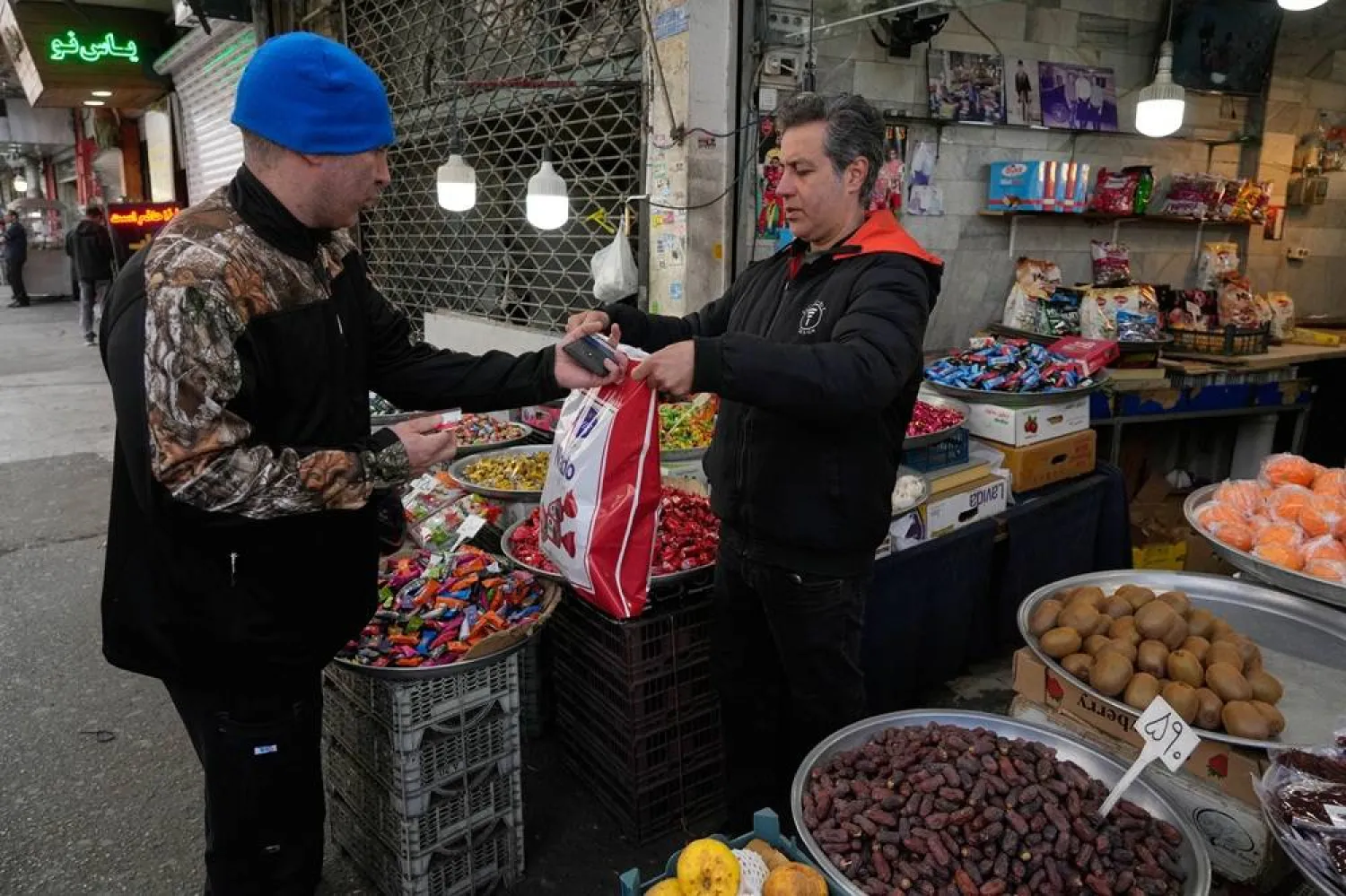
People conduct their businesses around the traditional grand bazaar of Tehran, Iran, March 29, 2026. (AP)
TT

Iran’s Economy Has Been Battered. Its Leaders Still Think Trump Will Blink First

People conduct their businesses around the traditional grand bazaar of Tehran, Iran, March 29, 2026. (AP)

In the heartland of Iran’s famed carpet-making industry, manufacturing has ground to a near halt. Dairies struggle to find packages for milk and butter. Giant steel mills that once drove Iran’s economy have gone silent. Hundreds of thousands have lost jobs, and millions more are at risk.

Over more than five weeks of bombardment, US and Israeli strikes hit thousands of factories. The damage is reverberating across Iran’s economy, threatening increasing waves of layoffs, even as Iranians face skyrocketing prices. The cost of chicken is up 75% the past month, and beef and lamb jumped 68%. Many dairy products have increased by half.

It could get worse as the United States blockades Iranian ports, choking off many imports and oil exports that bring in billions of dollars. Economic woes sparked the mass protests that were crushed before the war and could again push Iranians into the streets.

Still, Iran has its own weapon pointed at the global economy, with its grip on the Strait of Hormuz. Iran’s leaders say they will only reopen the key waterway for global energy if the blockade is lifted and the war ends. They are betting that an economy built to be self-reliant under decades of international sanctions can endure the pain longer than US President Donald Trump.

Iran has lost at least 1 million jobs directly because of the war, Deputy Labor Minister Gholamhossein Mohammadi said, according to state media.

But the ripple effects put some 10 million to 12 million jobs at risk — half of Iran’s labor force — warns Hadi Kahalzadeh, an Iranian economist.
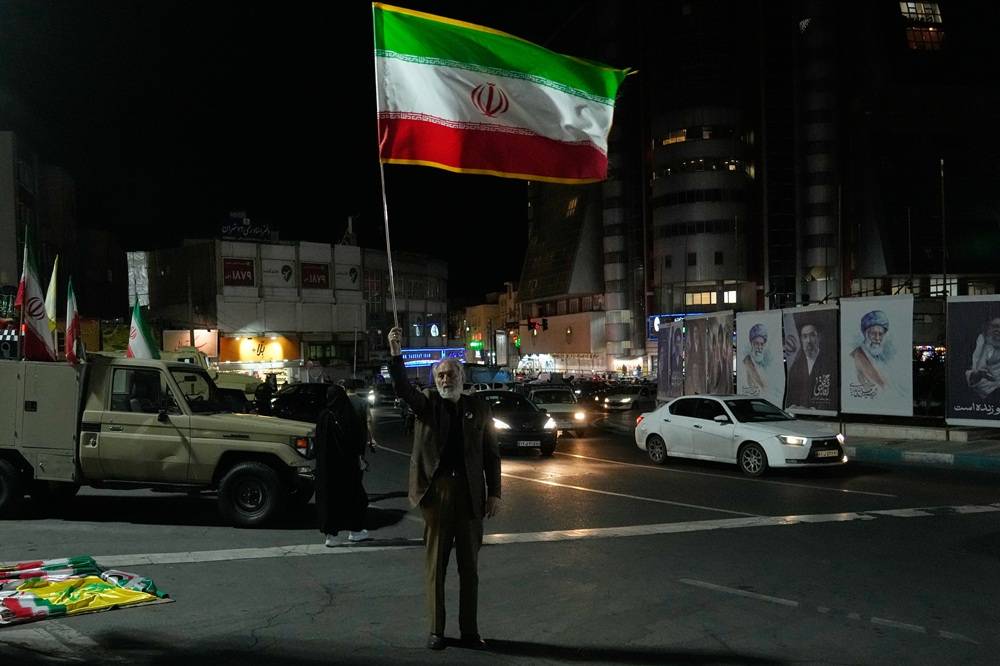
A pro-government demonstrator waves an Iranian flag during a gathering in Tehran, Iran, Monday, April 27, 2026. (AP)

Steel and petrochemical production crippled

Israel claimed to have struck the industrial base of Iran's paramilitary Revolutionary Guard. But the strikes went well beyond, hitting facilities not owned by the force.

Airstrikes damaged 20,000 factories, some 20% of the country’s production units, according to Kahalzadeh, a research fellow at Brandeis University. The stricken facilities included Tofigh Daru, Iran’s largest pharmaceutical holding, producing anticancer drugs among other things. Optics and chemical developers, and aluminum and cement factories, were also hit.

Perhaps most damaging, Israel hit Iran’s biggest steelmaking and petrochemical factories, most of them in a wave of strikes just before the April 8 ceasefire. The two biggest steel producers, Mobarakeh Steel and Khuzestan Steel, as well as smaller mills, halted production. More than 50 petrochemical complexes have been shut down, according to Iran’s semiofficial Jamaran news agency.

That has crippled Iran’s two biggest non-oil exports, and higher prices have affected everything from plastics to pipes, to fabrics and packaging for groceries like milk, butter and cheese.

Strikes are not the only cause of economic woes. The internet has largely been shut down since the protests, gutting small and medium-sized businesses reliant on online sales. Even before the US blockade, Iranian strikes on the United Arab Emirates, on which it relied for around a third of its imports, led that country to cut off trade.

Ripple effects

Around 80% of rug and carpet manufacturers have stopped operations in the industrial zone of the city of Kashan, the center of Iran’s rugmaking industry, said the son of a rugmaker. His family factory, which employs 20 to 30 people and used to machine-make hundreds of rugs a month, is among those that shut down, though his father still goes to the facility every day.

“Never have I heard my father so upset,” said the son, who lives in the United States and spoke on condition of anonymity for his family’s security.

Kashan, home to hundreds of carpet manufacturers, “relies on the rug industry and unfortunately it’s been crippled,” he said. Exports plummeted since the war began, and domestic sales are almost zero. Prices for synthetic fibers have leaped 30%- 50% — partly a downstream effect of hits on petrochemical facilities, he said.

Mehdi Bostanchi owns a ventilation and air conditioning factory, and a second producing household fans, with a total of more than 1,130 employees. Both still operate. But the HVAC factory heavily depends on the construction industry, and “construction is facing a massive shock,” he said.

Most new building is on hold, while the price of iron sheeting has more than doubled.

Bostanchi, a member of a council representing Iranian industrialists, said “all the country’s industries in some way rely on our petrochemical industry.” Even companies that don't directly need steel or petrochemical products have contracts with those that do.
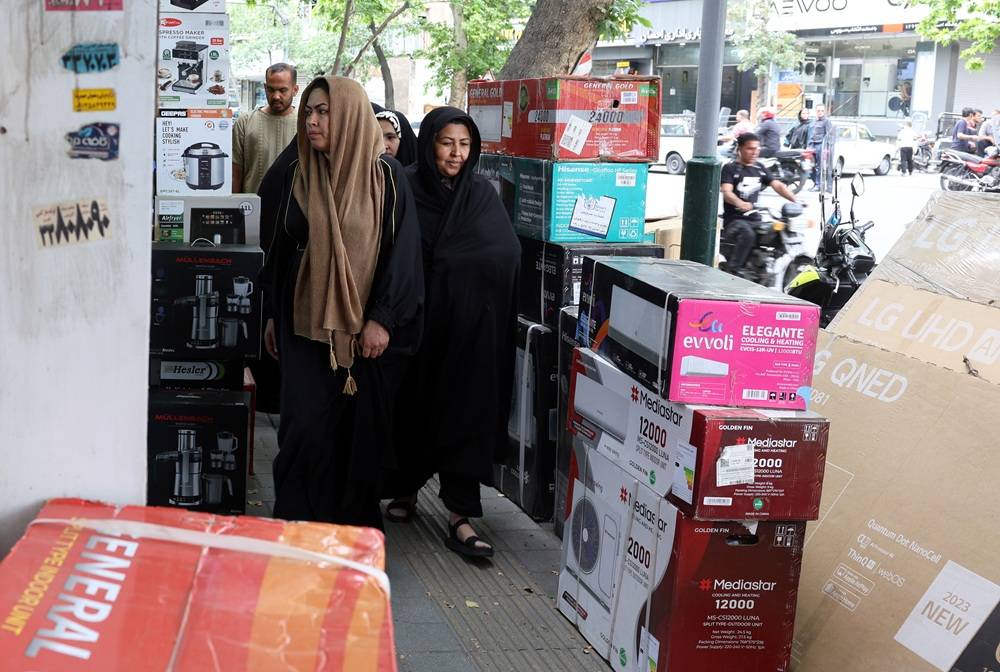
Iranians go shopping at a home appliance market in Tehran, Iran, 27 April 2026. (EPA)

A chemical engineer working at one of Iran’s biggest private construction contractors said it laid off half of its 180 headquarters staffers and had to shut down a project with Mobarakeh Steel, costing 1,000 jobs.

A Tehran resident quit his job as a consulting engineer just before the war, and the new job he had lined up is now uncertain.

“I am at the top 1% (of society), and I am without a job. I am super worried about my future,” he said, adding that people’s savings will start to run out in the coming weeks.

Both he and the chemical engineer spoke on condition of anonymity out of security concerns.

Projecting resilience

Millions took to the streets in January's protests that were triggered by worsening inflation but turned into calls for the end of the regime, bringing a bloody crackdown.

Officials are trying to reassure the public that Iran can withstand the economic pain. The government has promised to increase unemployment insurance. But the burden on Iran's social security system is rising even as its funding is gouged, since it depends heavily on its stakes in petrochemical companies and other key industries, Kahalzadeh said.

The US blockade threatens to cut off export revenues: Iran sold some $98 billion in exports in 2025, just under half of it from oil.

But a complete blockade is difficult; around half of Iran’s non-oil trade goes overland or through Caspian Sea ports, according to Esfandyar Batmanghelidj, an economic expert.

Iran has also built up significant resilience and “readiness for worst-case scenarios,” Batmanghelidj wrote for the Bourse and Bazaar Foundation, a research group he heads on economic development in West and Central Asia.

Iran maintains large reserves of vital supplies. At the end of 2025, Iran had stored up enough electrical machinery for nearly eight months, cement to last nearly six months and enough steel and iron for four months, he wrote, adding that supplies could be further stretched by rationing.

Bostanchi, the factories owner, said he believes Iran's economy could bounce back once the war ends. But how much depends on whether Iran can win an end to international sanctions.

“If we cannot lift the sanctions in any agreements, then no, the optimistic forecast ... will not happen,” he said.


China Factory Activity Returns to Expansion Riding AI Global Boom

 A man stands next to a poster of a humanoid robot during the China International Supply Chain Expo (CISCE) in Beijing on June 25, 2026. (AFP)
A man stands next to a poster of a humanoid robot during the China International Supply Chain Expo (CISCE) in Beijing on June 25, 2026. (AFP)
TT

China Factory Activity Returns to Expansion Riding AI Global Boom

 A man stands next to a poster of a humanoid robot during the China International Supply Chain Expo (CISCE) in Beijing on June 25, 2026. (AFP)
A man stands next to a poster of a humanoid robot during the China International Supply Chain Expo (CISCE) in Beijing on June 25, 2026. (AFP)

China's factory activity returned to expansion in June, driven by demand for chips, computers and other AI-related products, as robust export orders and front-loading to the United States to get ahead of tariffs offset weakness elsewhere in the economy.

The data suggest global AI investment is providing an important cushion for manufacturers in China's $20 trillion economy, even as disruption from the Middle East conflict and a prolonged property slump continue to weigh on broader growth.

The official manufacturing purchasing managers' index (PMI) rose to 50.3 in June from 50.0 in May, according to a survey by the National Bureau of Statistics (NBS). It beat a median forecast of 50.0 in a Reuters poll.

"Exports to meet international demand for chips and other AI-related products, as well as front-loading to get ahead of new US Section 301 ‌tariffs due late ‌July and improved domestic demand due to lower upstream costs underpinned the improvement," said ‌Dan ⁠Wang, China director ⁠of consultancy Eurasia Group.

The number of domestic infrastructure projects ticked up over the last month too, she added. US retailers have brought forward orders from China by four to six weeks to secure their inventories for Black Friday and Christmas holiday sales before the expected tariff hikes later this year, shipping executives said.

The sub-index for new export orders returned to expansion in June, rising to 50.1 from 48.6, while the production and overall new orders gauges edged up to 51.4 and 51.2 from 51.2 and 49.9, respectively.

Factory gate prices slipped to 48.2 from 51.9 in May, however, following five months of expansion, with ⁠employment also continuing to trend downward.

"The export strength is set to continue, driven by ‌global AI investment demand," said Xu Tianchen, senior economist at the Economist Intelligence ‌Unit. "Second, more policy easing will come."

"For example, fiscal spending has lagged behind budget arrangements, and it should accelerate in the coming months. There ‌is also room for monetary easing," he added.

The non-manufacturing PMI, which includes services and construction, improved to 50.2 ‌versus 50.1 in May, while the composite PMI came in at 50.6 compared with 50.5 a month earlier.

AI BOOM OR BUST

With the property crisis showing little sign of stabilizing and household spending remaining subdued, policymakers face the challenge of managing a two-speed economy.

There is enormous international demand for semiconductors powering data centers and advanced electronics, playing to China's manufacturing strengths, but there does not seem ‌to be much demand for anything else.

Exports of furniture, for example, grew just 1.9% in value terms year-on-year, according to the latest trade data for May, while shipments of ⁠automated data processing equipment ⁠jumped 60% over the same period.

Furthermore, retail sales, a proxy for domestic demand, fell for the first time in over three years, the most recent data for May showed, along with a faster slump in new home prices.

Julian Evans-Pritchard, head of China Economics at Capital Economics, said the improvement "remains heavily dependent on exports and AI-related tech," and warned that "despite the improvement in activity, the manufacturing sector appears to be slipping back into deflation."

China has set a 2026 growth target of 4.5% to 5.0%, slightly below last year's 5% expansion.

With signs of precautionary buying in the wake of Middle East-related price pressures fading, input costs rising and overseas customers running down inventories while awaiting a ceasefire, Chinese manufacturers may increasingly need demand from the world's largest consumer market to regain momentum.

A closely watched meeting in May between US President Donald Trump and Chinese leader Xi Jinping, however, produced no meaningful breakthroughs, whether on tariffs or Beijing using its influence over Tehran to end the Iran war.

"The sluggish data from the past few months will likely result in a notable slowdown in second-quarter GDP," said Lynn Song, chief economist for China at ING.

"We're looking for a slowdown to 4.6% year-on-year, with risks slightly balanced to the downside."


EU's Side of US Trade Deal to Come Into Force on July 1

FILED - 03 June 2024, Berlin: FILE PHOTO - The European Union flag flies in the wind. Photo: Sebastian Gollnow/dpa
TT

EU's Side of US Trade Deal to Come Into Force on July 1

FILED - 03 June 2024, Berlin: FILE PHOTO - The European Union flag flies in the wind. Photo: Sebastian Gollnow/dpa

The European Union's side of a trade deal struck with the United States last year, which will remove import duties on many US goods, will come into force on July 1, said a formal European Union regulatory filing.

The EU said this ⁠regulation would apply ⁠from July 1 until December 31, 2029, Reuters reported.

"Where appropriate, the Commission shall submit together with the comprehensive assessment a legislative proposal to extend ⁠the period of application of this Regulation," added the regulatory filing.

Under the agreement, the EU agreed to remove import duties on US industrial goods and provide preferential access to US farm produce.

It will also extend duty-free imports of ⁠US lobster, ⁠a mini-deal struck with Trump during his first term as president.

The EU legislation expires at the end of 2029 and includes multiple safeguards that would allow the EU to suspend concessions if the United States breaches the trade deal's terms.


Saudi Real Estate Developers Move to Capitalize on New Foreign Ownership Rules

A general view of buildings and homes in the Saudi capital, Riyadh (File photo: Reuters)
TT

Saudi Real Estate Developers Move to Capitalize on New Foreign Ownership Rules

A general view of buildings and homes in the Saudi capital, Riyadh (File photo: Reuters)

Saudi Arabia's real estate market has entered a new phase of testing the practical impact of the executive regulations governing property ownership by non-Saudis, as listed developers move swiftly beyond welcoming the decision and the initial positive market reaction to translating it into strategic growth plans.

While the sector index has extended its early gains on expectations that the new rules will broaden international demand, the competitive advantage is beginning to shift toward companies with high-quality assets that are ready to be marketed and sold.

The real estate index on the Saudi stock market posted a sharp gain following the announcement, rising from 2,924 points to 3,044 points. The increase was driven by investor expectations that allowing non-Saudis to own property under specific regulations would expand demand for Saudi real estate assets, particularly in cities and projects with strong investment and religious appeal.

Real estate stocks led the market's gainers in the session following the announcement. Shares of Umm Al Qura for Development and Construction (Masar) hit the daily 10 percent limit, while Knowledge Economic City rose about 9.3 percent. Jabal Omar Development, Retal, Emaar The Economic City, and Makkah Construction and Development also posted strong gains.

Financial and economic adviser Dr. Hussein Al Attas told Asharq Al-Awsat that allowing non-Saudis to own property represents an important structural shift for Saudi Arabia's real estate market, but said the impact will not be uniform across all developers. Instead, the market will increasingly differentiate between companies with attractive assets and projects in locations targeted by international investors and those without them.

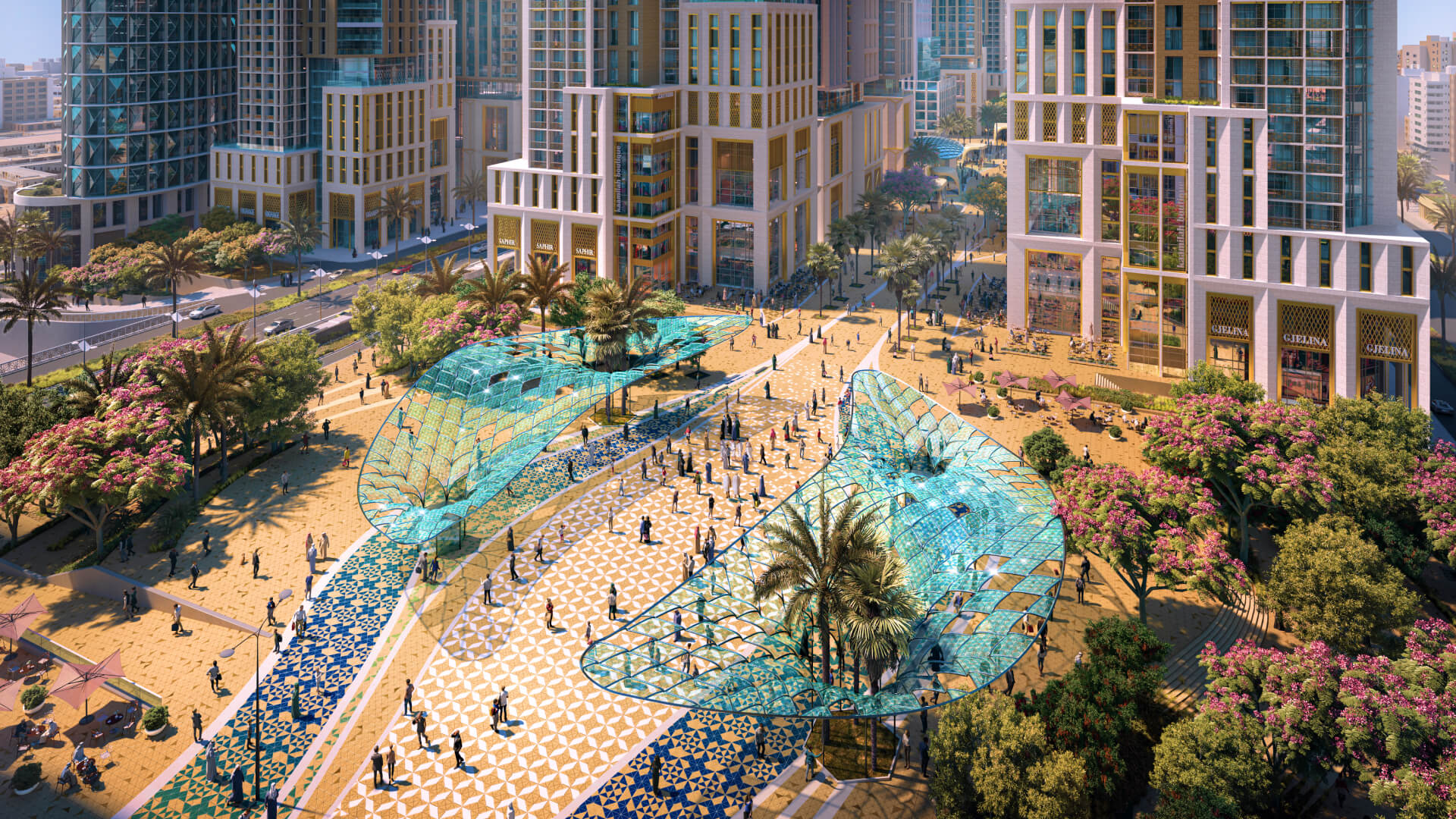
Master plan of the Masar Makkah destination (Masar)

He added that asset quality, location, financial strength, the size of developable land holdings, and the ability to attract international investors will be among the key factors determining how much companies benefit from the decision in the coming period.

Al Attas expects the sector to perform positively over the medium to long term. However, he said the real impact of the decision will ultimately be measured by companies' ability to turn this opening into actual sales, partnerships, and cash flows, rather than by the initial rise in share prices following the announcement.

In the first concrete move by a listed company since the regulations were approved, Jabal Omar Development on Sunday outlined its strategy for capitalizing on the decision after its project in Makkah was included within the geographic areas where non-Saudis are permitted to own property.

The company said the decision would broaden its base of potential investors and property owners among Muslims around the world, supporting demand for its real estate assets. It also announced plans to offer 400 existing hotel residential units for sale this year as the first phase of the program, with the proceeds earmarked to reduce debt and lower financing costs.

The company also plans to redesign the seventh and final phase of the project by increasing the number of hotel residential units available for sale while making greater use of off-plan sales programs to reduce financing requirements and strengthen reliance on internally generated liquidity.

Al Attas said the market's response to the regulations has unfolded in two stages. The first was a broad wave of optimism that lifted most real estate companies. The second has begun as investors seek to identify the companies best positioned to convert the decision into tangible growth in sales, cash flow, and profitability.

The decision to allow non-Saudis to own property forms part of a broader package of measures introduced by the Kingdom in recent months to restore balance to the real estate market and strengthen its investment appeal.

These measures include allowing the sale, purchase, and development of land in new areas north of Riyadh, increasing fees on undeveloped land, imposing fees on vacant properties, and freezing annual rent increases in Riyadh for five years.

The decision also coincides with signs of improving real estate and construction activity across the Kingdom. The construction sector returned to growth in May, supported by stronger residential building activity and renewed growth in new orders.

Although the full impact of the regulations will take time to emerge, recent moves by real estate developers indicate that the market has already begun shifting from expectations to execution as companies seek to attract a new segment of investors and buyers from outside the Kingdom.
