A Bird Leaves Nothing Behind: The Lesson Behind Japan’s World Cup Stadium Cleanups

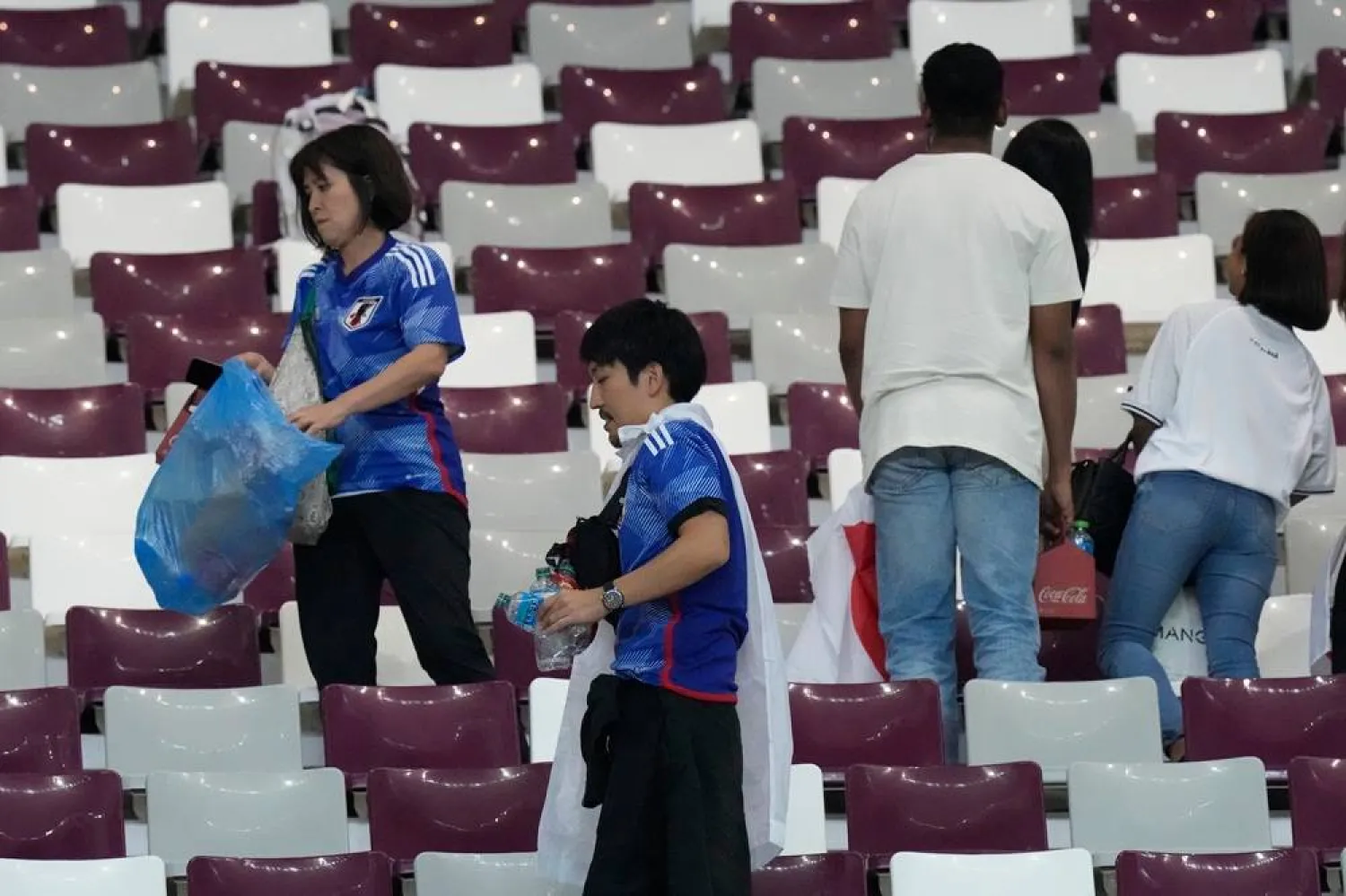
Japan supporters clean the stands at the end of the World Cup group E football match between Germany and Japan, at the Khalifa International Stadium in Doha, Qatar, Wednesday, Nov. 23, 2022. (AP)
TT

A Bird Leaves Nothing Behind: The Lesson Behind Japan’s World Cup Stadium Cleanups

Japan supporters clean the stands at the end of the World Cup group E football match between Germany and Japan, at the Khalifa International Stadium in Doha, Qatar, Wednesday, Nov. 23, 2022. (AP)

If there's one country guaranteed to clean up at the World Cup, it's Japan.

Literally.

Scenes of Japanese football fans sweeping stadiums and picking up trash after a match first drew public attention in France in 1998 — Japan's first appearance in the World Cup.

The tradition has continued every four years. It happened at the World Cup in Qatar in 2022, and it's certain to continue when Japan opens play in June with group games in Arlington, Texas, and Monterrey, Mexico.

The cleanup astonishes non-Japanese who might be accustomed to leaving stadiums and stepping over half-eaten food, shredded paper wrappers, and cups — empty or with liquid dribbling out.

At the World Cup in Russia in 2018, Japanese players famously cleaned the dressing room after a loss and left a thank-you note in Russian. In 2022, fans left thank-you notes on rubbish bags written in Arabic, English and Japanese.

Why do Japanese behave this way? It's not that complicated. Beginning in elementary school, students are socialized to behave this way — in the classroom, in the school yard or on a playing field.

“Japanese sports fans at world events who clean up the stadium are behaving much the same way they did when they learned how to enjoy sports as school boys and girls,” Koichi Nakano, who teaches politics and history at Sophia University, told The Associated Press.

There is a phrase in Japanese that explains it.

“Tatsu tori ato wo nigosazu.”

The literal translation is: “A bird leaves nothing behind.”

Rendered in English the message is: “Return it the way you found it.”

Many Japanese elementary schools don’t have janitors, so the clean-up work is left to students. Office workers often dedicate time to sprucing up their areas.

Also, there are relatively few trash containers in public spaces in Japan, so people take their waste home with them. This keeps the sidewalks cleaner, saves the cost of emptying trash cans, and keeps away vermin.

“The way most ordinary soccer fans experience soccer at school is no different from other sports, and the emphasis is not just on physical education but also on moral education as well,” Nakano added.

Collective vs. the individual

Raised in Germany, Barbara Holthus is the deputy director of the German Institute for Japanese Studies in Tokyo. A sociologist, she agrees it's prudent not to put Japanese on a pedestal. Japan, like any country, has its own challenges and shortcomings.

“An academically sound explanation is that people in Japan just happen to be socialized different,” she told The AP. “If you grew up with a certain way of how things are being done, you apply that to even cleaning up a stadium afterwards.”

At work here is also the Japanese concept of “meiwaku,” which implies not causing trouble or annoying others. From the Japanese point of view, leaving rubbish piled up in a stadium would be a bother to others.

Japan is a relatively crowded place, and greater Tokyo alone has about 35 million people, almost the population of the entire state of California. People need to get along.

“Japanese learn early on that you don't want to inconvenience other people,” Holthus said.

She said the focus is often on the collective, compared with the West where the emphasis is on the individual and individual rights.

“You don’t want to bother people. It goes to all areas of life in Japan,” Holthus added. “We are raised (in the West) that we don’t have to clean up after ourselves in public spaces because there is going to be some kind of public service doing that.”

And because Japanese people have received widespread praise for the clean-up, the behavior has been reinforced.

“Now that the media has latched onto the story and lavished praise on Japanese fans, they have made it a point of pride to display those values and norms,” Jeff Kingston, who teaches history at Temple University in Japan, wrote in an email.

A Japanese tradition

The clean-up tradition is not limited to football’s marquee tournament. The same thing happened last year at the Under-20 World Cup in Chile as Japanese fans cleaned up after a match. And even more recently last month at Wembley Stadium in London where Japan defeated England 1-0 in an international friendly.

“It’s one of our traditions,” said Toshi Yoshizawa, who was leading the cleanup in Chile. “We grew up with the teaching that we should leave a place cleaner than when we arrived.”

William Kelly, an emeritus professor of anthropology at Yale University and a specialist on Japan, said the tradition is linked to football more than other sports. He speculated it's tied to the establishment of Japan's professional football league more than 30 years ago.

“It (the J-League) was trying to distinguish itself from baseball by emphasizing teams’ community embeddedness and commitment,” Kelly wrote in an email. “Soccer fans felt, and feel, more a part of the club and its stadium.”
Can PSG Win a Third Straight Champions League without Injured Kvaratskhelia?

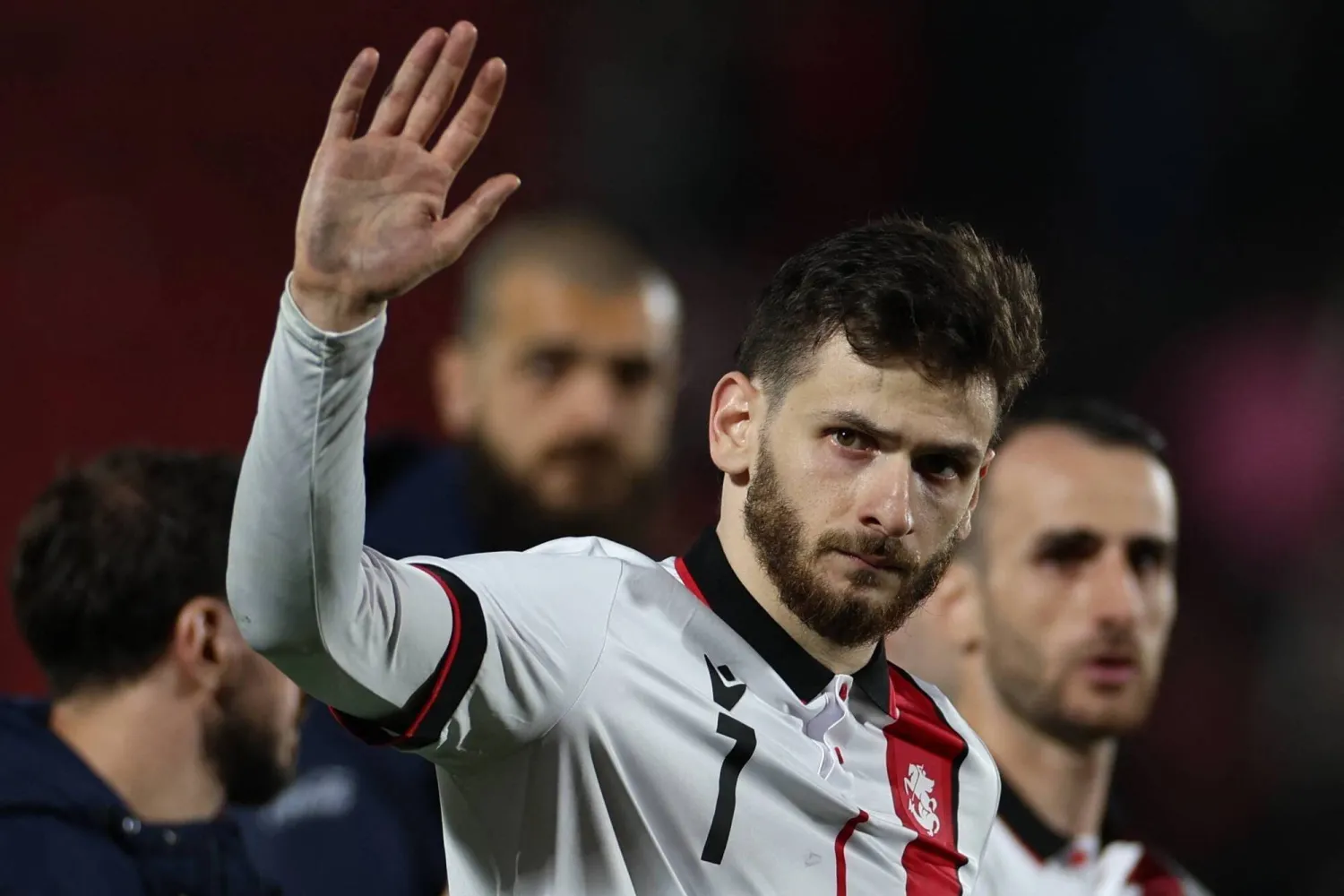
Khvicha Kvaratskhelia. (AFP/Getty Images)
TT

Can PSG Win a Third Straight Champions League without Injured Kvaratskhelia?

Khvicha Kvaratskhelia. (AFP/Getty Images)

As Paris Saint-Germain head to Spain to face Villarreal on Tuesday, the French club's quest to win a third consecutive Champions League title is under threat as injuries to key players raise doubts about the strength of their squad for another tilt at European glory.

PSG's thrilling 4-2 win two weeks ago against Barcelona was overshadowed by the sight of Khvicha Kvaratskhelia having to be helped off injured in the second half.

The Georgian was probably the best player in last season's Champions League knockout rounds, with seven goals and four assists in eight games up to and including the final against Arsenal.

But the rupture to the anterior cruciate ligament in his right knee which the 25-year-old suffered in the win over Barcelona means he is unlikely to return this season.

That is a hammer blow for PSG, who have become Europe's outstanding club side since Kvaratskhelia joined from Napoli in January last year.

Luis Enrique's team began this season's league phase with three wins from three and are well set to reach the knockout stage, but PSG must now be mulling whether to sign a replacement for Kvaratskhelia in the January transfer window.

"Not especially. No injury means we need to sign a new player. None," Luis Enrique said when asked if PSG now needed to go shopping.

"I already said at the start of the season that our team could stay the same, even with two or three injuries. That said, we are always open to the possibility of new players. But not just because we have injuries."

- Barcola missed? -

PSG had already taken something of a risk by selling Bradley Barcola to Liverpool in August in a blockbuster 145 million-euro ($162m) transfer.

Goncalo Ramos, Lee Kang-in and Ibrahim Mbaye all made significant attacking contributions in the last two seasons, but were allowed to leave too.

However, Luis Enrique described the business done by the club during the summer as "exceptional", saying: "I am very happy to begin the season with the number of players that we have".

PSG signed Maghnes Akliouche, a French international winger or midfielder, from Monaco and Spain's World Cup final match-winner Ferran Torres from Barcelona, each for a reported 50 million euros.

They also recruited Belgian international winger Mika Godts from Ajax for a reported 55 million euros.

Torres scored seven goals in his first six appearances, but has gone six games without finding the net. Godts got off to a slow start but has just scored in back-to-back games.

But as the new signings settle, there are renewed doubts about Ousmane Dembele's ability to stay fit after he suffered a hamstring injury against Barcelona -- a player whose minutes were very carefully managed last season is now out for several weeks.

And it is not just in attack where PSG have injuries, with center-back and captain Marquinhos and left-back Nuno Mendes sidelined.

In that case, perhaps the answer to all their problems is right-back Achraf Hakimi, scorer of a hat-trick in Friday's 5-1 win at Le Havre in Ligue 1.

"He is more of an attacker," said Luis Enrique, who has overseen more wins than any other coach in PSG's history.

"He plays higher up the pitch and has the ability to make runs and set up goals.

"He is the best right-back in the world. What I like is that he is always at the highest level, always ready. That means a lot."

PSG made it nine straight wins in that game, despite having only two starters from last season's Champions League final in their line-up.

With competition to PSG lacking in France, being able to rest key players in Ligue 1 and still win remains something which could help them when it comes to Europe.

"We are going to need everyone if we are going to win trophies, and with the injuries there will be opportunities," insisted Luis Enrique.

The problem is there are few players anywhere who could adequately replace a talent like Kvaratskhelia.


Superstitious Antonelli to Shun F1 Champion’s Number One Next Year

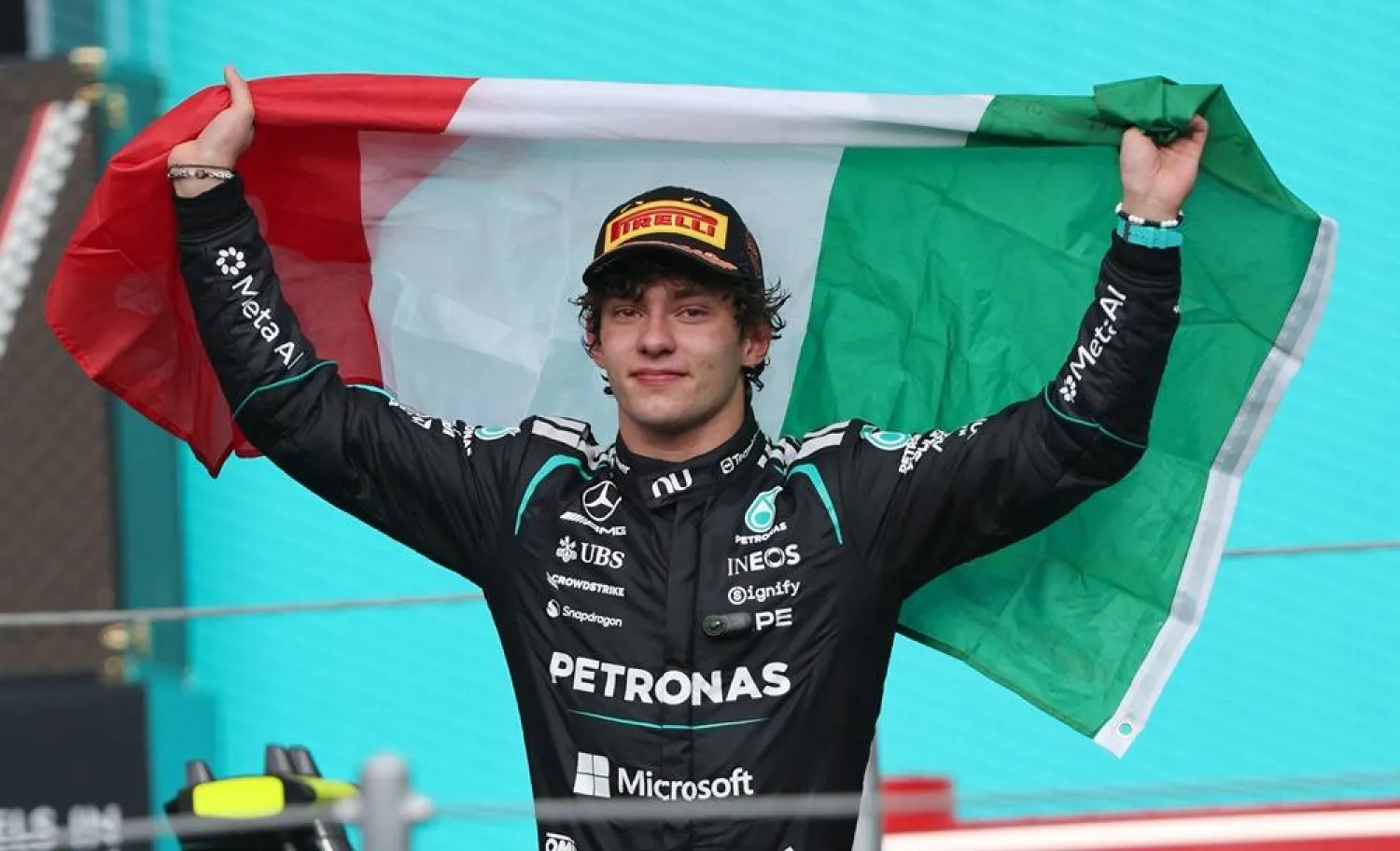
Mercedes’ Italian driver Kimi Antonelli celebrates after being crowned the new Formula 1 world champion, having finished third at the Mexico City Grand Prix, held at the Autodromo Hermanos Rodriguez in Mexico City, Mexico, 01 November 2026. (EPA)
TT

Superstitious Antonelli to Shun F1 Champion’s Number One Next Year

Mercedes’ Italian driver Kimi Antonelli celebrates after being crowned the new Formula 1 world champion, having finished third at the Mexico City Grand Prix, held at the Autodromo Hermanos Rodriguez in Mexico City, Mexico, 01 November 2026. (EPA)

Kimi Antonelli will ‌not have the number one on his car next year out of superstition and humility, the 20-year-old Italian explained after becoming Formula One's youngest champion on Sunday.

The Mercedes driver took the title in Mexico City with racing number 12 on his car and he will keep that when he starts his reign.

"I'll stay with number 12 because, obviously, it's a very special number for me, but also it's a way for me to stay grounded, to stay humble," said the first Italian champion in 73 years.

"I feel like by keeping number 12 it allows me ‌to have a ‌new point where to start and build on ‌everything ⁠again and try ⁠to improve. And also, to be honest, I'm very superstitious, and number one has never been a good number for me.

"Whenever I put it (on), it went extremely badly. So one more reason to stay with number 12."

Antonelli is the first F1 driver to win a championship with the number 12 since the late Brazilian triple champion Ayrton Senna did so ⁠with his first for McLaren in 1988.

Senna, who ‌died racing for Williams at Italy's Imola ‌circuit in 1994, is also an idol for Antonelli, who comes from nearby ‌Bologna and Antonelli said he would be wearing a special tribute ‌helmet at next weekend's Brazilian Grand Prix in Sao Paulo.

Mercedes team boss Toto Wolff said Antonelli's humility made him a new kind of driver, one that other youngsters should emulate.

"This notion of win at all costs -- selfish, opportunistic, ruthlessness ‌for your own benefit -- that model of racing driver has died," said the Austrian.

"We have a new ⁠champion that represents ⁠values like humility, like integrity, loyalty, respect, believing in himself.

"He should be a role model for many other young drivers in junior formulas. He should be a role model for the few entitled ones in Formula One, the endless moaners on the radio, the ones that complain, the ones that crash.

"Look at this kid of 20 years and then think what you can do in order to improve."

Wolff said that was how he, the governing FIA and Formula One wanted to see racing drivers in future.

"He (Antonelli) represents the modern Formula One driver because of those values, not only because of his talent," he added. "He has demonstrated that you can beat everyone out there by being a good person."


Ten Hag Says Relegation a Real Possibility for Man Utd

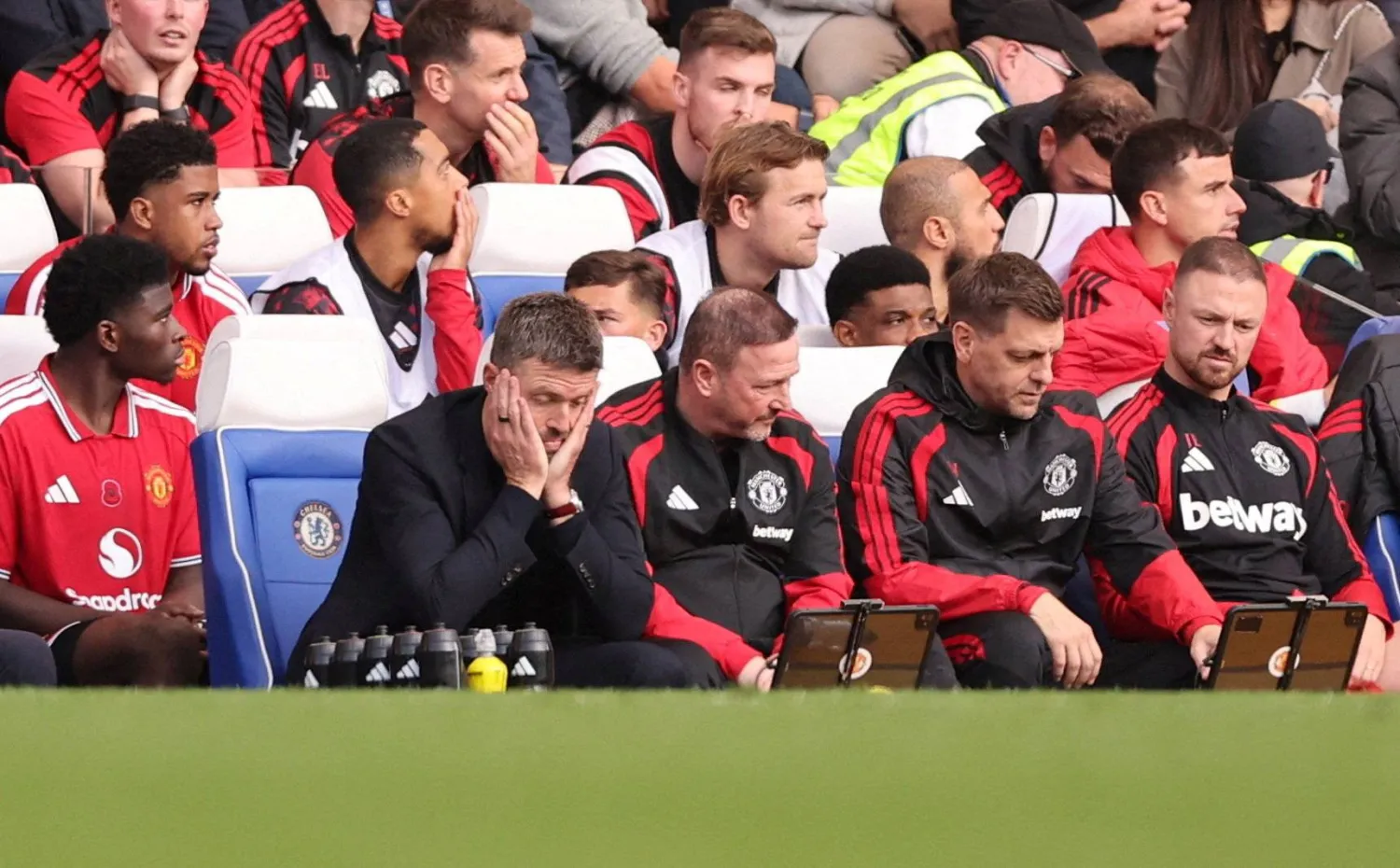
Premier League - Chelsea v Manchester United - Stamford Bridge, London, Britain - October 31, 2026 Manchester United manager Michael Carrick looks dejected during the match. (Reuters)
TT

Ten Hag Says Relegation a Real Possibility for Man Utd

Premier League - Chelsea v Manchester United - Stamford Bridge, London, Britain - October 31, 2026 Manchester United manager Michael Carrick looks dejected during the match. (Reuters)

Former Manchester United manager ‌Erik ten Hag said relegation is a real possibility for the club due to the strength of the Premier League, after a 2-0 loss to Chelsea on Saturday left them one spot above the drop zone.

United are 17th with seven points from nine games, above Crystal Palace in the final relegation spot on goal difference, and are winless in their last nine ‌matches, their ‌longest run without a victory since ‌1984, ⁠according to data ⁠firm Opta.

The United board decided to stick with current manager Michael Carrick for the Chelsea game despite a 3-0 home defeat by Bournemouth and a 4-1 drubbing at Como in the Champions League in the lead-up to the ⁠match.

Asked about the possibility of United ‌being relegated for the ‌first time in over half a century, Ten Hag ‌told ESPN: "In the Premier League it's certainly ‌possible, because all the teams are simply strong.

"They're all strong squads, all good managers. And if you end up on the wrong side once and you ‌really get into that vicious circle -- yes, then it can become very, ⁠very difficult."

Ten ⁠Hag arrived at United in 2022 and guided them to an FA Cup and League Cup trophy during his tenure before being sacked in 2024.

"Before we arrived, six years without winning a trophy," said the Dutch manager, who was named FC Twente's technical director ahead of the 2026-27 season. "Look where they are now."

United next host AS Roma in the Champions League on Tuesday, before facing Aston Villa in the Premier League on Sunday.