

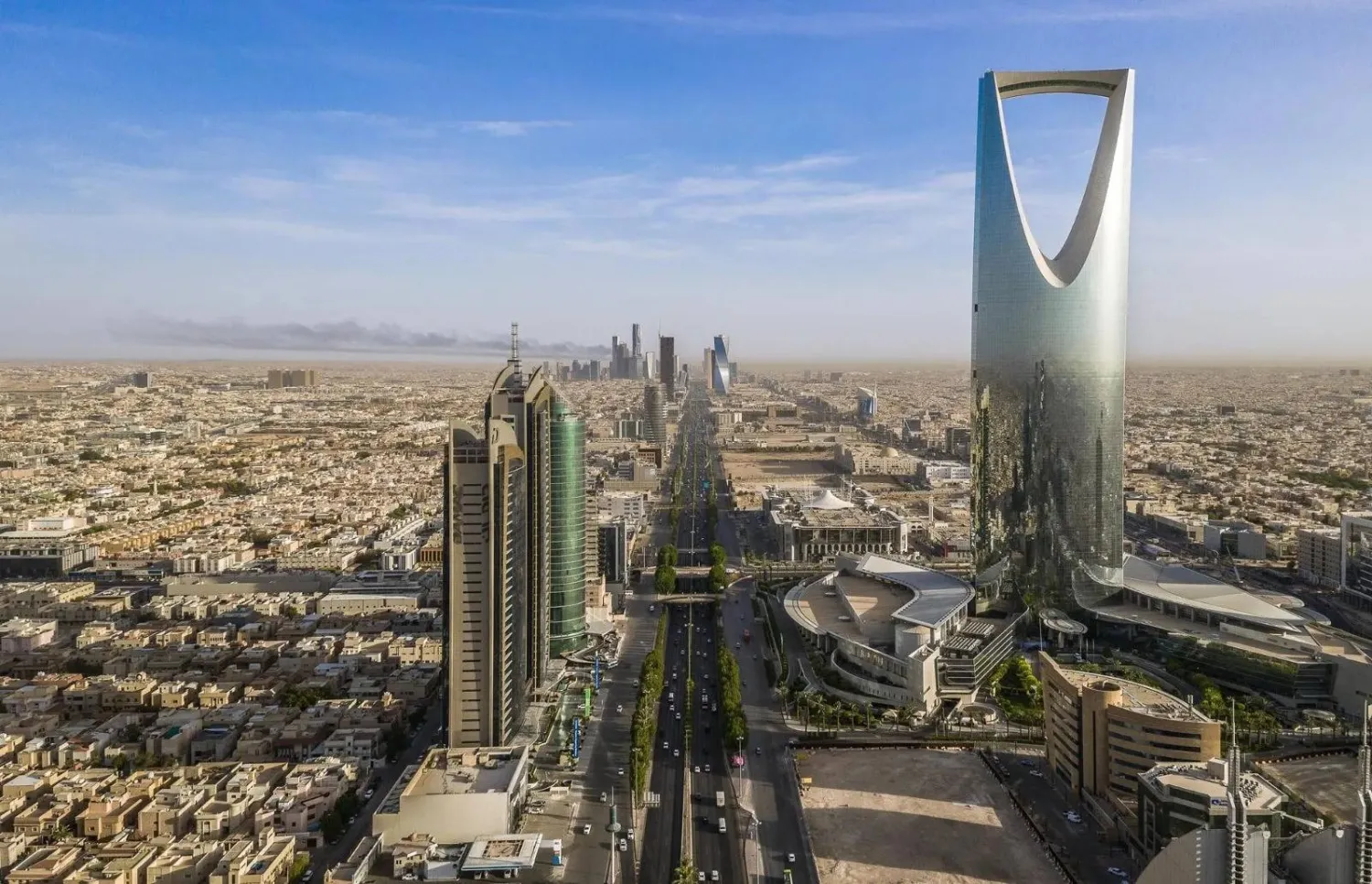

Flight to Stability Boosts Saudi Real Estate

The Saudi capital, Riyadh (SPA)
TT

Flight to Stability Boosts Saudi Real Estate

The Saudi capital, Riyadh (SPA)

As geopolitical turmoil redraws the regional investment map, Saudi Arabia is emerging as a “fortress of stability” and a safe haven for capital.

Experts told Asharq Al-Awsat the Kingdom’s real estate sector has been the biggest winner, posting exceptional growth of 20% to 30%.

They said the surge is no coincidence, but the result of strong financial buffers and ambitious structural programs under Vision 2030, which have proved effective in absorbing external shocks and turning regional challenges into sustained growth.

In an economic paradox, the current regional conflict has underscored Saudi Arabia’s appeal as an investment destination, backed by flexible government programs that adapt to shifting conditions.

The impact has been clear in real estate. The sector has benefited from an influx of residents and investors from crisis-hit countries, driving a sharp rise in occupancy across residential and hotel units, and increasing flows of travelers and economic activity into the Kingdom.

Despite pressure on global energy markets, commodities and supply chains, Saudi real estate has moved in the opposite direction, with a clear positive effect. Rental returns across the Kingdom jumped by an average of 20% to 30%, driven by immediate and rising demand.

The trend highlights the Saudi economy’s ability to offer a stable and rewarding investment environment, even in difficult regional and global conditions.

Positive impact

Saudi investor Mohammed Al-Murshid, a member of the Riyadh Chamber of Commerce and Industry and former head of its real estate committee, said the fallout from the current war had a clear short-term positive impact on demand, especially rents in major cities including Riyadh, Jeddah and the Eastern Province.

He said the war was not the main driver, but reinforced an existing trend.

Al-Murshid told Asharq Al-Awsat the effect stemmed from shifts in population movement in countries more directly affected by the conflict. Flight disruptions and partial airspace closures in the Gulf pushed travelers and residents toward Saudi Arabia as a relatively more stable hub.

In some cases, people moved by land to Riyadh as a safe transit point. This created immediate demand for short-term rentals and hotels, put temporary pressure on furnished units, and lifted corporate demand.

“In times of regional instability, companies tend to relocate employees to safer environments and strengthen their presence in more stable economies,” Al-Murshid said.

He said Saudi Arabia benefited from its economic weight and relative security and stability compared with some regional hotspots.

Global inflation has also fed into the market. Higher energy prices, shipping and insurance costs linked to the war have pushed up construction costs.

Global estimates suggest these factors raised property prices by 15% to 20%, reflecting the market’s exposure to supply chain pressures.

Al-Murshid said the war boosted Saudi real estate by 20% to 30%, citing the ability of Vision 2030 programs to absorb shocks, alongside population growth among citizens and residents that continues to drive domestic demand.

Saudi real estate is the biggest winner

Dr. Abdul Rahman Baashen, head of the Al Shorouk Center for Economic Studies, echoed that view, saying the sector has emerged as a leading beneficiary of current geopolitical shifts.

He said the “key” lies in resilient local demand, which has continued to grow on the back of domestic factors despite disruption elsewhere in the region.

Baashen pointed to a key paradox. While global oil supply volumes fell due to the near-total closure of the Strait of Hormuz, the surge in crude prices offset the drop in exports.

The rise in value boosted state revenues, helping sustain government spending on major real estate and infrastructure projects, a core support for the market.

Three drivers

Baashen identified three factors driving momentum:

A temporary surge in demand, fueled by the movement of people and companies seeking stability.

A rise in prices, driven by higher global construction and logistics costs.

A stronger strategic position for Saudi Arabia as a regional investment haven.

He said Saudi real estate is now in a state of “smart balance,” supported by strong domestic demand and additional external demand linked to regional crises.

This mix gives the sector flexibility to adapt to current conditions in the short- and medium-term, while keeping it closely tied to the strength of the Saudi economy.

Reinforcing Saudi Arabia’s position

Baashen and Al-Murshid agreed that the crisis has reinforced Saudi Arabia’s status as a regional investment haven.

They said three forces are shaping that position: strong demand driven by a move toward stability, rising prices in line with global costs, and growing international confidence in the Saudi economy.

They said the sector now rests on solid domestic demand, with added support from external demand linked to regional shifts, sustaining its appeal and performance in the short and medium term.



Copper Crawls Higher on Softer Dollar and Supply Issues

FILE PHOTO: A coil of copper rod sits on the production line for copper flat wire at the Wellascent factory in Ganzhou, Jiangxi province, China, August 14, 2025. REUTERS/Florence Lo/File Photo
TT

Copper Crawls Higher on Softer Dollar and Supply Issues

FILE PHOTO: A coil of copper rod sits on the production line for copper flat wire at the Wellascent factory in Ganzhou, Jiangxi province, China, August 14, 2025. REUTERS/Florence Lo/File Photo

Copper prices edged higher on Friday, supported by a weaker dollar and supply issues, but gains were modest due to worries about high oil prices hitting demand.

Benchmark three-month copper on the London Metal Exchange rose 0.5% to $14,319 a metric ton in official open-outcry trading. That marked a decline of 2% since the end of last week.

"Metals have seen light turnover again so far this session with copper finding some support with a slightly softer dollar, but the broader tone remains cautious," Neil Welsh, head of metals at broker Britannia Global Markets, said in a note.

"High energy costs stemming from the ⁠ongoing US-Iran conflict and ⁠signs of industrial weakness in China have weighed on sentiment across the complex."

The dollar index hit its strongest in 17 months this week, but weakened on Friday, making commodities priced in the US currency cheaper for buyers using other currencies.

LME copper has gained 16% over the past six months, largely due to a large shift in ⁠inventories to the US attracted by the prospect of tariffs there, creating shortages elsewhere.

Stocks in warehouses monitored by the Shanghai Futures Exchange <CU-STX-SGH> have slumped by 79% over the past four months to 38,744 tons, their lowest since January 2024.

The SHFE was closed for China's National Day and will reopen on October 8.

The prospect of less output in the world's largest copper producer Chile has also underpinned the market, with data on Wednesday showing production fell 12.8% year-on-year in August.

Supervisors at Chile's Escondida copper mine, the world's largest, rejected a collective ⁠contract offer, ⁠paving the way for a potential strike and adding to supply fears.

"This adds to an overall slump in output, as the industry struggles to maintain aging infrastructure amid difficult operating conditions," Reuters quoted Daniel Hynes, senior commodity strategist at ANZ, as saying in a note.

Among other metals, LME aluminium dipped 0.1% in official activity to $3,121.50 a ton and nickel also shed 0.1% to $15,620.

Zinc rose 0.2% to $3,732.50, lead ticked 0.3% higher to $1,863 and tin was little changed at $54,350.


Eurozone Inflation Hits Three-year High at 3.8% in September

FILE PHOTO: The logo of the European Central Bank (ECB) is pictured outside its headquarters in Frankfurt, Germany, April 26, 2018. REUTERS/Kai Pfaffenbach/File Photo
TT

Eurozone Inflation Hits Three-year High at 3.8% in September

FILE PHOTO: The logo of the European Central Bank (ECB) is pictured outside its headquarters in Frankfurt, Germany, April 26, 2018. REUTERS/Kai Pfaffenbach/File Photo

Eurozone inflation jumped to 3.8 percent in September, the highest level in three years, as the war in the Middle East fueled a surge in energy costs, official data showed Friday.

The figure for the 21-country euro area was up sharply from 3.2 percent in August and remains well above the European Central Bank's two-percent target, raising the likelihood of another interest rate increase.

The September reading published by the statistical office of the European Union was slightly higher than the 3.7 percent forecast by economists for Bloomberg.

As the US war against Iran drags on, the conflict has caused major disruptions to fuel supplies from the Middle East, including from the Strait of Hormuz, a key energy trade route.

Energy price increases surged to 18.8 percent in September, up from 14.3 percent a month earlier, AFP quoted Eurostat as saying.

Core inflation, which strips out volatile energy and food prices, rose to 2.5 percent last month from 2.4 percent in August.

Meanwhile, food and drinks inflation increased to 1.4 percent from 1.1 percent in August.

Eurozone inflation was last above 3.8 percent in September 2023, when it stood at 4.3 percent.


World Food Prices Near Four-year High in September

A street food vendor pushes a cart along the road in Ho Chi Minh City on October 2, 2026. (Photo by Nhac NGUYEN / AFP)
TT

World Food Prices Near Four-year High in September

A street food vendor pushes a cart along the road in Ho Chi Minh City on October 2, 2026. (Photo by Nhac NGUYEN / AFP)

World food prices rose in September to their highest in nearly four years as logistics disruptions and weather concerns affected crop markets, the United Nations' Food and Agriculture Organization said.

Fears about a severe El Nino weather pattern have pushed international sugar prices to an 18-month high, while a war-related collapse in Black Sea trade pushed wheat futures to a three-year peak early last month.

The FAO ⁠Food Price Index, ⁠which tracks monthly changes in international prices for a basket of food commodities, averaged 136.0 points, up from a revised 134.0 for August and the highest reading since November 2022.

FAO's benchmarks for cereal, sugar and vegetable oil ⁠prices all rose last month, though meat and dairy quotations fell.

“We are seeing a persistent and increasingly broad-based build up in global commodity prices, as disruptions in the Strait of Hormuz and the Black Sea combine with climate shocks, putting pressure on energy, transport and key food commodities,” FAO Chief Economist Maximo Torero said, according to Reuters.

“If sustained, these pressures will soon pass through to consumer food ⁠prices, especially ⁠in food and energy import-dependent countries,” he said in a statement.

In a separate report, FAO kept its forecast for global cereal production in 2026 almost unchanged at 2.979 billion metric tons, 2.1% below the previous year's peak but still the second-largest harvest on record.

FAO cut its forecast for world cereal trade in 2026/27 by 0.7% from September, citing lower wheat and maize export expectations due largely to constrained Black Sea shipping routes.