Saudi Arabia Reaffirms Commitment to NPT at Eleventh Review Conferencehttps://english.aawsat.com/gulf/5267727-saudi-arabia-reaffirms-commitment-npt-eleventh-review-conference
Saudi Arabia Reaffirms Commitment to NPT at Eleventh Review Conference
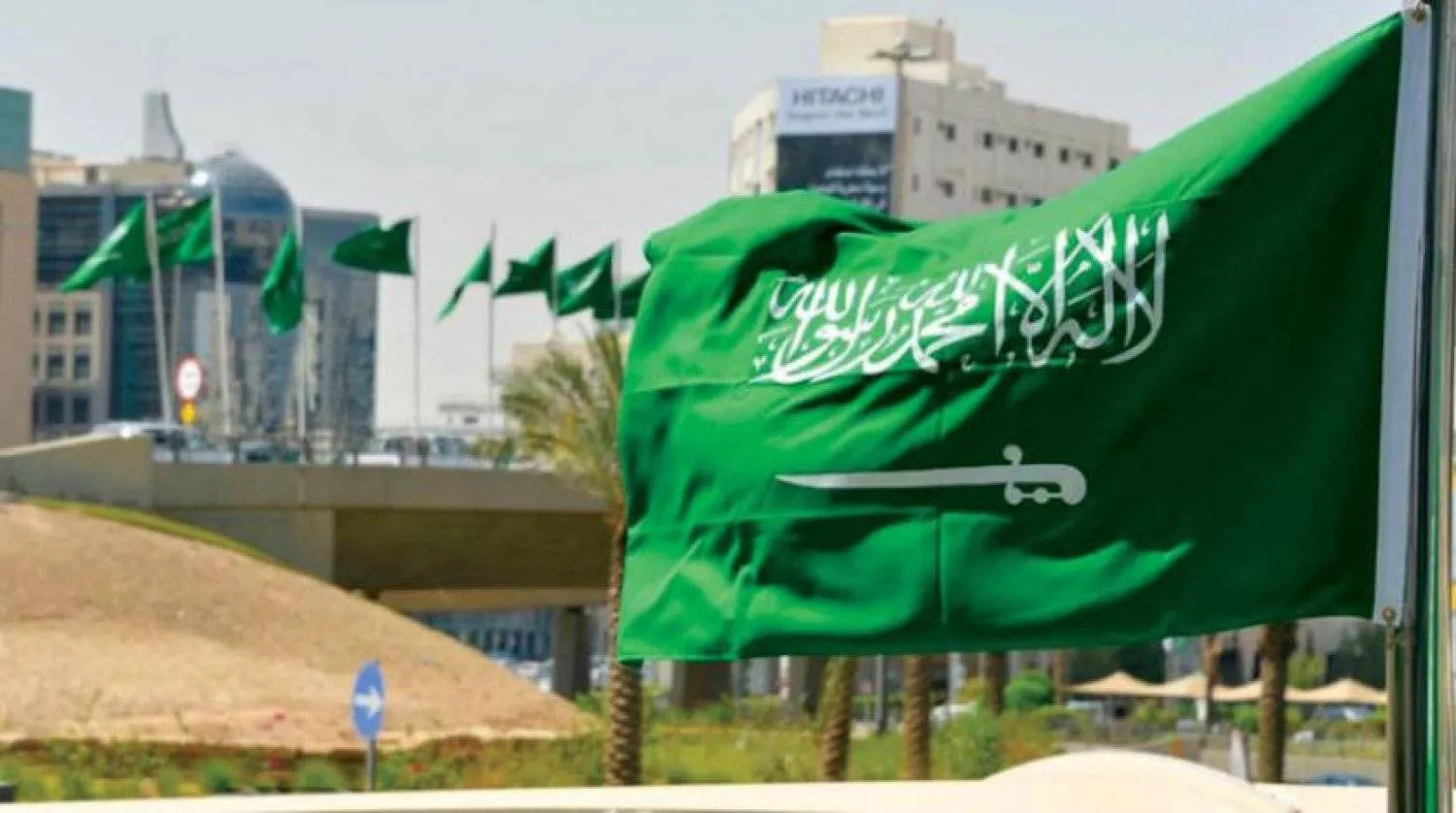
The Saudi flag. Asharq Al-Awsat
Saudi Arabia has reaffirmed the importance of the Treaty on the Non-Proliferation of Nuclear Weapons (NPT) as a fundamental pillar of the global non-proliferation regime, stressing full implementation of its provisions and balance among its three pillars.
The stance was made by the Kingdom’s Permanent Representative to the United Nations, Dr. Abdulaziz Alwasil, at the general debate of the Eleventh NPT Review Conference in New York.
The Kingdom called on nuclear-weapon states to honor their disarmament pledges, affirming that the only guarantee against nuclear weapons use is their complete elimination.
It also affirmed the inherent right of States Parties to peaceful uses of nuclear energy in accordance with the treaty. It underscored the importance of transparency and cooperation with the International Atomic Energy Agency (IAEA).
The speech addressed Iranian attacks against the Kingdom, targeting civilians and civilian infrastructure, which were condemned by the international community. It stressed the importance of regional security, good neighborliness, non-interference in internal affairs, and Iran's full cooperation with the IAEA.
The Kingdom affirmed that establishing a Middle East zone free of nuclear weapons and other weapons of mass destruction is a collective international responsibility, noting that Israel's refusal to join the treaty remains a major obstacle to this goal.
Musaid bin Abdulrahman: A Bridge Between the Imam’s Generation and the Institutional Statehttps://english.aawsat.com/gulf/5321540-musaid-bin-abdulrahman-bridge-between-imam%E2%80%99s-generation-and-institutional-state
Musaid bin Abdulrahman: A Bridge Between the Imam’s Generation and the Institutional State
A recent directive by Custodian of the Two Holy Mosques King Salman bin Abdulaziz, based on a proposal by Crown Prince Mohammed bin Salman, to name the Saudi Electronic University after Prince Musaid bin Abdulrahman comes as Saudi Arabia prepares to celebrate its National Day on Sept. 23.
In a historical coincidence, the 1965 Cabinet decision establishing Sept. 23 as National Day was issued when Prince Musaid was a Cabinet member. Now, his name is being given to the university as the Kingdom marks its anniversary.
The royal directive revives the memory of a major statesman and pioneer of Saudi political and administrative thought who died nearly 40 years ago, in December 1986, and showed little interest in publicizing his life, let alone writing memoirs.
Press archives contain little beyond official reports. Abdulrahman Al-Shubaili, who interviewed him for television and later published the interviews alongside testimonies from his contemporaries, produced what I believe is the only book devoted to Musaid’s life and career.
It is therefore unsurprising that many Saudis today know little about his political and administrative record. Some may first have heard of him when Crown Prince Mohammed bin Salman praised his foresight in a 2021 television interview, recalling Musaid’s decades-old proposal that the state, rather than the private sector, develop residential communities — an idea opposed by some ministers and officials at the time.
It is fitting that Musaid’s name should be given to a university whose establishment 15 years ago represented a forward-looking vision for education, just as Mohammed bin Salman revived his uncle’s forward-looking vision by establishing Roshn, a Public Investment Fund company.
It is as though the architect of Vision 2030 sought through this tribute to say that those who possess foresight and work tirelessly for their country will ultimately be recognized, even if the time for implementing their vision has not yet come.
Personally, I regard Musaid not merely as a minister and statesman but as one of the state’s thinkers, who contributed during a period of transformation that required restructuring government operations and decision-making.
Mohammed Aba Al-Khail, one of his most prominent aides and his successor at the Finance Ministry, recalled that Musaid viewed public office through principles rooted in Islamic law: a public servant was entrusted with applying general rules intended to achieve justice. He insisted on stating and defending his views clearly, then adhering precisely to whatever decision was ultimately reached, demanding the same discipline from those working with him.
Those who knew him described him as wise, farsighted, intelligent, honest and committed to justice, while shunning outward displays. They also cited his broad culture, extensive experience, realism, and analytical ability.
His education began at Ibn Musaybih’s traditional school before he studied under Riyadh scholars. Mohammed bin Jubair recalled that Musaid studied with several sheikhs, including Mohammed bin Ibrahim, attending their circles as a student or listener.
His intellectual formation extended further. He read widely, discussed ideas with scholars, politicians, intellectuals and historians who visited his library, and hosted intellectual gatherings at his home. His private library, first at his home in Riyadh’s Al-Hillah district and later in Al-Shumaisi, became in 1944 the first private library in Riyadh opened to the public. He stocked it with rare and varied books, periodicals and new publications, while continuing his own education through BBC recordings and educational programs.
This combination of religious study, early exposure to modern publications, intellectual debate and self-education produced a complex intellectual formation combining grounding in Islamic law, broad knowledge and openness to contemporary culture.
Despite his religious background - Aba Al-Khail described him as a jurist capable of independent legal reasoning - I observed in Musaid a combination of forceful argument and strong personality, authority and humility, simplicity and rigor.
I also saw two qualities in his thinking that were uncommon among many statesmen of his era.
The first was a legal sensibility, something I observed while attending some of his gatherings in Taif and listening to his discussions and views. It was also reflected in the organizational imprint he left on the institutions he headed, particularly the Board of Grievances, the General Auditing Bureau and later the Finance Ministry.
The second was a reformist inclination embodied in his ideas on reform, renewing thought and developing society. From an early age, he was concerned with the public good and the nation’s future. Nor was he merely a theorist: he sought to put his ideas into practice throughout his private life and in every public responsibility entrusted to him.
In 1940, while in his twenties, he wrote two essays setting out some of those ideas as part of a planned series titled, Advice to My Brothers in Religion and Kinship. They called for broad reform and social advancement, keeping pace with the times, developing education, teaching the arts and sciences, encouraging publishing, opening public clubs, establishing schools for girls and creating clubs for women.
Such ideas were not welcomed at the time, and he discontinued the series. What stands out is not only what he advocated but when: some of the educational and social changes he proposed in the early 1940s would take decades to materialize.
Al-Shubaili wrote that Musaid approached these subjects with the methodology of historians and sociologists, drawing lessons from the study of causes and influences, and that his enlightened ideas went beyond the era and environment in which they appeared.
Musaid’s political and administrative career began with his attendance at the councils of King Abdulaziz and later King Saud alongside senior advisers, without holding an official position.
He became head of the Board of Grievances in October 1954, assumed responsibility for state auditing in June 1957, and was appointed royal adviser, minister of state and Cabinet member in August that year. He became interior minister in July 1960 and finance and national economy minister in March 1962, serving until he requested to be relieved of his post in August 1975.
Three episodes particularly illustrate his intellectual abilities and political standing.
King Abdulaziz considered appointing him education minister, but Musaid recalled that resistance to educational reform and change prevented the plan from proceeding.
From October to December 1959, he served as acting prime minister while Prince Faisal, later King Faisal, was in Switzerland for medical treatment. I believe Musaid was the only prince to hold the title of acting prime minister.
He also chaired the committee established in 1962 to draft a Basic Law of Governance following the government’s 10-point program. It appears to me that the committee completed a draft, but circumstances were not conducive to its adoption.
This, then, was Prince Musaid, son of Imam Abdulrahman: a bridge between the imam’s generation and the generation of ministries; a minister in an institutional state; a thinker who helped establish principles of government administration that endure today; an early advocate of reform and education; an intellectual who opened his library to the public before public libraries existed; and a scholar deeply versed in Islamic law.
He established the Board of Grievances and auditing institutions before administrative justice and financial oversight became firmly established traditions, and managed the Kingdom’s finances for more than a decade during crucial years in the construction of its modern economy.
Without ever earning a university degree, he was himself a university from which leading statesmen graduated.
Saudi Arabia Marks its National Day with a Digital Economy Nearing One-Sixth of GDPhttps://english.aawsat.com/gulf/5321515-saudi-arabia-marks-its-national-day-digital-economy-nearing-one-sixth-gdp
Saudi Arabia Marks its National Day with a Digital Economy Nearing One-Sixth of GDP
King Salman chairs the extraordinary virtual G20 Leaders' Summit from Riyadh. SPA
When the country's regions were first unified, distances were measured in days of travel, and the telegraph was one of the state's tools for connecting its far-flung territories. Today, as Saudi Arabia celebrates its National Day, information travels in fractions of a second, and citizens can complete tasks on their smartphones that once required a journey, paperwork, and waiting.
Behind this daily reality lies the growing role of the digital economy, which, according to Saudi Arabia's Ministry of Communications and Information Technology, contributed nearly 16 percent of GDP in 2025, equivalent to almost one-sixth of the Saudi economy.
This year's National Day celebrations coincide with what Saudi Arabia has designated as the "Year of Artificial Intelligence," combining reflection on the country's unification journey with a focus on future sources of economic strength.
The current transformation builds on a development path led by King Salman and Crown Prince Mohammed bin Salman, placing technology at the heart of governance efficiency, business growth, human capital development, and the Kingdom's ambition to secure a larger share of the global knowledge economy.
In April 2016, the Saudi Cabinet, chaired by King Salman, approved Saudi Vision 2030, which was designed and overseen by Crown Prince Mohammed bin Salman. The vision positioned digital transformation within a broader project aimed at diversifying the economy and improving the efficiency of spending and public services.
Investments in digital infrastructure were accompanied by administrative reforms, regulatory modernization, and greater opportunities for private-sector participation. Over time, these efforts enabled various entities to develop interconnected services and measure the time and effort saved for beneficiaries.
The COVID-19 pandemic put these investments to a real-world test. On March 26, 2020, King Salman chaired the extraordinary virtual G20 Leaders' Summit from Riyadh. At a time when travel restrictions had closed airports and meeting venues around the world, the event presented a remarkable diplomatic scene and demonstrated the capacity of digital infrastructure to sustain work and communication when face-to-face meetings were impossible.
That same year, Crown Prince Mohammed bin Salman linked the National Data and AI Strategy to the goal of making Saudi Arabia a global leader in the field. Since then, a succession of initiatives, institutions, and companies have been launched, culminating in the Saudi Cabinet's approval last March of the designation of 2026 as the "Year of Artificial Intelligence."
This continuity reflects how broad strategic ambitions have been translated into programs spanning government, investment, and education, all focused on expanding the Kingdom's ability to develop and deploy technology.
Readers can observe this transformation in everyday life: renewing documents through the Absher platform, following judicial procedures through Najiz, and accessing services from multiple government entities through Nafath.
These digital services have fundamentally changed the relationship between beneficiaries and service providers. Many transactions can now be completed outside regular government and business hours, the need to carry documents between offices has decreased, and access to services has become easier for people living far from government centers.
The experience has also extended to healthcare through the Sehhaty platform and to the wide range of documents and services integrated into the Tawakkalna application. Behind every user action on the screen are less visible processes, including the integration of records, identity verification, data protection, and the maintenance of uninterrupted system operations.
This is where digital government generates economic value: it reduces transaction costs for individuals and businesses while creating demand for software development, cybersecurity, operations, and Saudi technical expertise.
In retail, electronic payments have transformed part of the sales process, while the integration of payment systems, delivery services, and digital platforms has fueled the expansion of e-commerce. Small businesses can now market their products to customers beyond their neighborhoods and cities, and manage inventory and payments through digital tools.
These developments help explain how the digital economy reaches sectors such as commerce, transportation, finance, and healthcare, and how its impact extends far beyond companies traditionally classified as technology firms.
Saudi Arabia's Ministry of Communications and Information Technology estimates the Kingdom's information and communications technology (ICT) market at approximately $53 billion (SAR 199 billion) in 2025.
The size of the ICT market differs from the digital economy's contribution to GDP, as the latter encompasses digital activities spanning multiple economic sectors. This influence is reflected in the growing adoption of networks, software, and digital services by businesses, enabling them to increase productivity and reach customers more effectively.
Small and medium-sized enterprises (SMEs), in particular, benefit from this transformation by gaining access to tools and technologies that previously required larger investments and specialized expertise.
Institutions Safeguarding Trust and Connecting Services
The expansion of digital activity has necessitated the creation of institutions that regulate and protect it. The National Cybersecurity Authority (NCA) serves as the national reference body for cybersecurity affairs.
The Saudi Data and Artificial Intelligence Authority (SDAIA) leads efforts related to data and artificial intelligence, while the Digital Government Authority (DGA) oversees the regulation and advancement of government digital services and their integration.
Through the coordination of these institutions, services are seamlessly connected to identity verification, data management, and cybersecurity, enhancing the ability of government entities to provide reliable user experiences.
This transformation also has a physical dimension. In northern Riyadh, the Digital City district brings together towers and headquarters of government entities and companies, including the Saudi Ministry of Communications and Information Technology.
Its urban presence provides a tangible representation of an economy in which countless transactions take place without paper. Behind these digital services are teams at work, neighboring companies, and an ecosystem that supports an industry built on knowledge exchange and multidisciplinary collaboration.
Saudi Companies Building Domestic Production Capabilities
As the market has matured, investments have increasingly focused on developing national capabilities across various stages of the digital industry. A prominent example is the role of the Public Investment Fund (PIF), chaired by Crown Prince Mohammed bin Salman, in establishing companies aimed at supporting economic diversification opportunities.
The Saudi Information Technology Company (SITE) illustrates this approach through its work in secure technology solutions, cybersecurity, and cloud services. In this context, expertise in protecting and operating digital systems has evolved into a field that generates business opportunities, professional training, and product development.
Another example is HUMAIN, launched in May 2025 and chaired by Crown Prince Mohammed bin Salman. The company works to link data centers and cloud-computing infrastructure with AI models and applications. Its initiatives include language models such as Allam, conversational AI applications such as HUMAIN Chat, and partnerships with global technology companies.
Here, the Arabic language itself acquires an economic dimension. The ability to understand Arabic and process its content supports the development of services tailored to the needs of institutions and users while expanding the presence of Arabic knowledge within AI products.
Developing these products requires extensive research into data quality, accuracy of responses, and understanding of local contexts, alongside testing their applications within institutions. This creates opportunities for collaboration among researchers, universities, and the private sector, and for translating specialized knowledge in healthcare, industry, and services into practical applications.
At the same time, investment in the Arabic language offers the possibility of building Saudi expertise capable of serving broader Arab markets.
Behind the Swift Answer... An Entire Industry
Behind the artificial intelligence services that appear effortless on a smartphone screen lies a vast infrastructure of technology and expertise. The answer that appears within seconds depends on processors, networks, storage systems, electricity, and cooling facilities. This is why data centers have emerged as a fundamental pillar of the AI economy.
Saudi Arabia is betting on its ability to attract such investments through the availability of energy, capital, strategic location, and growing domestic demand, while building partnerships that provide access to advanced technologies.
In Riyadh, the foundation stone for SDAIA's Hexagon Data Center was laid earlier this year, with a planned capacity of 480 megawatts. Now under implementation, the project reflects the scale of the Kingdom's ambitions in expanding hosting capabilities for digital systems and computing power. It also illustrates that the development of digital government and artificial intelligence requires substantial physical investments, integrating construction, energy, telecommunications, and specialized operations.
The market is also preparing for expanded local cloud-computing options in the coming months. Microsoft has announced that its Saudi Arabia East Datacenter Region will become available in November, while Amazon Web Services (AWS) has confirmed the launch of its first cloud region in Saudi Arabia in December this year.
These facilities will provide organizations with broader options for hosting data and running applications locally while leveraging platforms and tools used by businesses worldwide.
The connection between these investments and local economic development is evident in the growing collaboration between AWS and HUMAIN, which includes plans to make Allam, the Saudi Arabic-language AI model, available through the Amazon Bedrock platform. This partnership enables local developers to connect with global distribution platforms, increasing the value of locally developed products that address clear customer needs.
The LEAP Conference held in Riyadh. SPA
LEAP Conference: Investments Moving Toward the Market
The fifth edition of the LEAP Conference concluded in Riyadh in early September. According to the Saudi Press Agency (SPA), announced investments approached $15 billion. These announcements vary in scope and timeframe, and their ultimate economic impact will depend on implementation and the successful commercialization of projects and products.
Among the announcements, Al Moammar Information Systems (MIS) unveiled a $1.2 billion investment to expand its data-center capacity to 192 megawatts, one of the major announcements made on the conference's second day.
On the content and creativity front, Adobe expanded its partnership with Saudi Arabia's Ministry of Communications and Information Technology and HUMAIN to support AI-powered creativity. These initiatives demonstrate the breadth of opportunities across the digital economy, from building infrastructure to developing tools used by designers, content creators, and businesses.
The conference's significance also lies in bringing together investors, developers, suppliers, and customers in one place. Startups need pathways to market, manufacturers need partners and buyers, and computing projects require real-world applications to utilize their capabilities.
When these relationships evolve into contracts and ongoing business activities, the conference's impact extends well beyond the days of the event, contributing to business growth and the localization of expertise.
People at the Heart of the Economy
As important as data centers and technology projects are, people remain the decisive factor in their success. The digital economy depends on researchers who develop models, engineers who operate systems, specialists who protect data, educators who prepare students, and entrepreneurs who transform ideas into services.
From this perspective, training programs, educational initiatives, and university partnerships are closely linked to technology investment. The participation of young men and women in these fields forms an essential part of the expected developmental return.
This impact also extends to existing professions. Doctors, lawyers, accountants, and shop owners all need skills that enable them to benefit from new tools and evaluate their outputs effectively.
As digital literacy expands, technology is more likely to be adopted in productive everyday use. It also creates greater opportunities for Arabic-language content, research and development, and Saudi companies that offer solutions rooted in local market needs while remaining scalable to international markets.
Toward the 100th National Day
When Saudi Arabia celebrates its 100th National Day in 2030, it will be possible to assess the results of this phase through the quality of the products it develops, the jobs it creates, the knowledge it localizes, and the impact these achievements have on people's lives and business competitiveness.
The transformation accelerated under Vision 2030, led by King Salman and Crown Prince Mohammed bin Salman, opening broader opportunities for the Saudi economy to participate in the development of technology and shape its applications.
From the telegraph that once carried news across the country to advanced Arabic-language AI models that process and distribute knowledge through digital networks, the value of connectivity continues to evolve as a means of bringing people together and facilitating their daily activities.
In the Year of Artificial Intelligence, the Kingdom brings to its National Day the achievements of a transformation that citizens and residents experience through their smartphones, and that is being advanced by engineers in data centers, researchers in laboratories, and young entrepreneurs launching new ventures. From these countless individual contributions, the next chapter of Saudi Arabia's development story is taking shape.
Saudi Foreign Minister Meets US Special Envoy for Syria and Iraqhttps://english.aawsat.com/gulf/5321501-saudi-foreign-minister-meets-us-special-envoy-syria-and-iraq
Saudi Foreign Minister Meets US Special Envoy for Syria and Iraq
Saudi Minister of Foreign Affairs Prince Faisal bin Farhan bin Abdullah in Moscow on July 4, 2025. (Reuters)
Saudi Minister of Foreign Affairs Prince Faisal bin Farhan bin Abdullah met in New York on Tuesday with US Special Envoy for Syria and Iraq Tom Barrack, the Saudi Press Agency said.
The meeting was held on the sidelines of the High-level Week of the 81st session of the United Nations General Assembly.
The two officials discussed the latest developments in the Middle East and efforts to contain tensions and promote security and peace in the region.
لم تشترك بعد
انشئ حساباً خاصاً بك لتحصل على أخبار مخصصة لك ولتتمتع بخاصية حفظ المقالات وتتلقى نشراتنا البريدية المتنوعة