


Swiss President: We Stand with Saudi Arabia, US-Iran Negotiations Key to Stability

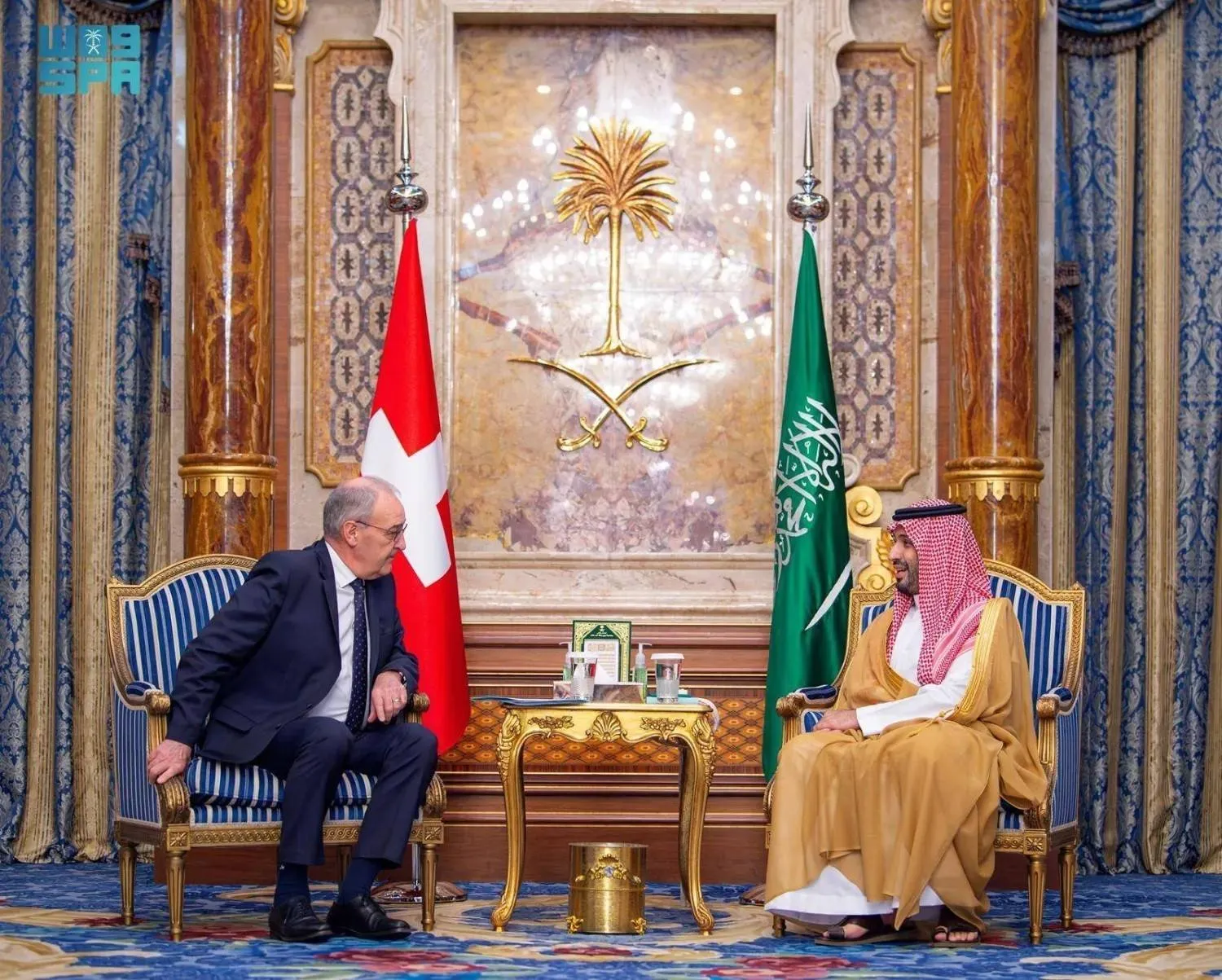
Crown Prince Mohammed bin Salman and Swiss President Guy Parmelin during a bilateral meeting in Jeddah on April 23. SPA
TT

Swiss President: We Stand with Saudi Arabia, US-Iran Negotiations Key to Stability

Crown Prince Mohammed bin Salman and Swiss President Guy Parmelin during a bilateral meeting in Jeddah on April 23. SPA

Swiss President Guy Parmelin reaffirmed his country’s support for Saudi Arabia in what he described as difficult circumstances, and stressed the need to press ahead with efforts to reach a diplomatic solution between Washington and Tehran through negotiations, to safeguard regional peace and stability.

Speaking to Asharq Al-Awsat, Parmelin said the region’s security situation topped the agenda. He expressed Switzerland’s solidarity with Saudi Arabia, praised Crown Prince Mohammed bin Salman’s wisdom and restraint, and conveyed Swiss support.

He said both sides agreed on the need to back all efforts to secure a negotiated diplomatic solution in the interest of regional stability.

"The visit to Saudi Arabia on 22 and 23 April marked the 70th anniversary of diplomatic relations between our two countries and aimed at further strengthening our bilateral ties at both the political and economic levels. In Jeddah, I was accompanied by HE State Secretary Helene Budliger Artieda and a high-level business delegation representing key Swiss industries."

Deepening strategic cooperation

Parmelin said talks with Crown Prince Mohammed bin Salman, who also serves as Saudi Prime Minister, focused on strengthening economic ties amid global uncertainty.

He said both sides explored opportunities to deepen cooperation in strategic sectors, including logistics, commodities, financial services, and insurance, where both countries have strong expertise.

"A key element of the visit was the economic roundtable I co-chaired with HE Fahad bin Abduljalil Al-Saif, Minister of Investment, which brought together leading representatives from government and business on both sides. It was a valuable opportunity to identify concrete areas for enhanced cooperation and strengthen links between Swiss and Saudi companies," he added.

Parmelin said the signing of a new bilateral investment protection agreement with the Saudi investment minister was a main outcome of the visit.

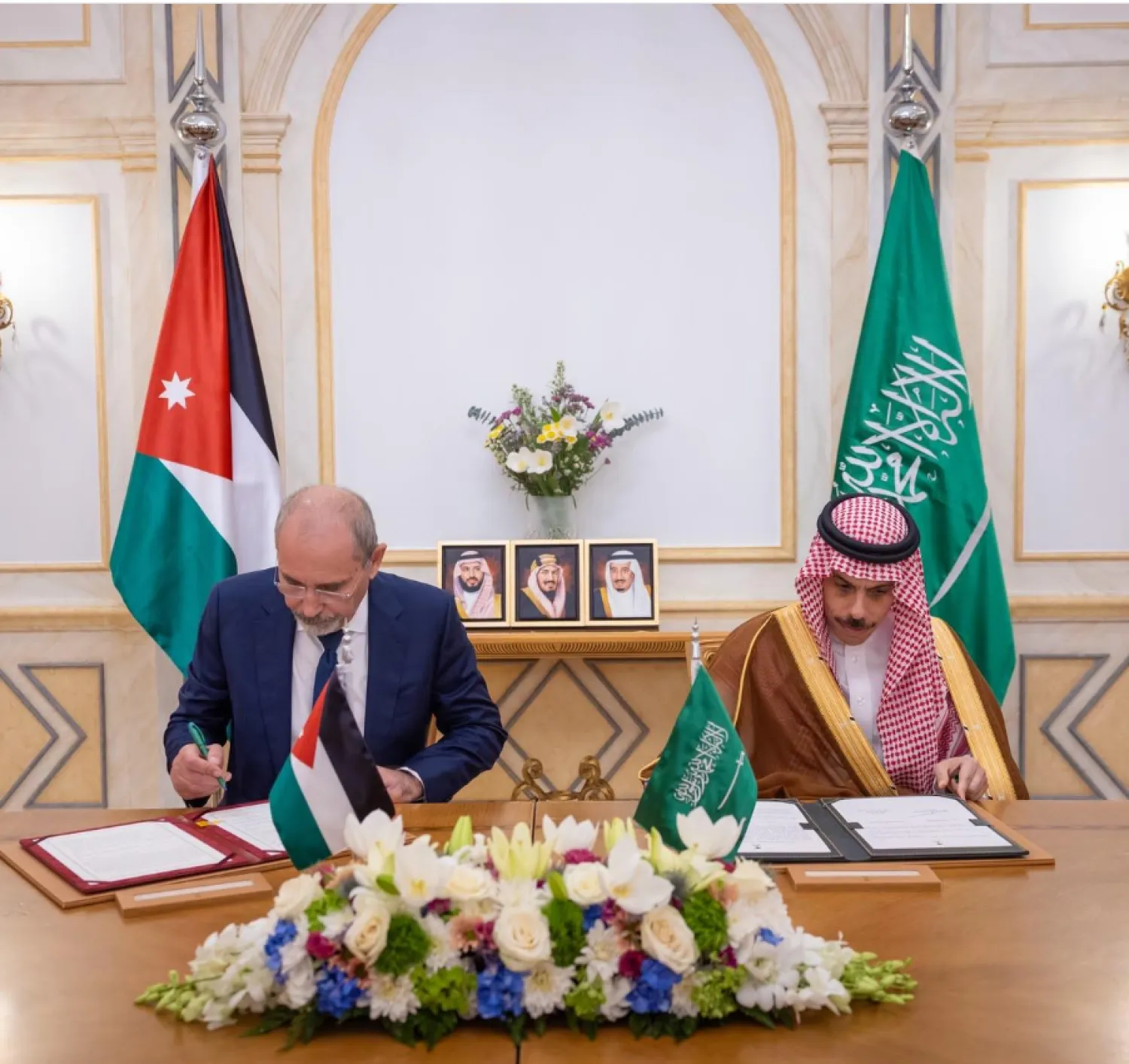
"I was particularly honored by the presence of HH Prince Faisal bin Farhan Al Saud, Minister of Foreign Affairs, at the signing ceremony, which underlined its importance. The agreement enhances legal certainty for investors and strengthens the conditions for bilateral economic engagement."

Saudi-Swiss relations

Parmelin said relations between Switzerland and Saudi Arabia are close, longstanding, and span more than 70 years, describing them as strong and steadily evolving.

He said the partnership is built on mutual respect, regular dialogue, and growing economic ties, underpinned by a shared interest in stability, open markets, and rules-based international cooperation.

"Economic cooperation is at the core of our bilateral relations. Switzerland is a significant trading partner for Saudi Arabia, and about 200 Swiss companies are actively engaged in the Kingdom across pharmaceuticals, machinery, engineering, technology, commodities, logistics, financial services and insurance."

Parmelin affirmed that Switzerland sees significant opportunities tied to Saudi Arabia’s Vision 2030 program, saying: "We also see growing opportunities linked to Saudi Arabia’s Vision 2030 transformation agenda. Swiss expertise in hospitality, research and innovation, sustainable infrastructure, advanced manufacturing, and vocational education and training has much to contribute here. On the institutional side, we advance our shared agenda through a yearly Joint Economic Commission, a Bilateral Financial Dialogue, and Political Consultations."

At the institutional level, he said both countries are advancing their shared agenda through a yearly Joint Economic Commission, a Bilateral Financial Dialogue, and Political Consultations. 

"Beyond economic ties, we maintain constructive political exchanges and cooperate in multilateral settings. Saudi-Swiss relations are broad-based and forward-looking, with real scope to deepen collaboration in both established and emerging sectors."


Saudi Arabia Seeks Lasting Agreement to Enhance Regional Security

Saudi Crown Prince Mohammed bin Salman and Pakistani Prime Minister Muhammad Shehbaz Sharif (Saudi Ministry of Foreign Affairs)
TT

Saudi Arabia Seeks Lasting Agreement to Enhance Regional Security

Saudi Crown Prince Mohammed bin Salman and Pakistani Prime Minister Muhammad Shehbaz Sharif (Saudi Ministry of Foreign Affairs)

Saudi Crown Prince and Prime Minister Mohammed bin Salman welcomed the agreement between the United States and Iran to end military operations, reached through mediation efforts by Pakistan, and reaffirmed the Kingdom’s aspiration for a lasting agreement that enhances regional security and stability.

The remarks came during a phone call the Crown Prince received on Friday from Pakistani Prime Minister Muhammad Shehbaz Sharif, who expressed his appreciation for the Kingdom’s support in efforts to reach the memorandum of understanding between Washington and Tehran.

In turn, the Crown Prince welcomed the agreement between the United States and Iran to end military operations and emphasized the Kingdom’s hope that it would lead to a durable arrangement that strengthens security and stability across the region.

The two leaders also reviewed bilateral relations between Saudi Arabia and Pakistan and explored avenues to enhance joint cooperation.

For his part, Shehbaz Sharif said in a post on his official account on the social media platform X that the phone call was marked by warmth and mutual appreciation. He added that he congratulated Prince Mohammed bin Salman on the signing of the “historic Islamabad peace agreement.”

The Pakistani prime minister stressed that the Saudi Crown Prince’s leadership, together with the Kingdom’s steadfast commitment to supporting security, stability and peace in the Middle East, had been a key pillar in advancing efforts to overcome the region’s crisis.

Shehbaz Sharif added: “We agreed that the next phase requires continued commitment to dialogue and diplomacy as the primary path forward, while maintaining the highest level of vigilance against any attempts to undermine the peace process or obstruct the progress achieved.”

He further expressed deep appreciation for the exceptional level reached in Saudi-Pakistani relations, affirming his desire to continue working jointly to strengthen the economic partnership between the two countries under the vision and leadership of Prince Mohammed bin Salman.


Saudi Arabia, Egypt, Türkiye, Pakistan Move to Deepen Partnership, Cooperation

 Foreign ministers attend a four-way meeting in Riyadh on March 20. (Egyptian Foreign Ministry)
Foreign ministers attend a four-way meeting in Riyadh on March 20. (Egyptian Foreign Ministry)
TT

Saudi Arabia, Egypt, Türkiye, Pakistan Move to Deepen Partnership, Cooperation

 Foreign ministers attend a four-way meeting in Riyadh on March 20. (Egyptian Foreign Ministry)
Foreign ministers attend a four-way meeting in Riyadh on March 20. (Egyptian Foreign Ministry)

Egypt will host a four-way meeting with the foreign ministers of Saudi Arabia, Türkiye and Pakistan, days after Washington and Tehran finalized a memorandum of understanding to stop the war that began in late February.

Egyptian Foreign Minister Badr Abdelatty will meet his Saudi counterpart, Prince Faisal bin Farhan, Türkiye’s Hakan Fidan and Pakistan’s Mohammad Ishaq Dar in Cairo on Sunday for a four-way meeting, Egypt’s state news agency reported late on Thursday.

The talks will be followed by an expanded session and a press conference.

A former Egyptian diplomat told Asharq Al-Awsat the meeting would focus on “ways to consolidate cooperation, deepen partnership and coordinate on regional issues, complete efforts to cement de-escalation in the region, and narrow differences during the next 60 days of negotiations between Washington and Tehran.”

The quartet played a prominent role in reaching the US-Iran agreement days ago. Its efforts formally began with a meeting in March in the Saudi capital, Riyadh, followed by meetings in Islamabad and Antalya as part of efforts to end the Iran war.

The meeting comes two days after the Swiss government said negotiations between the United States and Iran, due to begin on Friday in Switzerland, had been postponed indefinitely.

The announcement came hours after a planned visit by US Vice President JD Vance was canceled.

Iranian Supreme Leader Mojtaba Khamenei said earlier on Thursday that he had approved the memorandum of understanding signed by Washington and Tehran, despite expressing reservations about it.

US forces said they had lifted a naval blockade on Iranian ports after the memorandum was signed by the US and Iranian presidents on Wednesday.

Ambassador Mohamed Hegazy, a member of the Egyptian Council for Foreign Affairs and a former assistant foreign minister, told Asharq Al-Awsat the call for the four-way meeting marked an important step in regional consultations at a time of deep strategic shifts in the Middle East.

He cited the ceasefire, the containment of the US-Iran military confrontation, and the risks of the continuing war in Gaza and its impact on regional security and stability.

He said the “consultative quartet” of influential regional states had “proved its presence as an effective regional and international framework capable of addressing problems and issues in coordination with regional states and major powers to calm regional conditions and deal with their problems.”

Hegazy said the meeting’s importance went beyond traditional political coordination. He expected the agenda to include support for consolidating the “Washington-Tehran agreement,” continuing negotiations, discussing Gaza and Lebanon, and backing efforts to secure a sustainable regional calm.

The meeting is also expected to “open the door to deepening partnership and coordination among the quartet, and to studying the possibility of holding a regional or international conference on security and cooperation in the Middle East, similar to successful experiences in other regions,” Hegazy said.

Such a conference, he said, would aim to draft a declaration of principles governing regional relations and establish institutional mechanisms for dialogue, dispute settlement, and stronger economic, security and humanitarian cooperation among the region’s countries.

Egypt’s Foreign Ministry said on Friday that Abdelatty held separate phone calls with Pakistan’s Mohammad Ishaq Dar and Iranian Foreign Minister Abbas Araghchi to discuss regional developments after the US-Iran memorandum of understanding.

An official statement said the Egyptian and Pakistani ministers stressed “the importance of continuing coordination and joint consultation in the coming phase to ensure the implementation of the memorandum of understanding and reach a final and sustainable agreement that takes into account the interests and concerns of all parties and strengthens diplomatic solutions, in a way that achieves security and stability in the region.”

In his call with Araghchi, Abdelatty expressed hope that the memorandum of understanding would become “an important turning point in support of security and stability in the region, and contribute to opening the way to addressing all issues through dialogue and diplomatic means.”

He also voiced hope for a final and sustainable agreement that addresses the concerns of all parties and supports efforts to achieve lasting security and stability in the region.

Hegazy said it was important to maintain “serious dialogue among the main regional powers over the shape of the regional order that should govern relations among the countries of the region in the next phase, ensuring a shift from the logic of managing successive and recurring crises to building a stable system of security, cooperation and development.”

The current phase requires “the formulation of mutual understandings with Iran on the security of the Arabian Gulf, in a way that reassures all parties and lays the foundation for normal relations based on good neighborliness, common interests, and the non-use or threat of force,” Hegazy said.

He also called for strengthening political and security dialogue mechanisms to prevent the region from returning to cycles of escalation and confrontation, and for building frameworks to manage cooperation and development among the region's countries across various fields.


Saudi Foreign Minister Receives Written Message from Chinese Counterpart

Saudi Vice Minister of Foreign Affairs Waleed Elkhereiji and Chinese Ambassador to Saudi Arabia Chang Hua.(SPA)
TT

Saudi Foreign Minister Receives Written Message from Chinese Counterpart

Saudi Vice Minister of Foreign Affairs Waleed Elkhereiji and Chinese Ambassador to Saudi Arabia Chang Hua.(SPA)

Saudi Minister of Foreign Affairs Prince Faisal bin Farhan bin Abdullah received a written message from Foreign Minister of the People's Republic of China Wang Yi concerning relations between the two countries, the Saudi Press Agency reported Thursday.

The message was received by Vice Minister of Foreign Affairs Waleed Elkhereiji during a meeting at the ministry's headquarters in Riyadh with Chinese Ambassador to Saudi Arabia Chang Hua.

During the meeting, the two sides reviewed bilateral relations and discussed regional and international developments.
