



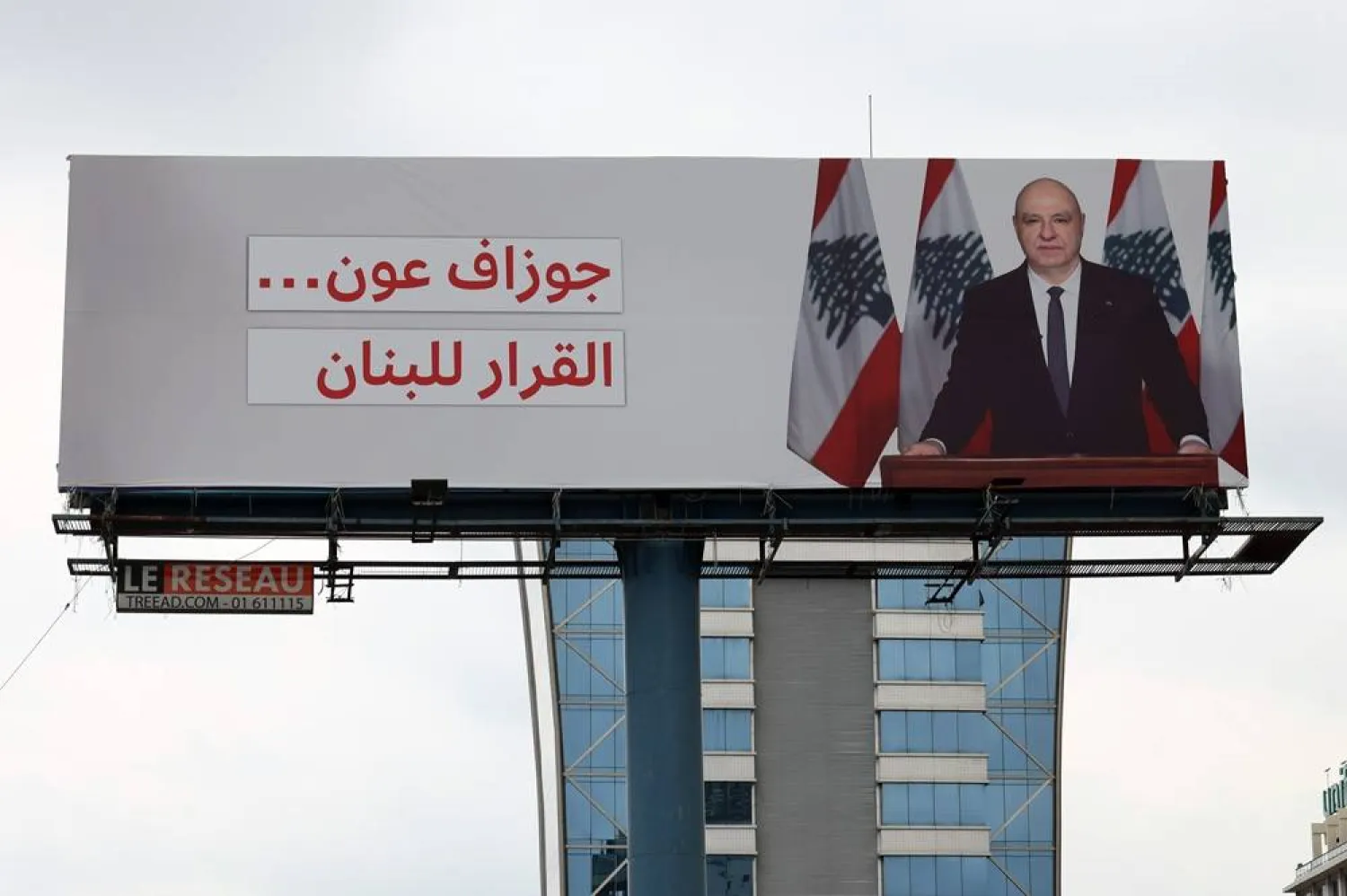

Lebanese President Joseph Aoun is pushing to lock in a ceasefire and halt Israeli strikes on civilians before Lebanese and Israeli representatives resume bilateral talks in Washington, as Hezbollah continues to vehemently reject the negotiations.
Aoun is under pressure from both sides. The United States is urging direct engagement between Lebanon and Israel, including a meeting between Aoun and Israeli Prime Minister Benjamin Netanyahu. Hezbollah, meanwhile, rejects direct talks outright.
Aoun says diplomacy is the only option to secure a ceasefire, ensure an Israeli withdrawal, and extend state control across all Lebanese territory. But he refuses any meeting with Netanyahu, after rejecting even a phone call with him as part of a US-mediated three-way contact.
Consolidating the ceasefire
Aoun’s push to cement the ceasefire was discussed with US Ambassador to Beirut Michel Issa, hours after the US Embassy said a direct meeting between Aoun and Netanyahu, "facilitated by President Trump, would give Lebanon the chance to secure concrete guarantees on full sovereignty, territorial integrity, secure borders, humanitarian and reconstruction support, and the complete restoration of Lebanese state authority over every inch of its territory -- guaranteed by the United States."
The Lebanese presidency said Aoun met Issa after returning from Washington and reviewed developments, focusing on consolidating the ceasefire and stopping attacks on civilians and civilian facilities, ahead of further Washington talks aimed at securing peace and stability along the border.
Issa reaffirmed the US’s continued support for Lebanon and its institutions. Aoun thanked Washington for its backing.
Prime Minister Nawaf Salam also met Issa to discuss consolidating the ceasefire and negotiations with Israel, the prime minister’s office said.
Sources close to the presidency told Asharq Al-Awsat that a ceasefire and a halt to attacks on civilians and civilian facilities are “the basis for completing negotiations.”
Aoun’s position on a direct meeting “is known and declared,” the sources said. “Anyone who rejected a phone call with Netanyahu will certainly reject meeting him.”
Hezbollah pressure
Alongside US pressure, Aoun faces pressure from Hezbollah, which has vowed to keep fighting Israel in the south, and is holding the state responsible for the path it is taking.
Hezbollah’s Loyalty to the Resistance parliamentary bloc said the authorities’ move toward direct negotiations is “rejected and condemned,” calling it a deviation from national principles, a violation of sovereignty, and a contradiction of the Taif Accord and national consensus.
It said it is “not concerned at all” with their outcomes.
The bloc accused Israel of daily killings of civilians and systematic destruction of border villages, calling them war crimes that will not deter people from defending the country, but instead reinforce support for the resistance- Hezbollah.
It added that such actions should push the authorities to “stop their series of free concessions.”
Geagea
The move toward direct talks with Israel has drawn support from some political forces, led by the Lebanese Forces.
MP Sethrida Geagea said Lebanon’s current phase “cannot tolerate more one-upmanship or populist rhetoric,” which she said has only led to further collapse.
She voiced full support for Aoun’s efforts to end the war through a “clear and explicit negotiating path” aimed at protecting Lebanon and re-establishing the state as the sole authority.


