

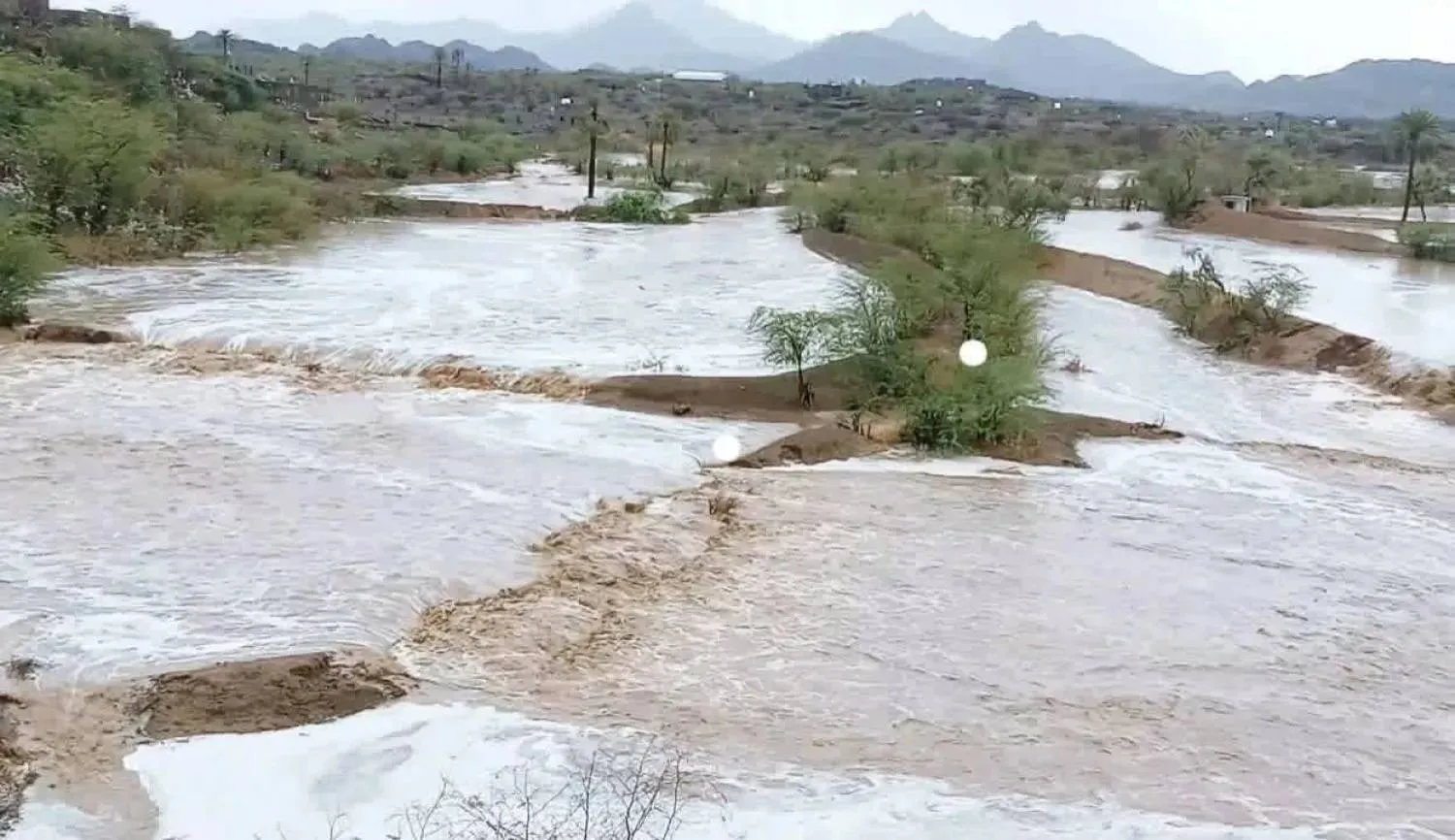

Seasonal Rainfall Deepens Yemenis’ Humanitarian Plight

Relief agencies said 200,000 people have been affected by the rainfall. (Local media)
TT

Seasonal Rainfall Deepens Yemenis’ Humanitarian Plight

Relief agencies said 200,000 people have been affected by the rainfall. (Local media)

Yemen is reeling from floods caused by seasonal rainfall that have swept vast swathes of the country in recent weeks, claiming dozens of lives and causing major damage in infrastructure.

Relief agencies said 200,000 people have been affected by the rainfall in April, with the number expected to rise as more rain is predicted.

Local and international assessments have said that southwestern regions of Yemen have since March witnessed heavy rain and flooding that have caused death, displacement and widespread damage in public and private property. The Mokha, Mawza, and al-Waziyah districts in Taiz and the al-Khokha and Hays districts in the Hodeidah province have been the most affected.

Several humanitarian sources said the floods have so far killed at least 24 people and affected 55,000 along the western coast regions held by the legitimate government.

Field assessments continue to determine the extent of the damage to homes, roads, water infrastructure and agricultural fields.

The number of affected people is expected to rise to some 220,000 if the rain continues, especially given the poor infrastructure and weak water drainage systems. The seasonal rainfall and ensuing floods are a recurring problem in Yemen given the weak infrastructure.

Authorities have dedicated around USD205,000 through an emergency response fund to tackle the crisis, support emergency relief operations and provide shelter to those affected.



Iran Says Lebanon Conflict 'Main Topic' in US Talks

Smoke billows from southern Lebanon following an Israeli strike, as seen from Nabatieh, Lebanon, June 20, 2026. REUTERS/Stringer
TT

Iran Says Lebanon Conflict 'Main Topic' in US Talks

Smoke billows from southern Lebanon following an Israeli strike, as seen from Nabatieh, Lebanon, June 20, 2026. REUTERS/Stringer

Iran said on Sunday that the ongoing conflict in Lebanon between Israel and militant group Hezbollah will top the agenda in talks with the United States in Switzerland, as well as issues such as frozen Iranian funds and the sale of the country's oil.

"The Zionist regime continues to violate its commitment in Lebanon, this issue will be the main topic of discussion in today's talks," foreign ministry spokesman Esmaeil Baqaei said in a video shared by IRNA state news agency.

Tehran said on Thursday it had signed a deal with Washington to end months of hostilities that began on February 28 following US-Israeli attacks on Iran.

Under the agreement, the Israel-Hezbollah conflict in Lebanon was also due to stop, said AFP.

Iran's military announced on Saturday that it has closed the Strait of Hormuz again over ongoing Israeli attacks in Lebanon.

But there were no reports of fresh strikes in Lebanon after Saturday evening and Baqaei said since Saturday "a fragile cessation (in Lebanon) has been established".

He added that Tehran would also pursue the issue of its frozen and inaccessible funds during the talks.

"The issue of making available Iran's frozen or restricted assets, as well as the discussion related to issuing the necessary licenses for the sale of Iranian oil, will also be on the agenda," he said from Switzerland.

Iran has not officially disclosed the value of its frozen assets, though media reports have estimated them at more than $100 billion, largely frozen since the 1979 Iranian Revolution that toppled the US-backed shah.

According to Baqaei, the Iranian delegation will meet the US delegation in a "quadrilateral meeting" that will also include mediators Pakistan and Qatar.


UN Security Council Warns of 'Imminent Risk of Mass Atrocities' in Sudan

A child looks at Sudanese women lining up to receive aid at the Al-Afad camp for displaced people in the town of Al-Dabba, northern Sudan, on November 15, 2025. (Photo by Ebrahim HAMID / AFP)
TT

UN Security Council Warns of 'Imminent Risk of Mass Atrocities' in Sudan

A child looks at Sudanese women lining up to receive aid at the Al-Afad camp for displaced people in the town of Al-Dabba, northern Sudan, on November 15, 2025. (Photo by Ebrahim HAMID / AFP)

The United Nations Security Council said Saturday it is concerned over the "imminent risk of mass atrocities" in Sudan as it called on paramilitary forces encircling El-Obeid to back down.

The majority-Muslim southern city, in the Kordofan region, has been under siege for several months by the Rapid Support Forces (RSF), which has been at war with the regular army since April 2023.

"The members of the Security Council expressed concern at the imminent risk of mass atrocities and demanded the RSF immediately halt its assault on El-Obeid," the Security Council said in a statement.

"Council members called on the parties to the conflict to immediately halt the fighting."

The UN has voiced fears that there could be a repeat of the atrocities committed during the October 2025 assault on the city of El-Fasher, which it said bore "hallmarks of genocide."

The UN said Friday that Pekka Haavisto, the secretary-general's special envoy for Sudan, had called rebel paramilitary forces chief Mohamed Hamdan Daglo to urge him not to attack El-Obeid.

Haavisto "underscored the need to urgently de-escalate the situation in El-Obeid and avoid any actions that may further worsen the already dire humanitarian situation and put civilian lives further at risk," said Stephane Dujarric, spokesman for UN Secretary-General Antonio Guterres.

The official said aid workers were "preparing for the potential movements of large numbers of people" fleeing the city, and that "our humanitarian colleagues are doing the responsible thing, which is getting ready for the worst while hoping for the best."

Dujarric said Haavisto was also talking to countries with influence over the warring parties to encourage dialogue and prevent the assault.

The conflict in Sudan has killed tens of thousands of people and forced more than 11 million from their homes, creating what the UN describes as the world's largest displacement and hunger crises.


Dual Saudi Support Measures Bolster Yemen’s Stability and Protect Civilians

Officials sign a previous Saudi agreement to supply fuel for Yemen’s power stations (X). 
TT

Dual Saudi Support Measures Bolster Yemen’s Stability and Protect Civilians

Officials sign a previous Saudi agreement to supply fuel for Yemen’s power stations (X). 

Saudi Arabia’s latest support measures for Yemen have been welcomed by the country’s leadership after Riyadh announced a new budget support payment and extended the Masam Project for landmine clearance for another year. The parallel initiatives aim to ease Yemen’s economic and humanitarian challenges.

Rashad Al-Alimi, chairman of Yemen’s Presidential Leadership Council, expressed his gratitude on behalf of the council, the government, and the Yemeni people to King Salman bin Abdulaziz and Crown Prince and Prime Minister Mohammed bin Salman for directing the release of a new tranche of financial assistance for the state’s general budget.

The announcement was made by Saudi Ambassador to Yemen Mohammed Al Jaber, who also serves as general supervisor of the Saudi Development and Reconstruction Program for Yemen.

He said the Saudi leadership had approved a new payment of more than SAR 224 million ($60 million) to help finance the Yemeni government’s budget deficit and cover public-sector salaries.

Al Jaber said the funding would support government cash flows, provide foreign-currency liquidity, help stabilize the Yemeni rial, and strengthen the government’s ability to maintain essential services and improve living conditions.

Yemeni officials say Saudi budget support has played a critical role in recent years by helping the government meet key financial obligations, particularly public-sector wages and basic services, at a time of declining state revenues and the continuing impact of war.

The assistance is also viewed as an important tool for easing pressure on the national currency and enabling state institutions to continue operating in government-controlled areas despite persistent economic challenges.

Alongside the financial announcement, Al-Alimi welcomed Saudi Arabia’s decision to extend the Masam Project for clearing mines from Yemeni territory for an additional year.

He described the initiative as one of the most significant humanitarian programs protecting civilians from mines planted by the Houthi movement across large areas of the country.

Al-Alimi praised the project’s achievements since its launch, saying landmines remain among the most devastating legacies of Yemen’s conflict because of the deaths, injuries, and permanent disabilities they have caused among civilians.

He said the extension reflects Saudi Arabia’s continued humanitarian commitment to Yemen and represents a long-term investment in protecting Yemeni lives and securing war-affected communities.

The King Salman Humanitarian Aid and Relief Center (KSrelief) announced it had extended the Masam Project for another year at a cost of more than $52.5 million, continuing efforts to remove landmines and unexploded ordnance from Yemen.


The project is implemented through Saudi personnel and international expertise in cooperation with trained Yemeni teams. Activities include mine-clearance operations, public-awareness campaigns, and capacity-building programs designed to strengthen national expertise in the sector.

According to project figures, Masam has cleared more than 567,000 landmines, unexploded ordnance items, and other explosive remnants of war since its launch in mid-2018. The items recovered include anti-personnel and anti-tank mines planted in residential areas, farmland, roads, and civilian facilities.

Dr. Abdullah Al Rabeeah, adviser at the Saudi Royal Court and supervisor general of KSrelief, said the extension reflects Saudi Arabia’s humanitarian responsibility toward the Yemeni people and its commitment to eliminating threats posed by landmines.

He noted that indiscriminately planted mines, often concealed through various methods, have caused thousands of civilian casualties, left many victims permanently disabled, spread fear among local communities, and disrupted agriculture and development activities across wide areas.

Al Rabeeah said Masam has become a leading humanitarian model for addressing the dangers of landmines and war remnants by combining field-clearance operations with training and rehabilitation programs that will help Yemenis confront such threats in the future.

He also praised the Saudi leadership for its humanitarian and relief efforts in Yemen and elsewhere, stressing that the Kingdom’s support for the Yemeni people will continue through a range of development, relief, and humanitarian programs.