


Lebanese PM Says Premature to Talk of Any High-Level Meeting with Israel

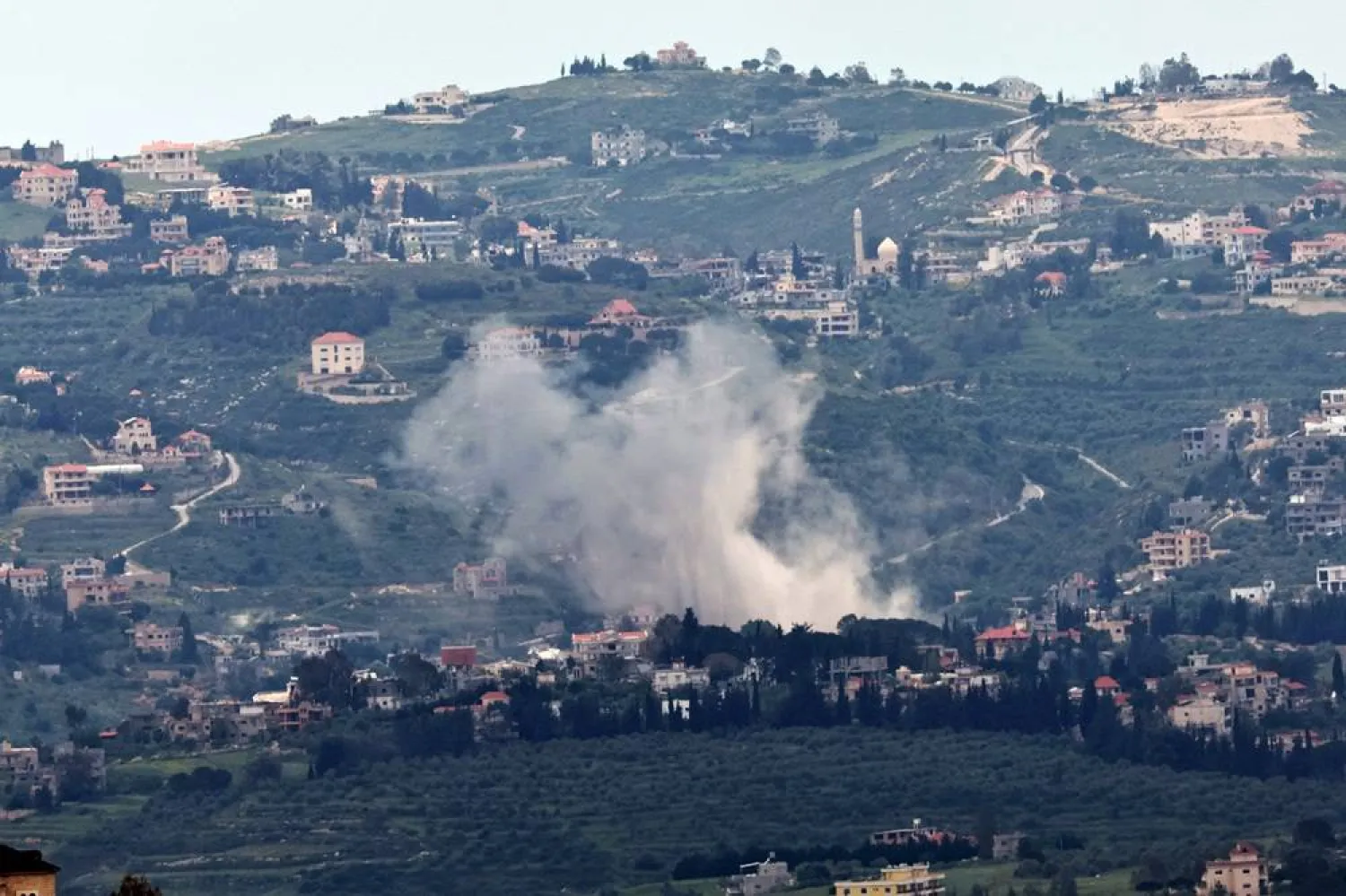
Smoke rises as a result of an Israeli strike in the south of Lebanon, as seen from the Upper Galilee in northern Israel, 06 May 2026, amid a ceasefire between Israel and Lebanon. (EPA)
TT

Lebanese PM Says Premature to Talk of Any High-Level Meeting with Israel

Smoke rises as a result of an Israeli strike in the south of Lebanon, as seen from the Upper Galilee in northern Israel, 06 May 2026, amid a ceasefire between Israel and Lebanon. (EPA)

Lebanese Prime Minister Nawaf Salam said it is premature to talk of any high-level meeting between Lebanon and Israel, comments underlining the dim chances of one being held soon as hoped for by US President Donald Trump.

Salam, in comments reported by Lebanon's National News Agency (NNA) on Wednesday, said shoring up a ceasefire would be the basis for any new round of negotiations that might be held by Lebanese and Israeli government envoys in Washington.

Hostilities between Israel and Iran-backed Hezbollah have continued to rage in southern Lebanon despite a US-mediated ceasefire between Lebanon and Israel announced on April 16.

Since ‌Hezbollah triggered the ‌war by opening fire in support of Iran on March ‌2, ⁠the Lebanese administration ⁠led by Salam and President Joseph Aoun has initiated Beirut's highest-level contacts with Israel in decades, reflecting deep divisions between the Shiite group and its Lebanese opponents.

Washington last month hosted two meetings between the Israeli and Lebanese ambassadors to the United States. Hezbollah strongly objects to the contacts.

Announcing a three-week extension of the ceasefire on April 23, Trump said he looked forward to hosting Israeli Prime Minister Benjamin Netanyahu and Aoun in the near future, and that he ⁠saw "a great chance" the countries would reach a peace deal ‌this year.

Salam said Lebanon was not seeking "normalization with Israel, but ‌rather achieving peace".

The current circumstances "are not ripe to talk about high-level meetings," he added, according to NNA.

"Our ‌minimum demand is a timetable for Israel’s withdrawal," he said, adding that the government ‌would develop its plan to restrict weapons to state control - an effort aimed at securing Hezbollah's disarmament.

Aoun said this week the timing was not right for a meeting with Netanyahu. Lebanon "must first reach a security agreement and a halt to the Israeli attacks, before we raise the issue of a meeting ‌between us," he said.

TRADING BLOWS

Israel has occupied a so-called security zone extending as deep as 10 km (6 miles) into southern ⁠Lebanon, saying it aims ⁠to protect northern Israel from Hezbollah militants embedded in civilian areas.

Hezbollah and Israel have continued to trade blows.

Lebanon's Health Ministry said on Wednesday an Israeli airstrike killed four people including two women and an elderly man in the town of Zelaya in southern Lebanon.

The Israeli military said Hezbollah had launched explosive drones and rockets towards Israeli soldiers in southern Lebanon, injuring two Israeli soldiers.

It also said the Israeli air force intercepted a hostile aircraft before it crossed into Israel, and announced strikes on Hezbollah infrastructure in several areas in Lebanon.

More than 2,700 people have been killed in the war in Lebanon since March 2, the Health Ministry says.

The Israeli military says Hezbollah has fired hundreds of rockets and drones at Israel since March 2. Israel has announced 17 soldiers have been killed in southern Lebanon, along with two civilians in northern Israel.



Lebanon State Media Reports Israeli Strikes after Conditional Truce Announcement

This photograph taken from the southern Lebanese area of Marjayoun shows smoke rising from the site of an Israeli strike that targeted the village of Kfar Tibnit on June 3, 2026. (Photo by AFP)
TT

Lebanon State Media Reports Israeli Strikes after Conditional Truce Announcement

This photograph taken from the southern Lebanese area of Marjayoun shows smoke rising from the site of an Israeli strike that targeted the village of Kfar Tibnit on June 3, 2026. (Photo by AFP)

Lebanese official media reported Israeli strikes on the country's south on Thursday morning, hours after an announcement that Israel and Lebanon had agreed to implement a conditional ceasefire following talks in Washington.

The state-run National News Agency (NNA) reported Israeli drone strikes along roads at several south Lebanon locations, saying at least one caused casualties.

Israel and Lebanon agreed Wednesday to implement a ceasefire but said it would require a "complete cessation" of fire by Iran-backed Hezbollah, according to a joint statement after US-led talks in Washington.


Israel Far-right Minister Slams Ceasefire with Lebanon as 'Serious Mistake'

A photograph shows the aftermath of Israeli airstrikes in the Burj al-Chamali area near the southern city of Tyre, on June 2, 2026. (Photo by Kawnat HAJU / AFP)
TT

Israel Far-right Minister Slams Ceasefire with Lebanon as 'Serious Mistake'

A photograph shows the aftermath of Israeli airstrikes in the Burj al-Chamali area near the southern city of Tyre, on June 2, 2026. (Photo by Kawnat HAJU / AFP)

Israel's far-right National Security Minister Itamar Ben Gvir criticized on Thursday a ceasefire deal with Lebanon brokered by Washington, calling it a "serious mistake".

"The ceasefire with Lebanon is a serious mistake and the pipe dreams of advisers are dragging the prime minister (Benjamin Netanyahu) to wrong decisions," the minister wrote on X.

Israel and Lebanon agreed Wednesday to implement a ceasefire but said it would require a "complete cessation" of fire by Iran-backed Hezbollah, according to a joint statement after US-led talks in Washington, said AFP.


Lebanon’s Shiite Duo Drops Israeli Withdrawal Demand in Ceasefire Talks

The Lebanese delegation participating in the Washington talks on Tuesday (Reuters) 
TT

Lebanon’s Shiite Duo Drops Israeli Withdrawal Demand in Ceasefire Talks

The Lebanese delegation participating in the Washington talks on Tuesday (Reuters) 

Recent statements by Lebanon’s Shiite duo - the Amal Movement and Hezbollah - indicate a tacit acceptance that Israeli forces could remain in Lebanese territory during an anticipated ceasefire phase.

This marks a shift from their previous insistence that any truce be accompanied by an Israeli withdrawal, the return of displaced residents to their villages, and the reconstruction of areas devastated by the war with Israel since 2023.

Israeli Prime Minister Benjamin Netanyahu on Wednesday blamed Hezbollah for the latest escalation, telling CNBC that it was being driven by Hezbollah rather than Israel and that his government remained committed to the ceasefire.

He also said that US President Donald Trump shares his objective of stripping Hezbollah of its arsenal and turning Lebanon into a demilitarized state.

A Lebanese source involved in ongoing contacts between Beirut and Washington said the demands of the Shiite duo, represented in negotiations by Parliament Speaker Nabih Berri, no longer focus on Israeli withdrawal or reconstruction.

Instead, the source said, their position is now limited to securing a ceasefire across land, sea and air, along with an end to the demolition and bulldozing operations carried out by Israeli forces in occupied Lebanese territory.

However, sources familiar with the duo’s position told Asharq Al-Awsat that the immediate objective is achieving a ceasefire in all its dimensions, stressing that subsequent steps — including an Israeli withdrawal, reconstruction efforts, and the deployment of the Lebanese Army to areas vacated by Israeli forces in southern Lebanon — would follow once a truce is in place.

Lebanese and Israeli diplomats held a second day of direct talks in Washington on Wednesday, the fourth such round since the outbreak of the war on March 2. The discussions coincided with an Israeli military escalation and intensified Lebanese contacts with Washington aimed at pressing Israel to implement a comprehensive ceasefire in Lebanon that would also apply to Hezbollah.

On Monday evening, Trump announced that a de-escalation arrangement had been reached between Hezbollah and Israel, saying that Israel would refrain from attacking Hezbollah and that Hezbollah would likewise refrain from attacking Israel. He also revealed he had stopped an Israeli strike on Beirut.

Israel on Tuesday underscored what it described as a “new equation,” under which it would strike Beirut’s southern suburbs if Hezbollah targeted northern Israel, adding that the United States had endorsed the principle.

Hezbollah Deputy Chairman of the Political Council Mahmoud Qomati told Agence France-Presse on Tuesday that the group would not accept any partial ceasefire agreement and rejected any arrangement that would trade an end to Israeli strikes on Beirut’s southern suburbs for a halt to Hezbollah attacks on northern Israel.

Meanwhile, the United Kingdom voiced support for Lebanon’s negotiating efforts. The Lebanese presidency said President Joseph Aoun received a phone call from UK National Security Adviser Jonathan Powell to discuss security and military developments in Lebanon, as well as the course of negotiations.

Powell reaffirmed Britain’s support for Lebanon and its political choices aimed at preserving the country’s security and stability, according to the presidency.