Ongoing Strait of Hormuz Disruption Could Drag Oil Market Recovery into 2027, Aramco CEO Says

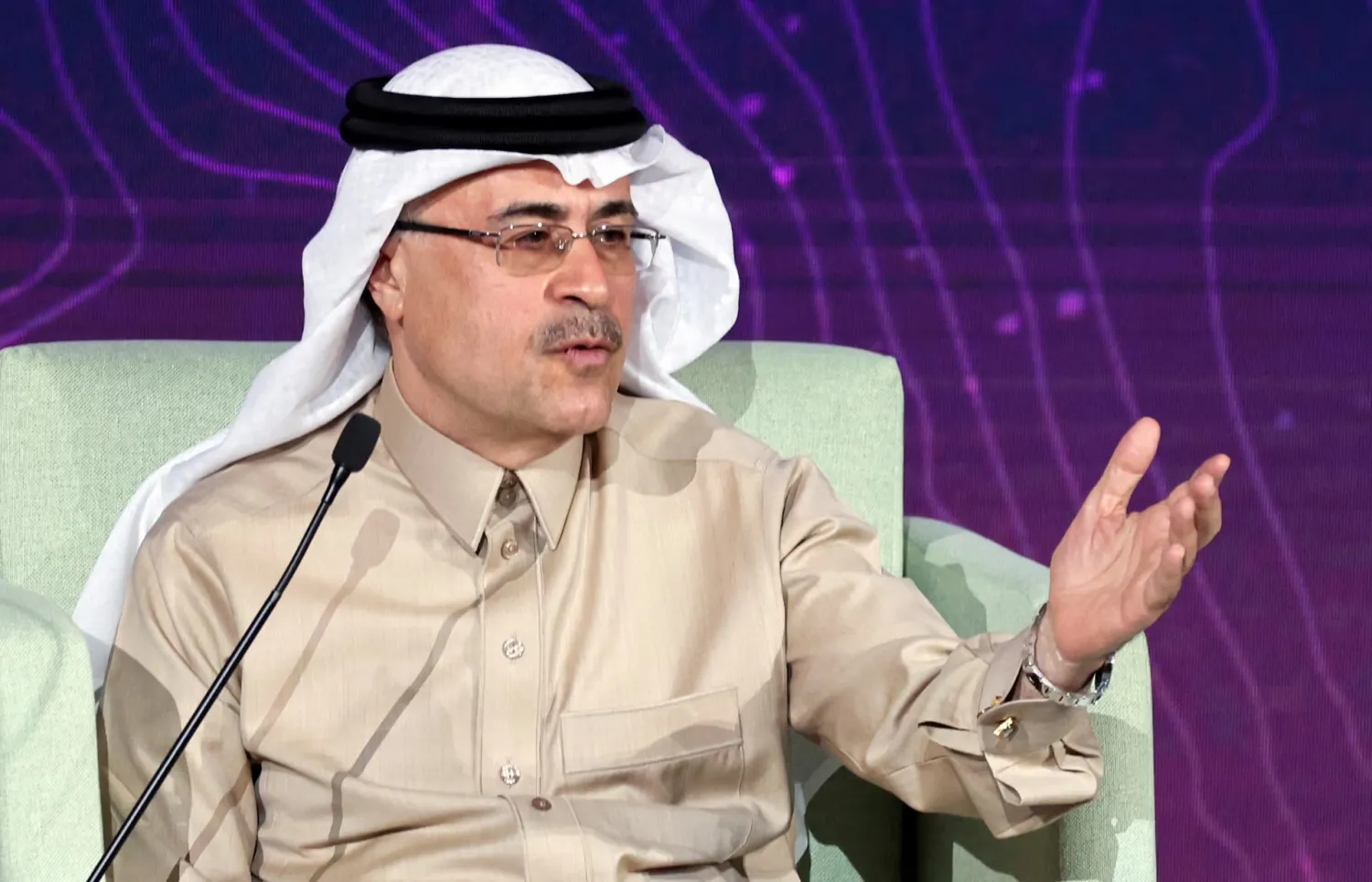
Aramco CEO Amin Nasser speaks at a conference. (Reuters file)
TT

Ongoing Strait of Hormuz Disruption Could Drag Oil Market Recovery into 2027, Aramco CEO Says

Aramco CEO Amin Nasser speaks at a conference. (Reuters file)

The ongoing energy supply shock is the largest the world has ever experienced, and continued disruption of the Strait of Hormuz could delay oil market normalization into 2027, Saudi Aramco CEO Amin Nasser warned on Monday.

"The longer the supply ‌disruptions continue, even ‌for another few more weeks, it ‌is ⁠going to take ⁠a much longer time for the oil market to rebalance and stabilize," he told analysts on a call to discuss the company's first-quarter results, which were released on Sunday and beat expectations.

The recovery could drag into 2027 if the situation continues until ⁠mid-June, Nasser said.

Iranian authorities effectively blocked ‌the vital waterway ‌in response to the US-Israel attacks on Iran that began ‌on February 28, sending energy prices surging and ‌stoking fears of spiraling inflation and a looming economic downturn.

Aramco has ramped up its East-West pipeline to its expanded capacity of 7 million barrels per day (bpd) to ‌divert crude from its production heartland to the Red Sea port of Yanbu.

⁠Nasser on Sunday ⁠called the pipeline a "critical lifeline".

The market is losing around 100 million barrels of oil for every week the maritime chokepoint remains closed, Nasser said, adding that only two to five vessels are now crossing the strait daily compared to around 70 before the war.

Even if the strait opens today, it will still take months for the market to rebalance, he said.

Nasser, however, predicted a very robust return to demand growth once normal shipping and trade resume.


Netanyahu Rebuked for Plan to Use Crypto to Bypass Economic Sanctions

Supporters of Israeli Prime Minister Benjamin Netanyahu's Likud Party drive in a car adorned with campaign posters in Tel Aviv on October 25, 2026, ahead of Israel's legislative election. (AFP)
TT

Netanyahu Rebuked for Plan to Use Crypto to Bypass Economic Sanctions

Supporters of Israeli Prime Minister Benjamin Netanyahu's Likud Party drive in a car adorned with campaign posters in Tel Aviv on October 25, 2026, ahead of Israel's legislative election. (AFP)

Prime Minister Benjamin Netanyahu, who faces re-election this week, is drawing criticism from economists and political rivals after suggesting Israel could use cryptocurrency to help shield its economy from potential international sanctions.

In an interview with Israel's Channel 10 on Friday, Netanyahu said he was preparing for a scenario in which broader sanctions were imposed on Israel.

Last month, Britain, France and Canada said they would block imports from Israeli settlements in the West Bank in what was the latest in a series of actions targeting Israel's settlement policy, underscoring its growing diplomatic isolation among some of its traditional allies.

"There could be sanctions, and sanctions ‌on banks so ‌you need to set up a bypass economy," Netanyahu said. "You ‌know, there ⁠are currencies that ⁠can bypass (sanctions). We are also working on that."

Asked whether he was referring to cryptocurrency, Netanyahu replied: "Very true, very true," adding that blockchain technology was another possibility.

The comments drew a rare rebuke by the Bank of Israel, which said crypto currencies cannot serve as a route to bypass sanctions and that political leaders should focus on policy that would render such measures unnecessary.

"The right course for Israel's economy is to preserve our economic relations with our main trading ⁠partners, and to focus on preventing sanctions and their negative impact ‌on the economy," it said.

Netanyahu on Sunday continued to ‌defend his record, urging voters to back him and saying he and US President Donald Trump had ‌two years left to work together to topple Iran's rulers.

PLAN DRAWS CRITICISM

On Sunday, ‌more than 100 economists, including former Bank of Israel officials, ex-central bank governor Jacob Frenkel and several Nobel laureates, signed a letter expressing alarm over Netanyahu's proposal. They said it would lead to higher unemployment, a fall in foreign investment and the collapse of Israel's economic standing in the world.

"As ‌we have seen in countries that have suffered similar sanctions, such as South Africa, Iran, and Russia, the living standards of ⁠Israeli citizens would ⁠plummet dramatically, and the state's ability to finance its security and defend itself against its enemies would be severely damaged," the letter read.

"Netanyahu is knowingly leading the State of Israel toward boycott and international economic isolation, and all he has to offer the Israeli economy is a puzzling solution, one accepted in criminal organizations, that will not help in the slightest."

Netanyahu's main rival in Tuesday's election, Gadi Eisenkot, called the crypto plan "madness" and said he feared that the "BibiCoin policy" would drive companies abroad and undermine national security.

Opposition leader Yair Lapid said: "Netanyahu has gone off the rails ... He promises the citizens of Israel before these elections that they'll be standing in line for an hour and a half for bread, like in Russia and Iran."

Opinion polls point to a potential stalemate in the election with neither Netanyahu's ruling coalition nor an opposition alliance securing a governing majority in parliament.


Trump Says Canada Trade Deal Coming 'Soon'

President Donald Trump speaks after casting his early-voting ballot for the 2026 midterm elections at the Palm Beach County Library in West Palm Beach, Fla., Saturday, Oct. 24, 2026. (AP Photo/Mark Schiefelbein)
TT

Trump Says Canada Trade Deal Coming 'Soon'

President Donald Trump speaks after casting his early-voting ballot for the 2026 midterm elections at the Palm Beach County Library in West Palm Beach, Fla., Saturday, Oct. 24, 2026. (AP Photo/Mark Schiefelbein)

A trade agreement between the United States and Canada would be reached "pretty soon," President Donald Trump told a campaign rally on Sunday, nine days ahead of crucial US midterm elections.

Tensions between the North American neighbors have been high since trade talks broke down in August, with Trump imposing a slew of new tariffs in response, AFP reported.

"We'll have that settled pretty soon. They're willing to give us anything at this moment," the president said of an agreement during the rally in Port Huron, a Michigan town on the US-Canada border hit hard by his tariff war.

Trump once again defended his levies on Canada and accused it of "ripping off the United States for years."

The tariffs enforced after the August talks broke down impacted around US$20 billion worth of goods, ranging from hockey sticks to cement.

In response, Canada imposed tolls on an equivalent amount of American products, leading Trump to retaliate with another round of levies of as much as 50 percent on certain goods.

The White House removed some of them on Friday, in response to a request from Senator Susan Collins who represents the border state of Maine, which has been disproportionately impacted by the trade war.

Democrats are targeting Collins's seat in their attempt to win control of the Senate from the Republicans in next Tuesday's midterms.

Since the start of his second term, Trump has upended the global trade order by imposing wide-ranging tariffs on friend and foe, saying they had been taking advantage of the United States.

He has also explicitly tied some threatened tariffs to political or foreign policy objectives.


Saudi Arabia to Store Oil in Singapore to Bolster Asia Supply Security Starting 2027

 Saudi Arabia's Energy Minister Prince Abdulaziz ‌bin Salman Al-Saud speaks in a video recording at the conference. (X)
Saudi Arabia's Energy Minister Prince Abdulaziz ‌bin Salman Al-Saud speaks in a video recording at the conference. (X)
TT

Saudi Arabia to Store Oil in Singapore to Bolster Asia Supply Security Starting 2027

 Saudi Arabia's Energy Minister Prince Abdulaziz ‌bin Salman Al-Saud speaks in a video recording at the conference. (X)
Saudi Arabia's Energy Minister Prince Abdulaziz ‌bin Salman Al-Saud speaks in a video recording at the conference. (X)

Saudi Arabia plans to store crude oil at Singapore's Jurong Rock Caverns from the second half of 2027 to strengthen supply security in the region, energy ministers from both countries said on Monday.

The move comes after the US-Israeli war with Iran severely disrupted energy supplies to Asia shipped through the Strait of Hormuz, prompting countries to draw down inventories and raising concerns about stockpile levels globally. Asia imported two-thirds of its oil supplies from the Middle ‌East before ‌the war.

"Saudi Arabia and Singapore are announcing our joint intent to ‌establish ⁠an arrangement for ⁠Saudi crude oil to be stored at the Jurong Rock Caverns from the second half of 2027," Tan See Leng, minister for energy, trade and industry, told the Singapore International Energy Week conference.

"This arrangement enhances the resilience of the Saudi crude oil supply chain in Southeast Asia, as well as contributes to Singapore's energy security and resilience in the event of supply disruptions."

"Bringing supply closer to key Asian markets would strengthen the flexibility of our supply network ‌and support Singapore's security of supply and preparedness," Saudi Arabia's Energy Minister Prince Abdulaziz ‌bin Salman Al-Saud said in a video recording at the conference.

Located at a depth of 150 meters (492 feet) below the ground, the rock caverns at Jurong Island can store up to 1.47 million cubic meters, or roughly 9 million barrels of liquid hydrocarbons such as crude ‌oil and condensate.

Saudi Aramco currently stores crude in Japan and South Korea where local governments have priority to buy ⁠the supplies in ⁠the tanks in the event of an unexpected shortage.

The crude storage capacity in Okinawa was expanded to 8.2 million barrels in September 2017 in an agreement with Japan Oil, Gas and Metals National Corp (JOGMEC), Aramco Japan said on its website.

In 2023, Aramco inked a deal with Korea National Oil Corp to store 5.3 million barrels of oil in South Korea's reserve facilities in the port of Ulsan for five years.