
Saudi Arabia’s telecom sector entered a new stage of financial and operational maturity in the first quarter of 2026, as growth moved beyond subscriber gains and became increasingly driven by returns from investments in digital technology and cloud computing.
Major operators demonstrated strong resilience in absorbing financing pressures and turning national digital transformation projects into sustainable cash flows, reinforcing the sector’s role as one of the Saudi economy’s strongest non-oil drivers.
Combined profits of listed telecom companies rose 6% year on year to 4.78 billion riyals, $1.27 billion, from 4.51 billion riyals a year earlier. Sector revenue reached about 27.64 billion riyals, $7.37 billion, reflecting strong operating momentum at the start of the year.
Digital leadership
The sector has four listed companies. Three of them end their fiscal year in December: Saudi Telecom Co., STC, Etihad Etisalat, Mobily, and Mobile Telecommunications Co. Saudi Arabia, Zain KSA. The fourth, Etihad Atheeb Telecommunication Co., GO, ends its fiscal year in late March.
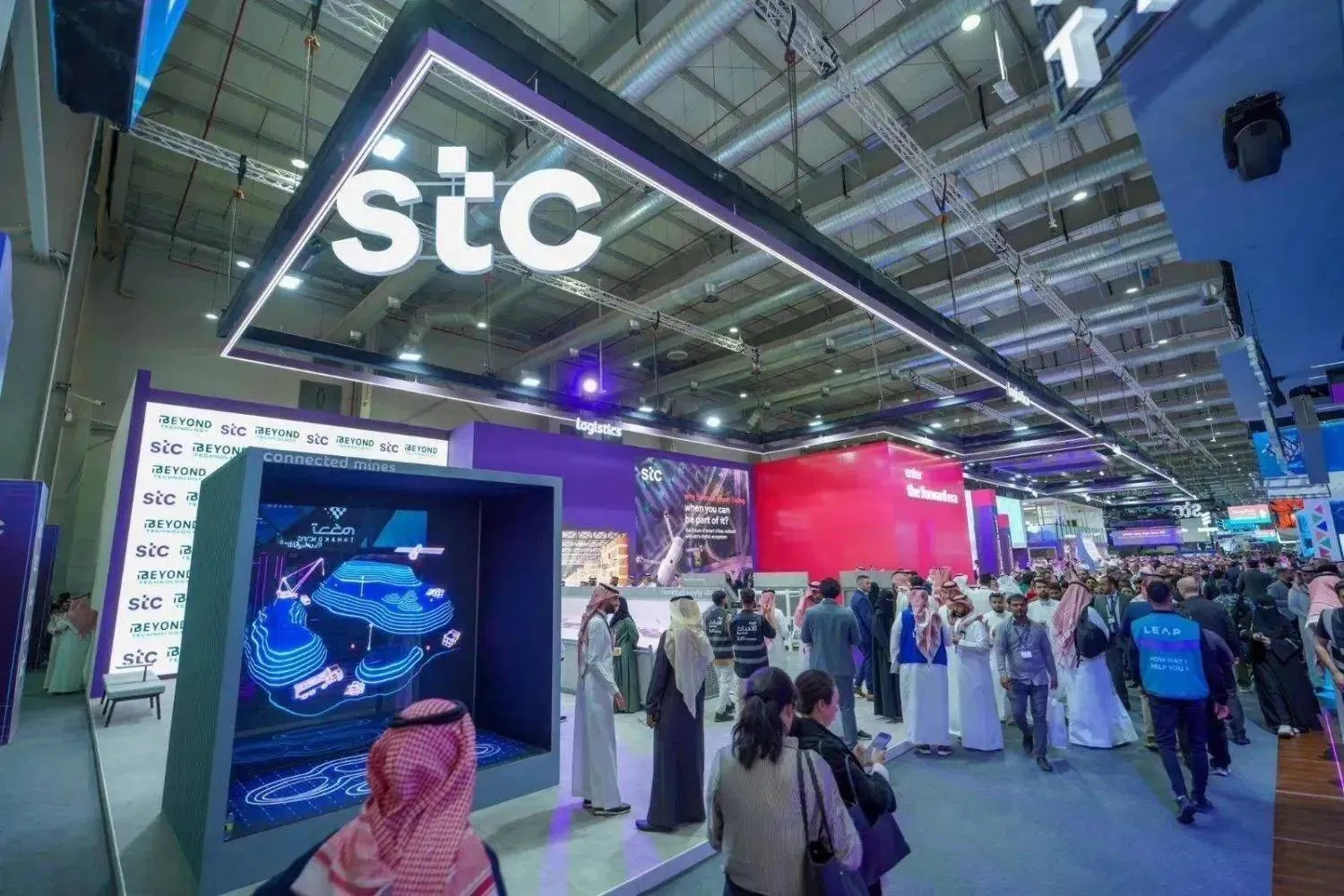
STC remained the sector’s dominant profit driver, accounting for about 77% of total earnings. It reported the highest net profit in the first quarter, at 3.7 billion riyals, up 1.3% from a year earlier, supported by continued growth in operating revenue and digital services.
Mobily came second, with a profit of 880 million riyals, up 15% year on year, driven by stronger operational efficiency and customer growth.
Zain KSA recorded the sector’s fastest profit growth, with earnings rising more than 116% to 201 million riyals, supported by better operating performance and continued cuts in financing costs.
Operational efficiency
Financial markets analyst and Saudi Economic Association member Dr. Sulaiman Al-Humaid Al-Khaldi told Asharq Al-Awsat that STC’s dominance reflects its strong financial performance and its continued shift from a traditional telecom operator into an integrated digital technology group.
He said STC’s profit growth was driven by higher operating revenue, expansion in digital services, data centers, and cloud computing, and sustained growth in business and higher-margin technology services.
Al-Khaldi said telecom companies lifted first-quarter profits by focusing on operational efficiency, controlling expenses, improving cost management, and benefiting from infrastructure built in recent years. Continued demand for data services, 5G, and digital solutions in the Saudi market also supported results.
He said STC is one of the market’s giants, with a brand value of more than 66 billion riyals ($17.6 billion). It ranks second in Saudi Arabia after Saudi Aramco, whose brand value reached $47.3 billion in the latest Brand Finance report for 2026.
Al-Khaldi expects telecom companies’ profits in 2026 to exceed last year’s levels, saying the sector is entering a stronger financial phase as Saudi Arabia’s digital transformation accelerates and spending on technology, artificial intelligence, and cloud services rises.
He said these trends give telecom companies greater room to boost revenue and reach historic profitability levels, especially as companies such as STC expand into high-return technology and investment sectors and strengthen their position as the region’s largest digital and technology enabler.
The combined profits of the three largest companies stood at 18.9 billion riyals, $5 billion, at the end of 2025, compared with 28.39 billion riyals, $7.6 billion, in 2024.
Improved financial efficiency
G World Chief Executive Mohamed Hamdy Omar told Asharq Al-Awsat that the sector’s first-quarter performance reflected healthy operational growth and improved financial efficiency, not a passing accounting boost.
He said the figures showed companies benefited from steady demand for core services, faster growth in digital services, and easing pressure from financing and costs.
Omar said STC has become the sector’s main engine, showing a strong ability to convert operational growth into real profit. He attributed this to the company’s diversified portfolio, which now extends beyond telecoms into multiple sectors, leaving its assets under management highly diversified.
He said Mobily benefited from stronger operational efficiency, with profit margins rising in the first quarter as financing costs fell and net profit reached 880 million riyals. Zain showed the clearest improvement in growth terms, as net profit jumped to 201 million riyals on better operating performance and lower financing burdens.
Omar cited three main reasons behind the sector’s profits.
The first was continued growth in operating revenue, particularly at STC, whose results pointed to expanding digital businesses and a growing role in the digital economy.
The second was stronger efficiency and cost control, visible at Mobily through improved profit margins and a sharp drop in capital expenditure compared with the previous quarter, and at Zain through lower financing costs and better operating profitability.
The third was a relatively better financing environment, which helped some companies ease pressure on net profit as some interest and financing burdens declined. STC also showed strong operating cash flows, improving both the quality and size of earnings.
Omar expects the sector to remain on a moderately positive path, but with less momentum than the jump some companies recorded in the first quarter.
He said STC appears best placed to sustain momentum because of its diversified income streams and strong digital businesses. Mobily, he said, must maintain operational discipline and expand its customer base to preserve growth.
Zain’s continued improvement will depend on turning lower financing costs into sustainable operating profits, he said, while pressures linked to investment, depreciation, and amortization could later slow the pace of gains.