
Palestinians in Gaza Mark Anniversary of 1948 Mass Expulsion and Say Today's Catastrophe is Worse

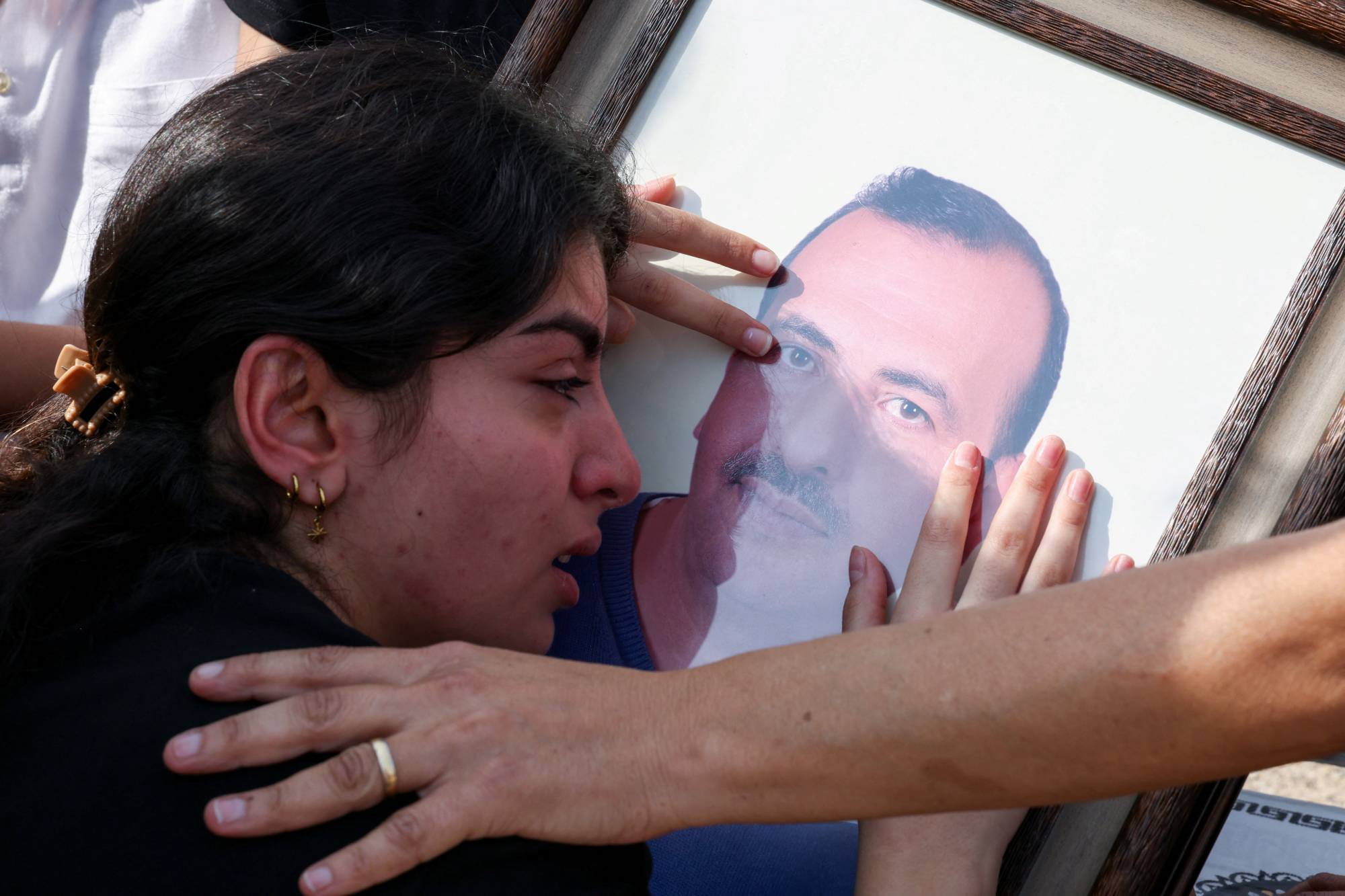
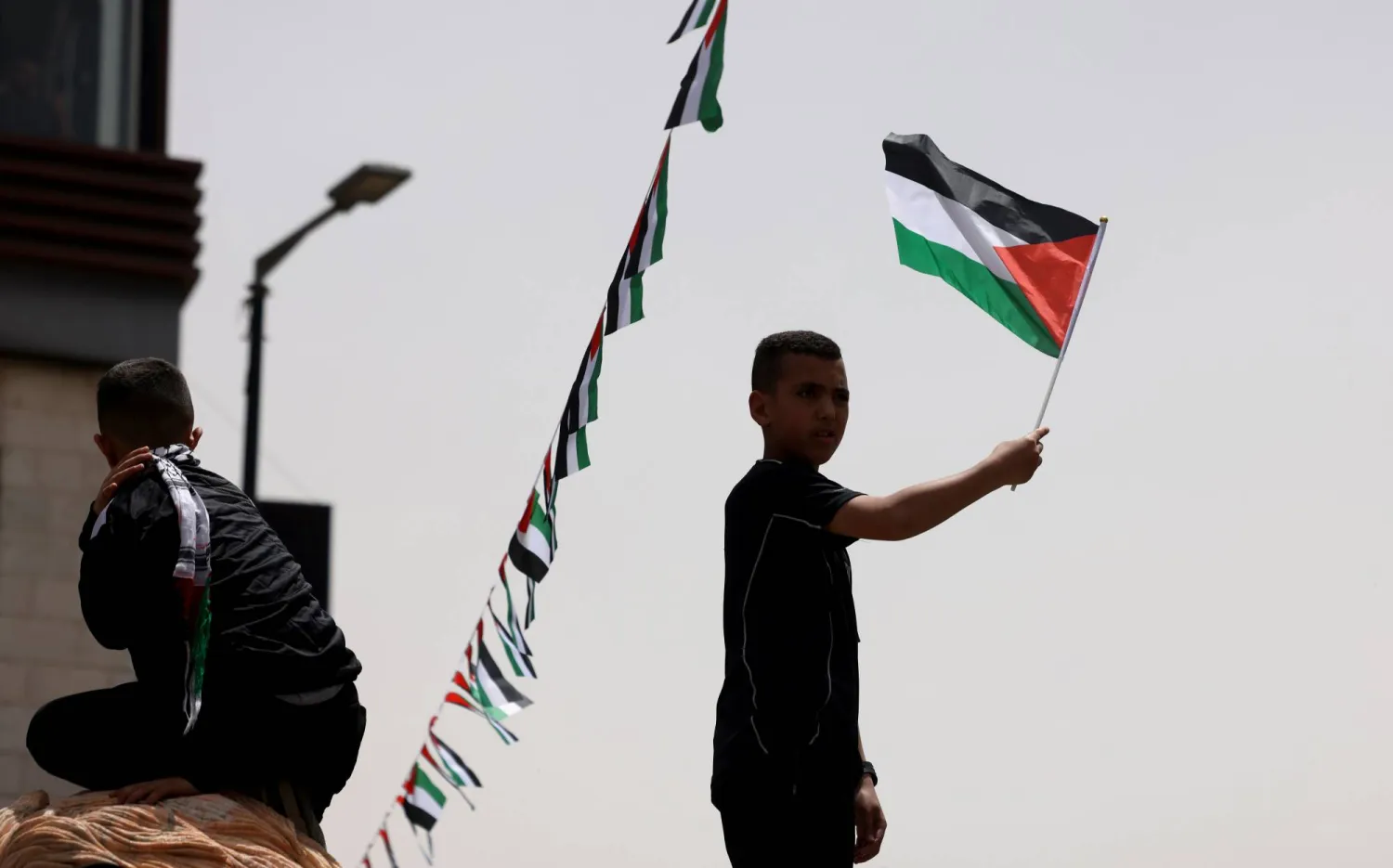
Palestinians attend a rally marking 'Nakba' day in the West Bank city of Ramallah, 12 May 2026. EPA/ALAA BADARNEH
TT

Palestinians in Gaza Mark Anniversary of 1948 Mass Expulsion and Say Today's Catastrophe is Worse

Palestinians attend a rally marking 'Nakba' day in the West Bank city of Ramallah, 12 May 2026. EPA/ALAA BADARNEH

Blink and you might miss the few stone walls that are all that’s left of the village that Yusuf Abu Hamam’s family was forced to flee when he was an infant in 1948.

The village, al-Joura, was demolished by the Israeli military at the time. It has since vanished under neighborhoods of the southern Israeli city of Ashkelon and the grounds of a national park.

The neighborhood where Abu Hamam’s family ended up — and where he spent most of his life — now lies also largely in ruins. Buildings in the Shati Camp in the northern Gaza Strip have been razed and wrecked by Israeli bombardment and demolitions during the past 2½ years of war, The Associated Press said.

On Friday, Abu Hamam and millions of Palestinians mark the 78th anniversary of the Nakba, Arabic for “catastrophe,” referring to the mass expulsion and flight of some 750,000 Palestinians from what is now Israel during the 1948 war surrounding Israel’s creation. It’s the third commemoration of the Nakba since the war in Gaza began.

The 78-year-old Abu Hamam, one of a dwindling number of Nakba survivors, says the current war is an even greater catastrophe.

More than six months after an October ceasefire, he and the rest of Gaza’s more than 2 million people are now crammed into less than half of the 25-mile-long strip along the Mediterranean coast, surrounded by an Israeli-controlled zone encompassing the rest of the territory.

“There is no country left,” Abu Hamam said, speaking next to his home, which was heavily damaged by Israeli shelling earlier in the war. “A square kilometer and a half extending from the sea, this is what we are living in ... It’s indescribable, unbearable.”

What was the Nakba? For Palestinians, the Nakba meant the loss of most of their homeland. Some 80% of the Palestinians who lived in the area that became Israel were driven from their homes by forces of the nascent state before and during the war. The fighting began when Arab armies attacked following Israel’s establishment as a home for Jews in the wake of the Holocaust. Palestinians who remained behind hold Israeli citizenship.

After the war, Israel refused to allow Palestinian refugees to return to ensure a Jewish majority within its borders. Palestinians became a seemingly permanent refugee community that now numbers some 6 million, with most living in refugee camps in the Israeli-occupied West Bank, Lebanon, Syria, Jordan and Gaza.

Around 530 Palestinian villages in what became Israel were destroyed, according to the Palestinian Bureau of Statistics.

Abu Hamam’s birth village was one of them. Al-Joura was seized by the Israeli military as it advanced against Egyptian forces in November 1948. Soldiers were ordered to destroy every home in al-Joura and neighboring villages to ensure their Palestinian populations couldn’t come back, according to military archives cited by Israeli historian Benny Morris.

Refugees swelled the population of the tiny patch of territory along the southern coast that became the Gaza Strip. They stayed in tent camps, run by a newly created UN agency for Palestinians, UNRWA, which provided aid and schooling. Those camps, like Abu Hamam’s Shati Camp, grew into dense urban neighborhoods over the decades, before many were flattened during the latest Gaza war by Israeli bombardment.

In Gaza, Palestinians live a new Nakba

The ancestors of Ne’man Abu Jarad and his wife, Majida, were already living in what would become the Gaza Strip in 1948. They both recall stories from their families about refugees streaming in by foot from areas further north, like the village Abu Hamam came from.

Though they avoided the original Nakba, there was no escaping from what Majida now calls “our Nakba.”

Their hometown has been wiped off the map. Over the past year, Israeli bulldozers and controlled detonations have razed nearly every building in the northern Gaza towns of Beit Lahiya and Beit Hanoun. A new Israeli military base stands about 700 meters (765 yards) from where the Abu Jarads’ house once stood, according to satellite photos.

Also gone is the southern Gaza city of Rafah, once home to a quarter million people, and other villages and neighborhoods located in the Israeli-held half of the Gaza Strip. The military says it is destroying positions used by Hamas and preparing the area for reconstruction. Satellite photos show nearly every structure reduced to rubble.

Over the last 31 months of war, the Abu Jarads and their six daughters have been displaced more than a dozen times as they fled Israeli bombardment and offensives. They currently live in a camp in the southern city of Khan Younis. Their tent offers little shelter from biting winter winds or summer heat, Majida said.

Their daughters have been out of school for over two years now.

“The Nakba of ’48, I don’t think it can be compared to our Nakba,” Majida said. “In ’48, they say people were displaced once and settled in one place, and they are still there until now. But our Nakba, honestly, is more severe because our displacement has happened multiple times. There is no stability.”

Around 90% of Gaza’s more than 2 million people have lost their homes, according to UN estimates, with most of them now sheltering in huge tent camps with rat infestations and pools of sewage. They are dependent on aid to survive.

Israel’s offensive has killed over 72,700 Palestinians, according to local health officials. It was triggered by Hamas’ Oct. 7, 2023, attack on southern Israel that killed some 1,200 people. Militants also abducted 251 hostages.

In the northern West Bank, tens of thousands of Palestinians are entering their 15th month of displacement, after the Israeli military ordered them out of their refugee camps as it launched an operation it said was targeting militant groups.

Since then, troops have demolished or heavily damaged at least 850 structures across the refugee camps of Nur Shams, Jenin and Tulkarem, according to an analysis of satellite imagery by Human Rights Watch released in December.

Saving what was lost, again and again

The 1948 Nakba also brought the loss of Palestinians’ history, as those fleeing struggled to keep hold of the documents and possessions tying them to their homes.

One of the largest archives of Palestinian documents dating back to the Nakba belongs to UNRWA.

UNRWA staff members, who fled their offices in Gaza after Israel ordered the north evacuated, had to leave behind the agency’s extensive archive.

The staff then launched a mission to rescue the most crucial documents — birth, death and marriage certificates and refugee registration cards, according to Juliette Touma, a former senior UNRWA official.

Without those documents, Palestinians could lose their rights and refugee status. Staffers crammed their personal suitcases full of papers and carried them through checkpoints and out of the territory, Touma said.

The current war has cost Palestinians in Gaza what little remained of their personal histories. Majida’s parents’ home in Beit Hanoun was destroyed, and with it family photos.

“There is nothing left,” she said.

Abu Hamam, too, says everything has been lost.

“When this war came, it devoured trees, stones and people,” he said. “Entire families were erased from the civil registry. Hundreds of families are still buried under the rubble.”


Syria Hails Shift From Captagon Hub to Anti-Drug Partner

Syria’s Anti-Narcotics Directorate seized 25 million professionally packaged Captagon pills. (Syrian Interior Ministry)
TT

Syria Hails Shift From Captagon Hub to Anti-Drug Partner

Syria’s Anti-Narcotics Directorate seized 25 million professionally packaged Captagon pills. (Syrian Interior Ministry)

Syria on Friday marked what it called its shift from a “Captagon hub” to a “partner in combating it,” as the world observed the International Day against Drug Abuse and Illicit Trafficking.

The official Syrian Arab News Agency, SANA, said this year’s event was held under the slogan “The global drug problem: persistent issues, new challenges and innovative responses,” citing rapid changes in global drug markets, the rise of new substances and increasingly complex smuggling routes.

SANA said the occasion came as Syria presses ahead with efforts to dismantle drug production and smuggling networks following changes in the file after the fall of the former government, a reference to the government of former President Bashar al-Assad.

“After years in which Syria, under the former regime, was one of the world’s most prominent hubs for producing and smuggling Captagon, the country entered a new phase after liberation,” SANA said in a report on Friday.

That phase, it said, is focused on dismantling drug factories, pursuing trafficking networks and expanding international cooperation, turning Syria “from a source of threat into an active partner in combating it.”

SANA said that in December 2025, one year after Assad’s government fell, the United Nations Office on Drugs and Crime, UNODC, confirmed the disruption of large-scale Captagon manufacturing in Syria.

It said the Syrian government had dismantled 15 Captagon manufacturing facilities and 13 smaller storage sites since December 2024, the month the former government fell.

The agency said UNODC’s 2026 report also noted that disruption in the Captagon market after Assad’s fall had pushed up pill prices in some areas. The report also warned that some users could turn to other synthetic drugs, such as methamphetamine.

Coinciding with the international anti-drug day, SANA said the Interior and Health ministries had launched a national campaign under the slogan “Syria Without Drugs.”

Brig. Gen. Khaled Eid, head of the Anti-Narcotics Directorate, told Syrian Alikhbariah that reaching a “Syria Without Drugs” was not just a slogan, but a national project built on scientific and carefully studied plans.

He said the campaign rests on a balance between deterrence and treatment. “The user is viewed as a victim who requires care, while the dealer and smuggler are treated as perpetrators of a crime that requires punishment,” he said.

Eid said the Interior Ministry had faced “a complex reality” in recent months, including local manufacturing centers and distribution networks targeting young people. He said this required stronger security controls, tighter oversight of border crossings, better-equipped anti-narcotics units with modern tracking technology, and an integrated database on active networks.

According to SANA, Syria’s Anti-Narcotics Directorate has carried out 1,550 drug seizures and interdiction operations since Assad’s fall. The operations led to the dismantling of 90 international smuggling networks and the closure of 17 Captagon factories.

The seized materials included 697 million Captagon pills, 15 metric tons of hashish, 10 million narcotic pharmaceutical pills, 180 kg of cocaine, 84.5 kg of crystal meth, 7 kg of heroin and 221 metric tons of chemical precursors, according to Eid.

Separately, the UN Security Council unanimously passed a resolution renewing the mandate of the United Nations Disengagement Observer Force in the Golan, known as UNDOF, during a session on Thursday.

Syrian Alikhbariah quoted Syria’s Permanent Representative to the United Nations, Ibrahim Olabi, as saying at the session that Syria was now one of the most stable countries in the region and was “engaged in reconstruction, restoring institutions and attracting investment.”

He also cited Syria’s cooperation with international partners on counterterrorism, chemical weapons-related obligations and regional security.

Olabi also addressed political change in Syria, saying “the change in Syria was represented by the disappearance of a regime that practiced torture and used chemical weapons.”

On Israel, Olabi expressed “Syria’s concern over Israeli statements about not withdrawing from Syria,” saying “Israel’s current actions can be interpreted as an attempt to seize the lands it occupied.”

Olabi said the change in Syria that Israel appeared to fear was the removal of “an authoritarian regime that used chemical weapons against its people.” He asked whether Israel preferred the situation that had existed under Assad.

UNDOF was established after the October 1973 war under the Disengagement of Forces Agreement signed by Syria and Israel in 1974. The force has operated since then in the buffer zone to monitor compliance with the ceasefire in the Syrian Golan Heights, which Israel has occupied since 1967.


Iraq Row Erupts Over ‘Missing’ $140 Bn

 A session of Iraq’s parliament in Baghdad, March 2026. (Iraqi News Agency)
A session of Iraq’s parliament in Baghdad, March 2026. (Iraqi News Agency)
TT

Iraq Row Erupts Over ‘Missing’ $140 Bn

 A session of Iraq’s parliament in Baghdad, March 2026. (Iraqi News Agency)
A session of Iraq’s parliament in Baghdad, March 2026. (Iraqi News Agency)

A senior Iraqi official has ignited a new dispute over the fate of about $140 billion in public revenues, as Iraq presses ahead with corruption investigations involving high-ranking officials at the oil and electricity ministries.

The cases center on allegations that tens of millions of dollars and billions of Iraqi dinars were stolen through contracts suspected of being fake.

The developments come as the Iraqi government faces mounting financial and political pressure ahead of Prime Minister Ali al-Zaidi’s visit to the United States in mid-July.

The government is also grappling with efforts to bring weapons under state control, complete the formation of the government and confront financial strain caused by a drop in Iraqi oil exports after the closure of the Strait of Hormuz.

The pressure has prompted Baghdad to seek alternatives to secure state employees’ salaries for the next three months.

Missing $140 billion

In a televised interview broadcast two days ago, former Finance Ministry undersecretary Masoud Haider said the state treasury had received about 455 trillion dinars over the three years of the previous government, equivalent, by his estimate, to about $345 billion.

Haider said operating spending and public-sector salaries totaled about $205 billion, then questioned the fate of the remaining $140 billion.

Haider, a member of the Kurdistan Democratic Party, said spending on infrastructure projects, including overpasses in Baghdad, could not explain the gap.

He accused the Finance Ministry of blocking his access to data from the accounting and budget departments while he served as undersecretary.

He said the restriction was imposed because of his ethnic and party affiliation and presented an official document that he said barred the two departments from dealing with him without the minister’s approval.

Haider said he informed former Prime Minister Mohammed Shia al-Sudani of what he described as a legal violation, but said Sudani took no action.

Former Finance Minister Taif Sami denied the accusations. In a statement, she said Haider’s remarks were “baseless and not supported by any reports or official documents issued by the relevant oversight authorities.”

Sami said oil revenues are monitored and audited by the Federal Integrity Commission and the Federal Board of Supreme Audit, as well as by international auditing systems that track oil exports and reconcile exported volumes with collected revenues.

She said the disappearance of the cited sums would be “impossible” without their appearing in official records and reports.

She said non-oil revenues had also grown in recent years as a result of reform measures, including the introduction of point-of-sale systems and follow-up with public companies to collect dues and transfer them to the public treasury after audit by the Federal Board of Supreme Audit.

On revenues from the Kurdistan Region, Sami said the file differed from other federal revenues. She said the region’s revenues had not been transferred to the federal treasury in a way that would allow them to be included in the accounts cited.

Sami said maintaining public trust in financial and oversight institutions required accuracy and reliance on facts and official documents, not estimates or accusations unsupported by evidence.

Major budget changes

On Iraq’s severe financial crisis, lawmaker Hussein al-Daraji said in press remarks that the time left this year was not enough to prepare and pass a 2026 budget draft in parliament.

He said the government was instead preparing a draft 2027 budget, which he expected to be sent to parliament in October or November.

Daraji said the government planned major changes to the 2027 budget law, making it different from previous budgets in how it is prepared, how its tables are structured and how spending is set.

He said the decision to bypass the 2026 budget was driven by accounting issues stemming from the advanced stage of the fiscal year. The state, he said, is still spending under a temporary one-twelfth disbursement mechanism, based on the Financial Management Law and the previous three-year budget.

According to the parliamentary finance committee, the government and parliament have agreed to focus technical efforts on preparing the 2027 budget in an economic format with new spending tables.

The draft is expected to be referred to parliament before the end of the year, with the aim of reducing the deficit and passing it before the start of the new fiscal year.


Lebanon Banking on US Pressure to Yield ‘Declaration of Intent’ in Negotiations with Israel

Lebanese President Joseph Aoun chairs a cabinet meeting on Thursday. (Lebanese Presidency)
TT

Lebanon Banking on US Pressure to Yield ‘Declaration of Intent’ in Negotiations with Israel

Lebanese President Joseph Aoun chairs a cabinet meeting on Thursday. (Lebanese Presidency)

Lebanon is counting on US pressure to push Israel to soften its position after the third day of the fifth round of Lebanese-Israeli negotiations in Washington failed to yield a breakthrough.

The two delegations failed to agree on a declaration of intent, prompting the US State Department to extend the round by one day and schedule a fourth session for Friday.

The extension came after Lebanon’s cabinet on Thursday approved a mandate for the negotiating delegation to continue the talks.

The decision was backed unanimously by ministers, including those aligned with Hezbollah and the Amal Movement, even as the “Shiite duo” continues to reject direct negotiations with Israel.

Differences remain

Thursday’s talks were the longest since the fifth round began, lasting 11 hours. They had been expected to end with a news conference, and journalists were invited in the evening.

But the event was canceled without explanation before the US State Department announced that negotiations would continue for another day, signaling that major differences remained.

Sources familiar with the talks said the extension followed a failure to agree on the final wording of the declaration of intent, despite discussions having reached the stage of detailed drafting.

The sources told Asharq Al-Awsat that Lebanon is insisting the declaration include core principles: affirmation of Lebanese sovereignty, recognition of the Lebanese army’s role in extending state authority, and a clear link between any field arrangements or “model areas” and a full Israeli withdrawal from occupied Lebanese territory, along with the return of displaced people.

Israel, the sources said, remains firm. It is demanding security guarantees to prevent Hezbollah from rebuilding its military infrastructure and is refusing to include any clear commitment to a full withdrawal from Lebanese territory in the declaration of intent.

(2L/R) Israel's Ambassador to the US Yechiel Leiter, State Department Chief of Staff Daniel Holler, US Ambassador to Lebanon Michel Issa and Lebanese Ambassador to the US Nada Hamadeh attend a meeting between Israeli and Lebanese delegations hosted by the United States at the State Department in Washington, DC, on June 3, 2026. (AFP)

The sources said the main sticking point is the issue of “model areas.” They said Israel had retreated from an earlier approval of the proposal and is now demanding that the Lebanese army first deploy in areas outside the yellow line, meaning areas still under Lebanese state control north of the Litani River.

The aim, the sources said, is for the army to impose control there and disarm Hezbollah. Lebanon rejects that approach and insists that any model areas must first be tied to Israel’s withdrawal from the territory it occupies.

The sources also pointed with concern to security developments on Friday in the south, where Israeli incursions continued. They cited indications of attempts to expand the yellow line on the ground.

“All of this makes Lebanon even more determined to link any understanding to a full Israeli withdrawal,” one source said.

Lebanon banks on US pressure

US Secretary of State Marco Rubio had said Thursday that progress had been made in the negotiations and suggested that a declaration of intent could be reached. But that has not happened, with differences between the two delegations still unresolved.

Lebanon is now counting on further US pressure to push Israel to ease its stance and accept the Lebanese proposal in Friday’s session, particularly on withdrawal and the model areas. The sources said Rubio was expected to follow the talks from Washington after returning there.

In parallel, Lebanon’s cabinet approved on Thursday a decision “taking note” of the negotiations underway in Washington.

The decision said the cabinet took note of the mandate granted by the president, in agreement with the prime minister, to the Lebanese negotiating delegation, authorizing it to take the necessary steps to achieve the desired outcome under the delegation's supervision.

The sources said the mandate allows the Lebanese delegation to sign in Washington any agreement or declaration of intent that may be reached, but does not bring it into force. Implementation would still depend on cabinet approval.

They stressed that the delegation is not acting independently. President Joseph Aoun is continuously following the talks and issuing instructions to ensure the delegation remains committed to Lebanon’s core principles throughout the negotiations.