Milan Fashion Week Says Will Ask Brands Not to Show Fur

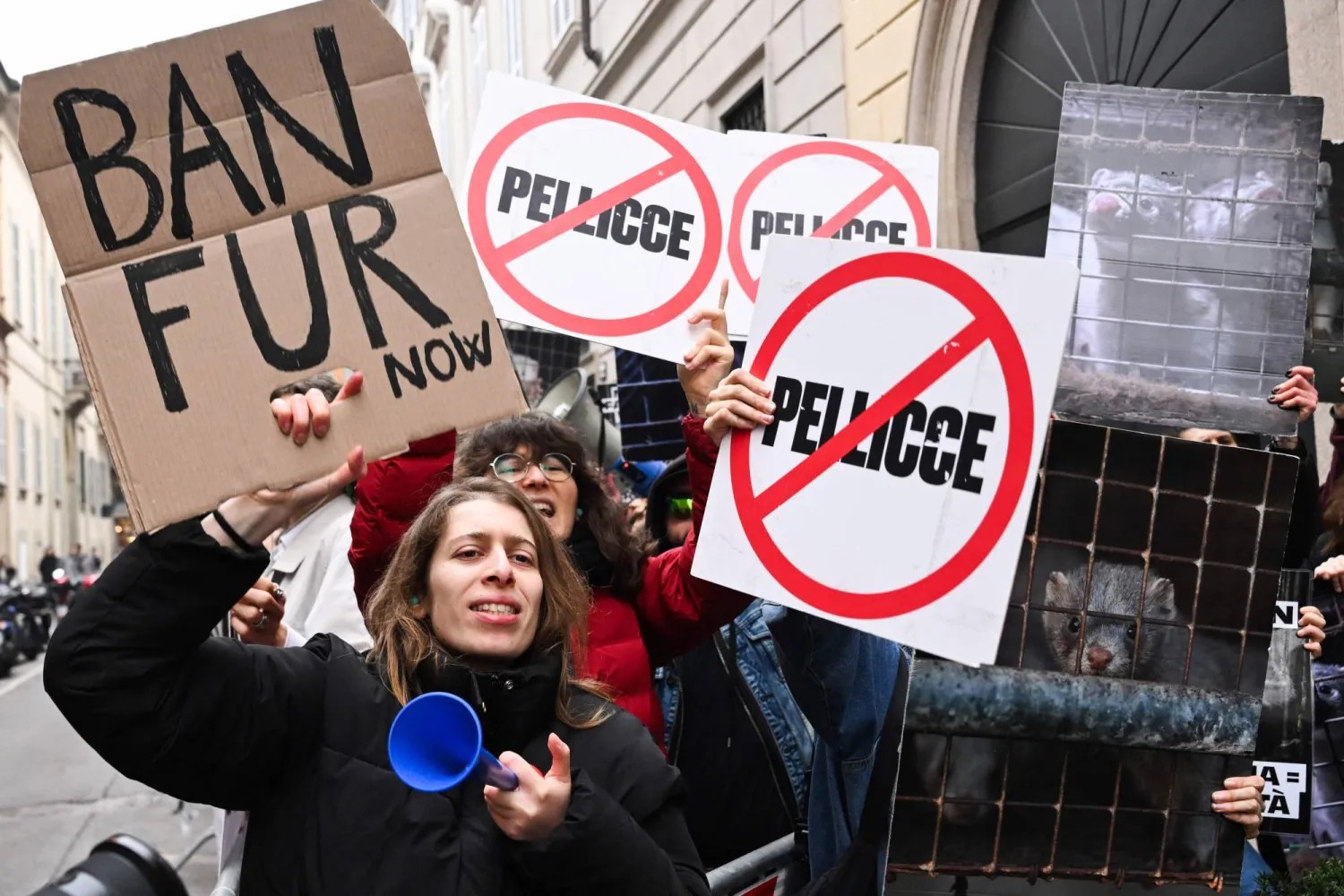
Protestors hold signs reading "Ban fur" ahead of the Giorgio Armani womens's ready-to-wear Fall/Winter 2026 collection fashion show as part of the Milan Fashion Week, in Milan on March 1, 2026. (AFP)
TT

Milan Fashion Week Says Will Ask Brands Not to Show Fur

Protestors hold signs reading "Ban fur" ahead of the Giorgio Armani womens's ready-to-wear Fall/Winter 2026 collection fashion show as part of the Milan Fashion Week, in Milan on March 1, 2026. (AFP)

Milan Fashion Week said Friday it would "invite" participating brands at its high-profile runway shows not to show fur, in a partial concession to animal rights activists following pressure.

The National Chamber of Italian Fashion (CNMI), which organizes fashion week, has been under pressure from animal activists to ban fur at the shows -- something fashion weeks in London, New York and various others have already done.

But the guidelines published Friday fell short of activists' demands, making the request not to show fur voluntary.

"CNMI believes that the most effective approach does not consist in imposing bans... but in issuing a request not to present, during the Milan Fashion Week shows, clothing, accessories, or any other item made of fur," the body said.

The new guidelines, to come into effect starting in September, include the chamber not using fur in its communications.

According to the chamber, materials excluded from the guidelines include shearling, vintage fur and fur obtained "by indigenous communities through traditional subsistence hunting practices".

Most fashion names who show at Milan Fashion Week have already gone fur-free, including the Armani Group, Dolce & Gabbana and Prada, but a major holdout has been Fendi, which began as a furrier.

In her first show for the brand, new Fendi designer Maria Grazia Chiuri showed a collection that included "remodeled" furs, or pieces from old furs reworked into new designs.

In March, anti-fur activists demonstrated during the women's shows, unfurling banners that said "Milan Fashion Week Go Fur-Free".

Animal activists noted that CNMI's new guidelines fell short of the flat-out bans on fur seen in other fashion weeks, but nevertheless called it progress.

"Without a fur-free policy like those in place at New York and London Fashion Weeks, there is no guarantee that cruelty will be excluded from Milan's runways, but we hope this anti-fur statement encourages greater use of next-generation biomaterials, which are both beautiful and responsible," said Emma Hakansson of Collective Fashion Justice.

The European Commission has yet to rule on a 2023 citizens' initiative that called on the EU to ban fur farms and the killing of animals such as mink, foxes, raccoon dogs or chinchillas solely for their pelts.

Activists cite the cruelty inherent in fur farming, in which the animals are crammed into tiny wire battery cages before being gassed or electrocuted.

Retailer Zalando Launches AI Shopping Agent as Margins Squeezed

A person carries a shopping bag branded by Zalando in central Berlin, Germany, November 13, 2025. (Reuters)
TT

Retailer Zalando Launches AI Shopping Agent as Margins Squeezed

A person carries a shopping bag branded by Zalando in central Berlin, Germany, November 13, 2025. (Reuters)

Top European online fashion retailer Zalando on Tuesday launched its first AI shopping agent amid concerns that artificial intelligence could disrupt online retail, after reporting third-quarter gross margin below market expectations.

Shares in the German company fell 5% in early trading.

Zalando reported a gross profit margin of 38.7% in the quarter, missing expectations partly due to investments, analysts at Jefferies and JPMorgan said in notes to ‌clients.

The industry ‌is facing disruption from so-called agentic commerce, ‌in ⁠which autonomous AI ⁠agents execute the full purchase cycle for goods, from price comparison across multiple retailers to payment, on behalf of human shoppers.

"The stock could drift lower in the coming days given the lack of any incremental positives, in our view, and its current level, along with ongoing ⁠structural risk from agentic commerce development," JPMorgan said.

As ‌shoppers increasingly use AI ‌to compare prices, check product availability and get recommendations, retailers are racing ‌to adopt AI tools to remain competitive and ‌expand the range of products available on their platforms.

Zalando said it would launch Zalando Extended, a platform where users will buy products from other online shops ‌using AI agents on the Zalando app, with a pilot in collaboration with home retailer ⁠Westwing.

"Our ⁠shift to a platform business model is accelerating, with our partner business and retail media growing at a double-digit rate and B2B revenue up almost 28%," Zalando finance chief Anna Dimitrova said in a statement.

Zalando sells clothes, shoes and accessories from thousands of brands including Nike, Hugo Boss, and Coach.

It said its third-quarter revenues grew 5.1% year-on-year to €3.17 billion ($3.55 billion), above the €3.15 billion expected by analysts polled by LSEG. Gross merchandise value, a metric measuring the value of all goods sold, rose 7.5% to €4.54 billion.


Estee Lauder Raises Annual Forecasts on Resilient Demand Ahead of Holiday Season

Cosmetics by Estee Lauder are displayed at a cosmetics store in a mall, Mumbai, India, May 28, 2025. (Reuters)
TT

Estee Lauder Raises Annual Forecasts on Resilient Demand Ahead of Holiday Season

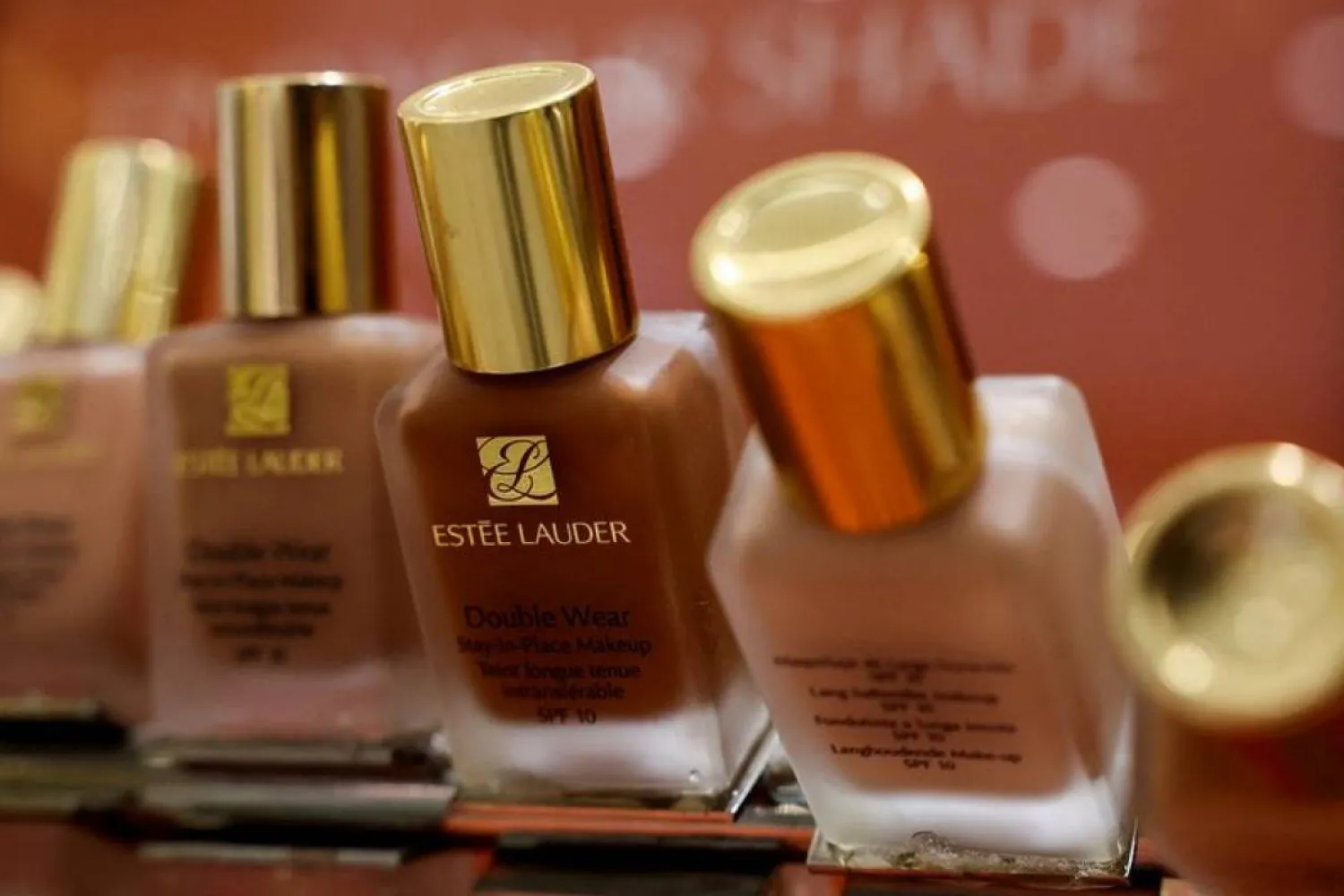
Cosmetics by Estee Lauder are displayed at a cosmetics store in a mall, Mumbai, India, May 28, 2025. (Reuters)

Estee ‌Lauder raised its annual sales and profit forecasts on Monday, banking on resilient demand for its premium skincare and fragrance brands ahead of the holiday season as CEO Stephane de La Faverie's year-long turnaround efforts boost growth.

Consumers, ‌particularly affluent ‌and younger groups, ‌have continued to ⁠indulge in skincare ⁠and fragrance purchases despite economic uncertainty, strengthening sales for the Clinique and Tom Ford owner's luxury skincare and fragrances.

As part of ⁠CEO's "Beauty Reimagined" strategy, Estee ‌Lauder has ‌been focusing on faster innovation, expanding ‌into new channels and markets, ‌leveraging AI for consumer insights and marketing, increasing consumer-facing investment, streamlining operations and saving costs by ‌trimming roles.

The company expects fiscal 2027 organic sales ⁠to ⁠grow between 4% and 5.5%, compared with its prior forecast of a 3% to 5% rise.

It also expects annual adjusted profit to be in the range of $3.20 to $3.45 per share, compared with its earlier forecast of $3.10 to $3.35.


Puma Narrows 2026 Operating Loss Guidance, Quarterly Sales Top Market View

 A view of a logo at the Puma flagship store in New York City, US, July 16, 2025. (Reuters)
A view of a logo at the Puma flagship store in New York City, US, July 16, 2025. (Reuters)
TT

Puma Narrows 2026 Operating Loss Guidance, Quarterly Sales Top Market View

 A view of a logo at the Puma flagship store in New York City, US, July 16, 2025. (Reuters)
A view of a logo at the Puma flagship store in New York City, US, July 16, 2025. (Reuters)

German sportswear maker Puma narrowed the guidance range for its 2026 operating loss on Friday, slightly weakening the midpoint amid muted consumer demand even as its third-quarter sales beat market expectations.

Puma, which is attempting to reboot its brand appeal to better compete with larger rivals Adidas and Nike, has been grappling with weaker demand and elevated inventory levels at sporting goods ‌retailers through which ‌it generates most of its sales.

The company ‌now ⁠expects an operating ⁠loss of €80 million to €130 million ($89 million to $145 million) in 2026, compared with a previous forecast for a loss of €50 million to €150 million.

Puma's third-quarter operating loss was €11.4 million, against a profit of €16.2 million a year ago and analysts' average forecast for a €10 million loss.

The figure includes a positive ⁠effect of €29.8 million from US tariff refunds ‌and one-off costs of €11.7 million ‌related to the company's cost efficiency program, it said.

"Our third-quarter ‌performance was in line with expectations as we continued ‌to move Puma through this transition year while laying the foundation for future growth," CEO Arthur Hoeld said in a statement.

Jefferies analysts said the results continued to point to a "complex reboot" ‌of Puma's consumer appeal as it seeks to revive growth. The company's shares rose ⁠6% in ⁠early trading.

Puma is investing in advertising to boost its brand and pursuing efforts to improve its credentials as a performance sportswear maker, particularly in running, where it has worked on its shoe technology.

Its quarterly sales fell 5% to €1.77 billion, but slightly beat market expectations of €1.75 billion. Inventories fell 24.3% to €1.6 billion on the back of lower purchasing volumes.

"Perhaps the one encouraging feature today is a reduction in inventory levels to already below the target expected by the end of this year," Jefferies said in the note to investors.