
Lebanon, Israel Say Extending Ceasefire Despite New Strikes

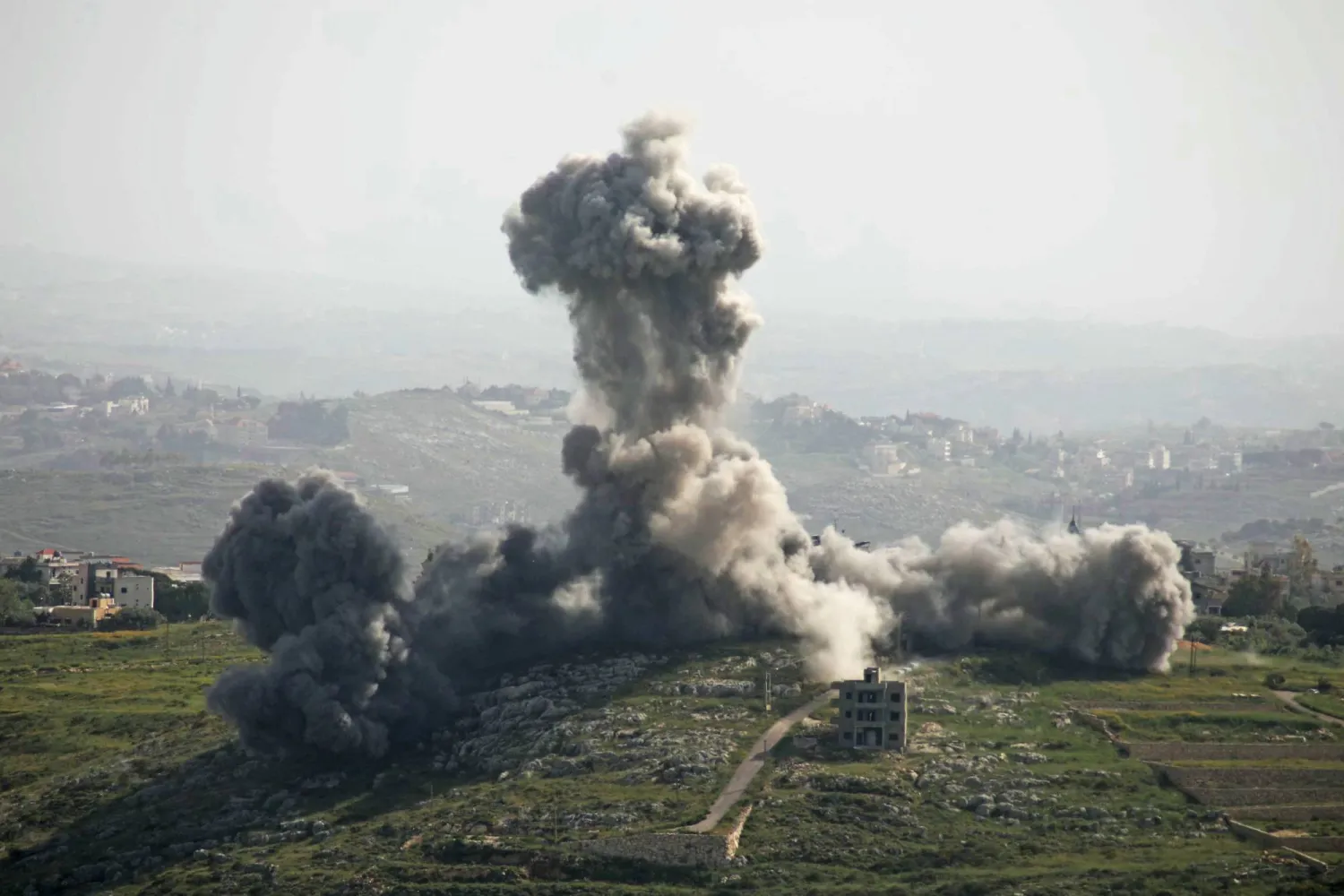
Smoke rises from the site of an Israeli airstrike that targeted the southern Lebanese village of Deir al-Zahrani on May 13, 2026. (AFP)
TT

Lebanon, Israel Say Extending Ceasefire Despite New Strikes

Smoke rises from the site of an Israeli airstrike that targeted the southern Lebanese village of Deir al-Zahrani on May 13, 2026. (AFP)

Lebanon and Israel agreed to extend a ceasefire and hold expanded talks on a political settlement, the United States announced Friday, even as Israel carried out new strikes that it insists are not subject to the truce.

Israel has been pounding Lebanon and invaded its south in response to fire from Hezbollah, the Iranian-backed movement that is not part of the ceasefire diplomacy.

Envoys from Israel and Lebanon's government, which has struggled to restrain Hezbollah, met for two days in Washington and said they would extend the ceasefire that was set to expire Sunday.

The cessation of hostilities "will be extended by 45 days to enable further progress," State Department spokesman Tommy Pigott said.

He said that the State Department would hold negotiations aimed at reaching a permanent political agreement on June 2 and 3 and that the Pentagon would bring together delegations from the countries' militaries on May 29.

Lebanon's delegation said in a statement that the ceasefire extension and opening of military talks would offer "critical breathing room for our citizens" with a goal of "lasting stability."

In an implicit rebuke to Hezbollah, Lebanese Prime Minister Nawaf Salam told an NGO dinner in Beirut that his country has had "enough of these reckless adventures serving foreign projects or interests."

The latest brought "a war we did not choose but was forced upon us, which led to Israel occupying 68 towns and villages," he said.

The United States steadfastly backs Israel, with which it launched attacks on Iran on February 28, but has also gently voiced unease about Israeli troops' encroachments into southern Lebanon.

Israel's ambassador to Washington, Yechiel Leiter, who led his country's delegation, said after the talks that the priority was ensuring Israel's security.

"There will be ups and downs, but the potential for success is great," Leiter wrote on X.

Iran's clerical state, Hezbollah's patron, has demanded a lasting ceasefire in Lebanon before any peace agreement with US President Donald Trump, who has been frustrated by Tehran's refusal to an accord on his terms.

- Truce met with violence -

Hundreds of people have died in Israeli strikes despite the truce announced on April 17.

Moments after the ceasefire renewal was announced, an Israeli strike hit a center of the Hezbollah-linked Islamic Health Committee in the southern town of Hanuf, authorities said. Six people died, including three paramedics, according to the Lebanese health ministry.

Israel also carried out strikes in the southern city of Tyre after issuing evacuation orders, and Hezbollah said it targeted Israeli barracks in the northern city of Kiryat Shmona with drones.

Lebanon's health ministry said strikes in the Tyre district also wounded at least 37 people, including six hospital personnel, nine women and four children.

Hafez Ramadan, a resident near the building targeted by the airstrike, said it had housed people who had fled their towns due to the war and was adjacent to a hotel where more displaced were staying.

"There are only women, children and the elderly here," he said. "Because of this strike, people have been displaced again."

The Israeli military said another of its soldiers was killed in southern Lebanon, bringing the number of Israeli soldiers killed in clashes with Hezbollah since early March to 19. A civilian contractor was also killed.

It said it killed more than 220 Hezbollah fighters over the past week and struck hundreds of targets.

- 'Unacceptable' toll -

The United Nations humanitarian coordinator for Lebanon, Imran Riza, said that diplomacy needed to stop the violence.

"The reality on the ground in Lebanon has been deeply alarming," he said. "Airstrikes and demolitions continue daily, with an unacceptable toll on civilians and civilian infrastructure."

But he expressed his hope that the Lebanon-Israel talks "will pave the way toward a political solution."

During the last talks between Israel and Lebanon, Trump brought envoys to the White House and predicted within the current ceasefire period that he would host a historic meeting between Israeli Prime Minister Benjamin Netanyahu and Lebanese President Joseph Aoun.

That meeting has not happened, with Aoun saying a security deal was necessary first, and there was no mention of a summit in the last ceasefire extension.

Lebanon was dragged into the Middle East war on March 2 when Hezbollah fired rockets at Israel in retaliation for the killing of Iran's supreme leader Ali Khamenei.

Israeli attacks since then have killed more than 2,900 people in Lebanon, including more than 400 since the truce took effect, according to Lebanese authorities.


Israel Military Says Striking Hezbollah Targets in Southern Lebanon

TOPSHOT - A photograph taken from the southern area of Tyre shows smoke rising from the site of an Israeli airstrike that targeted the area of Ras Al-Ain on May 12, 2026. (Photo by KAWNAT HAJU / AFP)
TT

Israel Military Says Striking Hezbollah Targets in Southern Lebanon

TOPSHOT - A photograph taken from the southern area of Tyre shows smoke rising from the site of an Israeli airstrike that targeted the area of Ras Al-Ain on May 12, 2026. (Photo by KAWNAT HAJU / AFP)

The Israeli military said it had launched new strikes targeting Hezbollah infrastructure across southern Lebanon on Saturday, the day after the two countries agreed to extend an existing ceasefire.

The military said that its forces “have begun striking Hezbollah infrastructure sites in several areas in southern Lebanon”.


Palestinian Ministry Says Israeli Forces Kill Man in West Bank Camp

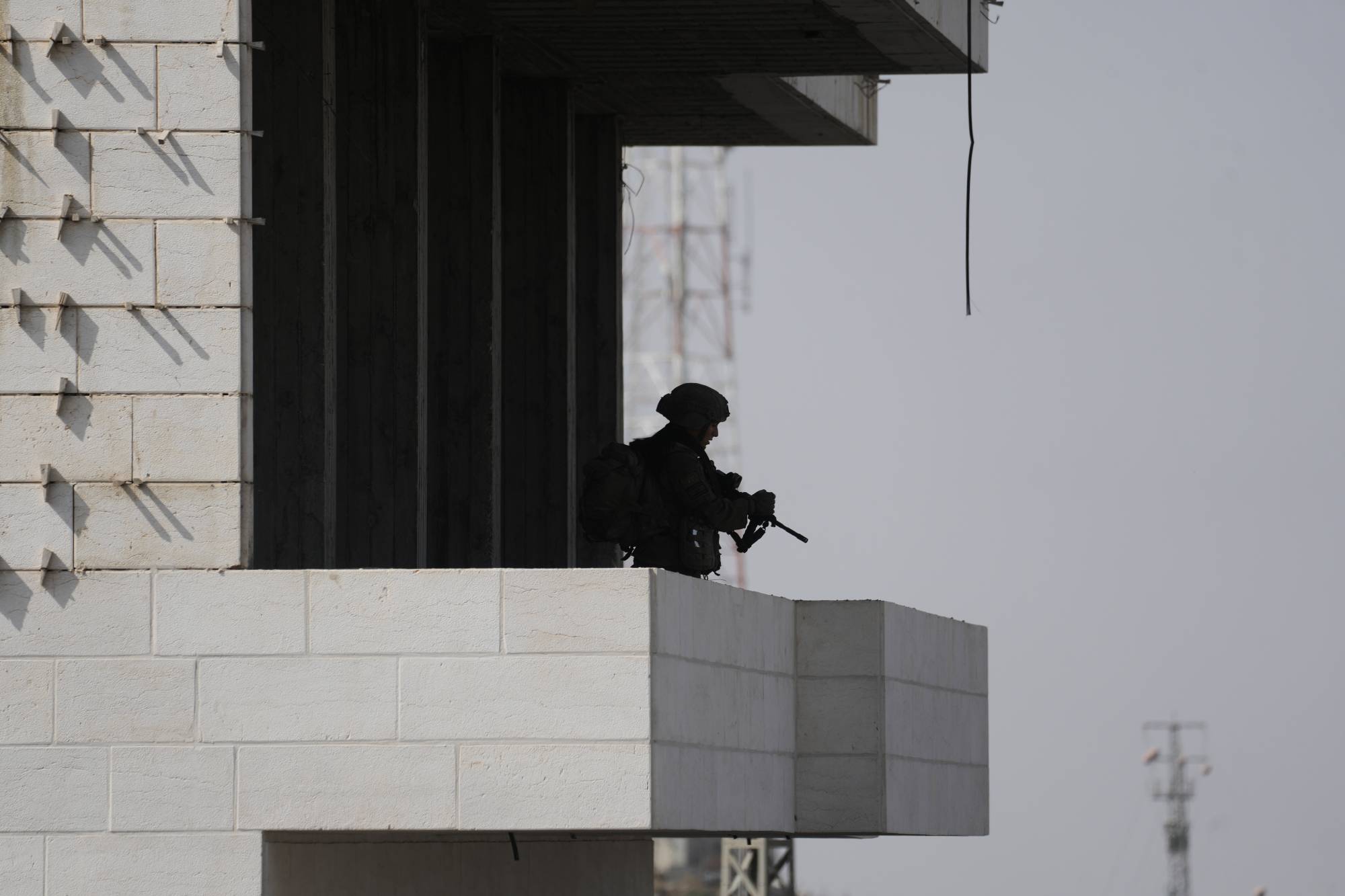
 A member of the Israeli security forces aims his weapon while patrolling during a military raid in the Qalandia refugee camp, south of Ramallah in the Israeli-occupied West Bank, on May 11, 2026. (AFP)
A member of the Israeli security forces aims his weapon while patrolling during a military raid in the Qalandia refugee camp, south of Ramallah in the Israeli-occupied West Bank, on May 11, 2026. (AFP)
TT

Palestinian Ministry Says Israeli Forces Kill Man in West Bank Camp

 A member of the Israeli security forces aims his weapon while patrolling during a military raid in the Qalandia refugee camp, south of Ramallah in the Israeli-occupied West Bank, on May 11, 2026. (AFP)
A member of the Israeli security forces aims his weapon while patrolling during a military raid in the Qalandia refugee camp, south of Ramallah in the Israeli-occupied West Bank, on May 11, 2026. (AFP)

Palestinian health officials said Israeli forces killed a man on Saturday on the outskirts of the Jenin refugee camp in the northern occupied West Bank.

The health ministry in Ramallah identified the victim as 34-year-old Nour al-Din Kamal Hassan Fayyad, saying he was "killed by occupation forces' fire in the Jenin camp".

The Palestinian Red Crescent said its teams in Jenin received a man "with no signs of breathing or pulse from inside Jenin camp after he sustained a live bullet wound to the thigh".

The Israeli army did not immediately respond to a request for comment.

Israel launched a major military operation in mid-January in multiple northern Palestinian refugee camps, where the army says it is seeking to root out armed groups.

The operation, dubbed "Iron Wall", has targeted Jenin and Tulkarem camps and displaced nearly 40,000 Palestinians, according to the UN agency for Palestinian refugees UNRWA.

The Israeli military has sealed off Jenin camp, allowing displaced residents only limited access to check on their homes and belongings.

Refugee camps were created in the West Bank, Gaza and neighboring Arab countries after the first Arab-Israeli war for Palestinians who fled or were expelled from what is now Israel at the time of its creation in 1948.

Since the war in Gaza broke out in October 2023, near-daily violence has also rocked the West Bank, which Israel has occupied since 1967.

Israeli soldiers or settlers have killed at least 1,072 Palestinians since then, including many gunmen, according to an AFP tally based on Palestinian health ministry data.

Official Israeli figures show at least 46 Israelis have been killed in Palestinian attacks or during Israeli military operations in the same period.


Defector ‘Savannah’ Arrives in Khartoum, Deepening RSF Crisis

A circulated image shows defector Savanna among his troops during military operations before splitting from the Rapid Support Forces. 
TT

Defector ‘Savannah’ Arrives in Khartoum, Deepening RSF Crisis

A circulated image shows defector Savanna among his troops during military operations before splitting from the Rapid Support Forces. 

Former Rapid Support Forces (RSF) field commander Brigadier General Ali Rizqallah, known as “Savannah,” arrived in the Sudanese capital Khartoum days after announcing his split from the paramilitary force led by Mohamed Hamdan Dagalo (Hemedti), in a move observers say highlights growing divisions within the RSF leadership and field ranks.

When Savannah announced his defection last week, he stressed he would not side with either party in the conflict, saying only that he had “sided with the will of the people.” But his arrival in Khartoum was widely seen by observers as a practical indication that he had joined the Sudanese army, dealing another blow to the RSF, which has faced a growing wave of defections in recent months.

Media sources said Savannah arrived in Khartoum without official details about his next moves, but the timing of his arrival, amid escalating military operations on several fronts, reinforced speculation of significant internal shifts within the RSF structure.

Defected RSF Major General Al-Nour Ahmed Adam, known as “Al-Nour al-Qubba,” told local media that Savannah was among the RSF’s most prominent field commanders and that his defection had generated wide attention because of his military influence and standing within the force.

He described Savannah as “one of the strong men and men of principle,” predicting that his joining the army would represent “a real addition to the armed forces and the Sudanese people.”

Al-Qubba also hinted at further defections within the RSF, saying the coming days would witness new developments following Savanna’s move to the army, in remarks suggesting that other commanders could join the Sudanese armed forces.

Savannah emerged as one of the leading RSF field commanders in the Kordofan region after the outbreak of war in April 2023. He led several military operations against the army and helped expand RSF control across large parts of the region.

He is the fourth prominent commander to defect from the RSF in recent months after Abu Aqla Keikel, commander of the Sudan Shield forces, who joined the army in October 2024, followed by Major General Al-Nour Ahmed Adam al-Qubba and field commander Bashara al-Huwaira, who also defected and joined the armed forces.

Tribal leader Musa Hilal, the former head of the Janjaweed militia, had previously declared support for the army after relocating to Port Sudan following the RSF’s takeover of his hometown of Misterei in Darfur, in a development observers say contributed to growing unrest and divisions within the RSF.

Observers say RSF attacks on areas controlled by Musa Hilal and his forces affected tribal and military balances in Darfur and indirectly accelerated defections from the paramilitary group.

Neither the Sudanese army nor the RSF issued official comment on Savannah’s arrival in Khartoum. The RSF had previously described him in a Telegram statement as a “defeated general,” while pro-RSF platforms circulated videos showing fighters from his combat group rejecting his defection.

The war between the Sudanese army and the RSF has entered the first month of its fourth year, with humanitarian and security conditions continuing to deteriorate across the country.

The International Organization for Migration estimates that the conflict has displaced more than 14 million people, including nearly four million who fled to neighboring countries, while the United Nations has described the Sudan crisis as the world’s “largest humanitarian catastrophe.”

Unofficial estimates say the war has killed around 150,000 civilians, in addition to thousands of fighters from both sides, amid the absence of precise figures on military losses.