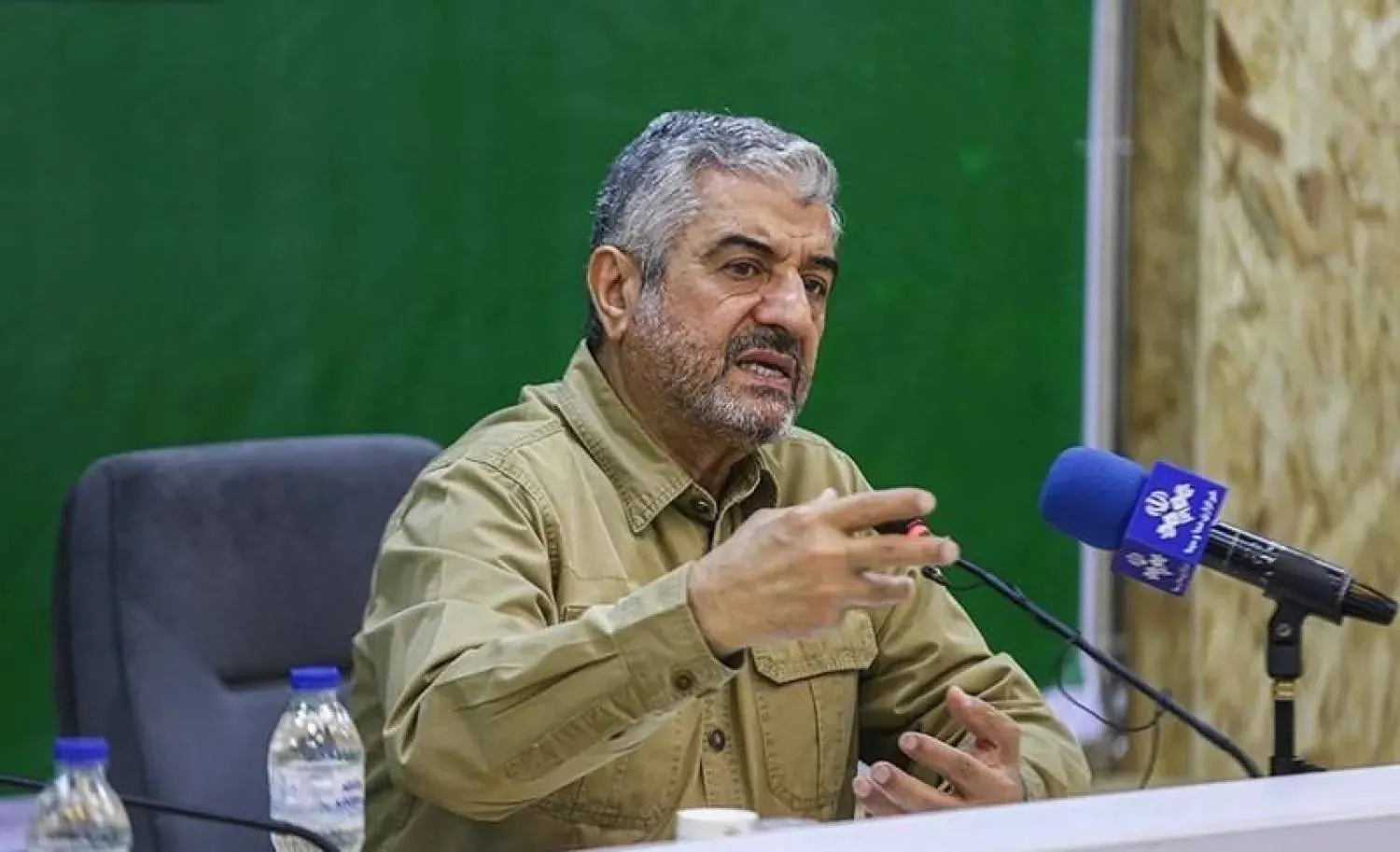

Mohammad Ali Jafari, former commander-in-chief of Iran’s Revolutionary Guard Corps (IRGC), said Iran would not enter negotiations with the United States before Washington implements “preconditions” and “confidence-building measures.”
In an interview with the IRGC-affiliated Tasnim news agency, Jafari said Tehran would reject any negotiations before the war ends on all fronts, sanctions are lifted, frozen Iranian assets are released, war damages are compensated and Iran’s sovereignty over the Strait of Hormuz is recognized.
Jafari said the United States “must pay the price for violating its commitments” after Iran was subjected to two military attacks during negotiations. He said the experience had produced a “strategic shift” in Tehran’s negotiating approach, now based on written guarantees and commitments against renewed military threats, alongside practical steps such as releasing frozen assets.
He further revealed that Iran is not currently engaged in direct negotiations with Washington, but is exchanging messages through a third country, such as Pakistan, to present its conditions and seek guarantees. If such commitments are secured, negotiations on other issues, including the nuclear file, could follow later.
Jafari said Iranian President Masoud Pezeshkian and Parliament Speaker Mohammad Bagher Ghalibaf, who oversees the negotiations, are acting within the framework of decisions by the ruling establishment and directives from Supreme Leader Mojtaba Khamenei.
He noted that Washington “has no option” but to accept “Iran’s legitimate demands” or continue the war, warning that if fighting resumes, Iran would launch “stronger strikes” than before. He added that the cost of continuing the war for the United States and its regional allies would be “far greater” than for Iran.
Jafari’s remarks on Thursday came days after he said Iran’s response was based on five preconditions: ending the war, lifting sanctions, releasing frozen assets, war reparations and recognition of Iran’s sovereignty over the Strait of Hormuz. He stressed that “there will be no negotiations before they are achieved.”
Jafari currently heads the IRGC’s cultural and social divisions and is considered a close ally of General Mohammad Bagher Zolghadr, who became secretary of Iran’s Supreme National Security Council after former secretary Ali Larijani was killed during the war.
The first round of Iranian-US talks, mediated by Pakistan and held on April 12, ended without agreement, despite a ceasefire that took effect on April 7.
US President Donald Trump said on Monday that the ceasefire with Iran was “close to collapse” after Tehran’s latest response to a US proposal to end the war showed the sides remained divided on several issues. He also sought to ease tensions after naval clashes last week.
In response, Ghalibaf said Iran’s armed forces were ready to respond decisively to any “aggressive act.”
Iran’s response focused on ending the war on all fronts, particularly in Lebanon, where Israel is fighting the Iran-backed Hezbollah group.
Tehran also demanded compensation for war damages, stressed Iranian sovereignty over the Strait of Hormuz and called on the United States to end its naval blockade, guarantee no further attacks, lift sanctions and end the US ban on Iranian oil sales.
Iran also demanded recognition of its “sovereignty” over the Strait of Hormuz, where maritime traffic has been halted through the waterway that previously carried one-fifth of global oil and gas supplies.
Separately, lawmaker Mahmoud Nabavian, a member of parliament’s National Security Committee who accompanied the Iranian negotiating team, disclosed details of the Iranian-US talks in Pakistan.
Nabavian said the Islamabad talks included four sessions and that US Vice President JD Vance said in the first session Washington had two main demands: the full reopening of the Strait of Hormuz and the removal from Iran of all uranium enriched to 60%.
According to Nabavian, the Iranian delegation insisted on sanctions relief and recognition of Iran’s enrichment rights, but Vance asked to address the Strait of Hormuz first. Ghalibaf replied: “We do not have one issue to solve first; there are four issues on the table,” according to the state-run Mehr news agency.
Nabavian added the two sides later agreed to continue negotiations across four tracks. He noted that the Americans again raised the Strait of Hormuz and Iran’s uranium stockpile, proposing the release of $6 billion in frozen assets in exchange for Iranian cooperation.