


UK’s Ex-Health Minister Streeting Says Will Run to Replace PM Starmer

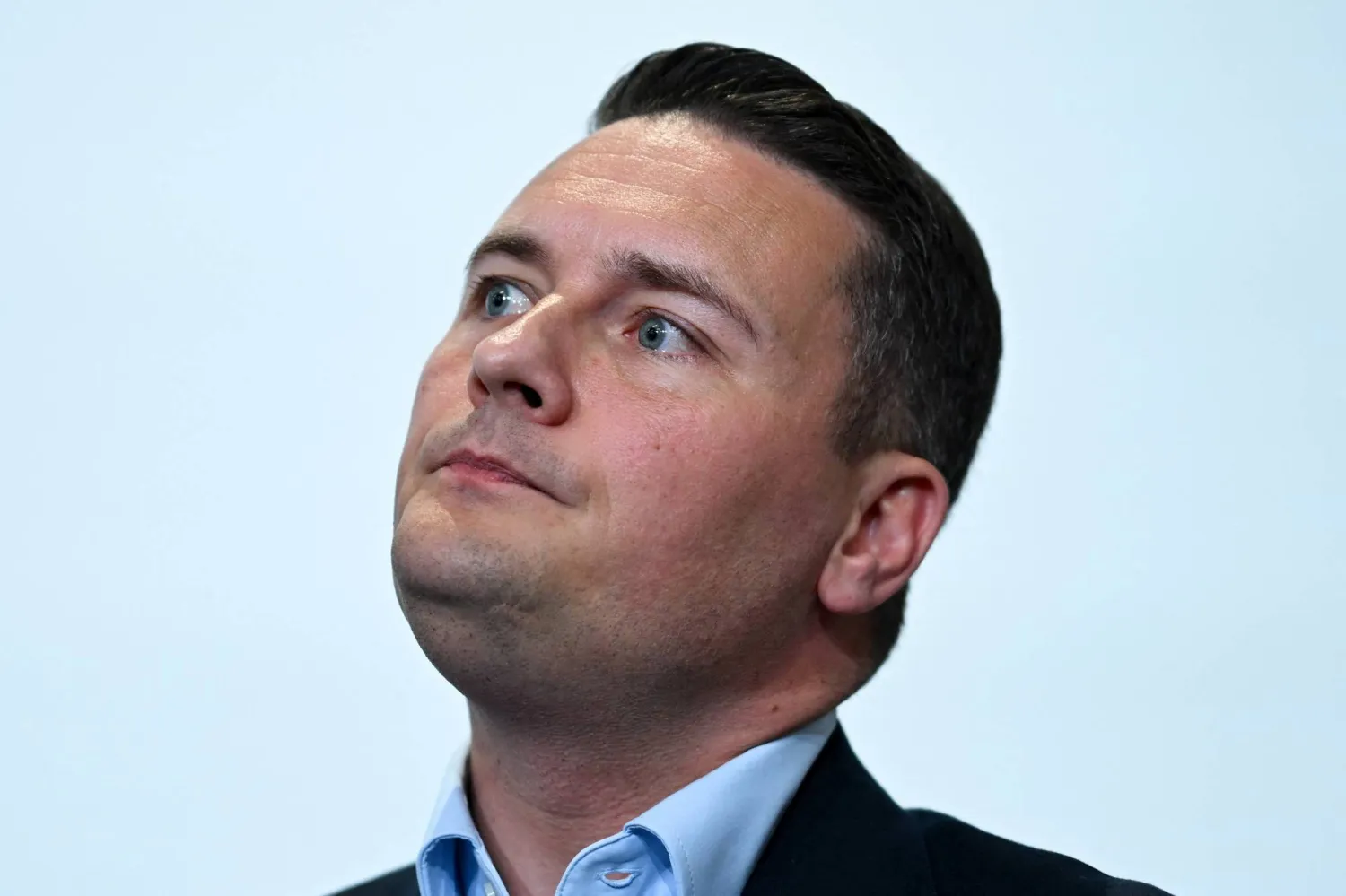
 Britain’s former Health Secretary Wes Streeting delivers a keynote address at the Progress annual conference 2026, in London, Britain, May 16, 2026. (Reuters)
Britain’s former Health Secretary Wes Streeting delivers a keynote address at the Progress annual conference 2026, in London, Britain, May 16, 2026. (Reuters)
TT

UK’s Ex-Health Minister Streeting Says Will Run to Replace PM Starmer

 Britain’s former Health Secretary Wes Streeting delivers a keynote address at the Progress annual conference 2026, in London, Britain, May 16, 2026. (Reuters)
Britain’s former Health Secretary Wes Streeting delivers a keynote address at the Progress annual conference 2026, in London, Britain, May 16, 2026. (Reuters)

Wes Streeting, who resigned as UK health secretary this week, announced Saturday he will run to replace Keir Starmer as Labour leader and prime minister, after the party suffered disastrous local election results.

Streeting quit the government Thursday with a withering assessment of Starmer's leadership, but no other senior minister followed suit and the 43-year-old MP did not immediately trigger a leadership contest.

Later that day, Greater Manchester mayor and Andy Burnham unveiled a bid to become an MP which, if successful, would allow the 56-year-old from the left of the party to stand in that contest.

While still not announcing he has kickstarted the formal leadership challenge process, Streeting confirmed Saturday he will vie to replace Starmer and become the center-left Labour's new leader.

Whoever leads the ruling party, which has a big majority in Britain's parliament, will by default become prime minister.

"We need a proper contest with the best candidates on the field, and I'll be standing," Streeting said in a speech and question-and-answer session at a think tank event in London.

Explaining the lack of a formal contest launch, Streeting -- from Labour's right-wing and long thought to covet the premiership -- said he wanted "all of the candidates... on the pitch".

"If we had rushed ahead without giving Andy a chance to stand, the new leader, whether it was me or anyone else, would lack the legitimacy."

A Labour party leadership contest can be triggered if 81 of its MPs -- 20 percent of the party in parliament -- formally back a candidate to challenge Starmer and submit the necessary paperwork.

- Brexit 'mistake' -

Starmer, as current leader, would automatically be on the ballot if he wants to defend the challenge.

Labour members and affiliates then get to vote, not just MPs. They rank candidates in order of preference and a contender needs 50 percent to win.

Labour's National Executive Committee (NEC) -- which selects the party's candidates in parliamentary seat elections -- said Friday it had permitted Burnham "to stand in the candidate selection process" in the by-election in Makerfield, northwest England.

That contest is expected in mid-June at the earliest, meaning any formal leadership challenge is likely to be triggered afterwards.

The political jockeying follows dismal results for Labour in local and regional elections held last week, which have prompted several junior ministers and dozens of the party's MPs to demand Starmer to step down.

But the beleaguered 63-year UK leader appears to have been granted a stay of execution, of sorts, while Burnham's fate is decided in the Makerfield by-election.

Burnham told British media Saturday he was prepared to "fight to the highest level".

Meanwhile it appears Streeting, who delivered a wide-ranging speech at the think tank event, has kicked off a leadership campaign in all but name.

Setting out a fledgling policy platform, he said Brexit was "a catastrophic mistake" and that Britain must pursue a "new special relationship" with the European Union.

He signaled he wanted to see the country rejoin the trade bloc in the future.


USS Ford Returns Home After 11-Month Deployment Supporting the Iran War and Maduro’s Capture

Aircraft carrier USS Gerald R. Ford arrives at Naval Station Norfolk on May 16, 2026 in Norfolk, Virginia. (Getty Images/AFP)
TT

USS Ford Returns Home After 11-Month Deployment Supporting the Iran War and Maduro’s Capture

Aircraft carrier USS Gerald R. Ford arrives at Naval Station Norfolk on May 16, 2026 in Norfolk, Virginia. (Getty Images/AFP)

The USS Gerald R. Ford, the world largest aircraft carrier, returned home to Virginia on Saturday after an 11-month deployment, the longest since the Vietnam War, that saw it support the US war with Iran and the capture of Nicolás Maduro when he was Venezuela's president.

The most advanced US warship and two accompanying destroyers docked at Naval Station Norfolk with about 5,000 sailors waiting to see their families for the first time since June.

Besides combat operations and traversing continents, the sailors aboard the carrier faced a noncombat-related fire that left hundreds without places to sleep and forced lengthy repairs on the Greek island of Crete.

Defense Secretary Pete Hegseth was on hand for the arrival of the warships, which included the destroyer USS Bainbridge.

Hegseth commended the crew of the Bainbridge for a “job well done.”

“You didn't just accomplish a mission, you made history,” Hegseth said on the destroyer's deck. “You made a nation proud.”

The Ford’s 326 days at sea are the most for an aircraft carrier in the past 50 years and broke the record for the longest post-Vietnam War deployment, according to US Naval Institute News, a news outlet run by the US Naval Institute, a nonprofit organization. The only longer deployments were the 1973 deployment of USS Midway at 332 days and the 1965 deployment of USS Coral Sea at 329 days.

The Ford's long time at sea has raised questions about the impact on service members who are away from home for long periods, as well as about increasing strain on the ship and its equipment beyond the fire, which started in one of the carrier's laundry spaces.

When the Ford first left Virginia's coast in June, it headed to the Mediterranean Sea. It was then rerouted to the Caribbean Sea in October as part of the largest naval buildup in the region in generations.

The carrier took part in the military operation in January to capture Maduro. Then it would see more battle, heading toward the Middle East as tensions with Iran escalated. The Ford participated in the opening days of the Iran war from the Mediterranean Sea before going through the Suez Canal and heading into the Red Sea in early March.

Technically, the crew of the USS Nimitz was on duty and away from home for a total of 341 days in 2020 and 2021. However, that included extended isolation periods ashore in the US meant to help prevent the spread of COVID-19.


Pakistani Minister Arrives in Tehran to ‘Facilitate’ US-Iran Peace Talks

 Night falls over the city and the Milad Tower in Tehran, Iran, Friday, May 15, 2026. (AP)
Night falls over the city and the Milad Tower in Tehran, Iran, Friday, May 15, 2026. (AP)
TT

Pakistani Minister Arrives in Tehran to ‘Facilitate’ US-Iran Peace Talks

 Night falls over the city and the Milad Tower in Tehran, Iran, Friday, May 15, 2026. (AP)
Night falls over the city and the Milad Tower in Tehran, Iran, Friday, May 15, 2026. (AP)

Pakistan's interior minister arrived in Tehran on Saturday "to facilitate" the peace talks between Iran and the United States that have stalled despite a fragile ceasefire, Iranian media reported.

"Mohsin Naqvi arrived today in Iran on an official two-day visit as part of Pakistan's ongoing efforts to facilitate talks and promote regional peace," the Tasnim news agency reported.

Iranian Interior Minister Eskandar Momeni received Naqvi, whose visit to Tehran comes days after that of Pakistan's influential army chief, Field Marshal Asim Munir.

Islamabad has been actively mediating in the peace talks between Iran and the US and last month hosted a high stakes meeting between delegations from both sides.

A ceasefire that began on April 8 has largely halted the fighting that erupted when US and Israeli forces attacked Iran on February 28.

Iranian Foreign Minister Abbas Araghchi said on Friday that Tehran had received messages from Washington indicating that President Donald Trump's administration was willing to continue negotiations.

Iran's chief negotiator and speaker of parliament, Mohammad Bagher Ghalibaf said on Tuesday that Washington should accept Tehran's proposal for peace or face "failure" after Trump rejected an Iranian counteroffer and warned the ceasefire was on "life support".

"There is no alternative but to accept the rights of the Iranian people as laid out in the 14-point proposal. Any other approach will be completely inconclusive; nothing but one failure after another," Ghalibaf said, in a social media post.


Canada Deepens Arctic Defense Ties with Nordics after Trump Threats

Canada Prime Minister Mark Carney talks to reporters during the 8th European Political Community Summit in Yerevan, Armenia on Monday, May 4, 2026. (Sean Kilpatrick/The Canadian Press via AP)
TT

Canada Deepens Arctic Defense Ties with Nordics after Trump Threats

Canada Prime Minister Mark Carney talks to reporters during the 8th European Political Community Summit in Yerevan, Armenia on Monday, May 4, 2026. (Sean Kilpatrick/The Canadian Press via AP)

Since US President Donald Trump’s barrage of threats to seize Greenland, authorities on the frozen island have been seeking help from a northern ally: Canada.

A reserve unit of the Canadian armed forces called the Rangers has long maintained a year-round presence in mostly inaccessible Arctic communities. For three years, authorities in Greenland and Denmark have consulted with Canadian officials on how to set up their own version of the Rangers — conversations that grew more urgent with Trump’s threats and growing fears of Russian hostility in the Arctic, said Reuters.

“The rhetoric coming out of the White House has sped up efforts to rebuff the idea that Arctic communities need the US to come in and save them,” said Whitney Lackenbauer, an honorary lieutenant-colonel Canadian Ranger involved in the talks, who spoke with Reuters during a recent 5,000-kilometer Arctic snowmobile trek by the Rangers. “The Nordic countries and Canada, we’re increasingly realizing we can come together in military and diplomatic ways to send a message that carries moral weight.” As Canada attempts to pivot away from relying on the US to protect its vast Arctic, Prime Minister Mark Carney is strengthening ties and exchanging security tips with the Nordic countries, which he describes as trusted partners. Canada's increased defense collaboration with the Nordics is part of Carney's effort to strengthen alliances between what he calls “middle powers” in a world where the United States is considered a less reliable partner.

The White House said ‌Trump’s leadership has prompted ‌allies “to recognize the need to meaningfully contribute to their own defense” and that the Arctic is a critical region ‌for US national ⁠security and the ⁠economy.

“The administration is participating in diplomatic high-level technical talks with the governments of Greenland and Denmark to address the United States’ national security interests in Greenland,” a White House spokesperson said in an email.

Alliances are shifting in the Arctic as climate change makes it more accessible. Russia has far more military bases than any other nation there and in recent years China has started to increase its presence in the mineral-rich area, mostly in partnership with Russia. While Carney says Canada will no longer rely on any other nation to protect its own territory, he says the Arctic’s greatest threat is from Russia – and the Nordics have been boosting their own defenses since Russia invaded Ukraine.

In March, Canada and the five Nordic countries — Denmark, Finland, Iceland, Norway and Sweden — agreed to deepen their cooperation in military procurement and ramp up defense production to deal with security threats, including cyberattacks. A plan for how Greenland might adapt the Canadian Rangers is expected by the ⁠end of this year, according to government policy documents. Canadian Foreign Affairs Minister Anita Anand told Reuters she meets regularly with Nordic ‌officials to work on collective defense and Arctic security. Canada’s partnership with the United States through NORAD, the North American ‌Aerospace Defense Command, remains critical, she said. But Canada is focused on bolstering new alliances. That includes the opening of a Canadian consulate in Nuuk in February and an invitation to her Nordic counterparts ‌to visit Canada’s Arctic this year.

“We have to build something new, and it has to be a world order that is built on the values that we ‌represent,” Danish Prime Minister Mette Frederiksen told Carney during the Nordic-Canadian summit in Oslo in March. In April, Alexander Stubb became the first Finnish president to visit Canada in a dozen years and signed several agreements on Arctic cooperation. Stubb and Carney took to the ice in Ottawa for a hockey practice, and afterward Stubb said he and Carney message each other almost every day.

The two national leaders sometimes chat about hockey or baseball, Stubb told reporters, but “most of the time it's about NATO or Ukraine or Iran."

NO MORE ‘FREE PASS IN THE ARCTIC’ FOR HOSTILE NATIONS

Lackenbauer, the honorary Canadian Ranger lieutenant-colonel, ‌is also an Arctic expert at Trent University in Peterborough, Ontario. He said Canada should overhaul its approach to Arctic security just as Nordic countries did after Russian troops marched into Ukraine in 2022.

“The more we can go and help Canada’s ⁠allies in northern Europe, the more hostile nations ⁠will get the message that they do not get a free pass in the Arctic,” he said. Among the eight countries that share the Arctic, Canada’s investment in defending the territory has consistently been near the bottom, trailing Russia, the US, Norway, Sweden, Denmark and Finland, according to the Arctic Business Index, a network of far north research institutions and analysts. Along with Greenland, Canada has historically spent the least. Last year, Canada hit the NATO target of spending 2% of its GDP on defense, around CA$63 billion, after repeated complaints from Trump. That compared to a low point of just 1% in 2014.

Neil O’Rourke, Director General at Canada’s Coast Guard for Fleet and Maritime Services, said he and a Danish defense colleague realized years ago that if either country had a serious incident in the Arctic, their first phone call should be to each other.

“Up north, we’re just across the water and it makes much more sense to share resources than to get help from down south,” O’Rourke said in an interview. He said Canada is also trying to learn more from Norway about how its maritime services handle emergency towing of vessels.

Rob Huebert, an Arctic expert at the University of Calgary, said working with the US remains critical, noting that the country produces arguably the most advanced military weaponry and that Canada’s military remains highly dependent on the US for protecting its northernmost regions.

“If we are talking about war-fighting capability, that means working with the US military,” he said. Huebert said Carney’s March trip to observe a Norwegian-led NATO exercise in Bardufoss is perhaps an indication the country’s approach is changing.

“Until very recently, Canada’s participation in NATO’s Arctic exercises in the Nordics has been very token,” he said. “But then all of a sudden because of Trump, we decide we’d better do something with the Nordics.”
