


Report: ‘Abu Lulu’, RSF Commander Who Was Filmed Killing Civilians in Sudan, Is Back in Combat

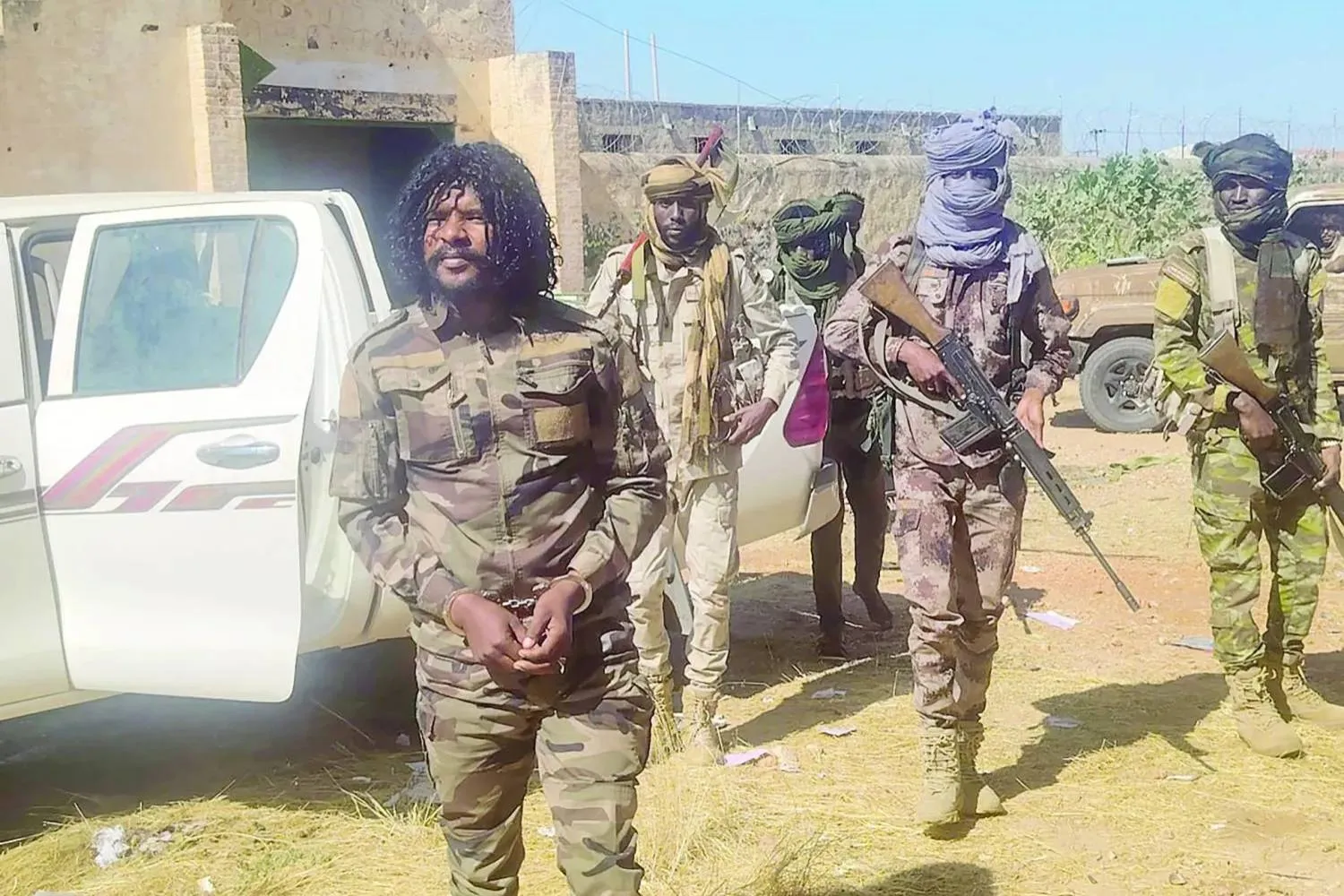
RSF Brigadier General al-Fateh Abdullah Idris, known as Abu Lulu, was reportedly seen on the battlefield in Kordofan in March. (AFP file)
TT

Report: ‘Abu Lulu’, RSF Commander Who Was Filmed Killing Civilians in Sudan, Is Back in Combat

RSF Brigadier General al-Fateh Abdullah Idris, known as Abu Lulu, was reportedly seen on the battlefield in Kordofan in March. (AFP file)

A Sudanese paramilitary commander who was arrested late last year following global outrage over videos of him executing unarmed people in al-Fashir has been released from prison and returned to active duty on the battlefield, nine sources told Reuters.

Two of the sources – a Sudanese intelligence official and a commander with the paramilitary Rapid Support Forces – said they personally saw RSF Brigadier General al-Fateh Abdullah Idris, known as Abu Lulu, on the battlefield in Kordofan in March.

RSF officers had pleaded for Abu Lulu to be returned to the field to boost the morale of forces engulfed in heavy fighting there, a Chadian military officer told Reuters.

In total, Reuters spoke with 13 sources who said they knew of Abu Lulu’s release. They include three RSF commanders, an RSF officer, a relative of Abu Lulu, a Chadian military officer close to RSF command and seven other sources with contacts in RSF leadership or access to intelligence on RSF field operations.

The RSF-led coalition government, in response to questions from Reuters, issued a statement on Monday denying the group had released Abu Lulu. A special court will try him and others accused of violations during the al-Fashir offensive, according to the statement from Ahmed Tugud Lisan, spokesman for the RSF-led Tasis government.

“The talk about Abu Lulu being released is untrue, malicious, and completely false,” the statement said. “Abu Lulu and the others accused of violations during the liberation of al-Fashir have been in detention since their arrest and have never left prison.”

Reuters was unable to reach Abu Lulu.

SANCTIONS CITE WAR CRIMES

The RSF imprisoned Abu Lulu in late October 2025, a few days after its bloody takeover of al-Fashir, a large city in North Darfur. Multiple videos had surfaced of him executing unarmed people during the offensive. His actions earned him the nickname “the butcher of al-Fashir,” a moniker noted by the UN Security Council when sanctioning him on February 24 for human rights abuses.

The three-year civil war between the Sudanese army and the RSF is a brutal power struggle to control the country and its financial resources. It has created what aid groups say is the world's largest humanitarian ‌crisis.

Earlier this year, an independent ‌UN probe found that the mass killings in al-Fashir bear the hallmarks of genocide. A separate UN probe found more than 6,000 people were killed by RSF fighters from ‌October 25 ⁠to 27.

Four videos verified ⁠by Reuters show Abu Lulu shooting at least 15 unarmed captives in al-Fashir on October 27, after the RSF seized the city. All were wearing civilian clothing. It is considered a war crime under international law to kill anyone, even a former fighter, who is unarmed and not posing a threat.

After international outcry by UN leaders, US politicians and others, RSF leader Mohamed Hamdan Dagalo, known as Hemedti, publicly acknowledged violations by his fighters in al-Fashir and said an accountability committee would be set up to investigate any abuses.

On October 30, the RSF released a video of Abu Lulu being driven to Shala prison, in southwestern al-Fashir. In the video, a handcuffed Abu Lulu is escorted from a vehicle flanked by armed men and placed behind bars. An unidentified RSF spokesperson standing in front of the prison says Abu Lulu “will be presented to a just trial in accordance with the law.”

In November, Al Jazeera published a story saying Abu Lulu had been released, citing unspecified online videos. But on December 2, the head of the RSF-appointed accountability committee told Reuters that it had Abu Lulu in custody and was investigating him and several other RSF soldiers in connection with violations committed in al-Fashir. Al Jazeera did not respond to questions from Reuters about its November report.

Four sources told Reuters Abu Lulu was released in December. Reuters was unable to confirm when he was freed.

The relative said that before Abu Lulu ⁠was authorized to return to duty in Kordofan, he appeared in November before a disciplinary board made up of six senior officers. The hearing was about videos he appeared in that ‌damaged the RSF’s reputation.

Reuters was unable to confirm the hearing took place or determine its outcome.

Abu Lulu is from the same clan as Hemedti, the RSF leader. Hemedti’s ‌brother, Abdelrahim Dagalo, the deputy commander of the RSF, personally ordered Abu Lulu’s release from prison, according to three sources – an RSF commander and an RSF officer both close to RSF leadership and a researcher with contacts in the committee tasked with investigating Abu Lulu.

The RSF officer said ‌that the disciplinary committee had not officially released Abu Lulu but that the deputy commander had ordered his release via radio message.

COMMAND RESPONSIBILITY

The videos of Abu Lulu are among nearly 300 videos posted online around the time of the offensive and ‌analyzed by Reuters and the Sudan Witness project at the Center for Information Resilience.

Abu Lulu was the only commander Reuters identified in video shooting unarmed people. But the Reuters-Sudan Witness investigation also found that three other senior RSF commanders were in the same area when the mass killings took place.

One video verified by Reuters shows Gedo Hamdan Abu Nashuk, the highest ranking RSF commander for the region of North Darfur, walking alongside Abu Lulu on the morning of October 27. Reuters geolocated videos from this area and found that Nashuk was recorded within 40 meters of two other videos that showed Abu Lulu executing unarmed men. By measuring shadows in the three videos, Reuters found that the videos were filmed within the same two-hour window.

Under international law, these leaders may be held criminally liable for crimes committed by their fighters during the conflict, said Jehanne Henry, a human rights lawyer and Sudan ‌director at The Reckoning Project, a US non-profit that documents war crimes.

The RSF did not respond to questions about the specific actions of any commanders present during the al-Fashir offensive. On October 29, Hemedti said that any soldier or officer who committed a crime would be arrested and investigated, with the results publicized.

The RSF government has been delayed in ⁠trying those accused of violations, spokesman Lisan said, because it is “establishing state structures ⁠under difficult circumstances.”

“We are committed to achieving justice and holding all those who commit violations accountable,” Lisan said. “Any talk to the contrary is deliberate misinformation.”

WITNESS ACCOUNTS

Reuters spoke with six survivors in refugee camps in Chad who said they witnessed Abu Lulu killing civilians in al-Fashir before they fled in October 2025.

Manazil Mousa, 25, recognized Abu Lulu from videos shown to her by a Reuters reporter and said she met him on the road out of al-Fashir as she and her family were fleeing. There, she said, he took their phones and all of their belongings, beat them severely and shot and killed her brother, Mubarak.

“Abu Lulu is the one who abused us,” she said. “He was the one who killed Mubarak. He is the one who killed our families and killed our husbands.”

Madina Adam, 38, said Abu Lulu entered Al-Fashir University on October 27, where she was sheltering with other civilians, and started to kill women and children. She described one moment when Abu Lulu asked a pregnant woman how many months along she was, and when she responded “seven months,” he shot her seven times in her stomach with his gun. The same scene was described by two witnesses in a UN report published in February.

Adam said Abu Lulu then asked a group of 10 children to sit on the ground and forced them to chant RSF slogans while he filmed. The children asked not to be killed, she said, but he shot all 10 of them.

SECRECY ORDERED

An RSF commander said leadership ordered other officers to keep quiet about Abu Lulu’s return to combat. A different RSF commander and the relative said Abu Lulu was released on the condition that he not film or be filmed on the battlefield. Reuters has not found any images of him in action since his release.

“He has been free for about three or four months and is on the battlefield with his troops,” said one RSF commander, who declined to be named. Abu Lulu’s relative said the RSF needed the commander’s services because its forces are struggling. After cementing control of al-Fashir, the RSF shifted its offensive eastward into the Kordofan region, between its territory and army-held areas. It has faced intense fighting there.

“He is very popular with the troops and that’s good for their morale,” the relative said.

In several videos verified by Reuters and Sudan Witness, other RSF fighters praise Abu Lulu and his killings. In one, filmed and posted online on November 1, 2025, by Salah Abdeen Mohamed Azala, an RSF fighter, Azala says many fighters are ready to take Abu Lulu’s place.

“If Abu Lulu disappeared, or you arrested him or tried him, we are all 1,000 Abu Lulus,” he says, speaking to the camera. “I too am Abu Lulu.”


Hezbollah Rejects Lebanon-Israel Talks While Backing Negotiations Between Iran and the US

Displaced people return to Beirut’s southern suburbs carrying the party’s flag and a picture of its Secretary-General (AP)
TT

Hezbollah Rejects Lebanon-Israel Talks While Backing Negotiations Between Iran and the US

Displaced people return to Beirut’s southern suburbs carrying the party’s flag and a picture of its Secretary-General (AP)

Hezbollah’s position on negotiations tied to the war in Lebanon has exposed a growing contradiction - the group fiercely opposes direct talks between the Lebanese state and Israel, yet supports Iranian-American negotiations that Tehran says include Lebanon.

The discrepancy has fueled political debate over whether Hezbollah truly rejects negotiations in principle or simply opposes talks led by the Lebanese state that could threaten its weapons and influence inside Lebanon.

The issue resurfaced Tuesday after Iranian Deputy Foreign Minister for Legal and International Affairs Kazem Gharibabadi said Tehran’s proposal includes “ending the war on all fronts, including Lebanon.”

His remarks revived questions about Lebanon’s role in any broader regional settlement and Hezbollah’s selective approach to diplomacy.

Different Standards for Beirut and Tehran

Hezbollah has repeatedly condemned direct Lebanese-Israeli negotiations as a dangerous path leading to concessions. At the same time, it has portrayed Iranian-American talks as a possible route to ending the war.

Hezbollah Secretary-General Sheikh Naim Qassem previously described a potential Iran-US agreement that includes Lebanon as “perhaps the strongest card” for stopping Israeli attacks, while thanking Iran for its support of Lebanon.

Hezbollah MP Hassan Fadlallah similarly praised what he called the “Islamabad track,” saying Iran had suspended negotiations “for Lebanon’s sake,” even as he denounced direct Lebanese negotiations with Israel as “a dead-end.”

Another Hezbollah lawmaker, Hussein al-Hajj Hassan, argued that direct talks conducted by Lebanese authorities had placed the government “in a deadlock that will produce only concessions without results.”

The discrepancy has raised a main question in Lebanon: Is Hezbollah opposed to negotiations themselves, or only to talks carried out by the Lebanese state?

A ministerial source close to the Lebanese presidency described Hezbollah’s position as “clearly contradictory,” arguing that “what is permitted for Iran appears forbidden for Lebanon,” despite the fact that Beirut is negotiating exclusively over Lebanese sovereignty and Israeli occupation.

Speaking to Asharq Al-Awsat, the source said Lebanon’s negotiations concern practical issues imposed by Israeli occupation, including withdrawal from Lebanese territory and restoring state authority. The source stressed that President Joseph Aoun and the government have maintained one principle from the outset: “No one but the state negotiates on behalf of Lebanon.”

Responding to arguments that Iran negotiates with the United States rather than directly with Israel, the source said Lebanon’s situation is fundamentally different because Israeli forces occupy Lebanese land. “Any country facing occupation negotiates to secure withdrawal and end that occupation,” the source underlined.

Hezbollah’s Deeper Concern

Imad Salamey, head of the Department of Political and International Studies at the Lebanese American University, said Hezbollah fears that any direct negotiations led by the Lebanese state, particularly with Arab and international backing, would gradually shift control of the conflict with Israel away from the party and back to state institutions.

He noted that such a process would likely involve tighter border controls, security arrangements, and ultimately limiting arms to the state while placing decisions on war and peace exclusively in official hands.

“That would effectively end Hezbollah’s independent military status and reduce Iranian influence inside Lebanon,” Salamey remarked.

By contrast, Hezbollah accepts Iranian-American negotiations because Tehran approaches them as part of a broader regional framework linking Lebanon, Gaza, Iraq, and Yemen to wider security and US interests.

According to Salamey, Hezbollah believes Iranian-led negotiations are more likely to preserve its role within Lebanon and the region, whereas direct Lebanese negotiations could place the group against a growing domestic and international consensus favoring a stronger Lebanese state with a monopoly on arms.


Iraq’s ‘Heist of the Century’ Returns to Spotlight with $5 Billion Figure

Former Iraqi Prime Minister Mohammed Shia al-Sudani announces the recovery of funds linked to the “Heist of the Century” scandal. (AFP)
TT

Iraq’s ‘Heist of the Century’ Returns to Spotlight with $5 Billion Figure

Former Iraqi Prime Minister Mohammed Shia al-Sudani announces the recovery of funds linked to the “Heist of the Century” scandal. (AFP)

Iraq’s massive tax embezzlement scandal - widely known as the “Heist of the Century” - has resurfaced with a dramatically higher estimated value of 8 trillion Iraqi dinars (about $5 billion), nearly double the amount originally announced when the scandal first erupted in October 2022.

The new figure was disclosed Tuesday by Talib al-Baidhani, a member of parliament’s Integrity Committee, who also revealed that about 30 additional individuals are now suspected of involvement in the case.

The latest development comes just days after parliament approved a new government led by Prime Minister Ali al-Zaidi, a businessman with no political background who has pledged to strengthen the economy and fight corruption - promises repeated by successive Iraqi governments since 2003.

The scandal dates back roughly four years and centers on the theft of tax deposit funds through five shell companies allegedly working with officials from the General Commission for Taxes and Rafidain Bank, as well as senior state officials, lawmakers, contractors, and brokers.

Speaking to Iraq’s state newspaper, al-Baidhani said parliament’s Integrity Committee is determined to recover Iraqi stolen funds and continue pursuing the case in coordination with the Federal Integrity Commission.

The scandal first became public on October 18, 2022, when former Prime Minister Mustafa al-Kadhimi confirmed an investigation into the theft of tax trust funds and accused some parties of exploiting the case to shield corrupt figures.

Two months later, former Prime Minister Mohammed Shia al-Sudani announced the recovery of more than 300 billion dinars, an amount critics described as negligible compared with the scale of the theft. Sudani promised the rest would be recovered, but his government later failed to do so.

Al-Baidhani, who belongs to the Asaib Ahl al-Haq movement, said some funds have already been recovered, while large sums remain outside Iraq and require coordinated efforts between parliament and al-Zaidi’s government to retrieve them.
He described the recovery effort as “the real beginning” of holding all those involved accountable for stolen public funds and suspicious deals.

Al-Baidhani added that the scandal was initially estimated at around 2.5 trillion dinars, but subsequent investigations by the Federal Integrity Commission uncovered much larger embezzlement operations, pushing the total to nearly 8 trillion dinars. He did not explain when or how those investigations were conducted.

In late October 2022, Iraqi authorities arrested the case’s main suspect, Nour Zuhair, chairman of one of the companies implicated in the scheme. He was later released on bail after Sudani announced the recovery of 5 percent of the stolen funds in exchange for Zuhair’s pledge to return the remaining money within days.

Shortly after his release, however, Zuhair fled Iraq and has remained missing ever since.

For years, Iraqi courts have continued issuing prison sentences against individuals linked to the tax theft, but without recovering the missing funds or apprehending the key suspects. The failure has fueled public criticism and accusations that the case is being used for political blackmail while influential political actors implicated “behind the scenes” remain protected.

Separately, al-Baidhani urged Iraq’s Foreign Ministry to recover properties tied to Saddam Hussein’s former regime through coordination with countries that have treaties with Iraq.

After Saddam Hussein’s fall in 2003, several Western governments froze Iraqi assets linked to the former regime and Hussein’s family under UN Security Council Resolution 1483, including bank accounts, real estate, and investments in countries such as France and Switzerland.


Lebanon Limits Security Delegation’s Role to ‘Technical’ Talks with Israel

Lebanese Army troops deployed in central Beirut last week. (EPA)
TT

Lebanon Limits Security Delegation’s Role to ‘Technical’ Talks with Israel

Lebanese Army troops deployed in central Beirut last week. (EPA)

Hezbollah threatened on Tuesday to attack any armed force that coordinates with Israel if such a force were ever created. The warning came ahead of a planned security meeting between Lebanese and Israeli military representatives in Washington on May 29, even though Lebanese officials insist that no proposal to establish such a force exists.

According to official Lebanese sources speaking to Asharq Al-Awsat, the upcoming meeting will focus strictly on technical and logistical matters between representatives of the Lebanese and Israeli armies under US sponsorship and mediation.

Still, MP Hassan Fadlallah, a member of the party’s parliamentary bloc, issued a sharp warning against what he described as “American-Israeli talk” of creating a proxy armed force similar to the “Free Lebanon Army” established in 1978 and the “South Lebanon Army” formed in 1984, both of which collaborated with Israel.

Fadlallah said Hezbollah would confront any such force “as we confront the enemy.” At the same time, he praised the relationship between Hezbollah and the Lebanese Army, describing it as “excellent.”

Lebanese sources dismissed the MP’s remarks as reactions to “speculative media reports about the upcoming talks”.

Speaking to Asharq Al-Awsat, the sources said the idea of creating a pro-Israel Lebanese force “has never been discussed” in negotiations in Washington and has not been raised by any international envoy visiting Lebanon.

They added that the Lebanese Army categorically rejects any proposal to establish an independent force, an idea that had also circulated in local media reports.

Trilateral committee and expanded UN monitoring

The May 29 meeting is expected to focus on two proposals. The first involves establishing a trilateral committee made up of representatives from the Lebanese Army, the Israeli military, and the US Army. It would monitor ceasefire violations, oversee the Israeli withdrawal from Lebanese territory, and coordinate the deployment of the Lebanese Army in those areas.

The talks are also expected to address expanding the role of the United Nations Truce Supervision Organization (UNTSO), the UN’s first-ever peacekeeping mission, founded in May 1948 to monitor ceasefire agreements between Israel and neighboring states, including Lebanon. UNTSO observers are limited to monitoring and reporting duties rather than combat operations.

The sources said one proposal under discussion is to strengthen the observer mission by increasing the number of personnel and expanding its operations.

Unlike the UN Interim Force in Lebanon (UNIFIL), which is expected to fully withdraw from Lebanon later this year, the UNTSO maintains only a small presence in Lebanon. Its observers, numbering only in the dozens, operate within the “Observer Group Lebanon” along the Blue Line to monitor the truce agreement between Lebanon and Israel.

Strictly military and technical files

The sources emphasized that the May 29 meeting will remain strictly technical and military in nature. Diplomatic negotiators, including Lebanon’s chief negotiator Ambassador Simon Karam and Lebanese Ambassador to Washington Nada Hamadeh Mouawad, are not expected to participate directly in the military discussions.

The agenda is likely to center on the ceasefire, Israeli withdrawal, and mechanisms for deploying the Lebanese Army in southern Lebanon.

The sources stressed that the meeting will not address Hezbollah’s weapons or any cooperation regarding its disarmament, saying those matters fall under the authority of the diplomatic negotiating team.

Hezbollah criticizes Lebanese leadership

Despite those assurances, Hezbollah continued to criticize the political and diplomatic approach pursued by Lebanese President Joseph Aoun to resolve the crisis. Relations between the party and Aoun remain strained.

Although Hezbollah appointed MP Fadlallah to coordinate with the presidency, Lebanese sources said he has neither met nor spoken with Aoun. The party has effectively suspended dialogue with the president, even though the presidential palace remains open, said the sources.

During a press conference in parliament, Fadlallah accused the government of breaking its commitment not to enter negotiations before a ceasefire was secured.

He questioned “how anyone can sit at a table with those continuing their crimes while Israel boasts of support from its allies in pursuing a destructive project.”

Fadlallah insisted that Lebanon’s only viable option is continued “resistance combined with indirect diplomacy backed by national unity and strength,” arguing that “no political alternative could compel Israel to halt the war and withdraw from Lebanese territory.”

In contrast, the Lebanese Kataeb Party called for broad national support for the negotiations in Washington, saying the process aims to consolidate the ceasefire, secure an Israeli withdrawal, end hostilities, free detainees, and allow displaced residents to return home.

The party accused Hezbollah of trying to keep Lebanon “a card in Iran’s hands” at the expense of South Lebanon and its residents.