

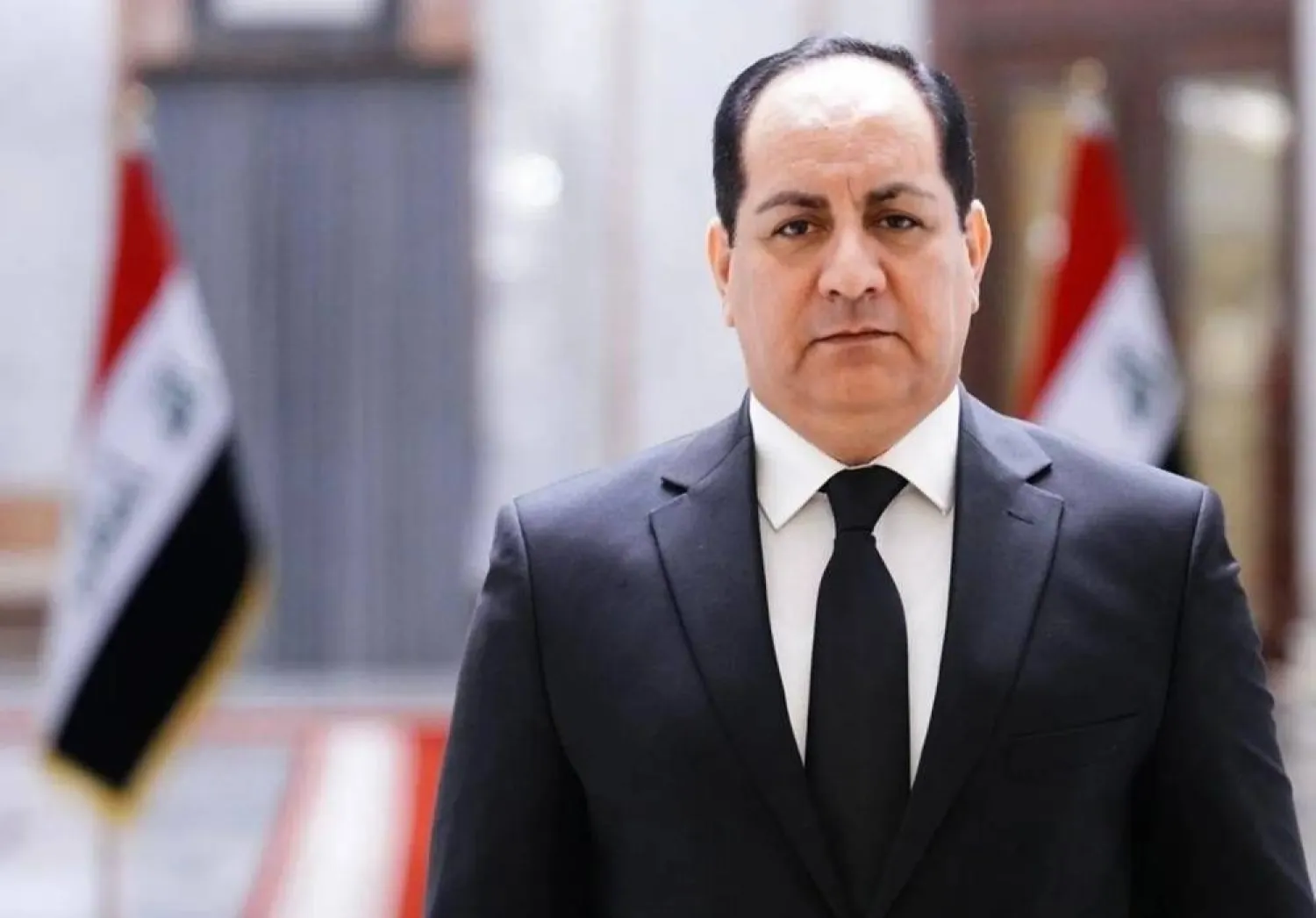

Iraq Vows No Leniency with Parties Harming Ties with Saudi Arabia

Iraqi government spokesman Bassem al-Awadi. (INA)
TT

Iraq Vows No Leniency with Parties Harming Ties with Saudi Arabia

Iraqi government spokesman Bassem al-Awadi. (INA)

Iraq said it was ready to cooperate fully in verifying any information about an attack on Saudi Arabia that was launched from its territory, renewing its condemnation of the incident and vowing measures to prevent any breach of Iraqi sovereignty.

The Iraqi government’s latest condemnation came a day after the Foreign Ministry denounced the attacks on the Kingdom, in what observers said signaled Prime Minister Ali al-Zaidi’s new government was keen to protect ties with Saudi Arabia and other Gulf states.

Saudi Arabia’s Defense Ministry said on Sunday it had intercepted and destroyed three drones after they entered the Kingdom’s airspace from Iraq.

Iraqi government spokesman Bassem al-Awadi renewed Baghdad’s condemnation on Tuesday, saying Iraq “reaffirms its firm and historic position in support of distinguished and lasting relations with brotherly and friendly countries of the region, its commitment to the security of Arab states, the importance of supporting stability, all efforts to ease tensions, and preventing attacks, whatever their source.”

“The Iraqi government condemns the recent drone attacks that targeted Saudi Arabia and affirms its continued joint efforts to strengthen regional security and safeguard the security and sovereignty of countries in the region,” he said.

Awadi repeated that the military authorities did not detect or record any activity from the country’s airspace, stressing, however, that Iraqi institutions were fully ready “to cooperate in verifying any information related to the circumstances of the attack that targeted the Kingdom.”

He stressed Iraq’s “categorical rejection of the use of its territory, airspace or territorial waters to launch any attack on neighboring countries.”

Awadi said Iraqi security forces had taken “all necessary steps and measures to thwart and uncover any attempt in this context,” adding that there would be “no leniency toward anyone who tries to violate the sovereignty of the Iraqi state or damage relations with the Kingdom, neighboring countries or brotherly states.”

Observers are now raising questions over how Zaidi will deal with pro-Iran armed factions and confront their activities at home and abroad, particularly under continued US pressure.

In recent months, after the outbreak of the US-Israeli war against Iran, factions launched hundreds of attacks on targets inside Iraq, most of them in the northern Kurdistan region.

They also carried out attacks on more than one country in Iraq’s regional neighborhood. Those attacks stopped during the ceasefire, before resuming with three drones over Saudi territory.

Many believe the factions’ latest attacks pose a serious challenge to Zaidi’s authority. The prime minister, whose government was approved by parliament last week, has received clear US, domestic and Arab backing, a development that was not welcomed by the factions, which are seeking to embarrass him at the start of his tenure in Iraq’s top executive post.


Lebanon’s Ambassador to Asharq Al-Awsat: Saudi Decision on Exports Came after Beirut Met Standards

Saudi Crown Prince Mohammed bin Salman and Lebanese President Joseph Aoun at Al-Yamamah Palace in Riyadh, Nov. 3, 2025 (SPA)
TT

Lebanon’s Ambassador to Asharq Al-Awsat: Saudi Decision on Exports Came after Beirut Met Standards

Saudi Crown Prince Mohammed bin Salman and Lebanese President Joseph Aoun at Al-Yamamah Palace in Riyadh, Nov. 3, 2025 (SPA)

Lebanon’s ambassador to Riyadh said Saudi Arabia’s decision to resume imports from Lebanon came after Beirut met the required standards to ensure the goods posed no risk.

The diplomat said the fight against drugs had involved intensive work and high-level security and political coordination between the two countries.

Saudi Crown Prince and Prime Minister Mohammed bin Salman on Wednesday ordered the resumption of Lebanese exports to the Kingdom at the request of Lebanese President Joseph Aoun and Prime Minister Nawaf Salam.

The move followed what were described as positive steps by Lebanon’s government to rebuild state institutions, work by specialist teams over the past year, Beirut’s cooperation and the required pledges it had made.

In a phone interview with Asharq Al-Awsat on Thursday, Ambassador Ali Karanouh welcomed the Crown Prince’s decision, saying it reflected “the depth of the brotherly and historic relations between the two countries, and the Saudi leadership’s keenness to support Lebanon, its institutions, economy, and people, especially in these difficult circumstances.”

‘A lifeline’

Karanouh said Lebanon was going through a period in which it needed “a lifeline,” adding that the step “is not surprising from Saudi Arabia, which has always stood by Lebanon.”

He cited Riyadh’s role in the Taif Agreement that ended Lebanon’s civil war, as well as its support during reconstruction and recovery.

The ambassador said Lebanese people were grateful for the decision, which he said would benefit agriculture, industry, trade, and services, and help Lebanon regain access to one of the most important Arab and Gulf markets at a time when it badly needs support.

He said the decision was the result of efforts that began with Aoun’s election and the formation of Salam’s government.

Saudi Crown Prince Mohammed bin Salman and Lebanese Prime Minister Nawaf Salam in Makkah on March 30, 2025. SPA

Intensive security coordination on drugs

Karanouh said the new Lebanese government “showed from the first day its determination to return Lebanon to its natural place among its Arab brothers, after a period of distance caused by political choices that were not in its interest.”

He said the government had repaired relations with Arab states, especially Gulf countries, on the basis that Lebanon is an integral part of its Arab surroundings.

He said Beirut was determined from the start not to allow Lebanon to be used as a platform to harm Arab countries. The anti-drug file, he added, had seen intensive work and security and political coordination at the highest levels between Lebanese and Saudi authorities.

Karanouh said Saudi authorities had appreciated Lebanon’s efforts, including tighter controls at border crossings, airports and ports.

Those efforts, he said, continued for about 18 months and helped restore confidence in Lebanon and its institutions, turning the page on a period that had damaged the country’s reputation and foreign relations.

Lebanon, he said, was now on the right path.

Karanouh said the decision to resume Lebanese exports to Saudi Arabia was a major step that would benefit Lebanon’s economy and economic cooperation between the two countries. He said it came after Lebanon met the required standards, ensuring Lebanese exports posed no danger to brotherly countries.

The ambassador said Lebanese exporters were ready to enter the Saudi market and that the remaining technical and procedural issues were minor and could be resolved easily.

He said the Saudi decision would push bilateral ties into a broader phase, whether through the signing and activation of partnership agreements or through the Saudi-Lebanese Business Council, whose formation was completed months ago.

He expressed hope that the move would be followed by the return of Saudi flights and Saudi tourism to Lebanon when conditions allow.

Broad welcome in Lebanon

The Crown Prince’s decision was widely welcomed across Lebanon, nearly five years after Saudi Arabia halted all Lebanese imports, citing at the time “the importance of taking all necessary measures to protect the security of the Kingdom and its people.”

Saudi Foreign Minister Prince Faisal bin Farhan conveyed the Drown Prince’s directive in a phone call with Salam on Wednesday. He affirmed Saudi Arabia’s support for Lebanon’s stability, sovereignty over all its territory and the well-being of its people, as well as Riyadh’s confidence that Lebanon would take all necessary measures to ensure it is not used as a platform to harm its brothers.

Aoun expressed deep gratitude to Prince Mohammed bin Salman, saying the decision was “a sincere expression of the depth of Arab brotherhood that binds the two brotherly countries, and an embodiment of the wise Saudi leadership’s keenness to support Lebanon and its people during the phase of recovery and revival it is undergoing.”

Aoun said: “This kind step will make a tangible contribution to reviving the national economy and supporting broad segments of Lebanese producers and exporters.”

He added that the entire Lebanese people appreciates the decision, and “views it as a gesture that strengthens the path of Lebanese-Saudi relations rooted in the bonds of history and shared destiny.”

Salam said the decision to lift the ban on Lebanese exports reflected the depth of the brotherly and historic ties between the two countries. He said it embodied Saudi confidence in Lebanon and a shared desire to strengthen economic and trade cooperation.

Salam said the move was an important step that would support Lebanon’s economy, open new opportunities for Lebanese producers and exporters, and help promote growth and stability.

He said Lebanon looked forward to continued work and coordination with Saudi Arabia to strengthen cooperation and partnership in various fields for the benefit and prosperity of both countries.


GCC Secretary-General Condemns Iranian Attacks on Bahrain, Kuwait, and Jordan

Secretary-General of the Gulf Cooperation Council (GCC) Jasem Albudaiwi. SPA
TT

GCC Secretary-General Condemns Iranian Attacks on Bahrain, Kuwait, and Jordan

Secretary-General of the Gulf Cooperation Council (GCC) Jasem Albudaiwi. SPA

Gulf Cooperation Council (GCC) Secretary-General Jasem Albudaiwi expressed his strongest condemnation of the repeated hostile Iranian attacks targeting the Kingdom of Bahrain, the State of Kuwait, and the Hashemite Kingdom of Jordan.

Albudaiwi stated that Iran's continued targeting of civilian facilities and vital infrastructure undermines international and regional efforts aimed at promoting security and peace and resolving ongoing crises, SPA reported.

He also reaffirmed the GCC’s full support for all measures taken by Bahrain, Kuwait, and Jordan to strengthen their security and protect their territorial integrity.


Saudi Arabia Condemns Iranian Attacks, Calls for Diplomatic Engagement

Firefighters work to extinguish fire in the aftermath of Iranian drone attacks, according to Bahrain's Interior Ministry, at a location given as Bahrain, in this handout image released on June 11, 2026. Ministry of Interior of the Kingdom of Bahrain/Handout via REUTERS
TT

Saudi Arabia Condemns Iranian Attacks, Calls for Diplomatic Engagement

Firefighters work to extinguish fire in the aftermath of Iranian drone attacks, according to Bahrain's Interior Ministry, at a location given as Bahrain, in this handout image released on June 11, 2026. Ministry of Interior of the Kingdom of Bahrain/Handout via REUTERS

Saudi Arabia strongly condemned on Thursday the repeated Iranian attacks on Jordan, Bahrain and Kuwait, and the continued violations of their sovereignty which “escalate tensions in the region.”

A Foreign Ministry statement called for “de-escalation, the avoidance of any further escalation, and the exercise of wisdom by returning to diplomatic engagement and continuing the constructive negotiations” sponsored by Pakistan, along with the efforts exerted by Qatar.

Such a move “spares the region and its people the consequences of the return of war and contributes to the restoration of security and stability in the region and the world,” the statement added.