
Petraeus Hands Washington 'Executive Plan' to Disarm Iraq's Armed Factions

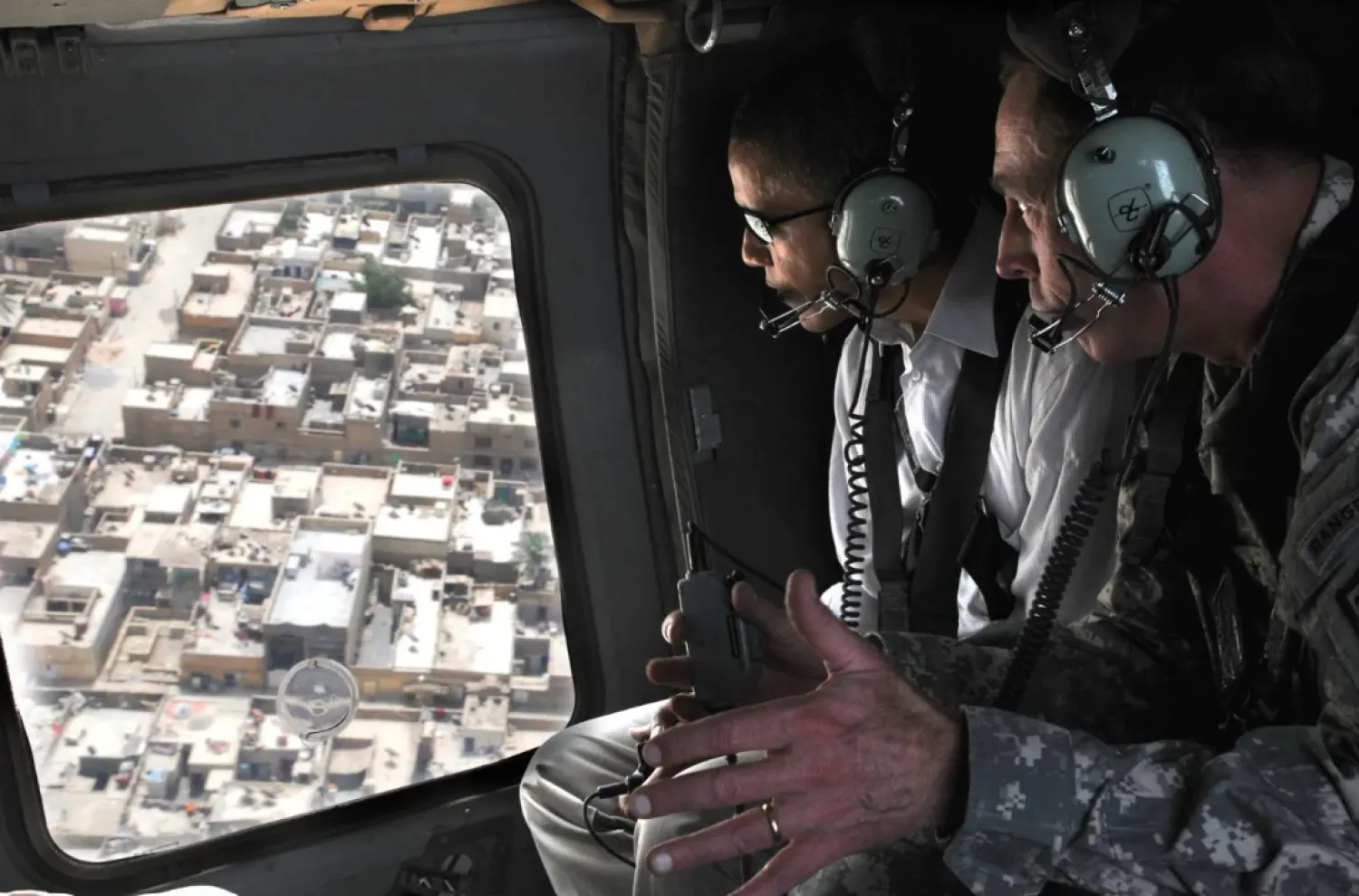
A 2008 photo released by the Pentagon shows David Petraeus briefing Barack Obama, then a US senator, on a plan to secure Sadr City in eastern Baghdad during an aerial tour over the area.
TT

Petraeus Hands Washington 'Executive Plan' to Disarm Iraq's Armed Factions

A 2008 photo released by the Pentagon shows David Petraeus briefing Barack Obama, then a US senator, on a plan to secure Sadr City in eastern Baghdad during an aerial tour over the area.

Iraqi officials said the United States has conditioned the integration of the Popular Mobilization Forces (PMF) on disarming armed factions, sidelining their leaders, and appointing professional officers to oversee the PMF’s infrastructure, a step Washington says is necessary because the force remains a major obstacle to restoring normal relations with Baghdad.

But Shiite groups said implementing the “bold plan,” which remains under discussion, would place Prime Minister Ali al-Zaidi’s government in an unequal confrontation with Iran and the factions linked to it, amid a lack of guarantees, warning of “internal divisions and unrest.”

What did Petraeus do in Baghdad?

The information disclosed by officials involved in technical and political discussions on the future of the PMF coincided with a visit by retired US General David Petraeus to Baghdad last week in his capacity as an “independent expert” providing advisory services to the White House.

After leaving Baghdad, Petraeus wrote on LinkedIn on May 17, 2026, that Iraqi officials he met “recognized the importance of ensuring that the Iraqi Security Services have a monopoly on the use of force in Iraq.” He added that he left Iraq “encouraged by what I heard, while also realistic about the dynamics with Iran.”

Asharq Al-Awsat learned that Petraeus spent five days in Baghdad, where he met senior Iraqi officials. The fate of PMF fighters was at the center of “serious discussions,” according to sources.

A US State Department spokesperson told Asharq Al-Awsat that Petraeus visited Baghdad as “a private citizen, nothing more.”

However, the level of meetings he held there, including with Iraq’s Chief Justice Faiq Zidan, Prime Minister Ali al-Zaidi, Parliament Speaker Haibat al-Halbousi, and Counter Terrorism Service chief Staff Lieutenant General Karim al-Tamimi, went beyond the nature of a personal visit.

An informed Iraqi source told Asharq Al-Awsat that “Petraeus’s meetings revolved around a single objective: reforming the military institution and ending the current PMF structure, while discussing realistic and practical mechanisms for integrating its members into the security institutions.”

Petraeus is among the most prominent commanders associated with the Iraq war after 2003. He gained experience through a range of field and strategic roles, most notably commanding the 101st Airborne Division during the invasion that toppled Saddam Hussein’s regime.

Petraeus now serves as partner and chief operating officer at KKR, a global investment management firm. Information available on the company’s website indicates that its activities are expanding across Middle Eastern countries, with no reference to Iraq.

KKR did not respond to Asharq Al-Awsat’s requests for comment on the nature of Petraeus’s visit to Baghdad or whether the White House had assigned him an advisory mission there.

However, three government and political figures told Asharq Al-Awsat that the US general “has been tasked with drafting an actionable executive paper to be submitted to the White House at a later stage through US envoy to Syria Tom Barrack.”

People close to the new prime minister in Baghdad told Asharq Al-Awsat that “Ali al-Zaidi will discuss this sensitive issue with US President Donald Trump if a planned visit to the White House takes place.”

An Iraqi official who declined to be identified said that “the preliminary date could be set after Eid al-Adha in June,” noting that “the timing could be affected by the course of negotiations between Washington and Tehran.”
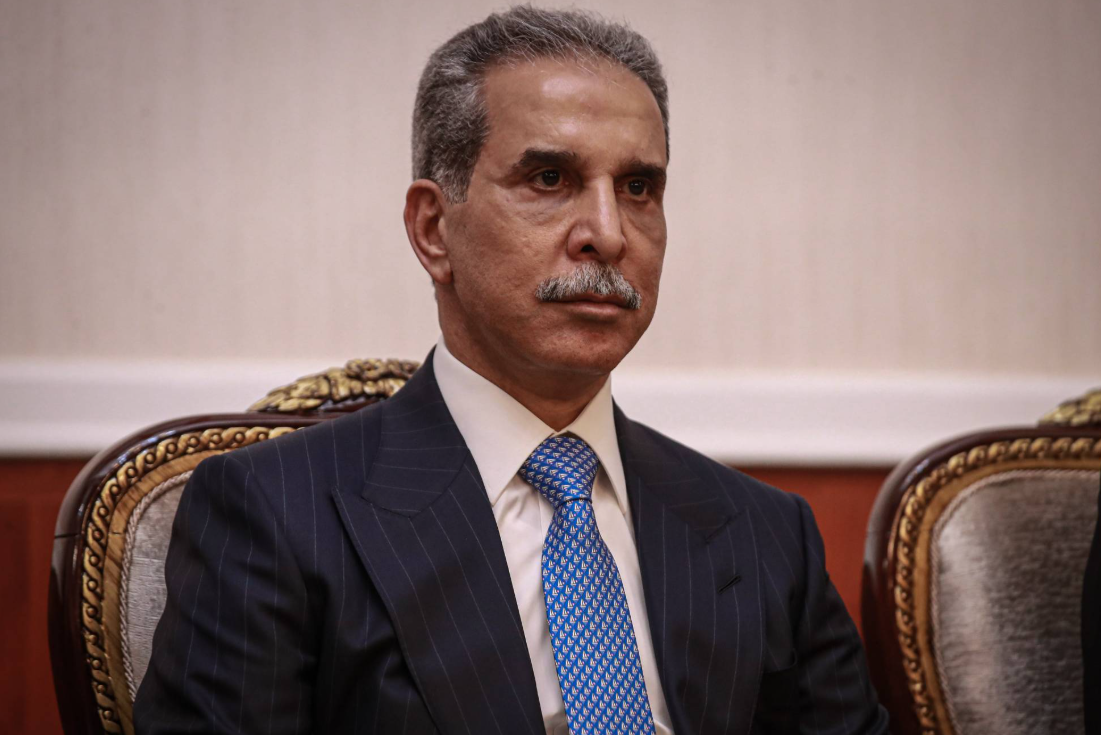
General David Petraeus began his visit to Baghdad with a meeting with Iraq’s Chief Justice, Faiq Zidan (DPA).

“A Danger That Could Blow Up in Your Face”

A person familiar with the discussions held during Petraeus’s meetings said that “some Iraqi officials spoke to the US general as though they were speaking directly to President Trump. They displayed unusual candor about their concerns over the potential consequences of plans for the Popular Mobilization Forces that remain largely theoretical at this stage.”

Another source said that “the US general listened more than he spoke during his meetings with Iraqi officials, but he was clear about what Washington wants: eliminating the source of the regional threat.” Nevertheless, “the general left Baghdad without complete confidence in Baghdad’s ability to resolve the problem in line with the US vision.”

Two Western diplomats, who spoke to Asharq Al-Awsat on condition of anonymity, said that “US confidence declined sharply during the final months of Sudani’s government because of what was viewed as leniency toward attacks by armed factions during the war. The current prime minister may now pay the price when he is asked to provide stronger security and political guarantees regarding the enforcement of state sovereignty.”

As attacks on Gulf states continued, and with the United States accusing the previous Iraqi government of providing official cover for these groups, the Popular Mobilization Forces and the armed factions associated with them have become “a knot that is difficult to untangle.” An Iraqi official said the issue is “a danger that must be dealt with, but when you get close to it, it could blow up in your face.”

Washington hopes that the new prime minister, Ali al-Zaidi, a businessman whose commercial activities are rumored to have prospered under the shadow of politics, will be able to distance his government from Iranian influence. It sees the issue of weapons outside state control as a test of whether trust can be maintained and support resumed, but the task will not be easy, according to a person close to him.

A person familiar with political consultations concerning the Popular Mobilization Forces said that “Petraeus did not answer questions raised by Iraqi officials about whether there would be sufficient backing to confront Iran if the Popular Mobilization Forces were dissolved.”
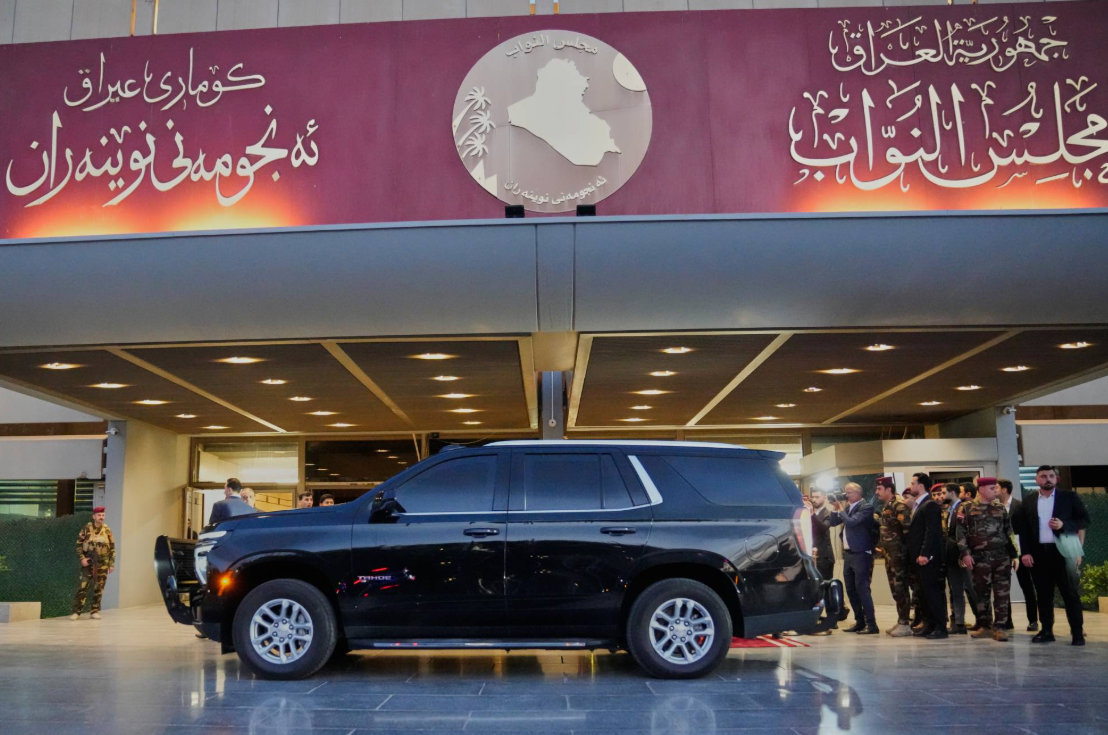
Shiite forces are pushing to refer the future of the Popular Mobilization Forces to parliament for discussion rather than addressing it under US pressure (AP).

Baghdad ‘Buys Time’

For Shiite leaders in Iraq, the Popular Mobilization Forces (PMF) are “a matter of destiny” and “a red line that cannot be crossed,” according to officials close to the factions. But the organization has become caught in intense regional polarization since the events of Oct. 7, 2023, and has been directly involved in the recent conflict between the United States and Iran.

Figures close to the armed factions have appeared on television warning of “retaliation against any government or political official who participates in a project to integrate or dissolve the PMF.”

A leader of an armed faction told Asharq Al-Awsat that “Iran recently urged them to resist the US effort aimed at dismantling the largest military force safeguarding its interests in the region.”

He added: “Generals from the Revolutionary Guards who play supervisory roles within Shiite factions, including those who run the Islamic Resistance in Iraq operations room, will put obstacles in the way if moves are made toward dissolving the PMF.”

According to an Iraqi lawmaker close to Kataib Hezbollah, the PMF is an institution operating under a law passed by the Iraqi parliament in 2016, and dissolving it would now require a parliamentary vote.

Shiite armed groups maintain influential political wings in the Iraqi parliament. Estimates suggest they hold around 80 seats, while the ruling Shiite alliance, the Coordination Framework, enjoys a comfortable majority of about 180 seats in the 329-member legislature, giving it substantial influence over the legislative process.

Two members of the Coordination Framework told Asharq Al-Awsat that “most leaders of the Shiite alliance informed the prime minister that they agree on the risks posed by the factions, but resolving the issue requires national dialogue and an incentives plan as part of a broader strategy involving the religious authority in Najaf, given the sensitivity of the political and security balances associated with it.”

A Western adviser working in Iraq told Asharq Al-Awsat that “Washington has come to view such ideas as attempts to buy time, and warnings about the risks of dissolving the PMF are being used as a form of counterpressure against the United States.”

An Iraqi official also said that “US officials who held discussions with local officials before Petraeus’s talks in Baghdad made it clear that overlooking the PMF issue carries an extremely high cost.”
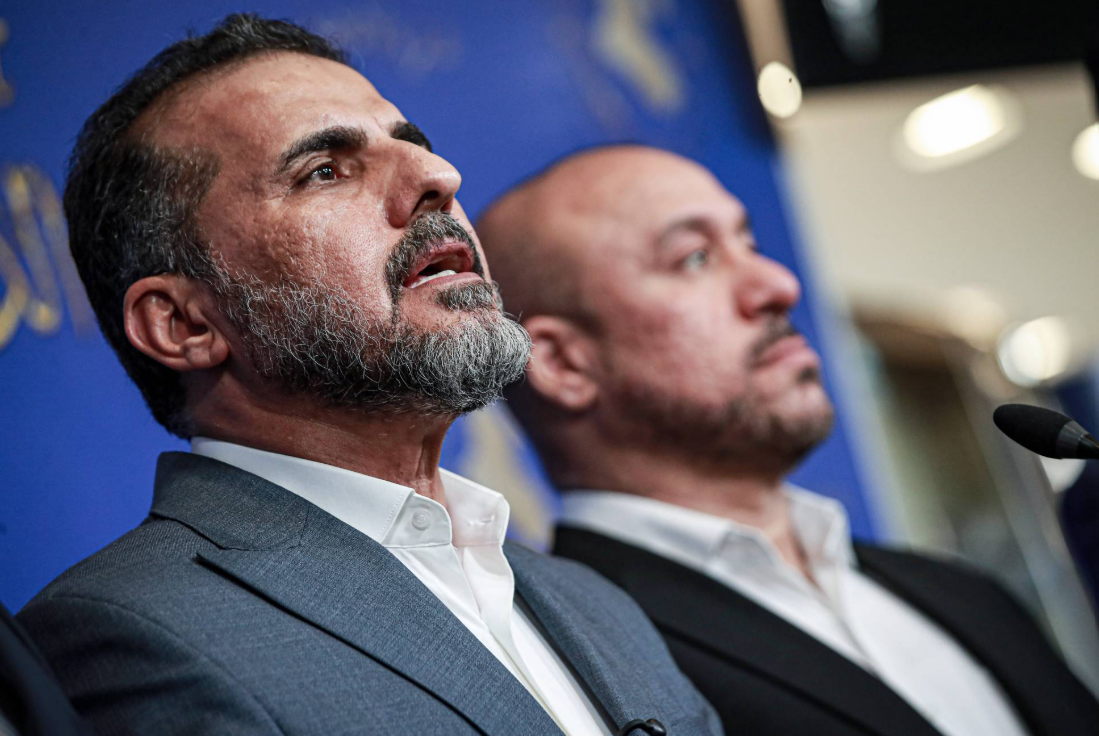
Hussein Mounes (left), head of the Huqooq Movement affiliated with Kataib Hezbollah, speaks to journalists in Baghdad on May 14, 2026, to announce his opposition to Ali al-Zaidi’s government (DPA).


“Fell on Deaf Ears”

On that basis, according to sources, the United States dismissed Iraqi proposals it viewed as cosmetic measures to integrate the Popular Mobilization Forces (PMF), restructure the organization, or change its leadership.

The Iraqi government, in its program approved by parliament, pledged to “define the responsibilities of the PMF within the military and security system.”

Al-Zaidi’s office declined to answer Asharq Al-Awsat’s questions about how the government intends to implement its program regarding the PMF and whether it has participated with the United States in any executive plans related to the issue.

According to five Iraqi and Western figures who spoke to Asharq Al-Awsat, proposals put forward by members of the Coordination Framework aimed at elevating the PMF and other factions into a new ministry or restructuring them within an administrative framework under the supervision of the prime minister “fell on deaf ears” in Washington.

Over the past week, figures close to Shiite groups appeared on local television channels promoting a proposal to establish a “Federal Security Ministry,” claiming it would serve as an umbrella for the PMF and other security formations, including the Rapid Response Forces and the Border Guards.

Informed sources told Asharq Al-Awsat that the United States is seriously focused on ensuring full Iraqi sovereignty over political and security decision-making and eliminating sources of threat that it describes as terrorist, so that Baghdad can live in peace with its neighbors.

It is widely believed in Baghdad that the recent attacks against Saudi Arabia and the United Arab Emirates are part of a dual-track campaign within the Revolutionary Guards’ regional strategy: linked to the ongoing conflict on one hand, and on the other an attempt at deterrence aimed at protecting the PMF’s position and preventing any reduction in its influence.

On May 18, 2026, Abu Mujahid al-Assaf, a security official in Kataib Hezbollah, said in a press statement that the faction was “prepared to respond to the United States on all fronts if leaders of the resistance and the Popular Mobilization Forces are targeted.”
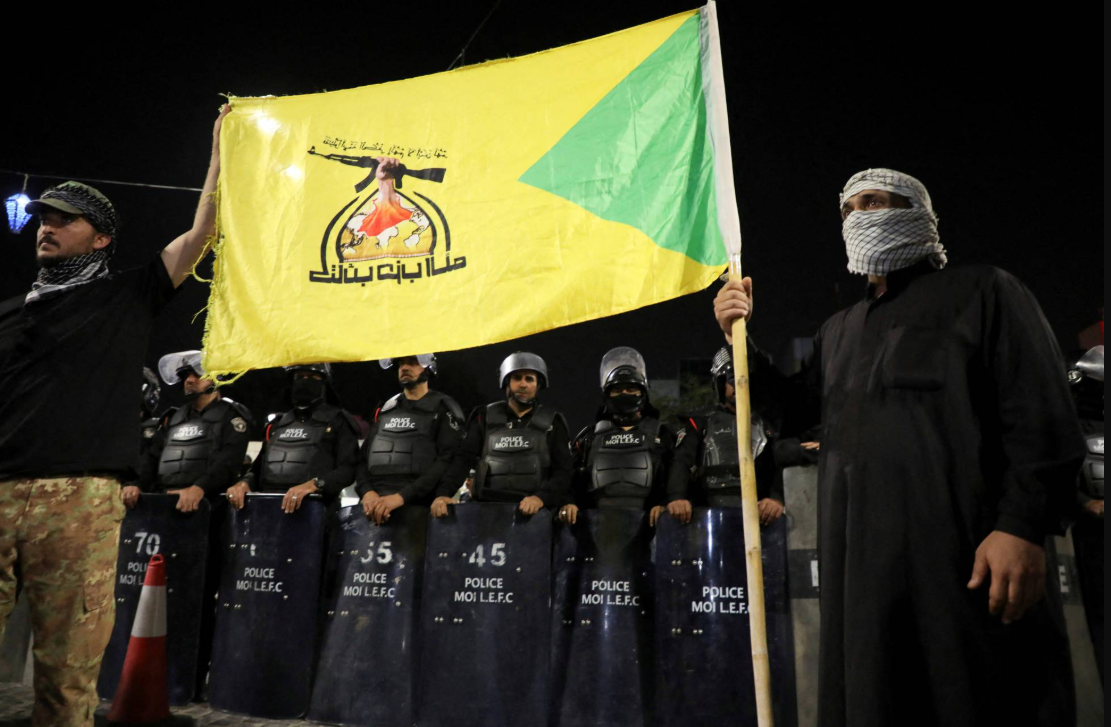
Two members of the Kataib Hezbollah faction carry the group’s flag in front of a riot police checkpoint in Baghdad (Reuters).


What Comes Next in Baghdad?

Nevertheless, two Iraqi figures said they expect “an initial phase to begin in the coming period,” involving the transfer of heavy and medium weapons to a trusted Iraqi security body agreed upon by the Iraqi government and the United States.

According to one of the two figures, the first phase would also include removing figures involved in attacks against the United States and its allies in the region, and appointing Iraqi generals to oversee the infrastructure associated with the Popular Mobilization Forces.

Asharq Al-Awsat learned that armed groups with political wings represented in parliament are negotiating to regain their share of positions in the Iraqi government after surrendering their weapons, but are seeking firm guarantees that they will be removed from the list of groups barred from participating in government.

Several ministerial posts in Ali al-Zaidi’s government remain vacant because of disputes within the Coordination Framework. However, some positions have been postponed indefinitely because of a US veto on election winners who maintain armed wings and have ties to Iran.




China Missile Test Deepens Pacific Divide Over Growing Militarization

The headquarters for the Pacific Islands Forum in Suva, Fiji, August 7, 2026. (Reuters)
TT

China Missile Test Deepens Pacific Divide Over Growing Militarization

The headquarters for the Pacific Islands Forum in Suva, Fiji, August 7, 2026. (Reuters)

China's test of a nuclear-capable missile last month has exposed the limits of Pacific leaders' ambition to make the region an "Ocean of Peace", free from the crossfire of major-power rivalry.

The July launch, China's first known ballistic-missile test into the Pacific since September 2024, was fired into the Pacific just hours after Fiji and Australia signed a major defense treaty, marking Fiji's first ever alliance.

More than a month after the test, Pacific Islands foreign ministers were unable to agree on a collective statement condemning Beijing's missile test, despite individual leaders expressing alarm, publicly and privately, about militarization of the region.

The test was "totally inappropriate", Papua New Guinea Foreign Minister Justin Tkatchenko told Reuters on the sidelines of the foreign ministers' meeting in Suva last week.

"China is a very close friend and ally to Papua New Guinea, but we feel this doesn't help at all," he said, adding that Beijing had given PNG advance notice of the launch but no details on where ‌the missile would ‌land.

At the time of the launch, Chinese Foreign Ministry spokesperson Mao Ning said it was ‌conducted "safely", ⁠adding: "We hope relevant ⁠countries will not over-interpret the matter."

The missile launch capped a year of more visible military activity across the Pacific, which is fiercely contested between the US and China for influence. That has included Chinese naval deployments and live-fire drills in the Tasman Sea, US-allied exercises around Guam and Hawaii, and a steady flow of warship visits linked to expanding security partnerships.

The United States, meanwhile, retains a substantial military presence across the region, including in Hawaii, Guam and the Marshall Islands.

Tuvalu permanent foreign secretary Pasuna Tuaga, who was speaking in a personal capacity, was concerned about growing militarization, not only because of the missile test but also security arrangements such as the AUKUS partnership between Australia, ⁠Britain and the United States.

UNITED, BUT DIVIDED

In September 2025, Pacific Leaders endorsed the Ocean ‌of Peace Declaration, which committed to safeguard the region, recognized the right of the ‌people to peace, and resolved to contribute to and strengthen international peace and security.

David Peebles of the Australian National University's Pacific Security College said ‌Pacific countries had long resisted having peace and security defined by outside powers and their competing Indo-Pacific strategies. The Ocean ‌of Peace initiative was an attempt to reclaim that agenda, he said.

The regional declaration inspired the defense pact signed between Australia and Fiji last month, known as the Ocean of Peace Alliance.

Australia's Department of Foreign Affairs and Trade did not immediately respond to a request for comment on concerns that the growing number of regional security pacts could further militarize the Pacific.

For many governments, security partnerships bring benefits: surveillance against illegal fishing, ‌disaster response, policing support and access to equipment and training. But critics fear a proliferation of bilateral arrangements could leave Pacific countries with little say over how their territory, waters and infrastructure ⁠are used.

Solomon Islands Foreign Minister ⁠Rick Houenipwela, who chaired the talks in Suva, said the region's agenda must remain "conceived by the Pacific, shaped by the Pacific and only by the Pacific."

Yet by the end of the one-day meeting, no unified statement in response to the missile test had emerged.

Kiribati and Nauru, which have deepened ties with Beijing since switching diplomatic recognition from Taiwan in 2019 and 2024 respectively, did not support the statement's wording, according to an official familiar with the discussions.

New Zealand Foreign Minister Winston Peters blamed foreign influence for the failure to reach consensus, without naming a country.

The impasse illustrates the central challenge facing these small island nations which have different economic, political and security interests.

In the northern Pacific, where the US has maintained a military presence for decades, some governments want deeper security engagement with the US while others remain wary.

Fiji Foreign Minister Sakiasi Ditoka said Pacific governments faced an unavoidable tension.

Countries wanted "to be free of all these war-making paraphernalia," he said, but also recognized that some security capabilities helped keep them safe. "I believe it's maintaining that balance."

Fiji for the first time participated last month in US-led war games in the Pacific known as RIMPAC.

Pacific leaders will meet in Palau in three weeks for the Pacific Islands Forum leaders meeting, where the missile test and regional unity are expected to return to the agenda.


One year after Putin-Trump Summit, 'Spirit of Anchorage' Dissipated

FILE - US President Donald Trump greets Russian President Vladimir Putin, Aug. 15, 2025, at Joint Base Elmendorf-Richardson, Alaska. (AP Photo/Julia Demaree Nikhinson, File)
TT

One year after Putin-Trump Summit, 'Spirit of Anchorage' Dissipated

FILE - US President Donald Trump greets Russian President Vladimir Putin, Aug. 15, 2025, at Joint Base Elmendorf-Richardson, Alaska. (AP Photo/Julia Demaree Nikhinson, File)

In the year since Donald Trump hosted Vladimir Putin on US soil for a summit designed to broker an end to Russia's offensive on Ukraine, the diplomatic initiative has fizzled out and the conflict has escalated.

For months, Russian officials talked up the "spirit of Anchorage" -- a supposed climate of detente, renewed dialogue with Washington and a framework for finding a way out of the deadliest European conflict since World War II, said AFP.

Now there are few traces of that atmosphere. US mediation efforts are at a standstill, both Russia and Ukraine are ramping up attacks and more civilians are being killed than at any point since the first months of the war.

- 'Ending the war'-

On August 15, 2025, Trump broke with the West's policy of isolating Putin, rolling out the red carpet as the Kremlin chief stepped off his plane at the Elmendorf-Richardson air base in Alaska.

It remains unclear what was decided or discussed behind closed doors.

Russia has always maintained some kind of understanding on a peace deal was struck -- "a compromise proposal", as Foreign Minister Sergei Lavrov called it.

Washington has rebuffed any talk of a deal being reached.

"There was a proposal in Alaska, but there was no agreement. If there had been an agreement, we would have had an end of the war," Secretary of State Marco Rubio said in June.

Moscow had hoped the summit would lay the foundations for a "lasting peace" by addressing what it calls the "root causes" of the conflict, said political analyst Sergei Markov -- designated a "foreign agent" but still close to the Russian authorities.

For years -- including right before launching its offensive in February 2022 -- Russia has called for a new overarching security deal with the United States over Europe, NATO and arms control.

The "compromise" Russia tabled in Alaska, Markov told AFP, was to limit its territorial claims on Ukraine to the eastern Donbas region in exchange for recognition of Russia's new borders by Washington and the lifting of sanctions.

- Disenchantment -

Those Russian demands were included in a 28-point document drafted by the United States -- later cut down to 19 -- after separate negotiations with Kyiv and Moscow.

The document was never published officially and never came to fruition.

US-brokered direct talks between Russia and Ukraine in early 2026 broke down, chiefly over the issue of territory.

Ukraine refuses to cede land it still controls and wants an immediate ceasefire along the current front line, with territorial status to be decided during fuller peace talks.

And since late February, Washington's attention has been consumed by the war on Iran.

Trump has since issued fresh sanctions on Russia and the last remaining nuclear arms control agreement -- New Start -- has been allowed to lapse.

Having once sensed a window of opportunity to press its demands and been at pains to praise Trump's efforts, Russia has lately allowed itself to publicly question Washington's commitment to diplomacy.

"I don't even want to imagine that Alaska ... was conceived to gain time in order to strengthen Ukraine militarily," Lavrov said in June.

A meeting between Lavrov and Rubio in Manila in July -- their first since September 2025 -- lasted only around 30 minutes.

"We'll have to find new suggestions and new ideas" that both "Russia and Ukraine can agree to," Rubio said after that meeting.

"That's going to require a lot of work," he added.

- Escalation -

The two sides' conditions for peace are irreconcilable.

Russia demands territory alongside political and military concessions that Ukraine rejects as capitulation.

At the same time, both are convinced force can improve their negotiating position.

"The Russian armed forces will continue their mission to liberate the Donbas and Novorossiya in line with the approved plan," Russia's army chief Valery Gerasimov told Putin in a televised meeting in early July -- referring to land stretching across eastern and southern Ukraine.

Buoyed by European support, Kyiv is banking on its long-range strike campaign to tip Russia's economy and society over the edge.

Its attacks triggered a nationwide fuel crisis over the summer, and have forced Moscow-installed authorities to put the annexed Crimean peninsula under a local "state of emergency".

Russia has upped its missile attacks on Kyiv, killing dozens there in recent weeks.

It has also brought Ukrainian exports through the Black Sea to a standstill through a campaign of port and ship strikes.

"The spirit of Anchorage has dissipated," said Russian political analyst Fyodor Lukyanov -- close to the ruling elite -- in August.

The result? "Brutal escalation."


Pleasing No One: Netanyahu Puts Election First with Gaza Decision

Israeli Prime Minister Benjamin Netanyahu speaks during a press conference in Jerusalem on March 19, 2026. (AFP)
TT

Pleasing No One: Netanyahu Puts Election First with Gaza Decision

Israeli Prime Minister Benjamin Netanyahu speaks during a press conference in Jerusalem on March 19, 2026. (AFP)

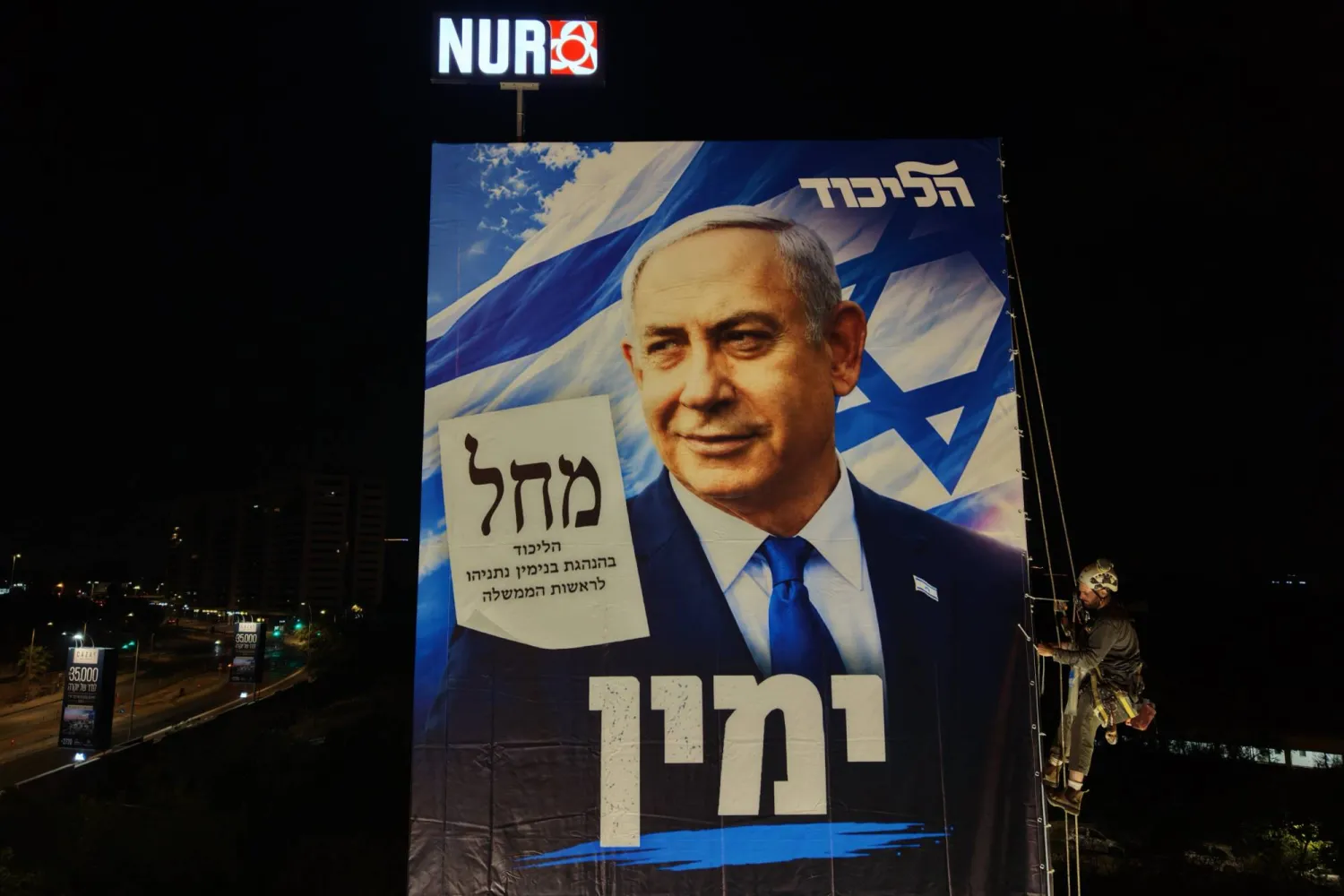
Faced with a divisive US-led Gaza plan just before elections that could end his career, Israeli Prime Minister Benjamin Netanyahu had to choose between pleasing his ally Donald Trump or his right-wing base.

In rejecting the plan, he may not please anyone.

The decision is a tactical and PR victory for Hamas, analysts say, with the movement publicly backing the deal under which it would disarm, without taking any steps yet to do so.

Netanyahu, who has built his decades-long career on hawkish security positions, had voiced concerns but softly after the US president on July 30 hailed what he called the historic milestone on ending the Gaza war.

He finally rejected the plan Sunday during a cabinet meeting after pushback from the far-right, which strongly opposes the 15-point deal that would see Israel eventually withdraw troops from much of Gaza.

Netanyahu, Israel's longest-serving prime minister, is by nature "a procrastinator" and is struggling to secure the trust of the hard-right ahead of the October 27 vote, said Yossi Mekelberg, an expert on Israeli politics at London-based think tank Chatham House.

Netanyahu's calculation is to dissuade votes for the opposition by creating the impression that he is "still the only bastion of power that will stop Hamas", Mekelberg said.

"Netanyahu knows that falling out with Trump doesn't serve him or Israel. On the other hand, he knows the minute that he agrees to the 15 points, he would be attacked not only by the right wing, but that some opposition parties will attack him, too," he said.

"He's trying to appease everyone. At the end of the day, he will be appeasing no one."

- Cooperating despite rejection -

Israel will be voting for the first time since the trauma of Hamas's October 7, 2023, attack, the deadliest ever against Israel, which retaliated with an overwhelming offensive in Gaza.

Despite Netanyahu's public rejection of Trump's plan, Israel in practice appears to be complying with a key part of it. Israel has stopped air strikes since August 3, although Gaza authorities report periodic Israeli gunfire.

"These strikes could be resumed and even intensified at any time. It is one of the cards Israel can maneuver with," said Ehud Eilam, a former analyst at Israel's defense ministry.

He noted that Israel had not succeeded in its goal of completely destroying Hamas after October 7.

"Therefore, Israel at least seeks to disarm Hamas, which is also a very difficult task," Eilam said.

"Hamas will anyway refuse to completely disarm, and for now can continue to use Netanyahu as an excuse to avoid or at least slow down this process," he said.

Netanyahu had long campaigned on his close rapport with Trump, who has taken unprecedented steps such as moving the US embassy to Jerusalem and joining Israel in attacking Iran.

But Trump's popularity in Israel took a nosedive in April when he called a ceasefire with Iran and sought a settlement, seeing the Middle East war as politically and economically damaging.

Netanyahu could be willing to take some steps forward on Gaza to please Trump in return for new US action against Iran, Eilam said.

"For Netanyahu, the Gaza Strip, and Lebanon too for that matter, are not the most urgent concerns; Iran is," he said.

- Tactical win for Hamas -

Hamas publicly backed the disarmament agreement shortly after it chose a new leader, Khalil al-Hayya.

"I think Hamas, from the get-go, did this for tactical reasons," said Ghaith al-Omari, a former Palestinian Authority official who is now a senior fellow at the Washington Institute for Near East Policy.

He said that Hamas wanted to be seen as a "reasonable actor" -- and that Netanyahu's rejection worked in its favor.

"What this does is actually give Hamas and mediators reason to say, look, Hamas has committed, Israel has not committed -- the ball is in Israel's court," he said.

"It lets the pressure off Hamas."