Israel Military Issues Evacuation Warning for Lebanese City of Nabatiehhttps://english.aawsat.com/arab-world/5277404-israel-military-issues-evacuation-warning-lebanese-city-nabatieh
Israel Military Issues Evacuation Warning for Lebanese City of Nabatieh
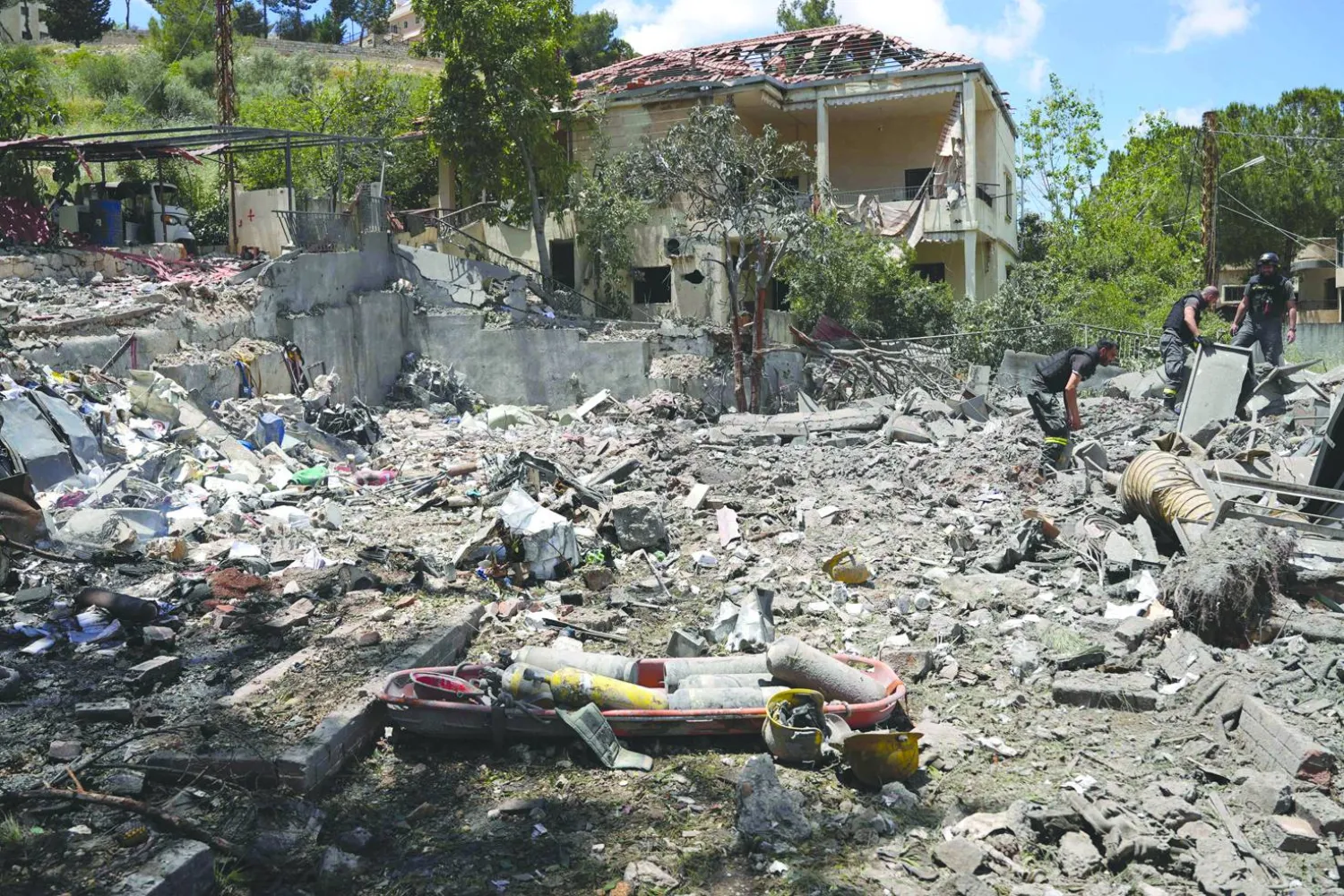
Emergency workers look to recover equipment from a civil defense center damaged in an Israeli air strike on the southern Lebanese city of Nabatiyeh on May 24, 2026. (Photo by Abbas Fakih / AFP)
Israel Military Issues Evacuation Warning for Lebanese City of Nabatieh
Emergency workers look to recover equipment from a civil defense center damaged in an Israeli air strike on the southern Lebanese city of Nabatiyeh on May 24, 2026. (Photo by Abbas Fakih / AFP)
The Israeli military for the first time warned residents of the southern Lebanese city of Nabatieh to immediately evacuate on Tuesday ahead of expected strikes, while Hezbollah said it confronted Israeli troops in a nearby town.
The day before Israeli Prime Minister Benjamin Netanyahu ordered his military to intensify attacks on Hezbollah to "crush" the Tehran-backed group.
"For your safety, you must evacuate your homes immediately and move north of the Zahrani River. Anyone who is near Hezbollah members, facilities or military equipment is putting their life at risk!" the military's Arabic-language spokesman, Avichay Adraee, posted on X, AFP reported.
Largely deserted since the start of the latest Israel-Hezbollah war on March 2, Nabatieh has faced relentless strikes despite an April 17 truce.
Lebanon's state-run National News Agency (NNA) also reported several Israeli strikes across the south.
Evacuation warnings near the southern city of Tyre on Monday caused mass panic and an exodus of residents of the historic city, according to an AFP correspondent.
Strikes also hit the town of Mashghara in the east, according to the NNA.
The Israeli military said on Tuesday it had bombed more than 100 Hezbollah targets overnight.
Hezbollah meanwhile said in a statement that its fighters repelled an Israeli force early Tuesday that had advanced toward Zawtar al-Sharqiyah, which overlooks Nabatieh, following airstrikes and heavy artillery fire.
The group said it used drones and was fighting with Israeli soldiers in the town.
Netanyahu had last night ordered "an even greater acceleration of our operations" against Hezbollah.
"It is true that they are attacking us with drones, including fibre-optic drones, but we have teams working on countermeasures and we will solve this issue... We will intensify our blows, increase our firepower, and we will crush them."
Israel has repeatedly bombed Lebanon despite the ongoing truce, saying it is targeting Hezbollah, while the latter has claimed several attacks on Israeli positions in southern Lebanon and Northern Israel.
More than 3,100 people have been killed by Israeli strikes since March 2, according to Lebanon's health ministry.
Days before Israeli Election, Military Conducts Massive West Bank Operationhttps://english.aawsat.com/arab-world/5333383-days-israeli-election-military-conducts-massive-west-bank-operation
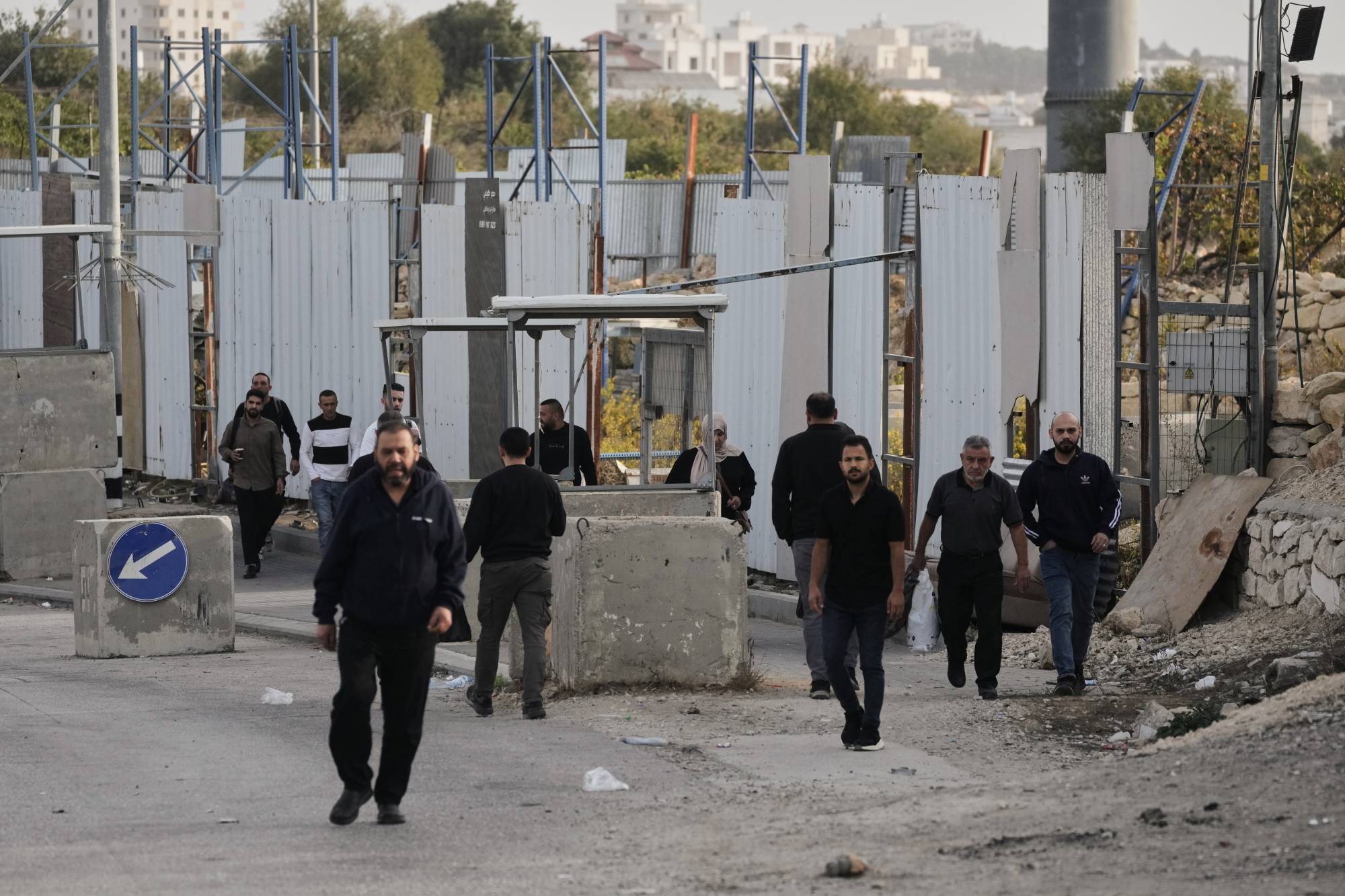
Palestinians cross on foot past a military gate closed to vehicles during an Israeli army operation in Hebron in the occupied West Bank Saturday, Oct. 24, 2026, a day after a Palestinian shooting attack in the area. (AP)
Days before Israeli Election, Military Conducts Massive West Bank Operation
Palestinians cross on foot past a military gate closed to vehicles during an Israeli army operation in Hebron in the occupied West Bank Saturday, Oct. 24, 2026, a day after a Palestinian shooting attack in the area. (AP)
The Israeli military continued a massive military operation in the occupied West Bank on Sunday, displacing hundreds of Palestinians and placing major restrictions on movement in response to a gun attack that killed two Israeli soldiers and wounded three others in Hebron on Friday.
The operation comes as Israel enters the final days before a tense election, which is largely seen as a referendum on current Prime Minister Benjamin Netanyahu’s leadership and security policies during the past three years of war, The Associated Press said.
Most Palestinian workers with permits will not be allowed to enter Israeli settlements for work in the occupied West Bank on Sunday and Monday, and crossings into Israel will remain closed until after Israel’s elections on Tuesday, the Israeli military said.
The military said it operated in more than 400 different locations over the weekend and arrested 40 Palestinians it claimed were affiliated with Hamas or Palestinian Islamic Jihad. It said the operation is continuing at the same intensity on Sunday.
Thousands of Palestinians displaced from Hebron
The Hebron municipality said the operation displaced more than 2,200 people, including nearly 300 children under the age of 18.
The military said that troops were conducting searches in the area where the gunmen operated, and warned residents to evacuate Deir Bahha, the suspected gunmen’s neighborhood. After Friday’s attack, Israel’s military said it found weapons in the gunmen’s car and that they were likely planning to attack Israeli civilians before being stopped at the checkpoint.
All entrances and exits to the city remained sealed, with the epicenter of the operation in Deir Bahha and another part of the city called Al-Jalda, according to Hebron Mayor Yousef Zuhair Al-Jabari.
“People cannot reach or enter the city, and they cannot leave it. The blockade has affected every aspect of life,” Al-Jabari said. He added that the blockade is forcing businesses to close and has also shuttered a mosque.
“The army told us that this area would be closed for 12 days. Now they’re saying 12 days, but maybe they’ll leave the area after two or three days,” said Shadi al-Qawasmi, a Hebron resident who was displaced with his family. “This may be because of the elections or some political matter no one knows except God Almighty.”
The operation forced some families to navigate crossings on foot in order to leave Hebron after the roads were closed to traffic. At some military gates, people passed sacks of flour and gas canisters through the gates, while an elderly man pushed his wife in a wheelchair through an opening beside one of them. Another family attempted to navigate the gate to access medical appointments.
Netanyahu vows a strong response as elections loom Hebron municipal officials said families had been displaced from nearly 500 apartments in Deir Bahha and surrounding neighborhoods.
Six Israelis have been killed this year in attacks in the West Bank, which is experiencing a surge of violence. During the same period, 112 Palestinians have been killed, including the suspected gunmen, according to the Ramallah-based Palestinian Health Ministry.
The attack sparked outrage in Israel, with Netanyahu and three members of his right-wing government giving statements from the site of the attack on Friday afternoon, vowing to respond forcefully. “We warned a few weeks ago about attempts by our enemies to harm us, our citizens and our soldiers ahead of the election,” Netanyahu said. “We will act to destroy this place.”
Netanyahu is under pressure to demonstrate a strong show of force against Palestinian attackers to bolster his image for Israelis concerned with security.
Roughly 3 million Palestinians and 540,000 Israeli settlers live in the West Bank, which Israel occupied in the 1967 Mideast war. Hebron is one of its most tense cities and the only place where Jewish settlers live in the heart of a densely populated Palestinian area under Israeli military protection.
Israel to Close All Land Crossings with West Bank on Election Dayhttps://english.aawsat.com/arab-world/5333333-israel-close-all-land-crossings-west-bank-election-day
Israeli soldiers stand guard at the site of a shooting on Friday in Hebron, in the Israeli-occupied West Bank, October 24, 2026. (Reuters)
TT
TT
Israel to Close All Land Crossings with West Bank on Election Day
Israeli soldiers stand guard at the site of a shooting on Friday in Hebron, in the Israeli-occupied West Bank, October 24, 2026. (Reuters)
Israel said Sunday all land crossings with the West Bank will be closed on the day of next week's election, as it pledged a harder line on militancy after Palestinian gunmen killed two soldiers in the territory.
The announcement came a day after Israeli forces pushed into the occupied West Bank city of Hebron and displaced around 2,000 residents, with Defense Minister Israel Katz saying, "they will not be allowed to return... until we've finished dealing with all the Hamas issues in Hebron".
Hamas, while not claiming credit, hailed Friday's killings at a checkpoint near the Palestinian city, in which attackers shot dead two Israeli soldiers and wounded three more.
Prime Minister Benjamin Netanyahu vowed to exact a heavy price for the attack just days before polls and said he was planning an operation on a scale not seen since Israel first occupied the West Bank in 1967.
The Israeli army said that, from Sunday, Palestinians would "not be permitted to enter Israeli communities in Judea and Samaria and the Jordan Valley for work", using terms many in Israel use to refer to the West Bank.
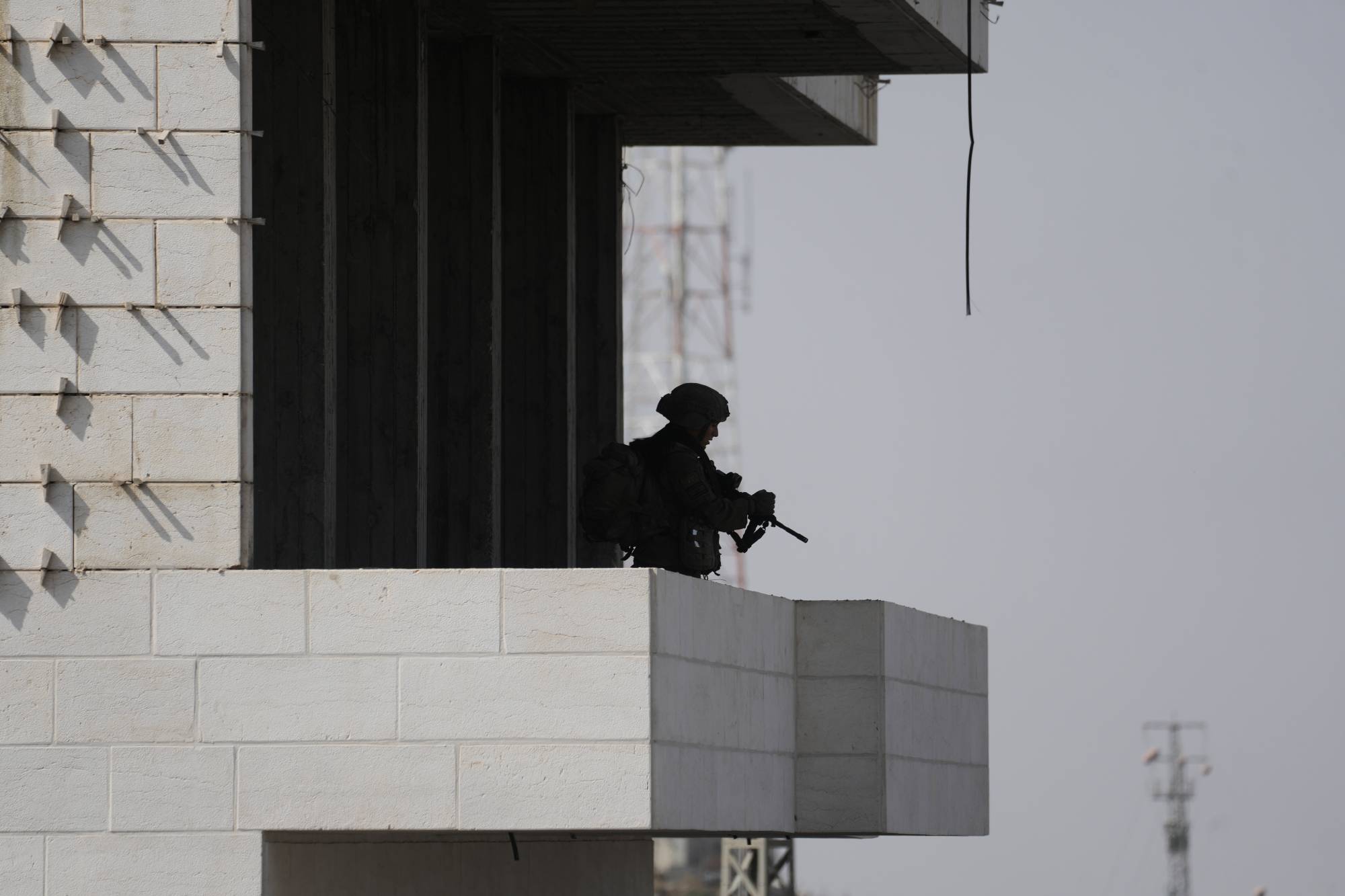
Israeli soldiers take up positions during an army operation in the West Bank city of Hebron Saturday, Oct. 24, 2026. (AP)
The army also said it would enforce "a ban on the entry and exit of Palestinian workers throughout Judea and Samaria and the Jordan Valley, including industrial zones, as well as the closure of all land crossings throughout Election Day" on October 27, it added.
Israel's longest serving prime minister Netanyahu is facing a tight race for a new term in Tuesday's polls, with his security-first reputation all but shattered by Hamas's October 7, 2023 attack.
The Palestinian Authority, the semi-autonomous body that governs parts of the West Bank in cooperation with Israel, called for international pressure on Israel to protect residents affected by the military operation.
The Israeli army said that over Friday and Saturday, it operated in 40 areas throughout the territory, with locals reporting that soldiers announced evacuations over loudspeakers late at night.
Israeli forces said they "apprehended approximately 40 suspects, including terrorists affiliated with the Hamas and Islamic Jihad terrorist organizations".
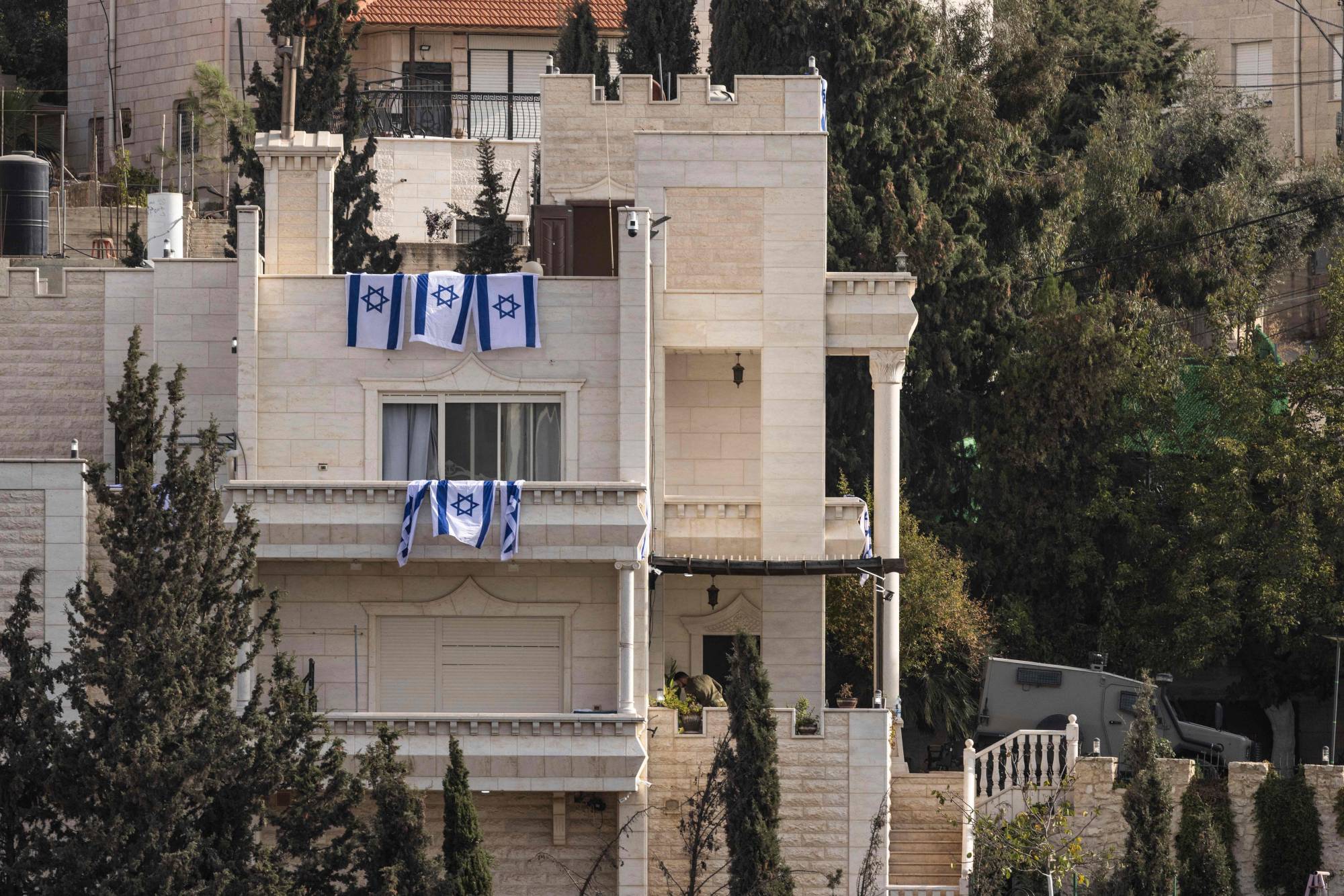
Israeli flags hang from a house after the Israeli army forced Palestinians to evacuate the Ein Deir Baha neighborhood in occupied West Bank city of Hebron on October 24, 2026. (AFP)
- 'Painful price' -
In the Hebron neighborhood of Ein Deir Baha, nestled between two hills, vacated buildings were marked by X's and the streets were deserted, save a pair of Israeli military vehicles.
Israeli flags were draped on a house on the slope apparently taken over by troops.
Higazi Shawer al-Tamimi, 70, a shopkeeper who plays a leadership role in the neighborhood, said he was awakened at 1:00 am by soldiers and a senior officer who said he had to leave.
"I asked them how long the evacuation would last. They said: 'Until further notice.'"
He told AFP he had only a short time to pack, adding that for some residents, getting out of the neighborhood was an ordeal.
"For example, my wife's mother, who is 90 years old and lives in the area, had to be carried out because she is ill," he said.
Right-wing Finance Minister Bezalel Smotrich, who also holds a position in the defense ministry overseeing civilian affairs in the West Bank, said he personally ordered "the immediate demolition of a row of illegal structures" following Friday's shooting.
Palestinians cross on foot past a military gate closed to vehicles during an Israeli army operation in Hebron in the occupied West Bank Saturday, Oct. 24, 2026, a day after a Palestinian shooting attack in the area. (AP)
"Anyone who messes with us will quickly understand that he will pay a painful price," he wrote on X.
To Tamimi, the West Bank operation is only happening because Netanyahu wants to win the election on "the blood of the Palestinian people".
He said people were not going anywhere. "I have lived through all the stages of the occupation, and I will die here."
But Tamimi's brother, Khaled Shawer al-Tamimi, 68, said he and his son left after the evacuation order rang out.
"The army was announcing through loudspeakers: 'Leave the area.' So we left."
He told AFP he was surprised to hear Friday's assailants came from the neighborhood, which he described as middle-class and law-abiding.
"We have never seen or even heard a single gunshot being fired," he said from his son's sitting room as children flitted about.
The Israeli military said the operation would last several days, but Netanyahu suggested bigger action was coming.
Tehran Strikes Iranian Kurdish Base in Iraq with Droneshttps://english.aawsat.com/arab-world/5333328-tehran-strikes-iranian-kurdish-base-iraq-drones
A Kurdish peshmerga fighter affiliated with the Iranian Kurdistan Democratic Party (KDP-Iran) stands guard on a building following an Iranian cross-border attack in the town of Koye (Koysinjaq), 100 km east of Erbil, the capital of the autonomous Kurdish region of northern Iraq on October 1, 2022. (AFP)
TT
TT
Tehran Strikes Iranian Kurdish Base in Iraq with Drones
A Kurdish peshmerga fighter affiliated with the Iranian Kurdistan Democratic Party (KDP-Iran) stands guard on a building following an Iranian cross-border attack in the town of Koye (Koysinjaq), 100 km east of Erbil, the capital of the autonomous Kurdish region of northern Iraq on October 1, 2022. (AFP)
Iran's armed forces attacked bases belonging to an Iranian Kurdish opposition group in Iraq's Kurdistan region using drones, a media outlet in Tehran reported on Sunday.
"As part of a drone operation carried out by the Revolutionary Guards' ground forces, the headquarters of the terrorist and separatist group Komala, located in the Balisan region, was targeted last night," the Mehr news agency said.
The semi-autonomous region hosts camps and bases belonging to several groups of Iranian Kurdish militants, which Iran has targeted repeatedly since the start of the Middle East war in February.
The Revolutionary Guards have not immediately claimed responsibility for the strikes on these fighters, whom Iran accuses of being supported by Israel, its sworn enemy.
In the most deadly recent attack, nine Komala members were killed on July 17 near the city of Sulaymaniyah.
لم تشترك بعد
انشئ حساباً خاصاً بك لتحصل على أخبار مخصصة لك ولتتمتع بخاصية حفظ المقالات وتتلقى نشراتنا البريدية المتنوعة