


Iran Says New US Strikes Violate Ceasefire

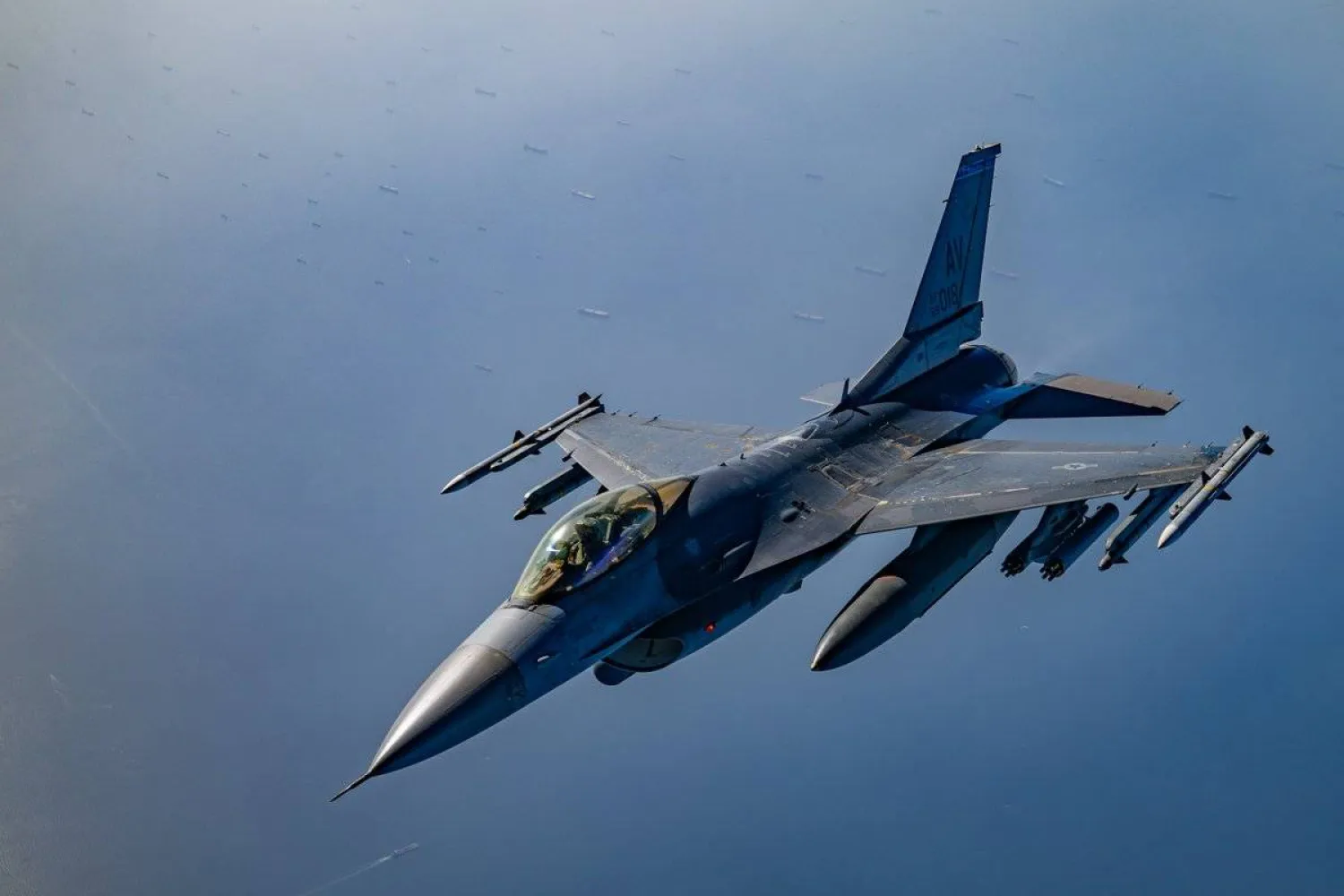
A US F-16 fighter jet conducts a patrol near the Strait of Hormuz last month. (CENTCOM)
TT

Iran Says New US Strikes Violate Ceasefire

A US F-16 fighter jet conducts a patrol near the Strait of Hormuz last month. (CENTCOM)

Iran said the United States had violated a ceasefire after the US conducted what it called defensive strikes in southern Iran, while US Secretary of State Marco Rubio said negotiating a deal to halt the conflict could "take a few days". 

Iran's foreign ministry said US strikes in Iran's southern Hormozgan province, where Iranian media reported sounds of explosions early on Tuesday, represented a "gross violation" of a tenuous ceasefire in place for nearly seven weeks. 

Both sides had previously indicated progress on a memorandum of understanding that could halt the war and restart shipping through the blockaded Strait of Hormuz, while giving negotiators 60 days to negotiate more complex issues including Iran's nuclear program. 

Iranian media reported that Iran's negotiators had been pushing for the memorandum to include the release of billions of frozen assets at talks in Qatar. 

OIL RISES AGAIN 

Following strikes against targets that the US said included boats attempting to lay mines and missile launch sites, Rubio told reporters on his plane in India's Jaipur that the Strait of Hormuz had to be open "one way or the other". 

The war, which began with US and Israeli ‌strikes on Iran on ‌February 28, has caused an unprecedented oil supply shock, pushing up the costs of fuel, fertilizer and food. ‌Iran responded to ⁠the strikes by ⁠launching drones and missiles at Gulf states that host US bases. 

Traffic through the Strait of Hormuz, which normally carries about a fifth of global trade in oil and liquefied natural gas, has been a fraction of its usual level since the war began. 

Global benchmark Brent crude oil rose about 3.5% on Tuesday to more than $99 a barrel following news of the US strikes. 

'CLOCK CANNOT BE TURNED BACK' 

US Central Command said late on Monday it had carried out the fresh strikes designed "to protect our troops from threats posed by Iranian forces." 

Iran's Revolutionary Guards said on Tuesday they reserved the right to retaliate. They said air defense units had downed a US drone and fired at another drone and a fighter jet which they said had entered Iranian airspace over the Gulf region. 

In comments posted on his Telegram channel on the occasion of the ⁠annual hajj pilgrimage, Iran's Supreme Leader Mojtaba Khamenei said: "The clock cannot be turned back, and the nations and ‌lands of the region will no longer be a shield for American bases." 

"From now on, the slogans 'Death ‌to America' and 'Death to Israel' will be the slogans of the nation and the oppressed people of the world, especially the youth," he added. 

US President Donald Trump has previously ‌cited the slogans while justifying military action against Iran. 

Trump had said talks with Iran were going "nicely" in a lengthy post on Truth Social on Monday, ‌but warned of attacks if they failed. It "will only be a Great Deal for all, or no Deal at all," he wrote. 

DOHA TALKS 

Iranian and US officials have indicated that recent indirect talks made progress on a memorandum of understanding, or initial deal, that would lead to further negotiations over a final agreement. 

Iran's top negotiator, Mohammad Baqer Qalibaf, its foreign minister and its central bank governor were in Doha on Monday for talks with Qatar's prime minister on a potential deal, an official briefed on the visit said. 

Qalibaf returned to Iran ‌after seeking agreement on the release of around $24 billion of frozen Iranian funds as part of the memorandum of understanding, Iranian media reported. 

Iran's Fars news agency cited a source saying that the unfreezing of the funds was ⁠the last serious sticking point for the memorandum ⁠of understanding to be finalized. 

According to Iranian sources, an initial deal would cover ending the war on all fronts, establishing a 30-day framework for restarting movement through the Strait of Hormuz, and possibly providing some financial relief - with more complex issues such as Iran's nuclear program to be negotiated in a second phase. 

Iran has been letting some ships through the strait, giving preference to vessels linked to countries with which it has alliances or close ties, and striking government-to-government agreements, Reuters has reported. 

Trump has said his key aim in the war is to prevent Iran from developing a nuclear weapon with its highly enriched uranium. Tehran denies any such plans. 

After a warning of escalated strikes, Israeli forces had expanded their operations in southern Lebanon, Israeli media reported on Tuesday. 

Thousands have been killed in the wider conflict, mostly in Lebanon and Iran. Inside Iran, internet monitoring group Netblocks reported a partial restoration of connectivity after a near 90-day blackout. 


Russia Opposes Iran Leaving Nuclear Non-Proliferation Treaty

Iranian Foreign Minister Abbas Araghchi meets his Russian counterpart, Sergei Lavrov, on the sidelines of the UN General Assembly in New York last week (Iranian Foreign Ministry) 
TT

Russia Opposes Iran Leaving Nuclear Non-Proliferation Treaty

Iranian Foreign Minister Abbas Araghchi meets his Russian counterpart, Sergei Lavrov, on the sidelines of the UN General Assembly in New York last week (Iranian Foreign Ministry) 

Russia does not want Iran to quit the nuclear Non-Proliferation Treaty (NPT) and counts on it remaining a party to the agreement, the Kremlin said on Tuesday.

Kremlin spokesman Dmitry Peskov responded to recent comments from Iranian officials about a possible exit from the treaty, which requires signatories not to develop or acquire nuclear weapons.

“This statement requires further clarification. We would not want Iran to withdraw from the NPT,” Peskov said.

The remarks came after Iranian First Deputy Parliament Speaker Ali Nikzad indicated that lawmakers are considering a “triple-urgency” bill on withdrawal.

Nikzad said the draft is under review, including its international implications, and could be brought to a plenary session for same-day consideration once registered.

The First Deputy Speaker also said that Tehran, which became a party to the treaty in March 1970, has no trust in the International Atomic Energy Agency (IAEA), or IAEA chief Rafael Grossi, because he conducts “merely superficial inspections and submits negative reports against Iran.”

Why Shouldn’t We Develop a Nuclear Weapon?

In an interview with state television in August, Mohsen Rezaei, secretary of Iran’s Supreme National Security Council, asked, “Why shouldn’t we develop a nuclear weapon so that nobody can attack us?”

Rezaei argued that Iran had subjected itself to extensive international monitoring, joined the Nuclear Non-Proliferation Treaty, yet its nuclear facilities were ultimately attacked.

He did not announce any change in Iran’s nuclear doctrine or a decision to build a bomb. The secretary of Iran’s NSC later said in a press interview that the issue of withdrawal was under consideration within Iran, and that US and Israeli attacks could push Tehran to withdraw from the NPT.

On Monday, more than 30 former Iranian officials had issued an open letter calling for withdrawal from the NPT, arguing that continued membership no longer served national interests and urging relevant bodies to begin legal steps promptly.

The petition includes former Intelligence Minister Heydar Moslehi, former Justice Minister Gholam-Hossein Elham, and former First Vice President Mohammad-Reza Rahimi from the Mahmoud Ahmadinejad administration.

Committed Member

On the sidelines of the UN General Assembly in New York, Iranian Foreign Minister Abbas Araghchi told NBC on Sunday that Iran is a “committed member” of the NPT treaty.

In response to a question about his country’s need for 60% enriched uranium, he said: “We enrich uranium to 60% for peaceful purposes, and this is in line with our obligations under the NPT. We are not violating the NPT.”

Araghchi also said that Iran is ready to discuss with the US a possible deal on uranium enriched to 60%, but for this it is necessary to restore trust between the parties.

He noted that Tehran has already offered Washington to agree on the available reserves of such material in 2025 and 2026.

The UN agency remains unable to verify the status, size, or whereabouts of Iran's enriched uranium stockpile or determine if enrichment activities have been suspended following the June 2025 military strikes. Iran possessed 440.9 kilograms of uranium enriched up to 60% before the start of the Israel-Iran War on June 12.

Option on Table

On September 20, the chairman of the Iranian Parliament's National Security and Foreign Policy Commission, Ebrahim Azizi, told the Mehr news agency that the option of Iran’s withdrawal from the NPT is on the table.

“Legislative proposals titled ‘Plan for Withdrawal from the NPT’—backed by the signatures of numerous MPs—have been drafted and submitted to both the Parliament's National Security and Foreign Policy Commission and the Office of the Deputy for Legislation,” he said.

However, Azizi added, withdrawing from NPT requires “taking effective measures and coordinating with all pillars of the government as well as adoption of a unified decision within the Islamic Establishment.”

On the same day, Iranian MP Hossein Ali Haji Deligani said given the country's current circumstances and recent attacks against it, remaining in the NPT offers Iran nothing but harm.

He noted that a bill proposing Iran's withdrawal from the NPT has been submitted to parliament's presiding board and is awaiting the speaker's approval to be put to an open session.

Hassan Qashqavi, a spokesman for the National Security Committee, said last Wednesday that Iran “will not stand idly by,” regardless of whether the US threats are carried out or not.

Last week, Javan newspaper, a newspaper affiliated with Iran’s Revolutionary Guard Corps (IRGC), wrote that the question of remaining party to the treaty had become tied to the relationship between “commitment” and “security,” citing attacks on Iran’s nuclear facilities and the subsequent suspension of field verification operations.


G20 Trade Officials Meet under Shadow of Tariffs, Overcapacity

US Trade Representative Jamieson Greer is hosting counterparts from G20 countries in Milwaukee for two days of talks. Jim WATSON / AFP/File
TT

G20 Trade Officials Meet under Shadow of Tariffs, Overcapacity

US Trade Representative Jamieson Greer is hosting counterparts from G20 countries in Milwaukee for two days of talks. Jim WATSON / AFP/File

G20 trade ministers are set to open talks Wednesday in the United States, in meetings strained by President Donald Trump's tariffs as Washington targets partners regarding forced labor and overcapacity.

The gathering of officials from the Group of 20 major economies -- which includes China, India, Russia, Japan, Germany and France -- takes place in the Midwestern city of Milwaukee.

But analysts expect the two days of talks to be deadlocked as Trump's tariffs weigh on relationships while China rejects concerns about its exports, which critics see as driven by excess industrial capacity.

US Trade Representative Jamieson Greer defended Washington's approach at a Tuesday roundtable in Milwaukee, saying the administration "is not anti-trade."

He added that countries are facing similar challenges with global overcapacity and "non-market policies."

This week, key US trading partners like Canada and the European Union are also expected to push for deeper trade ties outside the United States.

"Don't expect any breakthroughs in Milwaukee," Josh Lipsky of the Atlantic Council think tank told AFP, noting Trump's preference for bilateral negotiations.

Even as G20 partners will be anxious to find ways to cooperate with the world's biggest economy, "they will also be under pressure to voice their concerns with tariffs," added former US trade official Wendy Cutler, now at the Asia Society Policy Institute.

The United States holds the rotating presidency of the G20, which comprises 19 nations plus the EU and the African Union.

- 'Unfairly targeted' -

Trump has unleashed a barrage of tariffs on trading partners since last year, separately targeting sectors like steel and autos.

Although the Supreme Court struck down Trump's country-specific tariffs in February, Washington has since alleged insufficient action against forced labor to slap new tariffs on 60 economies.

These include China, India and the EU.

The president's sectoral duties remain intact too, straining ties.

And Washington is investigating 16 partners over excess industrial capacity, a complaint commonly levied at China. Critics say this floods markets, unfairly suppressing prices.

But ongoing US probes go beyond the world's number two economy, bringing the threat of more tariffs to the EU and G20 countries like Japan and South Korea.

Cutler expects some countries will "mince no words" regarding the investigation, feeling "they are being unfairly targeted."

China "will continue to deny the issue of exporting overproduction," by trying to convince others that it is doing good by providing high-quality and low-priced goods, she said.

"This will be a hard sell," Cutler told AFP, as countries see employment and commercial fallout from waves of Chinese imports.

"Meanwhile, members are wondering how much they should agree to with the Trump administration, given trade policy could change in the US after 2028," Lipsky said, referring to the next US presidential election.

- Diversifying -

With Trump's trade wars, all eyes are on G20 members' efforts to deepen trade ties outside the US, or strike deals with his administration.

Canada and the EU are expected to try and boost trade and investment with others, as a spat between Ottawa and Washington intensifies.

Canada's international trade minister Maninder Sidhu stressed Ottawa's support for "open, predictable and rules-based trade."

He plans to speak with partners to "reinforce a multilateral trading system," as officials try to diversify an economy they see as too reliant on an increasingly protectionist United States.

Others like India could finalize a long-awaited trade deal with the United States. Observers are also monitoring for signs of further pressure on Iran.

Outside the G20, workers and activists are protesting what they see as the Trump administration's broken promises to improve conditions for workers, farmers and smaller businesses.

John Drew, who chairs the political arm of the United Auto Workers union in Wisconsin, laments the loss of manufacturing jobs in the state.

While the UAW does not rule out using targeted duties to protect jobs, he said, Trump's sweeping "use of tariffs has done nothing to bring back jobs and rebuild manufacturing."


Somali Pirates Kill 5 Crew Members Before Tanker Rescue

File photo: Ships have been affected in the Gulf of Aden. AFP
TT

Somali Pirates Kill 5 Crew Members Before Tanker Rescue

File photo: Ships have been affected in the Gulf of Aden. AFP

Somali pirates killed five crew members of the hijacked MT Honour 25 petroleum products tanker before it was rescued by security forces, Somalia's semi-autonomous state of Puntland said on Tuesday.

Puntland's authorities said they also rescued a second vessel on Tuesday that had been hijacked in May.

The deaths aboard the Palau-flagged ship appear to be the first at the hands of Somali pirates in over a decade, said Reuters.

The ship with 17 crew members was seized by pirates ‌in April during a ‌resurgence of Somali piracy that experts have attributed, ‌in ⁠part, to impacts ⁠of the Iran war, including elevated oil prices that make tankers more attractive targets.

Puntland's information ministry said in a statement that a rescue mission had successfully freed the ship and captured 16 pirates.

"Before the operation begun, the pirates on board the ship killed five of the crew. Among those killed were three from Pakistan, one ⁠from Myanmar and one from India," it ‌said.

Four crew members - three Pakistanis ‌and one Indian - were also injured, the statement said.

The rescue follows another ‌rescue mission last week, when Puntland's maritime police force freed ‌the US-sanctioned tanker Sibu 1, which Somali pirates had hijacked in August.

Puntland's Maritime Police Force (PMPF) said in a statement late on Tuesday that it had also rescued an oil tanker called MT Eureka which had ‌been hijacked in May after its hijackers fled when police approached the vessel.

"As PMPF forces approached ⁠the area, ⁠the pirates fled towards the shore and moved inland," it said.

"PMPF forces continue to pursue the individuals involved and are conducting further operations to apprehend those who escaped."

The two rescues bring the total to five out of the six ships held by pirates off the Somali coast as of late August that have now been freed.

A previous wave of piracy from 2008 to 2014 disrupted one of the world's busiest shipping routes, cost the global economy billions of dollars and resulted in hundreds of millions of dollars in ransom payments.
