

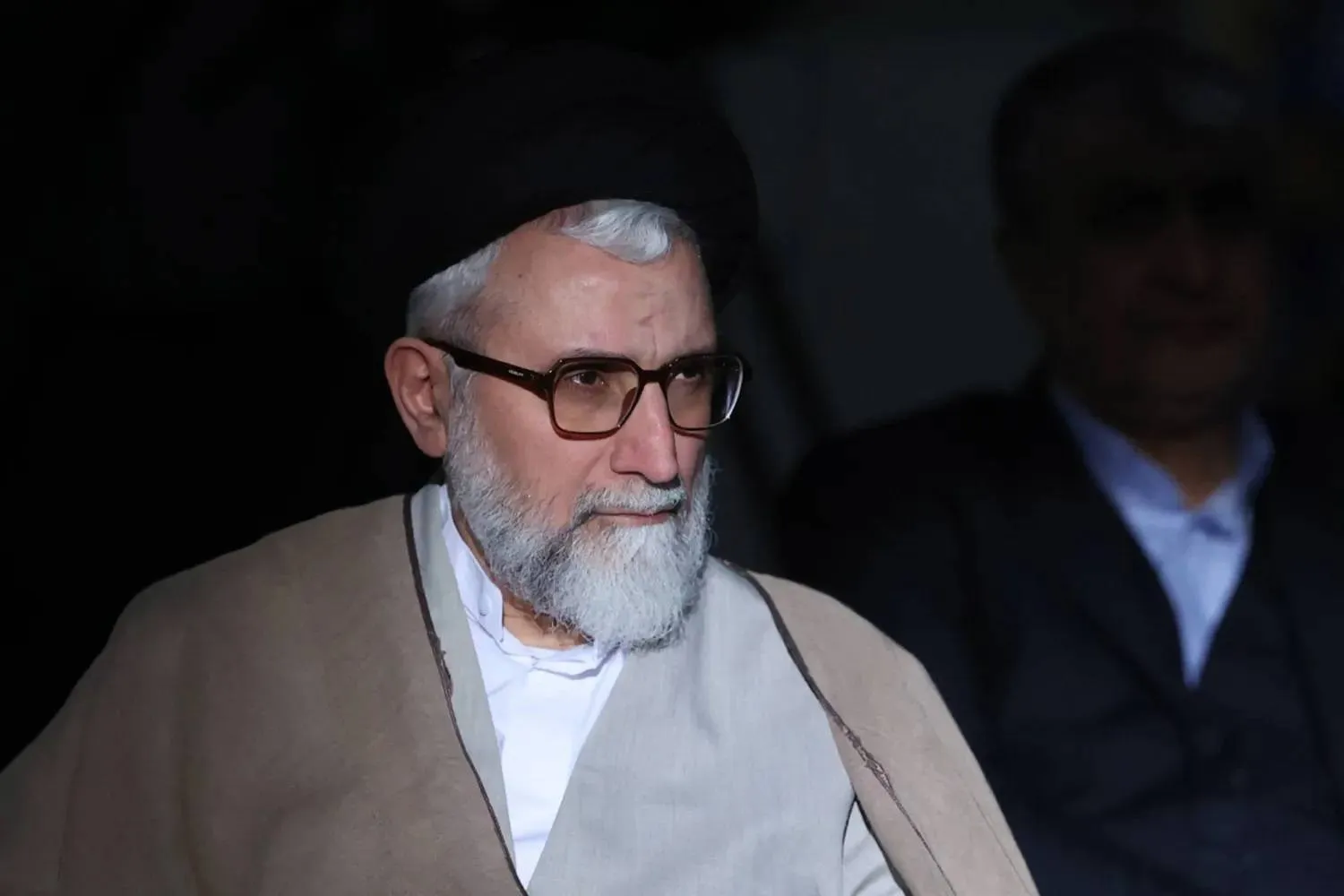

Mystery Shrouds Leadership of Iran’s Intelligence Agencies

Questions mount over the identity of Iran’s deputy intelligence minister months after Esmail Khatib’s death (Iranian Presidency)
TT

Mystery Shrouds Leadership of Iran’s Intelligence Agencies

Questions mount over the identity of Iran’s deputy intelligence minister months after Esmail Khatib’s death (Iranian Presidency)

Six months into Supreme Leader Mojtaba Khamenei’s rule, Iran has reshuffled its military and security leadership after a war that killed two cabinet ministers and a string of senior Revolutionary Guards commanders.

Yet two of the country’s most sensitive posts remain shrouded in secrecy: who is running the Intelligence Ministry, and who now commands the Guards’ powerful intelligence arm.

Defense Minister Aziz Nasirzadeh was killed on Feb. 28 in the opening strikes targeting the leadership, including the office of former Supreme Leader Ali Khamenei in Tehran’s heavily fortified Pasteur district.

On March 2, Iranian President Masoud Pezeshkian appointed Majid Ben Reza as deputy defense minister. He is expected to be formally nominated to parliament to take over the ministry.

Pezeshkian announced the death of Intelligence Minister Esmail Khatib on March 18. Since then, Iranian authorities have not disclosed who is serving as acting minister.

The government-affiliated news outlet reported last week that the deputy intelligence minister had sent separate congratulatory messages to Supreme National Security Council Secretary Mohsen Rezaei and newly appointed military commanders, pledging the ministry’s cooperation with the new leadership on priorities set by the supreme leader for the armed forces.

Deadline to name two ministers

Pezeshkian is under pressure from close reformist allies over the delay in naming a new intelligence minister, one of five cabinet posts that require the supreme leader’s approval.

In practice, the intelligence minister is usually chosen with the supreme leader’s direct involvement.

The minister also sits on the 12-member Supreme National Security Council, giving the officeholder a direct role in Iran’s main security decision-making body.

Abbas Goudarzi, a lawmaker and spokesman for parliament’s presiding board, said this week that Mojtaba Khamenei had given the government a deadline to submit nominees for the intelligence and defense ministries.

“Under the authorization obtained from the supreme leader, the government has one and a half months from Aug. 20 to submit its proposed ministers for intelligence and defense to the Iranian parliament,” Goudarzi said.

But naming a new intelligence minister may first require a change in the law.

Current legislation requires the minister to have attained the religious rank of ijtihad, a senior scholarly qualification that sharply narrows the pool of candidates to clerics who meet the requirement.

“The idea was raised that ijtihad should not be a requirement for the intelligence minister,” Goudarzi said. “Since the current law conflicts with this proposal, the law must be amended. It was therefore decided that the government would submit a bill to parliament on the matter.”

Legacy of security breaches

Khatib served as intelligence minister under former President Ebrahim Raisi and kept the job when Pezeshkian formed his government two years ago, despite mounting criticism of the security services over a series of breaches attributed to Israel’s Mossad.

Those criticisms intensified after Israeli intelligence reached military commanders and officials involved in the nuclear program who were killed during the war.

The next minister will inherit an agency battered by a string of security breaches and assassinations targeting military, nuclear and security officials, as well as the legacy left by successive ministers who ran the institution.

Fresh questions over the security surrounding senior intelligence officials were raised by Khatib’s son.

In an interview published by the state-run IRNA news agency on Aug. 10, he said his father had faced four assassination attempts before he was killed, including two during the June 2025 war.

He said Khatib was later killed at the home of his second wife despite tight security surrounding his movements.

Cultural Heritage Minister Reza Salehi Amiri is among the names being considered for the intelligence portfolio.

Salehi Amiri, previously known as Reza Fallah, worked at the Intelligence Ministry during the 1980s and 1990s and was one of the agency’s leading interrogators before gradually moving into political and government posts.

He later held positions at strategic research centers affiliated with the Iranian presidency and the Expediency Council.

Under President Hassan Rouhani, he served for a year as deputy minister of sports and youth before becoming a presidential adviser and head of the National Library and Archives.

He also served for a year as culture minister at the start of Rouhani’s second term before returning to government after Pezeshkian became president.

Vacuum in Revolutionary Guards intelligence

The picture is even murkier inside the Revolutionary Guards’ intelligence organization and its protection unit after several senior commanders were killed in the war.

On April 6, the Revolutionary Guards confirmed that Brigadier General Majid Khademi, head of its intelligence organization, had been killed in an Israeli-US attack, hours after Israeli Defense Minister Israel Katz first announced his death.

Khademi had previously headed the Guards’ protection organization before becoming intelligence chief on June 19, 2025, succeeding Mohammad Kazemi.

Before that, he oversaw the unit responsible for protecting political figures and sensitive sites, including key state institutions and nuclear facilities.

Kazemi was killed in Israeli strikes on June 15, 2025, three days after dozens of Revolutionary Guards commanders were killed in the opening strikes of the 12-day war.

That attack also killed Mohammad Reza Nasir Bagban, known by the alias Mohsen Bagheri, head of the Quds Force intelligence unit, and Brigadier General Hassan Mohaghegh, one of the Guards’ most prominent intelligence commanders and a figure with close ties to current Supreme Leader Mojtaba Khamenei.

Tehran has yet to disclose who now leads the Revolutionary Guards’ intelligence organization, its deputy command, or the Quds Force intelligence unit.

Hossein Taeb, however, who spent 13 years at the helm of Guards intelligence, has returned to a senior security role as commander of the Basij, tasked with expanding the “popular intelligence network.”



Iranian President Pezeshkian Arrives in New York

Iranian President Masoud Pezeshkian waves before departing for New York, at Mehrabad Airport in Tehran, Iran, September 22, 2026. Iran's Presidential website/WANA (West Asia News Agency)/Handout via REUTERS
TT

Iranian President Pezeshkian Arrives in New York

Iranian President Masoud Pezeshkian waves before departing for New York, at Mehrabad Airport in Tehran, Iran, September 22, 2026. Iran's Presidential website/WANA (West Asia News Agency)/Handout via REUTERS

Iranian President Masoud Pezeshkian arrived in New York where he is expected to speak at the United Nations General Assembly, Iranian state media reported on Wednesday.

State broadcaster IRIB posted a video clip of Pezeshkian exiting a plane with a caption saying that the Iranian president has arrived at a New York airport, AFP reported.

This is the first time that a leader whose country is at war with the United States sets foot on American soil to address a UN gathering, analysts say.


Far-Right Israeli Minister Seeks Defense Post in Next Government

 Israel's far-right National Security Minister, Itamar Ben-Gvir, holds a press conference ahead of Israel's general elections in October, in Jerusalem, September 22, 2026. (Reuters)
Israel's far-right National Security Minister, Itamar Ben-Gvir, holds a press conference ahead of Israel's general elections in October, in Jerusalem, September 22, 2026. (Reuters)
TT

Far-Right Israeli Minister Seeks Defense Post in Next Government

 Israel's far-right National Security Minister, Itamar Ben-Gvir, holds a press conference ahead of Israel's general elections in October, in Jerusalem, September 22, 2026. (Reuters)
Israel's far-right National Security Minister, Itamar Ben-Gvir, holds a press conference ahead of Israel's general elections in October, in Jerusalem, September 22, 2026. (Reuters)

Israel's far-right National Security Minister Itamar Ben-Gvir said Tuesday he will seek the post of defense minister in the next government, as the country prepares for next month's elections.

Ben-Gvir, who is a key minister in the right-wing coalition of Prime Minister Benjamin Netanyahu, regularly sparks international outrage with his provocative statements and political stunts.

"The reason I am putting myself forward is that the time has come to change the mindset within the army," Ben Gvir said, at a press conference in Jerusalem.

"The time has come to transform the State of Israel's security doctrine with a single objective -- decisive victory on every front," he added.

The firebrand minister put forward a "security plan" that includes the "encouragement of voluntary emigration" of Palestinians from both Gaza and the occupied West Bank, disarming what he called the "terrorist" Palestinian Authority, and increased support for Israeli soldiers.

Earlier in September, Ben-Gvir presented a detailed plan to "encourage" Palestinians from the Gaza Strip to move abroad.

Although members of the ruling right-wing coalition have made multiple statements about transferring Palestinians out of Gaza, it is unclear to what extent their remarks will be followed by action.

Forced displacement of civilians in occupied territory is considered a war crime under the Geneva Conventions.

Ben-Gvir's announcement that he is seeking the defense post caused an uproar among Israeli opposition leaders.

Gadi Eisenkot, a key contender for the premiership, accused his main rival Netanyahu on X of having "lost it" by accepting "criminal Ben-Gvir" in his coalition.

In his youth, Ben-Gvir was charged more than 50 times for incitement to violence or hate speech, but boasts he was cleared in the vast majority of those cases.

According to Israeli media, he was not drafted into the military due to his involvement in extremist far-right groups.

The October 27 vote is expected to be close, and there is no guarantee that the parties currently in power will remain so after then.

According to a Channel 16 survey published Sunday, Ben-Gvir's Otzma Yehudit (Jewish Power) party is polling at seven percent, which would grant it eight out of 120 seats in Israel's parliament, the Knesset.


Trump Hails Burnham as ‘Natural Business Person’ After First Meeting

 President Donald Trump meets with Britain's Prime Minister Andy Burnham during the United Nations General Assembly, Tuesday, Sept. 22, 2026, at the UN headquarters. (AP)
President Donald Trump meets with Britain's Prime Minister Andy Burnham during the United Nations General Assembly, Tuesday, Sept. 22, 2026, at the UN headquarters. (AP)
TT

Trump Hails Burnham as ‘Natural Business Person’ After First Meeting

 President Donald Trump meets with Britain's Prime Minister Andy Burnham during the United Nations General Assembly, Tuesday, Sept. 22, 2026, at the UN headquarters. (AP)
President Donald Trump meets with Britain's Prime Minister Andy Burnham during the United Nations General Assembly, Tuesday, Sept. 22, 2026, at the UN headquarters. (AP)

US President Donald Trump hailed Andy Burnham on Tuesday as a "natural business person" at what the new British leader's team described as a smooth first face-to-face meeting.

After days of preparation for the Trump meeting, Burnham emerged relatively unscathed, with the US leader only taking issue with what he called a "terrible deal" to cede sovereignty of the Chagos Islands, home to a US-British air base.

Otherwise, Trump praised Burnham, saying Britain's seventh prime minister in a decade was someone with whom he could do business and a patriot who had put Britain on the up after replacing the former prime minister, Keir Starmer, in July.

"I think right now, based on my relationship with the prime minister, Andy, I think that ... we're doing very well," Trump said after they met on the sidelines of the United Nations General Assembly in New York for around 40 minutes.

"I think he's a natural business person. We've had a lot of discussions, even before this meeting we were talking with each other numerous times on the phone."

'ENCOURAGING MEETING'

Burnham, who travelled to New York on Monday to take part in the UN assembly, had ‌said little beforehand ‌about his expectations for the meeting with Trump, saying only that in their two phone calls he ‌had found "a ⁠connection" with the ⁠US president.

Afterwards, he repeated that earlier conversations had established that connection "and that very much came through today".

"(I) can certainly work with him. It was a very encouraging meeting," Burnham told reporters, saying the two leaders had found "common ground" on dealing with cost-of-living pressures, ending the conflict in the Middle East and reindustrializing nations to spur economic growth, among other issues.

"He was very upbeat about the country's (Britain's) prospects, which, to be honest, was great to hear."

Before arriving in New York, Burnham had sought common ground with Trump on AI, a focus of his comments to the UN on Monday in which he described the technology as having the ability to bring "huge benefits" to the British and global economy.

Trump has said he wants to cherish AI rather than stifle its growth, dismissing fears ⁠about it as a hoax and "sick conspiracy". The US leader has said concerns can be addressed through the ‌existing justice system without extra regulation — an issue that might cause some friction with Britain.

Yet, ‌while the two leaders seemed to find common ground on a number of issues, there were some pitfalls.

Trump again criticized Britain's move, under Starmer, to cede ‌sovereignty of the Chagos Islands while retaining control of Diego Garcia air base on a 99-year lease.

Trump called the agreement with Mauritius, ‌now on hold, a "terrible" deal. "It's amazing how strategic it is, and I think the prime minister is going to be looking at it," he said.

Burnham later told reporters he had inherited the problem and would work to find a resolution between the different sides. "It was clear that we need to come to that agreement, but I'm confident we can find it working with our US partners," he said.

Burnham also showed a willingness to disagree with Trump if it is ‌in his nation's interest, saying he would "stand firm in the face of any threats" to the right of Falkland Islanders to self-determination and to remain British.

In August, Trump said he was reviewing the ⁠United States' neutral position on the ⁠remote archipelago in the South Atlantic. Days later Argentine President Javier Milei — who will address the UN on Wednesday — said he would impose sanctions on oil companies drilling in the islands.

And the British leader navigated some other bilateral sticking points. Trump appeared unmoved over Britain's decision to block imports from Israeli settlements in the occupied West Bank, while its decision not to back the US over the Iran war was also skated over.

OPENS WAY FOR BURNHAM TO FOCUS ON AI

With the meeting done, Burnham turns his focus for UNGA to AI and his support for the technology, which he hopes will help Britain assume a leading role globally.

At an earlier business roundtable, Burnham said he would make the case for Britain in a speech later on Tuesday to help establish "a single set of global principles and standards" to unlock the potential of AI.

Describing Britain as being stuck in 10 years of political turbulence since voting to leave the European Union in 2016, Burnham told business leaders he wanted to usher in a period of stability and embrace AI, while being clear-eyed on the risks.

"So outside Downing Street, on my first day, I said I want to be the circuit breaker," he told the roundtable, including Tim Cook, executive chairman of Apple, and Citigroup CEO Jane Fraser.

"(To) bring forward a very clear path that everyone can understand, a 10-year plan for Britain ... so that nobody's in any doubt at all about what we're trying to do."