


Masjid al-Namirah: The Mosque Where Only One Prayer is Held Each Year

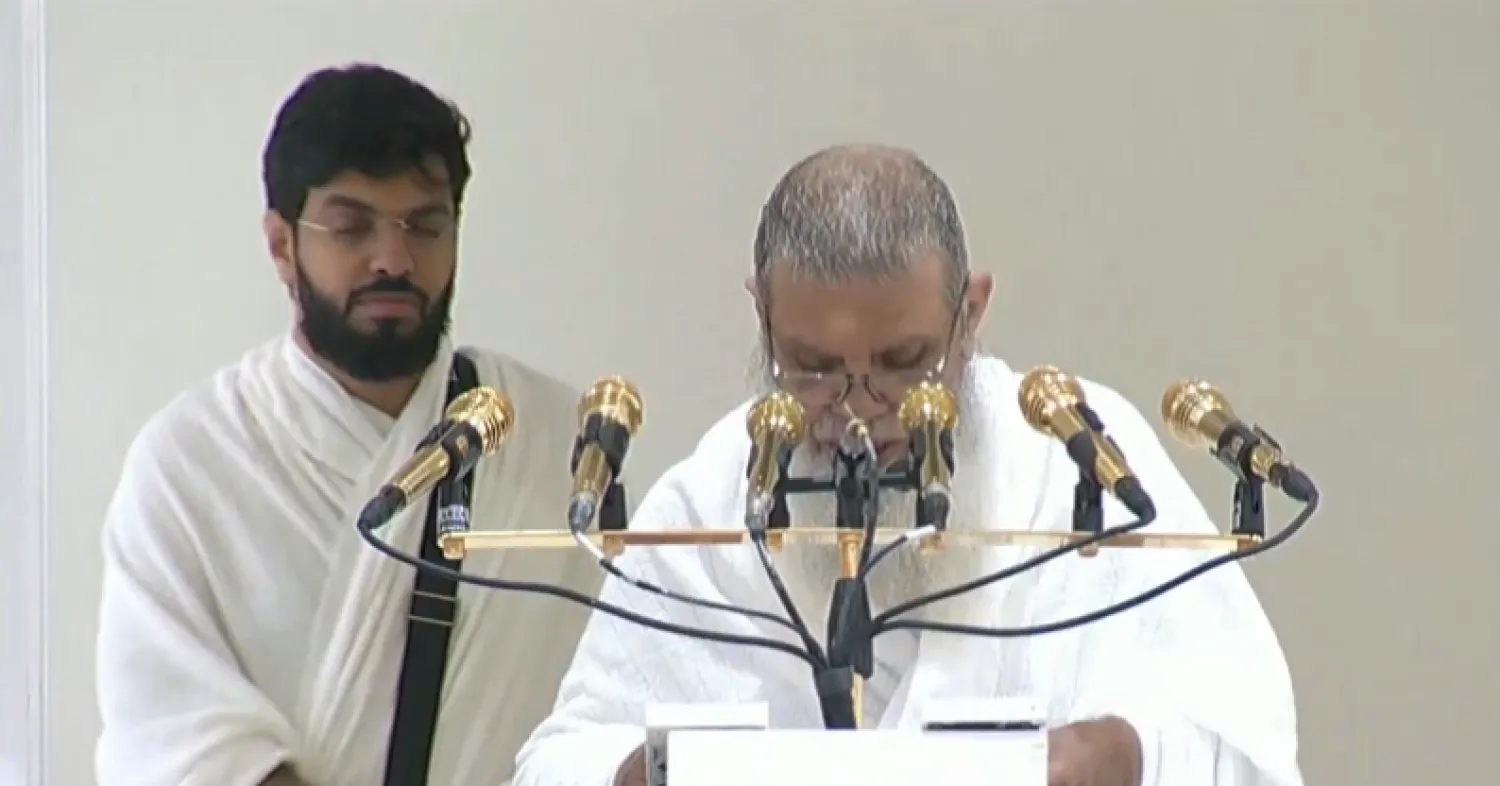
Sheikh Ali bin Abdulrahman Al-Huthaify, in his Day of Arafat sermon, called for the glorification of God's rites, adherence to calmness and order, and avoidance of anything that undermines the spirit of the pilgrimage. (Asharq Al-Awsat)
TT

Masjid al-Namirah: The Mosque Where Only One Prayer is Held Each Year

Sheikh Ali bin Abdulrahman Al-Huthaify, in his Day of Arafat sermon, called for the glorification of God's rites, adherence to calmness and order, and avoidance of anything that undermines the spirit of the pilgrimage. (Asharq Al-Awsat)

Masjid al-Namirah is considered one of the most prominent Islamic landmarks associated with the Hajj season, drawing the attention of millions of Muslims on the ninth day of Dhu al-Hijjah each year to listen to the Arafat Sermon and perform the Dhuhr and Asr prayers combined and shortened behind the imam and khatib of Masjid al-Haram.

The mosque is located in the plain of Arafat, west of Jabal al-Rahmah, and takes its name from the Namirah area where it was built. It has acquired major religious and historical significance because of its connection to the Farewell Sermon delivered by Prophet Muhammad, peace be upon him, during the Farewell Pilgrimage.
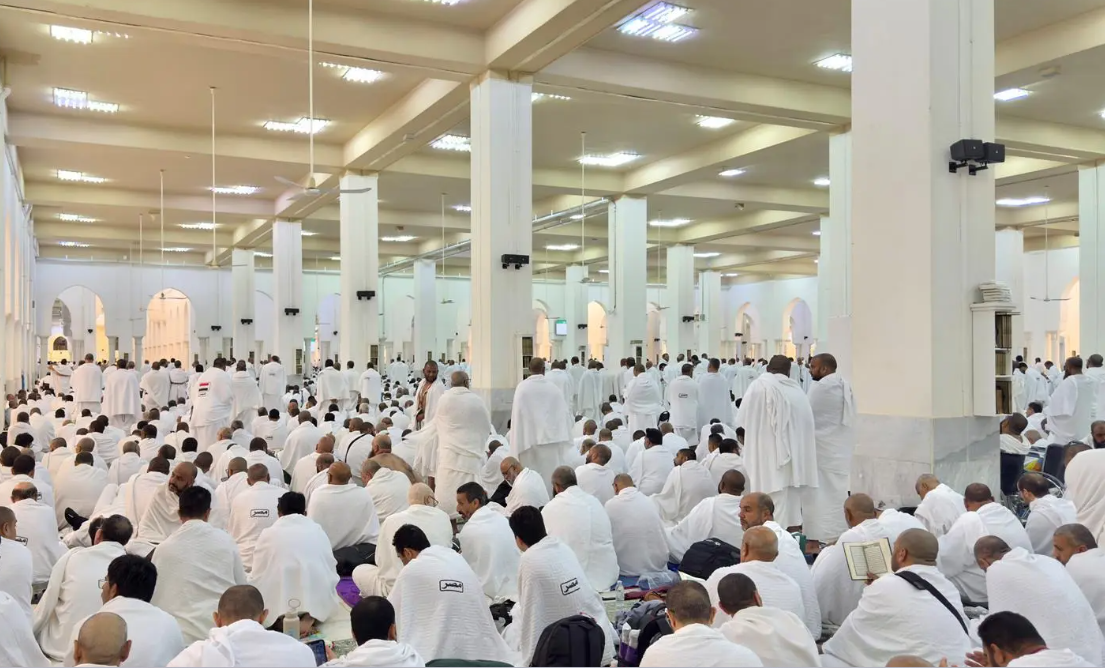
Hundreds of thousands of pilgrims gather at Masjid al-Namirah from the early morning hours to listen to the Arafat Sermon. (SPA)

Masjid al-Namirah is distinguished by a unique characteristic, as only one congregational prayer is held there each year: the prayer on the Day of Arafat. The mosque and its courtyards are filled with hundreds of thousands of pilgrims who arrive from the early morning hours to listen to the Arafat Sermon, regarded as one of the most spiritually significant moments of the Hajj season.

Large numbers of pilgrims arrived to perform the ritual of standing at Arafat amid an integrated system of services and organization, while the Arafat Sermon was broadcast live to countries around the world in multiple languages, reflecting the immense Islamic significance of the occasion.

Masjid al-Namirah hosted the Day of Arafat sermon delivered by Sheikh Ali bin Abdulrahman Al-Huthaify, who spoke about the meanings of piety, preparation for the Day of Judgment, and the importance of attaining salvation through obedience to God and avoidance of sins and wrongdoing, on what is considered one of the greatest days of the year in Islam.
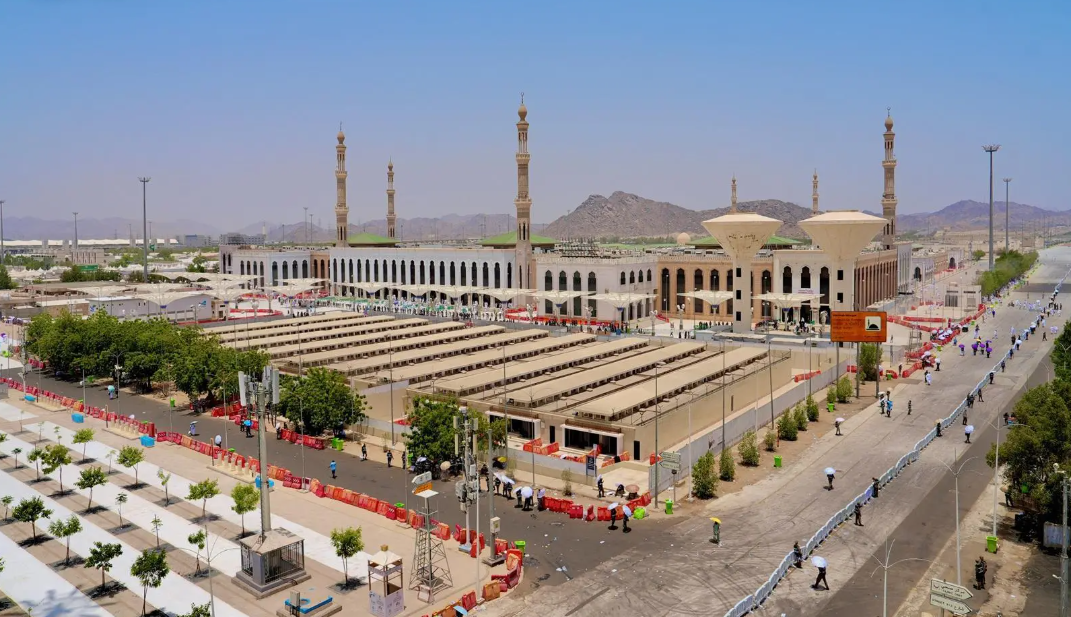
Masjid al-Namirah is one of the most prominent Islamic landmarks associated with the Hajj season. (SPA)

The Arafat preacher stressed that the Hajj season brings Muslims together from every corner of the world in unified worship and shared rituals, calling for the glorification of God's rites, adherence to calmness and order, and avoidance of anything that disrupts the spirit of the pilgrimage.

He also emphasized that the Day of Arafat is among the greatest occasions for prayers to be answered, urging Muslims to increase their remembrance of God and supplication on this blessed day, particularly the phrase: "There is no god but Allah alone, without partner. To Him belongs sovereignty and praise, and He has power over all things."

The Arafat preacher urged pilgrims to maintain calmness, avoid overcrowding, follow the instructions of the organizing authorities, and adhere to crowd movement regulations and grouping schedules in order to serve the public interest, prevent harm and disorder, protect lives, and facilitate the performance of the rituals.

Sheikh Dr. Al-Huthaify noted that Hajj embodies manifestations of acquaintance, harmony, cooperation, and solidarity among Muslims as they perform the rituals together despite differences in language, color, and nationality, united as brothers in faith.

Sheikh Al-Huthaify said that Hajj is free of political slogans and partisan calls, and is instead devoted entirely to submission to God, adherence to the Prophet's teachings, and purity both outwardly and inwardly.

In his sermon, Sheikh Ali bin Abdulrahman Al-Huthaify also reviewed the rites of Hajj, beginning with the standing at Arafat, regarded as the greatest pillar of Hajj, followed by the overnight stay in Muzdalifah, then proceeding to Mina for the stoning of the Jamarat, the sacrificial offering, shaving the head, and Tawaf al-Ifadah.

During the Days of Tashreeq, pilgrims stone the three Jamarat with seven pebbles at each site every day. It is preferable to remain until the 13th day of Dhu al-Hijjah, although pilgrims may depart earlier on the 12th day. Before leaving, pilgrims perform the Farewell Tawaf.

The mosque is considered one of the largest in the world, covering a total area of more than 110,000 square meters. It includes hundreds of entrances, restroom facilities, and modern air-conditioning and audio systems, enabling it to accommodate the massive numbers of pilgrims on the Day of Arafat.
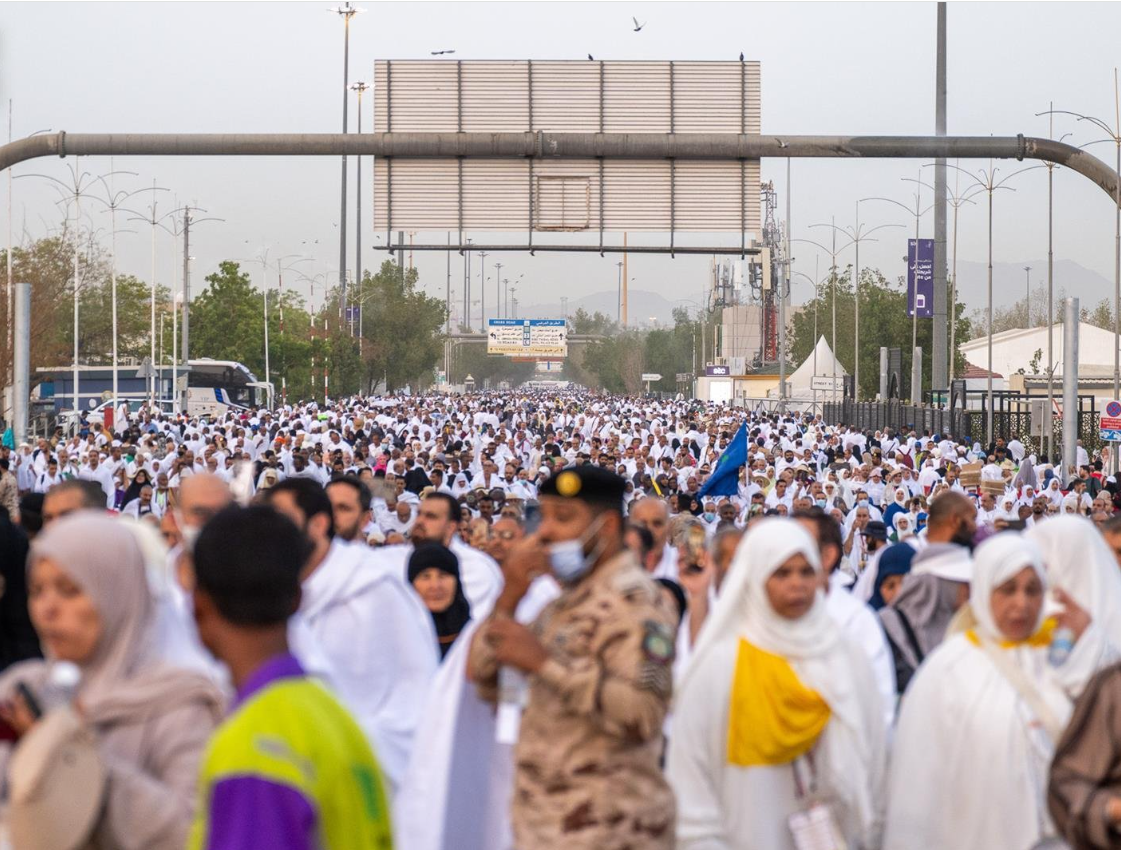
Large numbers of pilgrims arrive to perform the Standing at Arafat ritual amid an integrated system of services. (SPA)

Saudi authorities annually ensure that the mosque is fully prepared with healthcare, organizational, and technical services to guarantee pilgrims' comfort and enable them to perform their rituals with ease and reassurance as part of the Kingdom's extensive efforts to serve pilgrims during the Hajj season.

The mosque features a distinctive Islamic architectural design, extending 340 meters from east to west and 240 meters from north to south. It includes six minarets, each 60 meters high, three domes, ten main entrances, and 64 gates to ensure smooth crowd movement.

The mosque has also been equipped with the latest technological and service systems, including advanced audio and live-broadcast systems to transmit the Arafat Sermon and the Dhuhr and Asr prayers around the world, in addition to air-conditioning and ventilation systems, shaded courtyards, digital screens, and safety and surveillance systems designed to provide a safe and comfortable environment for pilgrims on the greatest day of Hajj.



Saudi Arabia and Canada: Questions and Answers on Joint Action and Coordination Council

Part of the memorandum signing ceremony attended by the Saudi Crown Prince and the Canadian Prime Minister in Jeddah on Thursday. (SPA)
TT

Saudi Arabia and Canada: Questions and Answers on Joint Action and Coordination Council

Part of the memorandum signing ceremony attended by the Saudi Crown Prince and the Canadian Prime Minister in Jeddah on Thursday. (SPA)

Saudi Arabia and Canada announced a series of agreements and memorandums of understanding signed in the presence of Saudi Crown Prince and Prime Minister Mohammed bin Salman and Canadian Prime Minister Mark Carney in Jeddah on Thursday.

The signing followed talks between the two sides and an official reception for Carney, the first Canadian prime minister to visit Saudi Arabia in 25 years.

The following questions, answers and background explain the Joint Action Document and the establishment of the Saudi-Canadian Coordination Council, both referenced in the joint statement issued after the leaders’ meeting, based on explanations provided to Asharq Al-Awsat by informed sources.

What is the Joint Action Document?

According to the sources, the Joint Action Document will serve as the overarching framework for bilateral cooperation.

It is intended to bring together the priority areas of cooperation for the next phase, with its provisions to be institutionalized and implemented through the establishment of the Saudi-Canadian Coordination Council.

What does the document aim to achieve?

The document seeks to strengthen the partnership in line with both countries’ national priorities in relevant fields, reflecting their shared commitment to expanding cooperation, deepening consultation and reinforcing ties in areas of mutual interest.

It also aims to establish a comprehensive framework for cooperation based on a shared understanding of global challenges, including enhancing security and stability, supporting economic growth and empowering communities.

What areas of cooperation are envisaged?

• Political affairs
• Security and defense
• Economic, trade and investment cooperation
• Cultural, educational and scientific cooperation
• Consular affairs

What is the Saudi-Canadian Coordination Council?

As part of their commitment to strengthening and deepening friendly relations, the two governments are working to establish a Saudi-Canadian Coordination Council at the level of the two countries’ foreign ministers.

The council will operate under a governance framework, organizational structure and clear implementation mechanisms for the relevant authorities on both sides. The objective is to ensure the council fulfills its mandate by developing strategic initiatives jointly agreed upon in the areas covered by the Joint Action Document.

Each initiative will be supported by a clear implementation timetable and defined performance indicators, with progress monitored under the council’s approved governance framework.

What are the council’s objectives?

• Establish an institutional framework for cooperation between the two countries.
• Strengthen bilateral cooperation through continuous consultation and coordination across all fields.
• Serve as a unified platform encompassing all existing areas of cooperation between Saudi Arabia and Canada.
• Advance bilateral relations at all levels.
• Promote shared interests and mutual benefit.

What are the council’s main pillars?

• Develop the council’s governance framework, including its organizational structure, responsibilities, procedures, operating models and subsidiary committees, in coordination with the relevant authorities.
• Prepare an annual schedule for meetings of the council and its subsidiary committees, to be approved as part of the council’s official meeting minutes.
• Implement joint initiatives across the full spectrum of bilateral cooperation.


Saudi Arabia Condemns Repeated Iranian Attacks on Kuwait, Bahrain, and Jordan

File photo of the Saudi flag/AAWSAT
TT

Saudi Arabia Condemns Repeated Iranian Attacks on Kuwait, Bahrain, and Jordan

File photo of the Saudi flag/AAWSAT

Saudi Arabia condemned in the strongest terms the repeated heinous Iranian attacks on Kuwait, Bahrain, and Jordan. The ministry renewed the Kingdom’s categorical rejection of Iran’s violation of the sovereignty of brotherly countries and its continued threat to the security and stability of the region, the Saudi Press Agency reported on Thursday.

The Kingdom reaffirmed that these attacks violate UN Security Council Resolution 2817 (2026), regarding the immediate cessation of all attacks launched by Iran against countries of the region.

It stressed the importance of respecting the sovereignty of brotherly countries and adhering to international resolutions and laws. The Kingdom also reaffirmed that these violations undermine international efforts to restore security and stability in the region.


Saudi FM Receives Phone Call from Qatari Premier and Foreign Minister

Saudi Minister of Foreign Affairs Prince Faisal bin Farhan bin Abdullah. (SPA file)
TT

Saudi FM Receives Phone Call from Qatari Premier and Foreign Minister

Saudi Minister of Foreign Affairs Prince Faisal bin Farhan bin Abdullah. (SPA file)

Saudi Minister of Foreign Affairs Prince Faisal bin Farhan bin Abdullah received a phone call on Thursday from Prime Minister and Minister of Foreign Affairs of Qatar Sheikh Mohammed bin Abdulrahman Al Thani, the Saudi Press Agency said.

During the call, the two sides discussed the latest regional developments and condemned the Iranian attacks on Kuwait, Bahrain and Jordan, as well as the continued threats to maritime navigation in the Strait of Hormuz.

They also reviewed the efforts being made to restore security and stability, emphasizing the importance of continued coordination and joint action to de-escalate tensions and mitigate the negative repercussions of the crisis at both the regional and international levels.