
Israel Tests Nabatieh Defenses, Seeks to Isolate the City in South Lebanon

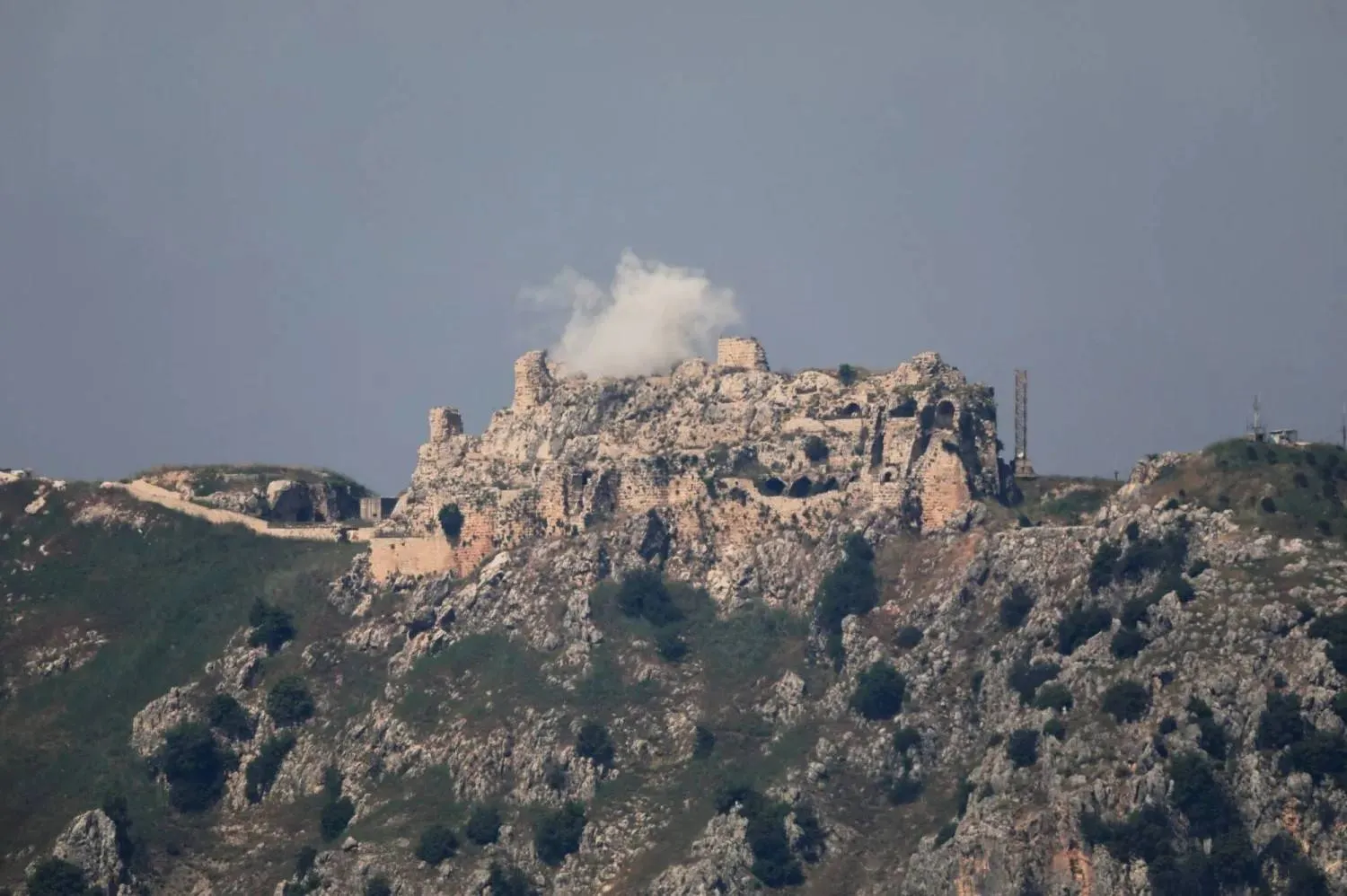
Smoke rises from Beaufort Castle following strikes, as seen from Marjayoun, southern Lebanon, May 27, 2026. REUTERS/Stringer
TT

Israel Tests Nabatieh Defenses, Seeks to Isolate the City in South Lebanon

Smoke rises from Beaufort Castle following strikes, as seen from Marjayoun, southern Lebanon, May 27, 2026. REUTERS/Stringer

The Israeli army made on Wednesday further incursions around the southern Lebanese city of Nabatieh beyond the Israeli-declared "yellow line” while increasing airstrikes up to 20 kilometers from the border and forcing the full evacuation of towns around the city.

The advance followed Israeli threats to expand beyond the yellow line and coincided with what Israel’s Channel 14 described as the widespread, systematic destruction of more than 10,000 buildings in southern Lebanese border villages, about 70% of the structures Israel plans to demolish in the area.

“We are expanding our operations in Lebanon to deepen the scale of the damage we are inflicting on Hezbollah,” Israeli army Chief of Staff Eyal Zamir said on Wednesday.
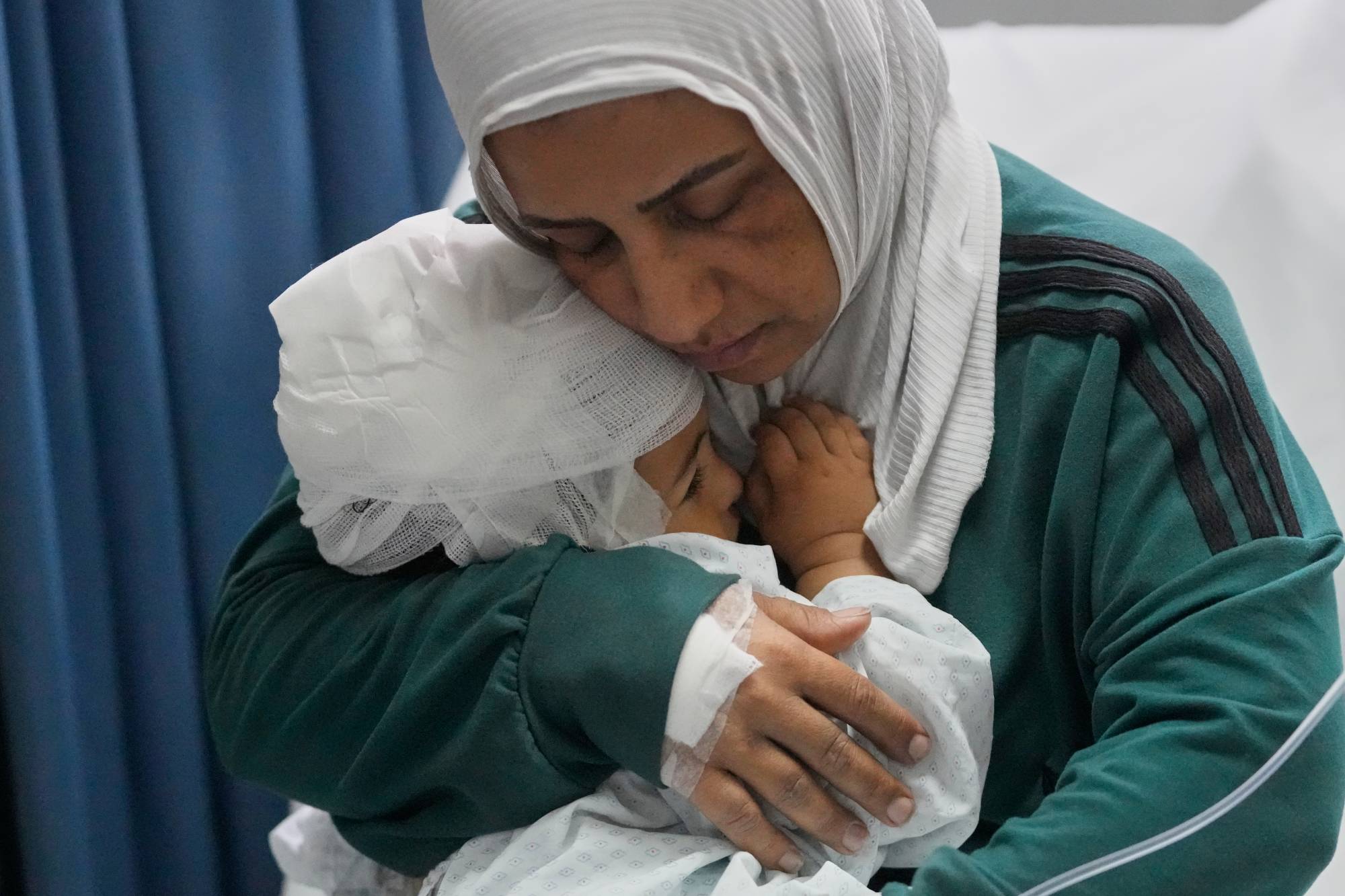
Hayat Al-Aqleh embraces her 18-month-old son Ali at Jabal Amel Hospital in the southern port city of Tyre, Lebanon, Wednesday, May 27, 2026, after he underwent head surgery for injuries sustained in an Israeli airstrike a day earlier in the village of Charnay near Tyre. (AP Photo/Mohammad Zaatari)

New push north of the river

Israeli forces entered eastern Zawtar, a town on the northern bank of the Litani, advancing on its outskirts as they sought to reach the strategic Beaufort Castle east of Nabatieh.

The castle overlooks, from the east, Lebanese towns under Israeli occupation, as well as northern Israeli settlements less than 10 kilometers away. Israel has placed the castle and the towns of Zawtar, Arnoun and Yohmor al-Shaqif within the yellow line, although they lie north of the Litani.

Local sources in southern Lebanon told Asharq Al-Awsat that Israeli forces sent unmanned vehicles deep into an area near Mayfadoun to probe defenses and reconnaissance capabilities.

They said the move pointed to attempts to push toward the hills south of Nabatieh, especially Mayfadoun and Shawkin, to isolate the city, which was placed under a full evacuation warning on Wednesday for a second day in a row.

The sources said airstrikes intensified on Beaufort Castle and nearby Yohmor, Kfar Tebnit and Arnoun, areas overlooking Nabatieh from the east.

The Israeli army gave no details on the fighting.

In a statement sent in response to a question from Agence France Presse and attributed to a military official, the army said it was operating in a targeted manner beyond the forward defense line to eliminate direct threats to the citizens of the State of Israel and to soldiers ... in accordance with directives from the political leadership.

Specific details regarding the locations of soldiers cannot be provided, the official said.

Clashes at point-blank range

In a statement Wednesday, Hezbollah said its fighters "clashed with the enemy forces at point-blank range" with light and medium weapons in the town of Zawtar al-Sharqiyah.

Since dawn on Tuesday, Hezbollah had said it targeted Israeli forces trying to enter the town with rocket-propelled grenades and explosive drones. It later said its fighters fired rockets and drones at Israeli forces on the town’s outskirts and near its entrance by the riverbed.

Al-Manar, Hezbollah’s television channel, said Israeli forces were moving along three axes on the outskirts of Zawtar al-Sharqiyah from the Hamra side. It said clashes were underway at three points, but denied that Israeli forces had advanced toward Mayfadoun or the inner neighborhoods of Zawtar al-Sharqiyah.

The town’s position north of the Litani gives it strategic significance due to its proximity to Nabatieh, southern Lebanon’s largest city. Israel accuses Hezbollah of violating the ceasefire.

Zawtar al-Sharqiyah lies next to the yellow line that the Israeli army drew last month in southern Lebanon. The line runs around 10 kilometers deep inside Lebanese territory and where residents have been warned not to return.

The advance into the town coincided with an Israeli army statement on Tuesday saying it was “operating in a targeted manner beyond the forward defense line to eliminate direct threats to the citizens of the State of Israel and to soldiers.”

Emptying Nabatieh’s surroundings

As it tries to advance, Israel is also working to isolate Nabatieh and its surroundings by expanding the fire-enforced buffer zone to nearly 20 kilometers from the border.

Field sources in southern Lebanon told Asharq Al-Awsat that the line of fire had been cleared to Doueir, where no one can now enter, including ambulances, which need permission from the so-called mechanism - an internationally brokered monitoring committee established to oversee the ceasefire - to access the town.
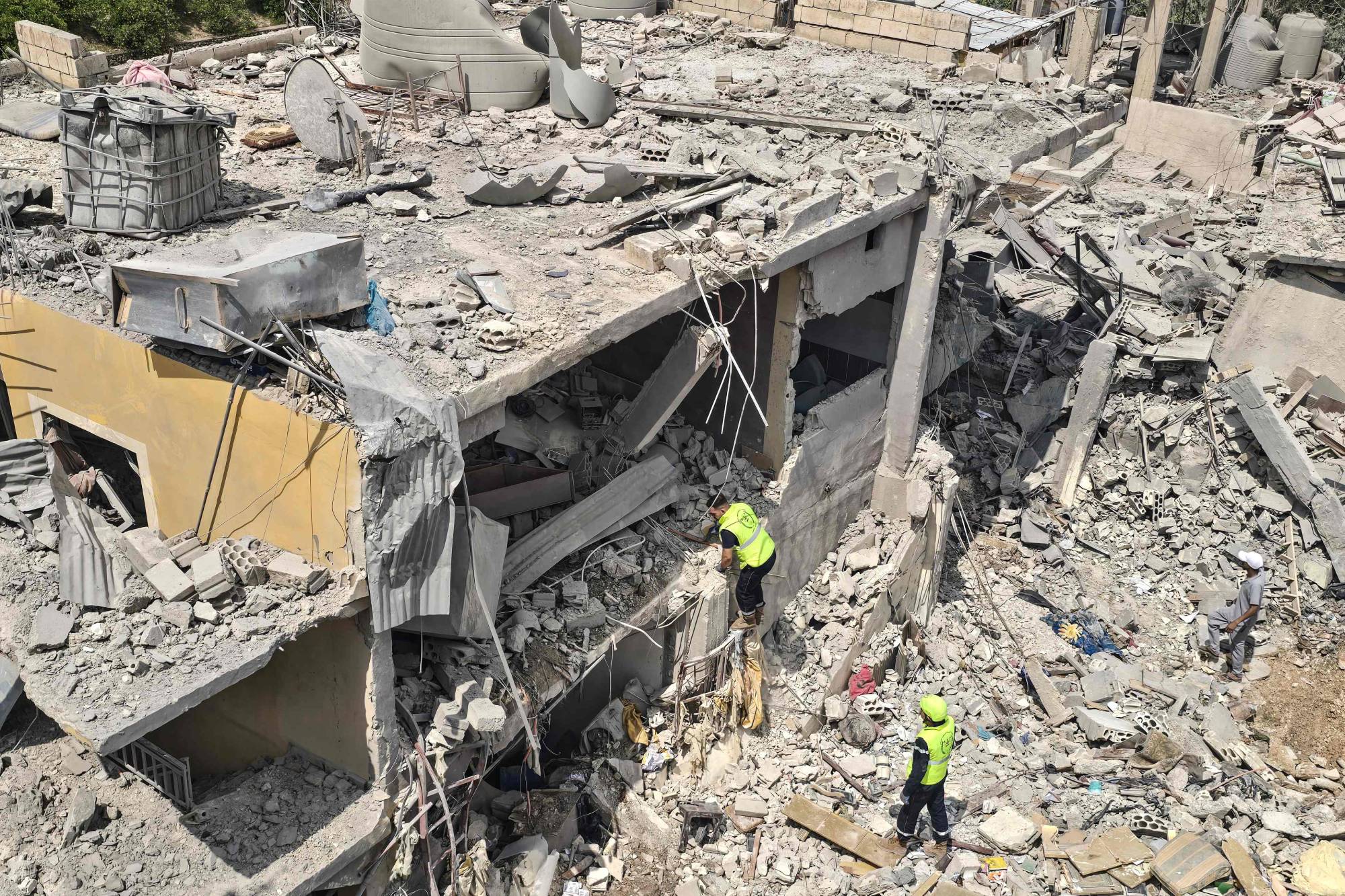
Civil defense members search for victims in the rubble of a residential building hit the previous day by an Israeli strike near the southern town of Burj al-Shamali, on the outskirts of Tyre, on May 27, 2026.(Photo by KAWNAT HAJU / AFP)

The sources said the evacuation sweep covered Doueir, Harouf, Jebchit, Zebdine, Toul, Kfar Jouz, Deir al-Zahrani, Habboush, Kfar Roummane, Mayfadoun and Shawkin. It also included towns north of the river, southwest of Nabatieh, overlooking the Litani’s bank.

The developments came hours after evacuation warnings on Tuesday covered about 50 Lebanese villages and towns, including all towns in the districts of Bint Jbeil, Marjayoun and Tyre, as well as a large part of the Nabatieh district.

The Israeli army carried out about 150 airstrikes on Tuesday, killing 31 people and wounding 40, according to Lebanon’s Health Ministry. The ministry said 14 people were killed in Burj al-Shamali near Tyre.

On Wednesday, the bombing expanded into the Zahrani district, hitting Tafahta, as well as large parts of villages around Nabatieh. Lebanon’s official National News Agency said a strike near Nabih Berri Governmental Hospital caused “major damage to hospital wards.”


Morocco Signs Agreement to Join Gaza International Force

 Palestinians gather around a blacksmith shop in Gaza City's Sabra neighborhood after it was hit by an Israeli military strike on Sunday, July 12, 2026. (AP)
Palestinians gather around a blacksmith shop in Gaza City's Sabra neighborhood after it was hit by an Israeli military strike on Sunday, July 12, 2026. (AP)
TT

Morocco Signs Agreement to Join Gaza International Force

 Palestinians gather around a blacksmith shop in Gaza City's Sabra neighborhood after it was hit by an Israeli military strike on Sunday, July 12, 2026. (AP)
Palestinians gather around a blacksmith shop in Gaza City's Sabra neighborhood after it was hit by an Israeli military strike on Sunday, July 12, 2026. (AP)

Morocco signed an agreement on Wednesday to participate in the International Stabilization Force (ISF) for Gaza, state media reported.

The agreement was signed in Rabat at a meeting attended by Moroccan Foreign Minister Nasser Bourita, senior defense officials ‌and Nickolay ‌Mladenov, the Board ‌of Peace ⁠envoy for Gaza, along ⁠with a delegation including the commander of the ISF, the state news agency MAP said.

The agreement "reflects the shared determination to contribute, through ⁠concrete humanitarian and security ‌actions, to the ‌establishment of a climate of ‌peace and security in the region," ‌MAP quoted a statement from the Moroccan defense administration as saying.

The Gaza Peace Council and ISF ‌leadership welcomed Morocco's decision to join the initiative, citing ⁠its ⁠planned deployment of senior military officers, gendarmerie and police personnel, as well as the creation of a military field hospital, MAP said.


Could Hezbollah Launch a New War in Support of Iran?

Supporters of Hezbollah carry Iranian and Hezbollah flags during a memorial ceremony for slain Supreme Leader Ali Khamenei in the southern suburbs of Beirut, Lebanon, 08 July 2026. (EPA)
TT

Could Hezbollah Launch a New War in Support of Iran?

Supporters of Hezbollah carry Iranian and Hezbollah flags during a memorial ceremony for slain Supreme Leader Ali Khamenei in the southern suburbs of Beirut, Lebanon, 08 July 2026. (EPA)

Amid deteriorating regional conditions and faltering US-Iranian understandings, Lebanese people fear that Hezbollah may once again launch a new round of war in support of Iran. This follows the party’s previous interventions, including its 2023 campaign backing Gaza and its retaliation for the late Iranian Supreme Leader Ali Khamenei in March this year.

Lebanon has witnessed a drop in Israeli military operations, which have reached their lowest levels in weeks, despite Israel's continued occupation of a security zone extending up to ten kilometers deep inside Lebanese territory. Hezbollah has also halted all military operations since the ceasefire was announced in mid-June.

However, the resumption of attacks between the US and Iran leads observers to believe that Tehran could once again request its regional proxies, including Hezbollah, to reignite all fronts in its support, should it perceive that the situation is heading toward a major escalation against it.

These fears are compounded by past statements by Hezbollah lawmakers and leaders. Most recently, MP Ali Ammar pledged to stand behind Iran in the event of a new war.

Conversely, during his latest appearance, Hezbollah Secretary-General Naim Qassem insisted on maintaining the diplomatic track between the US and Iran, while fiercely attacking the path of direct negotiations between Lebanon and Israel.

Political analyst Qassem Qassir, who is close to Hezbollah's positioning, noted that “no one can definitively determine the red lines drawn by Hezbollah, which, if crossed, would prompt a return to resistance in its broadest sense.”

“However, it is expected that a broad Israeli assault on the Ali al-Taher hill would naturally compel the group to defend it,” he told Asharq Al-Awsat.

“The same applies if attacks target other Lebanese areas still outside direct Israeli control, or if the enemy resumes wide-scale offensives and attacks against Nabatieh, Tyre, the southern suburbs of Beirut or other regions,” he added.

“Ultimately, the decision rests with Hezbollah's leadership, which has confirmed through its Secretary-General that it will not accept a return to the status quo prior to March 2” when the war with Israel erupted, he said.

“Consequently, matters remain contingent upon favorable conditions on the ground as well as the political climate. For instance, should direct Lebanese-Israeli negotiations hit a dead end, it could prompt the resistance [Hezbollah] to resume direct military operations,” he remarked.

Security and defense analyst Dr. Riad Kahwaji said: “The red lines that could prompt Hezbollah to resume fighting are determined by Iran, not the party's own leadership.”

Speaking to Asharq Al-Awsat, he added: “Tehran alone decides when the party will reopen the support front.”


Israeli NGO Slams Investment Plan for West Bank Settlements

Construction cranes tower above a construction site in Givat HaMatos, an Israeli settlement suburb of Israeli-annexed east Jerusalem on January 2, 2026. (AFP)
TT

Israeli NGO Slams Investment Plan for West Bank Settlements

Construction cranes tower above a construction site in Givat HaMatos, an Israeli settlement suburb of Israeli-annexed east Jerusalem on January 2, 2026. (AFP)

An Israeli NGO on Wednesday condemned a government plan to invest around $2.7 billion in infrastructure and thousands of new residential units across several settlements in the occupied West Bank.

Since Prime Minister Benjamin Netanyahu took office in 2022, his government has rapidly expanded settlements in the West Bank, drawing criticism from rights groups and the UN.

Earlier this week, Netanyahu and far-right Finance Minister Bezalel Smotrich signed an umbrella agreement to invest in settlements in the north of the Palestinian territory.

"This is another significant step in the settlement revolution we are leading in Judea and Samaria," Smotrich said on X, using the biblical name for the West Bank.

"As part of the agreement, approximately 12,000 new housing units will be established, alongside an investment of more than eight billion ILS (approximately $ 2.7 billion) in infrastructure, public institutions and settlement development."

Netanyahu hailed the agreement.

"Not only do we defend this place, we elevate it," he said.

Israeli anti-settlement watchdog Peace Now slammed the decision, accusing the government of squandering public funds and entrenching the occupation of the West Bank.

The group said the move would complicate any future withdrawal from the West Bank and the creation of a Palestinian state.

"Umbrella agreements are used for the rapid development of large-scale projects," Hagit Ofran, a spokeswoman for Peace Now, told AFP.

"From the government's perspective, it is a double win: unbridled construction in the settlements, along with shackling the next government to commitments that will make it difficult to roll back this terrible government's reckless policy."

Since taking office, Netanyahu's government, widely seen as one of the most right-wing in the country's history, has approved the establishment of 102 settlements in the West Bank, according to Peace Now.

All Israeli settlements are illegal under international law.

Excluding east Jerusalem, more than 500,000 Israelis live in settlements in the West Bank, which Israel has occupied since 1967, among some three million Palestinians.