



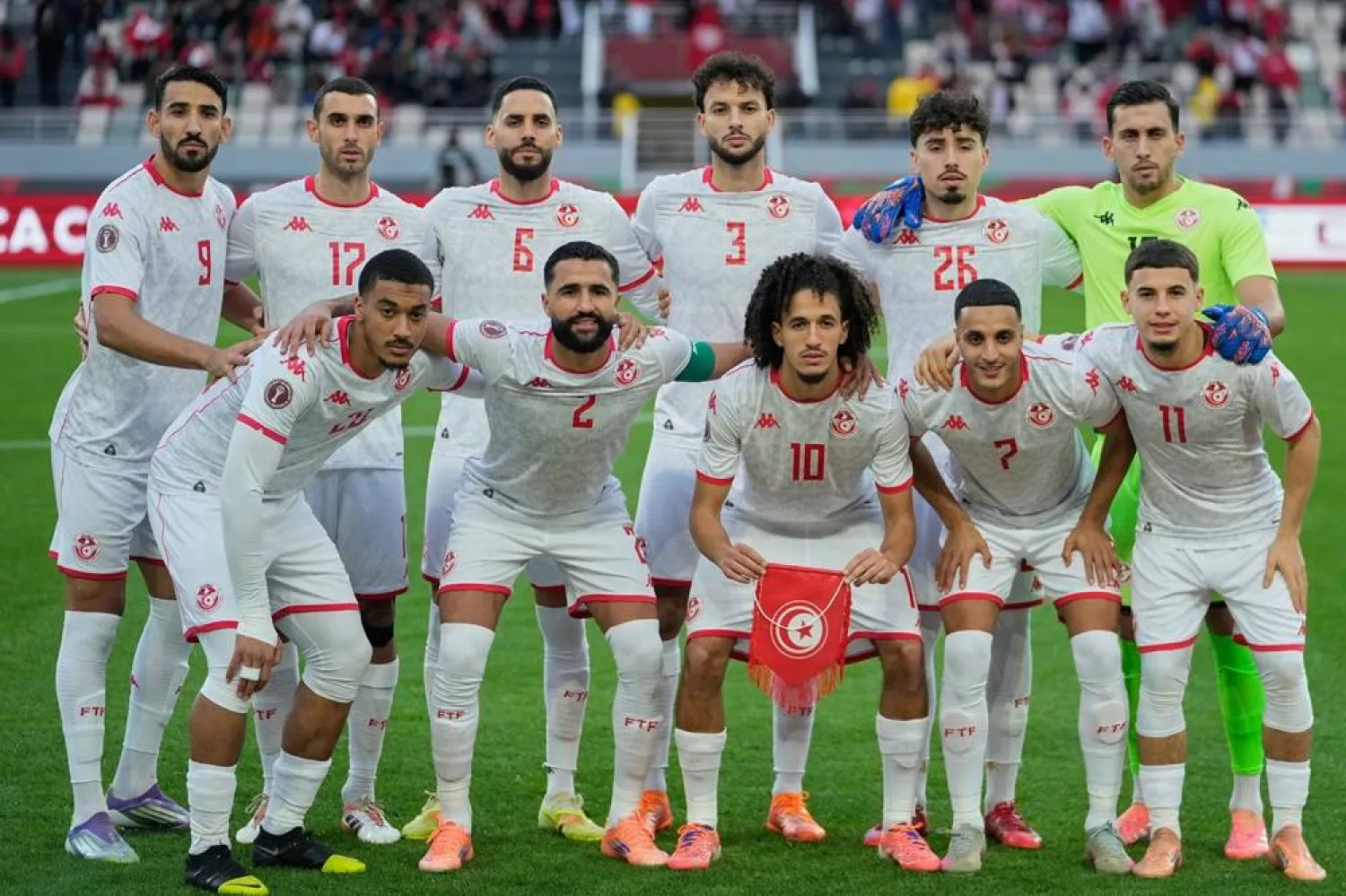

Tunisia carry quiet momentum into the 2026 World Cup after cruising through qualifying without conceding a single goal, but familiar doubts remain over whether their disciplined approach can trouble the game's elite on the global stage.
Drawn alongside the Netherlands, Japan and Sweden in Group F, Tunisia once again look set to rely on defensive organization and tactical consistency, qualities that have long made them one of Africa's most resilient sides.
However, recent performances have reinforced concerns about their lack of attacking edge against stronger opposition, with Tunisia continuing to depend more on collective discipline than individual brilliance.
Coach Sabri Lamouchi has responded by beginning a cautious reshaping of an ageing squad ahead of the finals, leaving out established veterans including midfielder Ferjani Sassi and defender Yassine Meriah as he looks to refresh the team.
"These decisions were not easy; on the contrary, they were extremely difficult," Lamouchi was quoted as saying by FIFA.com after naming his squad.
"But I am not looking to make simple decisions, nor am I looking to select players to please anyone other than the Tunisian people - neither now nor during the tournament."
Instead, Lamouchi has turned to new faces and younger profiles as he attempts to inject greater energy without sacrificing the defensive solidity that underpinned Tunisia's qualification campaign.
Among the notable additions is Union Berlin midfielder Rani Khedira, the 32-year-old brother of former Germany international Sami Khedira, who switched allegiance earlier this year after spending his entire professional career in Germany.
The French coach has also recalled several younger players, including Paris St Germain striker Khalil Ayari and Canada-based forward Rayan Elloumi, signaling a gradual transition rather than a complete rebuild.
Still, Tunisia's hopes may depend heavily on Burnley midfielder Hannibal Mejbri, one of the few players capable of producing moments of creativity and unpredictability in the final third.
The 23-year-old, who came through Manchester United's academy before moving to Burnley, is expected to shoulder much of Tunisia's attacking responsibility during the tournament.
Tunisia's pragmatic style has often made them difficult opponents in African competition, but their World Cup record remains modest. They have appeared at six previous World Cups but never advanced beyond the group stage.
Navigating a group containing the Netherlands, Japan and Sweden may ultimately reveal whether Lamouchi's gradual rebuild has given Tunisia enough quality and dynamism to compete beyond their traditional role as stubborn outsiders.


